wayground logo

Free Printable Worksheets

Font size

S
M
L
XL
Worksheets

2nd Semester Midterm Review

Total questions: 120

Worksheet time: 2hrs 3mins

Name
Class
Date
1.
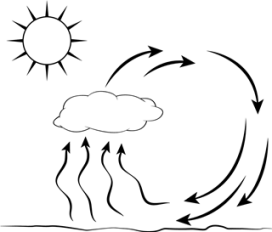
What is the water cycle?
a)
the 3 forms of water
b)
the movement of water on, above, or below the surface of the Earth
c)
when water melts
d)
when clouds form
2.
Which of these is an example of precipitation?
a)
snow
b)
air
c)
clouds
d)
vapor
3.
Which is the opposite of condensation?
a)
runoff
b)
evaporation
c)
precipitation
d)
transpiration
4.
Which best explains why runoff is important?
a)
It returns water to other locations on Earth
b)
It increases the chance of flooding
c)
It makes evaporation occur faster
d)
It increases condensation
5.
Snow, sleet, hail, and rain are all examples of  ________________. 
a)
evaporation
b)
condensation
c)
accumulation
d)
precipitation
6.
What does groundwater do?
a)
It sends water to our buildings, houses, and water transplant places
b)
Goes to the sky
c)
Goes to the sun
d)
Provides rivers
7.
After the rain falls down onto Earth's surface, what most likely happens?
What is it called?
a)
1. The remains of the water is soaked into the ground.
2.Groundwater
b)
1. Groundwater
2. The remains of the water is soaked into the ground.
c)
1. Groundwater
2. Transpiration happens to the plants.
d)
1. The liquid turns into a gas or water vapor
2. Evaporation
8.
What is it called when plants give off water vapor as a waste product?
a)
condensation
b)
evaporation
c)
sublimation
d)
transpiration
9.
When water _________, dew forms.
a)
Melts
b)
Evaporates
c)
Condenses
d)
Precipitates
10.
Which stages does liquid water from the ocean turn into water vapor?
a)
condesantion
b)
evaporation
c)
precipitation
d)
run off
11.
The atmospheric condition that affects each stage of the water cycle
a)
temperature
b)
density
c)
salinity
d)
atoms
12.
Water vapor suspended at or near Earth's surface
a)
Dew
b)
Frost
c)
Fog
d)
Snow
13.
There is only about 1% of freshwater available for use on Earth.
a)
True
b)
False
14.
Which represents the distribution of water on Earth?
a)
3% freshwater, 97% salt water
b)
97% freshwater, 3% salt water
c)
71% freshwater, 29% salt water
d)
29% freshwater, 71% salt water
15.
What happens to pressure as you go deeper into the ocean? 
a)
increases
b)
decreases
c)
stays the same
d)
doubles
16.
In addition to salinity, what factor affects the density of seawater?
a)
depth
b)
latitude
c)
temperature
d)
salt content
17.
Where is most of the freshwater found on Earth?
a)
lakes
b)
glaciers
c)
oceans
d)
rivers
18.
What is the scientific name for salt? 
a)
Sodium Acetate 
b)
Sodium Chloride 
c)
Chloride sodium 
d)
Hydroxide sulfate 
19.
As we go deeper into the ocean, salinity ___________. 
a)
Doubles
b)
Decreases 
c)
Increases
d)
Remains the same 
20.
What two elements make up water?
a)
Helium and oxygen
b)
Hydrogen and oxygen
c)
helium and carbon
d)
oxygen and carbon
21.
Why does ice float?
a)
As water freezes, it expands and its density decreases.
b)
As water freezes, it takes up more hydrogen from the atmosphere, causing it to have a greater buoyancy.
c)
As water freezes, air becomes trapped between the hydrogen bonds of water molecules.
d)
As water freezes, it takes up more oxygen from the atmosphere, causing it to have a greater buoyancy.
22.
Water's temperature stays relatively________
a)
stable
b)
unstable 
c)
different
d)
changing 
23.
The _________ is the gradually sloping end of a continent that extends under the ocean to 350 m deep.
a)
continental shelf
b)
trench
c)
seamount
d)
abbysal plain
24.
What is a deep, steep-sided canyon in the ocean floor?
a)
seamount
b)
trench
c)
continental rise
d)
continental slope
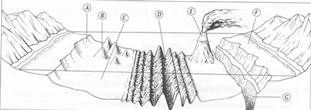
25.
This image shows
a)
sea floor is spreading
b)
continental shelf
c)
continental slope
d)
sea mount
26.
What is letter C?
a)
Mid-Ocean Ridge
b)
Cont. Shelf
c)
Cont. Slope
d)
Abyssal Plain
27.
What does salinity refer to?
a)
the temperature level of the water
b)
the depth of ocean trenches
c)
the height of the waves
d)
the level of minerals in the water
28.
Which process increases the salinity of ocean water?
a)
The Coriolis Effect
b)
Convection currents
c)
Evaporation
d)
Continental Deflection
29.
The density of ocean water increases when it?
a)
Joins the Gulf Stream
b)
Gets colder
c)
Gets warmer
d)
Turns to ice
30.
What is the difference between a volcanic island & a seamount?
a)
A volcanic island rises above the water & a seamount does not
b)
A seamount rises above the water & a volcanic island does not
c)
Both the seamount & volcanic island are underwater
d)
Both the seamount & the volcanic island rise above the water
31.
the deepest part of the ocean
a)
trenches
b)
abyssal plain
c)
ocean basin
d)
rift
32.
As you go from the continental shelf to the abyssal plain, the water temperature gets _____________
a)
warmer
b)
colder
33.
The continental slope is located at the end of the...
a)
shoreline
b)
continental shelf
c)
mid ocean ridge
d)
abyssal plain
34.
What letter is B?
a)
Cont. Shelf
b)
Cont. Slope
c)
Mid-Ocean Ridge
d)
Seamount
35.
The large, flat part of the ocean floor is called the _____________. 
a)
trench
b)
continental shelf
c)
continental slope
d)
abyssal plain
36.
If you are walking into the ocean you would be on the continental...
a)
shelf
b)
slope
c)
rise
37.

The measure of the amount of salt dissolved in a given amount of liquid.

a)

Saltine

b)

Salinity

c)

Saltonomous

d)

Salty McSaltster

38.

As you go deeper in the ocean, the water is colder and less salty.

a)

True

b)

False

39.
Which represents the distribution of water on Earth?
a)
3% freshwater, 97% salt water
b)
97% freshwater, 3% salt water
c)
71% freshwater, 29% salt water
d)
29% freshwater, 71% salt water
40.
The ocean makes up about ________ % of the Earth's surface. 
a)
100%
b)
53%
c)
70 %
d)
90%
41.
 As the temperature of ocean water changes from 10 to 30 degrees C, how does the density change?
a)
The water becomes more dense
b)
The water becomes less dense
c)
 The density does not change 
d)
 It is impossible to predict
42.
 The density of ocean water is influenced by what two factors?
a)
 Salinity and temperature
b)
Water color and chlorophyll
c)
 Dissolved gases and dissolved solids
d)
 Dissolved carbon and trace elements
43.
If I have freshwater that is less dense, what will it do in comparison to salt water that is more dense?
a)
The more dense water will float and the less dense water will sink.
b)
The more dense water will sink and the less dense water will float
c)
Nothing they will mix evenly.
44.

In this model of layers of water, what can you infer about the red layer of water?

a)

It is warmer than the yellow, green, and blue layers

b)

It is colder than the yellow, green, and blue layers

c)

It is higher in salinity than the yellow, green, and blue layers

d)

It is higher in salinity and warmer than the other layers

45.

Sonar is the most accurate way used to map

a)

the ocean floor

b)

sea level

c)

the moons of Jupiter

d)

the Grand Canyon

46.
The Coriolis Effect is caused by
a)
Earth rotating around the sun
b)
Earth rotating on its axis
c)
The tides
d)
Gravity
47.
Two types of water currents are
a)
local and global
b)
sea and land
c)
surface and deep
d)
warm and cold
48.

Inspect the data table above then answer the following question. Which of Georgia’s lakes along the Chattahoochee River is likely to have the least impact on the water flowing downstream?

a)

Lake Lanier

b)

West Point Lake

c)

Lake Eufaula

d)

Lake Seminole.

49.

Based on the pie chart above, which source of pollution listed below is responsible for adding the most pollution to the oceans?

a)

Offshore oil

b)

Industrial wastewater

c)

Maritime transportation

d)

Air pollutants

50.

What is a body of permeable rock that can contain or transmit groundwater.

a)

Runoff

b)

Surface water

c)

Groundwater

d)

Aquifer

51.

What is the top layer of a body of water?

a)

Groundwater

b)

Surface water

c)

Lake

d)

Aquifer

52.

Ways to conserve water in our everyday life includes:

a)

Turning the tab water off when we don't need it

b)

Using water buckets instead of hose for cleaning our cars

c)

Reporting any water leakage

d)

All of the above

53.
Water needs to be replenished, purified and circulated again and again so that it can preform its functions.
a)
True
b)
False
54.
Some of the water that precipitates does not runoff into the rivers and is absorbed by the plants or gets evaporated. It moves deep into the soil. What is this process called?
a)
Sublimation
b)
Transpiration
c)
Runoff
d)
Infiltration
55.
________  includes all the policies, strategies and activities to sustainably manage the natural resource of fresh water, to protect the hydrosphere, and to meet the current and future human demand.
a)
Sublimation
b)
Infiltration
c)
Water Conservation
d)
Runoff
56.
Which gas in our atmosphere is most abundant?
a)
Argon
b)
Oxygen
c)
Nitrogen
d)
Carbon Dioxide
57.
What percentage of our atmosphere is made up of other gases such as argon, water vapor, and carbon dioxide?
a)
1%
b)
21%
c)
78%
d)
90%
58.
The air in the troposphere has a greater density than the air in any other layer of the atmosphere,
a)
True
b)
False
59.
What is the percentage of oxygen in Earth's atmosphere?
a)
1%
b)
21%
c)
78%
d)
90%
60.
What is the percentage of nitrogen in Earth's atmosphere?
a)
1%
b)
21%
c)
78%
d)
90%
61.
In which layer of the atmosphere does weather occur?
a)
Mesosphere
b)
Thermosphere
c)
Stratosphere
d)
Troposphere
62.
What decreases as you go up in the atmosphere?
a)
Altitude
b)
Atmosphere
c)
Meteors
d)
Air Pressure
63.
What is the lowest main layer of Earth's atmosphere?
a)
Thermosphere
b)
Troposphere
c)
Stratosphere
d)
Mesosphere
64.
What is the second lowest main layer of Earth's atmosphere?
a)
Thermosphere
b)
Troposphere
c)
Stratosphere
d)
Mesosphere
65.
Which of the following is the correct order of the atmosphere layers from Earth to space?
a)
troposphere, stratosphere, mesosphere, thermosphere, exosphere
b)
troposphere, mesosphere, thermosphere, exosphere, stratosphere
c)
thermosphere, stratosphere, mesosphere, troposphere, exosphere
d)
troposphere, stratosphere, mesosphere, exosphere, thermosphere
66.
Which layer protects the earth from meteors?
a)
Troposphere
b)
Stratosphere
c)
Mesosphere
d)
Thermosphere
67.
Describe how the ozone layer protects the earth.
a)
Absorbs solar radiation, Protects Earth from UV Rays,  and emits heat
b)
Ozone in the lower atmosphere is a pollutant
68.
Airplanes fly in which layers of the atmosphere?
a)
Troposphere, Stratosphere, and Mesosphere
b)
Stratosphere and Mesosphere
c)
Troposphere and Stratosphere
d)
Troposphere Stratosphere, Mesosphere, and Thermosphere
69.
The force that air exerts on all objects is called-
a)
density
b)
altitude
c)
infrared radiation
d)
air pressure
70.
Which layer of the atmosphere do most satellites orbit the Earth?
a)
Stratosphere
b)
Mesosphere
c)
Exosphere
d)
Ionosphere
71.
Which layer of the atmosphere contains the ozone layer? 
a)
Mesosphere
b)
Stratosphere
c)
Ionosphere
d)
Exosphere
72.
Which layer has the hottest molecules?
a)
Thermosphere
b)
Mesosphere
c)
Exosphere
d)
Stratosphere
73.
Which layer protects humans from most of the harmful UV radiation received from the sun?
a)
Clouds
b)
Exosphere
c)
Ionosphere
d)
Ozone Layer
74.
A mixture of gases and particles that surround a planet, held by gravity is called the-
a)
greenhouse effect
b)
atmosphere
c)
jet stream
d)
blanket
75.
Which layer of the atmosphere contains the greatest amount of water vapor?
a)
Thermosphere
b)
Troposphere
c)
Mesosphere
d)
Stratosphere
76.
What is the definition of CONDUCTION?
a)
When heat is transferred from objects like rays of light or electromagnetically.
b)
a  hot liquid or air that  expands, becomes less dense, and rises or becomes more dense, and sinks.
c)
When heat transfers from objects that are touching.
d)
When heat transfers through the heater or AC in your house.
77.
What kind of heat transfer happens when the sun is heating your body?
a)
Conduction
b)
Radiation
c)
Convection
d)
Density
78.
What heat transfer happens when you burn your hand by touching a fire?
a)
Radiation
b)
Conduction
c)
Convectio
d)
I don't know!!!!!!!!!!!
79.
Warm air rises and the cool air sinks demonstrates this type of heat transfer. 
a)
conduction
b)
convection
c)
radiation
d)
Insolation 
80.
Warm air is __________ dense than cold air and rises creating convection currents.
a)
more
b)
less
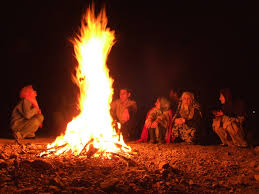
81.
A group of friends gather around a fire to stay warm.
a)
conduction
b)
convection
c)
radiation
82.
Transfer of thermal energy through "space"
a)
conduction
b)
convection
c)
radiation
83.
The way the heat is moving from the hot coffee is called...
a)
convection
b)
radiation
c)
insulation
d)
conduction
84.
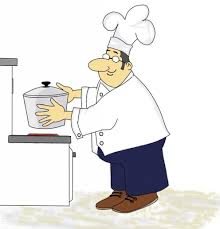
The man goes to take the hot pot off the stove with his bare hands.
a)
conduction
b)
convection
c)
radiation
85.
What happens when ice cubes melt in a glass?
a)
Heat travels from the ice to the warmer water.
b)
No energy is transferred.
c)
Heat is transferred from the warmer water to the ice cubes.
d)
The water warms up due to the humidity
86.
How many kinds of heat transfer are there?
a)
1
b)
2
c)
3
d)
4 or more
87.
In heat transfer, heat always flows from the _______________ substance to the _______________ substance.
a)
Hotter to colder
b)
Colder to hotter
c)
Hotter to hotter
d)
Colder to colder
88.
___________________ is the type of heat transfer that occurs in fluids, such as warm air rising and cold air sinking; creating wind.
a)
Convection
b)
Conduction
c)
Radiation
d)
insulation.
89.
Which statement is true?
a)
The quicker a molecule moves, the colder it is.
b)
The slower a molecule moves, the warmer it is.
c)
The quicker a molecule moves, the warmer it is
d)
The movement on molecule don�t affect its temperature
90.
The candle will slowly heat the metal and transfer the heat directly to the mans hand.
a)
conduction
b)
convection
c)
radiation
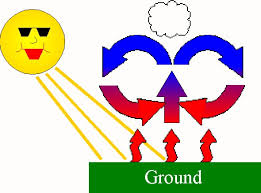
91.
What causes the circulation of air in the atmosphere?
a)
Air in the atmosphere is heated by the sun and sinks to the ground.
b)
The ground is heated by the sun and then heats the air, causing the air to rise.
c)
Air loses heat to the ground and then rises upward to obtain more energy.
d)
The sun heats the clouds which forces the cooler air to move away and sink.
92.
A crayon placed on a dark driveway in bright sunlight melted into a colorful puddle. What caused the crayon to melt?
a)
Solar radiation heated the driveway and then heat transferred to the crayon by conduction.
b)
Solar radiation heated the driveway and then heat transferred to the crayon by radiation.
c)
Solar convection heated the driveway and then heat transferred to the crayon by radiation.
d)
Solar convection heated the driveway and then heat transferred to the crayon by conduction.
93.
In this experiment, the WARM red dye and the COLD blue dye was placed in the water at the same time. The warm red dye rose to the top while the cold blue dye sank to the bottom.
a)
conduction
b)
convection
c)
radiation
94.
What type of winds blow constantly, predictably, and over long distances?
a)
land breezes
b)
mountain breezes
c)
global winds
d)
land breezes
95.
Where does the initial source of energy come from that creates winds?
a)
the moon
b)
the sun
c)
the Earth's surface
d)
the rotation of the Earth
96.
Land and water absorb and release the sun’s heat in different ways. One result of this is a sea breeze. Which statement is true of sea breezes?
a)
They originate in the day and blow toward the land.
b)
They originate in the day and blow toward the water.
c)
They originate in the evening and blow toward the land.
d)
They originate in the evening and blow toward the water.
97.
Which term is best described as the movement of air from land to sea?
a)
global winds
b)
sea breeze
c)
land breeze
d)
local winds
98.
The Coriolis effect causes ___________.
a)
the Earth to rotate on its axis
b)
continental deflection
c)
global winds and surface currents to move in a curved path instead of a straight line
d)
global winds and deep ocean currents to move in a curved path instead of a straight line.
99.
How do differences in air pressure affect the movement of air?
a)
Air always moves from areas of high pressure to areas of low pressure.
b)
Air always moves from areas of low altitudes to high altitudes.
c)
Air always moves from areas of low pressure to areas of high pressure.
d)
Air always moves from east to west.
100.
Which statement correctly describes the properties of cold air?
a)
less dense and less pressure than warm air
b)
more dense and more pressure than warm air
c)
more dense and less pressure than warm air
d)
less dense and more pressure than warm air
101.
Why does warm air rise?
a)
Warm air is more dense than cooler air.
b)
Warm air has more pressure than cooler air.
c)
Warm air is less dense than cooler air.
d)
Warm air has a higher dew point than cooler air.
102.
Near the top of the troposphere is a narrow band of high speed winds called the______.
a)
westerlies
b)
jet stream
c)
trade winds
d)
local winds
103.
When air is heated, it will MOST likely
a)
expand and fall
b)
expand and rise
c)
condense and fall
d)
condense and rise
104.
A sea breeze blows from the ocean toward the shore. Why does this occur?
a)
High pressure over the land causes a downdraft to occur.
b)
The tide carries the wind to the shore as it moves back and forth.
c)
Conduction of heat from the warm water produces wind from the ocean.
d)
Air over land heats faster than air over water, which causes convection.
105.
Which of these MOST likely causes winds to blow on Earth?
a)
Earth spins quickly, causing air to blow around.
b)
The gravity of Earth and the Moon push and pull the air.
c)
Warm air rises and cool air falls toward Earth's surface.
d)
Ocean waves push air onto the shore and across Earth's surface.
106.
Which factor causes the motion of surface ocean currents?
a)
the sun
b)
the wind
c)
the moon
d)
hurricanes
107.
Which of these BEST explains the cause of convection currents in Earth's atmosphere?
a)
Heat from Earth's core heats the land only at the equator.
b)
Glaciers moving away from the poles cool Earth unevenly.
c)
Sunlight is more concentrated in some places on Earth than others.
d)
The light and heat reflected from the moon varies as the moon changes phases.
108.
When visiting the beach, Felicity observed that a breeze blew in from the ocean during day and out toward the ocean at night. Which factor is MOST responsible for the direction of land and sea breezes in coastal regions?
a)
the revolution of Earth around the Sun
b)
the uneven heating between the land and water
c)
the gravitational pull of Earth on the atmosphere
d)
the daily rise and fall of tides in a regular pattern
109.
What are air masses?
a)
Large pockets of air that may cover ten thousand or more square miles
b)
temperature
c)
wind
d)
water
110.
When a cold front or a warm front stays in place for several days without invading another front, it is called a ______. 
a)
stationary front 
b)
 cold front 
c)
occluded front
d)
warm front 
111.
A cold front usually brings what kind of weather?
a)
snow  
b)
sunny and fair
c)
rain and/or thunderstorms 
d)
 cool and dry 
112.
When two air masses meet, what happens?
a)
The weather changes and precipitation usually occurs.
b)
wind
c)
water
d)
volcano
113.
When a cold front is approaching, what happens?
a)
warm air is pushing under cold air causing humid weather and lower temperatures
b)
warm air is pushing under cold air causing humid weather and higher temperatures
c)
warm air rises, cools, and causes rain and thunderstorms
d)
cold air is pushed over warm air causing rain and thunderstorms
114.
When a warm air mass gently slides on top of a cold air mass, and you have drizzly rain and then warmer weather, what type of front is it?
a)
warm front
b)
cold front
c)
occluded front
d)
stationary front
115.
A front is
a)
where warm air is cooling at earth's surface
b)
a line where hot and cold air are separating
c)
a line where two different air masses meet
d)
where cold air is rising and forming rain clouds
116.
Which front leads to steady rain for several days?
a)
warm front
b)
cold front
c)
stationary front
d)
occluded front
117.

The four types of fronts are:

a)

Colliding Fronts, Air Mass Front, Water Vapor Front, Warm Front

b)

Warm Front, Stationary Front, Standoff Fronts, Cold Fronts

c)

Cold Front, Warm Front, Stationary Front, Occluded Front

d)

Cold Front, Warm Front, Situational Front, Occluded Front

118.
_____________ air is more dense and tends to sink
a)
cold
b)
warm
c)
moist
d)
dry
119.
What type of storm front is this? 
a)
warm front
b)
cold front
c)
stationary front
d)
occluded front
120.
What type of storm front is this?
a)
warm front
b)
cold front
c)
stationary front
d)
occluded front