wayground logo

Free Printable Worksheets

NEW

Font size

S
M
L
XL
Worksheets

Forces of Flight & Newton's Laws

Total questions: 60

Worksheet time: 1hrs 16mins

Name
Class
Date
1.

Leonardo da Vinci was a famous ....

a)

inventor and artist

b)

artist and teacher

c)

driver and sculptor

d)

painter and caretaker

2.

The Wright brothers' names were....

a)

Orson and Welles

b)

Orville and Wilbur

c)

Otto and Karl

d)

Olio and Stanlio

3.
When an airplane is taking off, lift is ___________ the weight.
a)
greater than
b)
less than
c)
the same as
4.
This force is a measure of gravity which wants to pull the plane down towards the earth.
a)
drag
b)
lift
c)
weight
d)
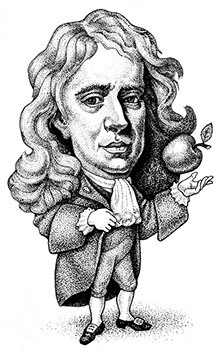
thrust
5.
This force slows a plane down.  It is caused by air friction on the plane.
a)
lift
b)
thrust
c)
weight
d)
drag
6.
When an airplane is cruising at altitude all forces are
a)
unbalanced
b)
no longer needed
c)
balanced
7.
Which is NOT an example of powered aircraft?
a)
jet
b)
rocket
c)
hang glider
d)
airplane
8.
This is an engine-powered force that pushes the plane forward through the air.
a)
thrust
b)
weight
c)
drag
d)
lift
9.
What force gives an upward push?
a)
lift
b)
drag
c)
thrust
d)
weight
10.
What can a glider fly without?
a)
wings
b)
force
c)
engine
d)
aircraft
11.
When an airplane takes flight, lift is less than the weight. True or false?
a)
True
b)
False
12.

Aerospace engineers work on

a)

Domestic & Commercial aviation, national defense, and space exploration

b)

On air

c)

Only space exploration

d)

On space planes.

13.

What question do engineers need to keep asking?

a)

Who

b)

What

c)

When

d)

Where

e)

Why

14.

What did Amelia Earhart attempt to do, but died trying?

a)

Flying across the Atlantic Ocean

b)

Flying across the Pacific Ocean

c)

Flying around the world

d)

Fly over the north and south poles

15.
Whose Principle is used to describe why flight is possible?
a)
Newton
b)
Descartes
c)
Bernoulli
d)
Pascal
16.

What was the purpose of the roman aqueducts?

a)

Move people

b)

Move air

c)

Move water

d)

Move animals

17.

When an unbalanced force acts on an object, the force ______________________.

a)

changes the motion of the object

b)

is cancelled by another force

c)

does not change the motion of an object

d)

is equal to the weight of the object

18.

When two equal forces act in opposite directions on an object, they are called ______________________.

a)

frictional force

b)

balanced force

c)

centripetal force

d)

gravitational force

19.

The resistance of an object to any change in its motion is called ______________________.

a)

inertia

b)

friction

c)

gravity

d)

weight

20.

According to Newton’s second law of motion, force is equal to mass times ______________________.

a)

inertia

b)

weight

c)

acceleration

d)

direction

21.
What law is best described by inertia?
a)
1st
b)
2nd
c)
3rd
22.

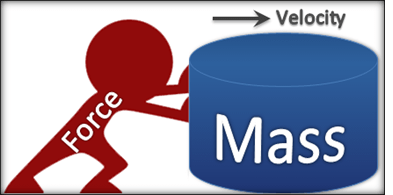
The picture is an example of Newton's...

a)

1st Law

b)

2nd Law

c)

3rd Law

23.

The picture is an example of Newton's...

a)

1st Law

b)

2nd Law

c)

3rd Law

24.
"For every action, there is an equal and opposite reaction."
a)
Newton's 1st Law
b)
Newton's 2nd Law
c)
Newton's 3rd Law
d)
Newton's 4th Law
25.
Force = Mass x Acceleration
a)
Newton's 1st Law
b)
Newton's 2nd Law
c)
Newton's 3rd Law
d)
Newton's 4th Law
26.
"An object in motion (or at rest) will to stay in motion (or at rest) until an outside force acts upon it."
a)
Newton's 1st Law
b)
Newton's 2nd Law
c)
Newton's 3rd Law
d)
Newton's 4th Law
27.
Any push or pull on an object.
a)
force
b)
velocity 
c)
inertia
d)
momentum
28.
The force that opposes motion between two surfaces in contact with each other.
a)
inertia
b)
friction
c)
momentum
d)
gravity
29.
The combination of all the forces acting on an object is the...
a)
net force
b)
action force
c)
reaction force
d)
balance force
30.
A Newton is a unit of...
a)
force
b)
inertia
c)
acceleration
d)
velocity
31.
What is the acceleration of a 50 kg object pushed with a force of 500 newtons? To solve this problem you must do - 
a)
500 ÷ 50
b)
50 ÷ 500
c)
500 x 50
32.
A 50 kg skater pushed by a friend accelerates 5 m/s2.  How much force did the friend apply? To solve this problem you must do - 
a)
50 ÷ 5
b)
5 ÷ 50
c)
50 x 5
33.
The mass of a car is 1000 kg.  How much force would be required to accelerate the car at a rate of 3 m/s2? The answer to this question is most likely (HINT: Look at the units!!!) - 
a)
3000 N
b)
3000 m/s2
c)
3000 kg
34.
What is the formula for force?
a)
F=M/A
b)
F=A/M
c)
F=M*A
d)
F=M*F
35.
Unit of force.
a)
Meter
b)
Centimeter
c)
Newton
36.
Unit of mass
a)
m/s 2
b)
m/s
c)
newtons
d)
kg
37.
Unit of force.
a)
Meter
b)
Centimeter
c)
Newton
38.
True of False?
An object's inertia is effected by its mass.
a)
False
b)
True
39.
What is the formula to calculate speed?
a)
Speed = time/distance
b)
Speed = distance/time
c)
Speed = distance x time
d)
Speed = time x distance
40.
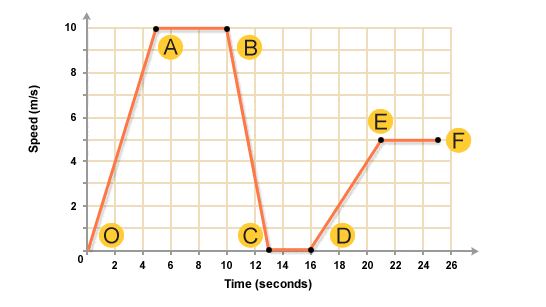
According to the graph how far does the person travel in the first 5 seconds?
a)
2 m
b)
10 m
c)
0 m
d)
5 m
41.
What is happening in this graph from point B to C?
a)
The object is going down a hill.
b)
The object is returning to its starting location.
c)
The object is slowing down.
d)
The object is staying still.
42.

An object traveling at a constant speed is shown on a speed-time graph by a horizontal line.

a)

True

b)

False

43.

Acceleration occurs when there is a change in speed.

a)

True

b)

False

44.

change in velocity during a period of time

a)

acceleration

b)

vertical

c)

acceleration formula

45.

final speed minus initial speed, divided by time

a)

horizontal

b)

acceleration

c)

acceleration formula

46.
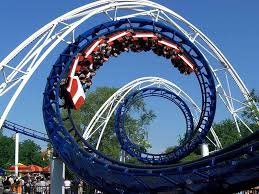
A roller coasters accelerates from an initial velocity of of 6.0 m/s to a final velocity of 70 m/s over 4 seconds.  What's the acceleration?
a)
24 m/s2
b)
18 m/s2
c)
16 m/s2
d)
16 m/s
47.
What is the net force?
a)
65 N left
b)
65 N right
c)
35 N left
d)
35 N right
48.
If there are two forces going in the same direction how would you find the net force?
a)
Subtract
b)
Add
c)
Neither
d)
Multiply
49.
What is force?
a)
A push exerted on an object
b)
A push or pull exerted on an object
c)
A pull exerted on an object
d)
Nothing
50.
With unbalanced forces, the object will move in the direction of the _______ force.
a)
larger 
b)
smaller 
c)
equal 
51.
The force that pulls things toward earth.
a)
Speed
b)
Gravity
52.
What famous scientist was the SI units of Force named after?
a)
Isaac Newton
b)
Galileo Galilei
c)
Albert Einstein
d)
Charles Darwin
53.
SI unit for mass
a)
pound
b)
newton
c)
kilogram
d)
liter
54.
SI unit for force
a)
pound
b)
newton
c)
kilogram
d)
liter
55.
The force of gravity on an object.
a)
mass
b)
weight
c)
volume
d)
inertia
56.
How does friction affect speed?
a)
more friction decreases speed
b)
more friction increases speed
c)
less friction decreases speed
d)
less friction doesn't affect speed
57.
Friction is a force that acts in an ___________ direction of movement.
a)
similar
b)
opposite
c)
parallel
d)
west
58.
When an object is in circular motion it is constantly changing its velocity.
a)
True
b)
False
59.
Centripetal force is...
a)
The net force exerted toward the center of a curved path
b)
The net force exerted to the outside of a circle
c)
The force going against gravity
60.

In which of the following are balanced forces acting on an object?

a)

a book resting on a desk

b)

an apple falling from a tree to the ground

c)

a soccer player kicking the ball toward the goal

d)

two teams in a tug-of-war that are moving the rope quickly