wayground logo

Free Printable Worksheets

NEW

Font size

S
M
L
XL
Worksheets

space systems

Total questions: 68

Worksheet time: 50mins

Name
Class
Date
1.
Why do globes lean sideways?
a)
To allow them to spin easier.
b)
To demonstrate the tilt of Earth's axis.
c)
To demonstrate the effects of gravity.
d)
To demonstrate day and night.
2.
What causes the seasons to change?
a)
The warming and cooling of Earth's core.
b)
The distance from the sun.
c)
Earth's tilt in relation to the sun.
d)
Earth's rotation on its axis.
3.
What happens when the area in which you live tilts away from the sun?
a)
It is summer.
b)
It is spring.
c)
It is winter.
d)
It is fall.
4.
What season is it in the Southern Hemisphere when it is fall in the Northern Hemisphere?
a)
winter
b)
spring
c)
summer
d)
fall
5.
Why does the area around the equator stay the same temperature all year?
a)
The equator rotates slower than the poles.
b)
The equator remains the same distance from the sun.
c)
The equator always receives direct sunlight.
d)
The equator has 18 hour days.
6.
In the Northern Hemisphere, on which day will you receive the most daylight?
a)
September 21
b)
December 21
c)
March 21
d)
June 21
7.
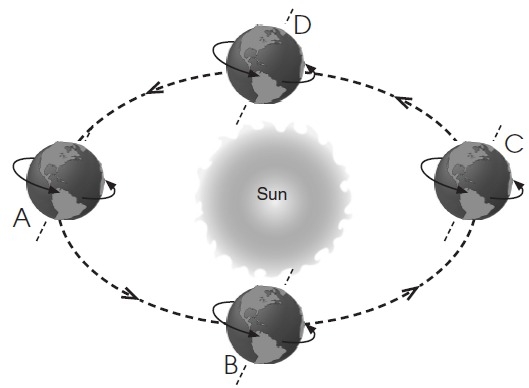
Which season is taking place in the Southern Hemisphere in Position 1?
a)
Winter
b)
Spring
c)
Summer
d)
Fall
8.
Which season is taking place in the Northern Hemisphere in Position 2?
a)
Winter
b)
Spring
c)
Summer
d)
Fall
9.
Which season is taking place in the Northern Hemisphere in Position 3?
a)
Winter
b)
Spring
c)
Summer
d)
Fall
10.
Which season is taking place in the Southern Hemisphere in Position 4?
a)
Winter
b)
Spring
c)
Summer
d)
Fall
11.
What is Earth's annual motion around the sun called?
a)
Rotation
b)
Revolution
12.
One rotation of Earth is equal to
a)
a day.
b)
a year.
13.
How long does Earth take to make a complete rotation?
a)
365 days
b)
24 hours
14.
Objects in the sky appear to move from _______ to _______.
a)
East to West
b)
West to East
c)
North to South
d)
South to North
15.
What would seasons be like if Earth's axis were straight up and down?
a)
Seasons would be the same.
b)
Seasons would be more extreme.
c)
There would be no seasons.
16.
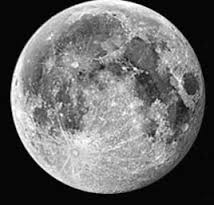
Name the moon phase
a)
waning crescent
b)
waxing crescent
c)
waning gibbous
d)
waxing gibbous
17.
Which moon phase is when you can't see the moon at all?
a)
Waning crescent
b)
Full moon
c)
Waxing gibbous
d)
New moon
18.
About how long does it take the moon to make one complete cycle around the earth?
a)
65 days
b)
8 days
c)
365 days
d)
28 days
19.
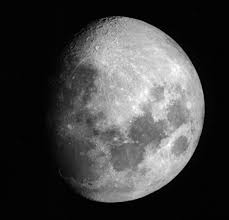
Name the moon phase
a)
First Quarter
b)
Last Quarter
c)
New Moon
d)
Full Moon
20.
Name the moon phase
a)
First Quarter
b)
Last Quarter
c)
New Moon
d)
Full Moon
21.
What is the difference between a gibbous moon and a crescent moon?
a)
The gibbous shows more than half of the bright side of the moon.
b)
The crescent shows more than half of the bright side of the moon.
c)
The gibbous shows less than half of the bright side of the moon. 
d)
There is no difference
22.
When the Earth is between the Moon and the Sun, it is most likeky a:
a)
Full Moon
b)
Half Moon
c)
3rd Quarter Moon
23.
The Moon gets its light from the
a)
Earth
b)
Stars
c)
Sun
24.
Why does the Moon have different phases?
a)
It follows the Sun around the Earth.
b)
It moves around the Earth.
c)
It moves around the Sun.
25.
What is the correct order of the Moon Phases?
a)
1st Quarter, 3rd Quarter, New, Full
b)
New, 1st Quarter, Full, 3rd Quarter
c)
New, Full 1st Quarter, 3rd Quarter
26.
When the Moon is between the Earth and the Sun, it is most likely in what phase?
a)
New
b)
3rd Quarter
c)
Full
27.
Name the moon phase
a)
waning crescent
b)
waxing crescent
c)
waning gibbous
d)
waxing gibbous
28.
What season is letter A?
a)
Winter
b)
Summer
c)
Spring
d)
Fall
29.
Waxing means...
a)
Growing
b)
Dying
c)
Losing light
d)
Moving
30.
Name the phase of the moon for letter a
a)
First Quarter
b)
Last Quarter
c)
Waxing Gibbous
d)
Waning Gibbous
31.
Name the phase of the moon for letter f
a)
Waning Gibbous
b)
Waxing Gibbous
c)
Waning Crescent
d)
Waxing Crescent
32.
What is the darkest inner part of the shadow cone called, where a total eclipse can be viewed.
a)
Total
b)
Umbra
c)
Penumbra
33.
What is the larger outer lighter part of the shadow cone called, where a partial eclipse can be viewed?
a)
Partial
b)
Umbra
c)
Penumbra
34.
A lunar eclipse can occur only during the _________________.
a)
Full moon
b)
New moon
c)
Waxing moon
35.
In order to have an eclipse, the Moon, Sun and Earth have to be?
a)
Below each other
b)
Above each other
c)
In alignment
36.
A solar eclipse can occur only during the _________________.
a)
Full moon
b)
New moon
c)
Quarter moon
37.
Which type of eclipse occurs when the Moon comes directly between Earth and the Sun?
a)
Lunar eclipse
b)
Solar eclipse
38.
Which type of eclipse occurs when the Earth comes directly between the Sun and Moon?
a)
Lunar eclipse
b)
Solar eclipse
39.
During what phase of the moon can a lunar eclipse occur?
a)
3rd Quarter
b)
1st Quarter
c)
New Moon
d)
Full Moon
40.
This type of eclipse occurs when the moon blocks the sunlight from reaching Earth?
a)
Solar eclipse
b)
Lunar eclipse
c)
Total eclipse
41.
Most places on Earth experience about how many high and low tides in 24 hours?
a)
2 high and 2 low tides
b)
4 high and 4 low tides
c)
1 high and 1 low tides
42.
What type of tide occurs during a new and full moon?
a)
Neap tides
b)
Spring tides
c)
Normal tides
43.
What type of tide occurs during the first or third quarter moon?
a)
Neap tides
b)
Spring tides
c)
Normal tides
44.
If the Sun, Earth, and Moon create a 90 degree angle, the Earth would have __________.
a)
Spring tides
b)
Neap tides
c)
Normal tides
45.
If the Sun, Earth, and Moon are in perfect alignment, the Earth would have a _______ tide.
a)
Spring
b)
Neap
c)
Normal
46.
Which is the largest object in our solar system?
a)
Sun
b)
Jupiter
c)
Earth
d)
Pluto
47.
Which planet is closest to the sun?
a)
Uranus
b)
Mercury
c)
Neptune
d)
Earth
48.
Which is the second closest planet to the sun?
a)
Earth
b)
Saturn
c)
Venus
d)
Mercury
49.
Which planet is third from the sun?
a)
Mars
b)
Pluto
c)
Venus
d)
Earth
50.
Which is the fourth planet from the sun?
a)
Mars
b)
Saturn
c)
Earth
d)
Jupiter
51.
Which planet is fifth from the sun?
a)
Saturn
b)
Jupiter
c)
Mars
d)
Earth
52.
Which is the sixth planet from the sun?
a)
Earth
b)
Uranus
c)
Saturn
d)
Neptune
53.
Which planet is seventh from the sun?
a)
Saturn
b)
Earth
c)
Venus
d)
Uranus
54.
Which planet is farthest from the sun?
a)
Neptune
b)
Pluto
c)
Earth
d)
Uranus
55.
A ball of ice and dust with a tail of gas and dust pointing away from the sun.
a)
Asteroid
b)
Comet
c)
Moon
d)
Meteor
56.
A small object that appears as a streak of light as it enters earth's atmosphere.
a)
Asteroid
b)
Comet
c)
Moon
d)
Meteor
57.
A natural satellite of a planet.
a)
Asteroid
b)
Comet
c)
Moon
d)
Meteor
58.

What is a property of terrestrial planets?

a)

rocky, or metal with a hard surface

b)

gaseous

c)

they have water and an oxygen atmosphere

d)

very cold

59.

Which is a terrestrial planet?

a)

Mercury

b)

Uranus

c)

Neptune

d)

Jupiter

60.

What is a property of a gas giant?

a)

very cold with rings

b)

small and rocky

c)

they have an Earth-like atmosphere

d)

close to the sun

61.

Which is a gas giant?

a)

Saturn

b)

Mars

c)

Venus

d)

Earth

62.

Which planets are the inner planets?

a)

terrestrial planets

b)

the coldest planets

c)

the ones that have rings

d)

the gas giants

63.

Which planets are the asteroid belt in between?

a)

Venus & Earth

b)

Earth & Mars

c)

Mars & Jupiter

d)

Jupiter & Saturn

e)

Saturn & Uranus

64.
Galaxies are composed of (best answer)
a)
stars
b)
stars and gas
c)
stars, dust, and gas
d)
stars, dust, and gas held together by gravity
65.
Our galaxy is called the
a)
Earth Nebula
b)
The Hubble Galaxy
c)
The Milky Way
d)
The Snickers
66.

Does a planet or a moon pull the ocean and create tides?

a)

Moons make ocean tides

b)

Planet for days

c)

Moon's pull the water to them so it becomes an ocean tide

d)

The Darth Vader uses the force to pull the ocean

67.
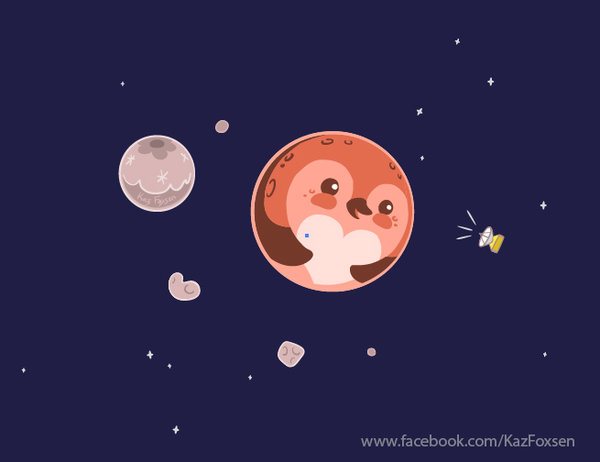
Some scientists believe that this dwarf planet is actually a very large comet caught in a permanent orbit.
a)
Eris
b)
Pluto
c)
Mars
d)
Neptune
68.
What force keeps objects in our solar system orbiting our Sun?
a)
push
b)
gravity
c)
motion
d)
pull