wayground logo

Free Printable Worksheets

NEW

Font size

S
M
L
XL
Worksheets

Chemistry Review

Total questions: 65

Worksheet time: 3hrs 32mins

Name
Class
Date
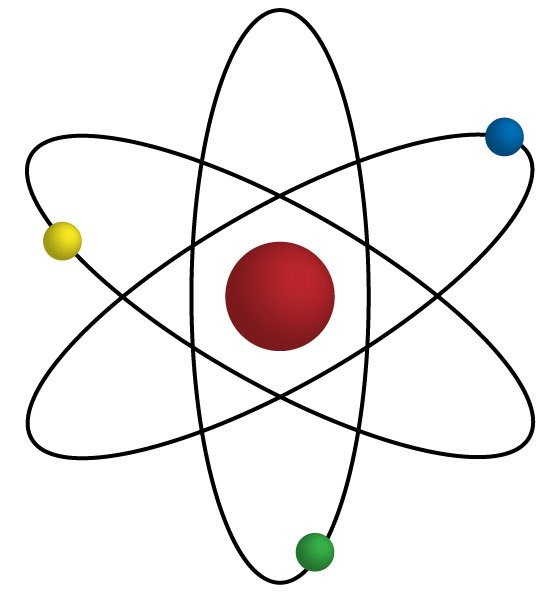
1.

This symbol indicates a _______.

a)

neutron

b)

proton

c)

electron

2.

An electron is located ...

a)

in the nucleus.

b)

outside the nucleus.

3.

What is the atomic mass for this element?

a)

6

b)

12.0107

c)

6.0107

d)

18.0107

4.

The center of an atom is called

a/an __________.

a)

atomic mass

b)

nucleus

c)

proton center

d)

energy shell

5.

How many neutrons are in an Calcium atom?

a)

20

b)

40.08

c)

60

6.

The atomic number of an element is determined by the _________ of ________ in the nucleus.

a)

protons, neutrons

b)

number, electrons

c)

electrons, protons

d)

number, protons

7.

Which image shows a Bohr model for Carbon.

a)
b)
c)
d)
8.

If the protons and electrons do not match, the atom is ____.

a)

neutral

b)

ion

9.

All matter is made of what...

a)

energy

b)

atoms

c)

electrons

d)

compounds

10.

The positive particles of an atom are

a)

electrons

b)

positrons

c)

neutrons

d)

protons

11.

The central region of an atom where its neutrons and protons are is its

a)

nucleus

b)

electron cloud

c)

core

d)

center

12.

Particles in an atom that are neutral and have no charge are

a)

negatrons

b)

electrons

c)

neutrons

d)

protons

13.

What does the 1.00794 stand for?

a)

Hydrogen

b)

atomic number

c)

atomic mass

d)

atomic explosion

14.

In the modern periodic table, elements are arranged by:

a)

atomic mass

b)

atomic number

c)

valence electrons

d)

number of isotopes

15.

The central region of an atom where its neutrons and protons are is its

a)

nucleus

b)

electron cloud

c)

core

d)

center

16.

An atom with atomic number 6 would have how many protons

a)

6

b)

12

c)

3

d)

cannot be determined

17.

What is the number of protons that the element in this image contain?

a)

14

b)

7

c)

15

d)

18

18.
What is the atomic mass of "F"
a)
9
b)
18
c)
17
d)
19
19.

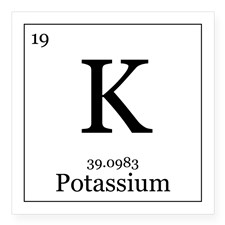
How many neutrons are in the atom "K"?

a)

7

b)

2

c)

39

d)

20

20.
What are the 3 particles that make-up the atom?
a)
protons, neutrons, and isotopes
b)
neutrons, isotopes, and electrons
c)
positives, negatives, and electrons
d)
protons, neutrons, and electrons
21.
Beryllium has how many protons?
a)
4
b)
9.0122
c)
2
d)
13.0122
22.

Valence electrons are located...

a)

inside the nucleus

b)

in outer space

c)

on the outermost orbit of an atom

23.
a)

10

b)

2

c)

8

d)

18

24.
a)

14

b)

4

c)

3

d)

28

25.

This is a correct dot diagram for fluorine (F)

a)

true

b)

false

26.

This is a correct dot diagram for oxygen (O)

a)

true

b)

false

27.
How many electrons can the first energy level hold?
a)
1
b)
2
c)
8
d)
0
28.
What's a valence electron?
a)
electrons in the second energy level
b)
electrons in the outermost energy level
c)
the atomic number
d)
electrons in the first level
29.
How many electrons are in the outer shell of Sodium (Na)?
a)
3
b)
1
c)
2
d)
4
30.
How many electrons should Beryllium have around its Lewis dot model?
a)
1
b)
2
c)
3
d)
4
31.
How many electrons should Flourine have around its Lewis dot model?
a)
5
b)
6
c)
7
d)
8
32.

This could be the dot diagram of

a)

Mg

b)

Cl

c)

C

d)

O

33.

If an atom loses electrons, the charge will be positive.

a)

true

b)

false

34.

A Bromine ion gains 1 electron, which of the following is the correct symbol for a Bromine ion?

a)

Br-1

b)

Br+1

c)

Br+7

d)

Br-7

35.

Which particles change the charge in atoms when ions are formed?

a)

Protons

b)

Electrons

c)

Neutrons

36.

An atom becomes _________ when it gains electrons.

a)

Positive

b)

Negative

c)

Neutral

37.

An atom becomes _______ when it loses electrons.

a)

Positive

b)

Negative

c)

Neutral

38.
What is the charge of an atom that has lost one electron?
a)
-1
b)
-2
c)
+1
d)
+2
39.
What is the charge of an atom that has gained one electron?
a)
-1
b)
-2
c)
+1
d)
+2
40.
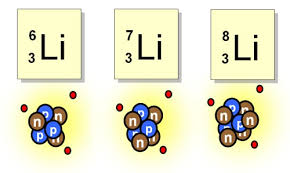
How many neutrons does the isotope of lithium have?
a)
8
b)
3
c)
4
d)
5
41.
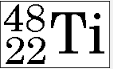
How many protons does this isotope of titanium have?
a)
48
b)
22
c)
26
d)
70
42.
In a correctly written symbol what would be located in the "A" position?
a)
number of neutrons
b)
atomic number
c)
number of electrons 
d)
mass number
43.
What quantities vary between isotopes of an element?
a)
protons, electrons, and atomic mass
b)
protons, electrons, and atomic number
c)
neutrons and electrons
d)
neutrons and atomic mass
44.
which atom has  4 neutrons?
a)
Li-6
b)
Li-7
c)
Li-8
d)
they have the same # of neutrons
45.
How many neutrons in C-14?
a)
6
b)
7
c)
14
d)
8
46.
Isotopes are atoms of the same element with different #’s of __________ & therefore different __________.
a)
n0 ;  atomic #’s
b)
p+ ; atomic #’s
c)
e- ; atomic masses
d)
n0 ; atomic masses
47.
If the number of electrons in an atom changes you make a(n) __________________.
a)
ion
b)
isotope
c)
new element
d)
isomer
48.
How many electrons are in an atom that has an atomic number of 34, an atomic mass of 74 and a charge of -2?
a)
34
b)
36
c)
2
d)
40
49.
What is scientific notation?
a)
A long way to write really short  numbers
b)
A short way to write really long numbers
c)
I don't know...
d)
None of the above
50.
How would you write 564,000,000 in scientific notation?
a)
5.64 x 10⁻⁷
b)
5.64 x 10⁶
c)
5.64 x 10⁸
d)
56.4 x 10⁷
51.
When writing a number in scientific notation, the first number must be greater than 1, but less than 10.
a)
False
b)
True
52.
How do you write
1001
in scientific notation?
a)
1.0001 x 10⁴
b)
1.01 x 10⁵
c)
1.001 x 10³
d)
10.1 x 10³
53.
Express the following in scientific notation:
.000457
a)
457 x 106
b)
457 x 10-6
c)
4.57 x10⁴
d)
4.57 x 10⁻⁴
54.
UNDERSTANDING
If the exponent is a positive number...
a)
you will get a large number
b)
you will get a smaller number
55.
When your exponent is negative, you move your decimal....
a)
to the right
b)
to the left
c)
to both sides
d)
nowhere.... the decimal goes nowhere
56.
Which of the following is correct scientific notation?
a)
20.35 x 10⁴
b)
.2035 x 104
c)
2035 4
d)
2.035 x10⁴
57.

400 grams =____kilograms

a)

0.4kg

b)

4kg

c)

40kg

d)

40,000kg

58.
1 m = ___ cm
a)
1
b)
10
c)
100
d)
1000
59.
1 km = ___ m
a)
1
b)
10
c)
100
d)
1000
60.
71 km = ___ m
a)
71
b)
710
c)
7,100
d)
71,000
61.
___ m = 400 cm
a)
4
b)
40
c)
400
d)
4000
62.
1 kg = ___ g
a)
1
b)
10
c)
100
d)
1000
63.
7 decimeters equals how many millimeters?
a)
.007
b)
70
c)
7
d)
700
64.

Substances that have only one kind of atom are called:

a)

Elements

b)

Electrons

c)

Nitrogen

d)

Nucleus

65.

The abbreviation for an element:

a)

Element Name

b)

Atomic Number

c)

Chemical Symbol

d)

Atomic Symbol