wayground logo

Free Printable Worksheets

NEW

Font size

S
M
L
XL
Worksheets

7th Grade Science Final Exam Review

Total questions: 66

Worksheet time: 59mins

Name
Class
Date
1.
When particles move from areas of high concentration to areas less concentrated, this has taken place.
a)
diffusion
b)
mitosis
c)
endocytosis
d)
photosynthesis
2.
What process occurs when WATER diffuses across a membrane?
a)
endocytosis
b)
mitosis
c)
osmosis
d)
nuclear fission 
3.
Which diagram best shows the end result of diffusion?
a)
F
b)
G
c)
H
d)
J
4.
What is another word that can be used to describe "homeostasis"?
a)

STEADY

b)

EQUAL

c)

COMPLETE

d)

CORRECT

5.

Surrounds the plant cell and maintains the cell shape and structure.

a)

Cell wall

b)

Cell membrane

c)

Nucleus

d)

Ribosome

6.

Makes food for the plant cell.

a)

Ribosome

b)

nucleus

c)

chloroplast

d)

cytoplasm

7.

Houses gel-like fluids that support cell organelles and holds them in place.

a)

cytoplasm

b)

endoplasmic reticulum (e.r.)

c)

golgi bodies

d)

nucleus

8.

The control center for the cell.

a)

ribosome

b)

cytoplasm

c)

nucleus

d)

cell membrane

9.

Storage space for water, wastes, food, and other cellular material

a)

mitochondria

b)

cell membrane

c)

cell wall

d)

vacuoles

10.

The "powerhouse" of the cell; breaks down food to make energy for the cell.

a)

organelles

b)

cell

c)

mitochondria

d)

cytoplasm

11.

This image is of

a)

animal cells.

b)

plant cells.

12.

What gives a plant its' green color?

a)

cellulose

b)

cell wall

c)

photosynthesis

d)

chlorophyll

13.
To stay alive, systems need to work ________.
a)
alone
b)
independently
c)
together
d)
randomly
14.
What kind of information does DNA carry?
a)
genetic
b)
nuclear
c)
cell structure
d)
it doesn't carry any info
15.
When looking at a specimen on your slide, you should always start with the
a)
low objective lens
b)
medium objective lens
c)
high objective lens
d)
super extra high power lens
16.
What is the function of stage clips?
a)
To move the objectives
b)
To keep the slide secure
c)
To adjust the focus
d)
To look through
17.
When would you use the diaphragm?
a)
When you wanted to move the stage
b)
When you wanted to adjust the light
c)
When you wanted to put the microscope away
d)
When you sneeze
18.
The__________ sharpens the image under high magnification.
a)
the diaphragm
b)
fine adjustment knob
c)
coarse adjustment knob
d)
the ocular
19.

The original source of energy for all organisms in a food web is...

a)

plants

b)

sun

c)

producers

d)

decomposers

20.

Producers are ...

a)

plants

b)

animals

c)

also called decomposers

d)

all of these are true

21.

An organism that gets energy from eating other organisms is a ______________

a)

producer

b)

consumer

c)

decomposer

22.

The part of the cell that contains chromosomes and genes is the:

a)

Mitochondria

b)

Nucleus

c)

Chloroplast

d)

Ribosomes

23.

How many pairs of chromosomes do you have?

a)

2

b)

46

c)

23

d)

8

24.
A cell is...
a)
the basic unit of structure and function in living organism
b)
an organism
c)
a basic part of everything that we see
d)
found only in animals, not plants
25.

"C" will inherit...

a)

46 chromosomes from each parent

b)

half of their chromosomes (23) from each parent

c)

Double the amount of chromosomes from each parent

d)

Pairs of chromosomes from each parent

26.
In a molecule of double-stranded DNA, the amount of Adenine present is always equal to the amount of
a)
cytosine
b)
guanine
c)
thymine
d)
uracil
27.

Plants make their own food through a process called what?

a)

photosynthesis

b)

ATP

c)

chlorophyll

d)

structure and support

28.

What is asexual reproduction?

a)

1 parent

b)

2 parents

29.

An animal with a backbone.

a)

Vertebrate

b)

Invertebrate

30.
What two products does a plant make during photosynthesis?
a)
Water and Glucose
b)
Oxygen and Glucose
c)
Oxygen and Water
d)
CO2 and Glucose
31.
__________ is an organism that only eats plants for energy.
a)
Carnivore
b)
Herbivore
c)
Omnivore
d)
Terivore
32.

Which type of organism should replace the X in the food web?

a)

an omnivore

b)

an herbivore

c)

a carnivore

d)

a producer

33.

What is the processes that organisms use to maintain a stable internal environment?

a)

Heredity

b)

Metabolism

c)

Homeostasis

d)

Cell

34.

A change in an organism's environment that causes the organism to respond is a(n):

a)

Producer

b)

Stimulus

c)

Response

d)

Metabolism

35.
When a millipede breaks down dead and decaying material, it is acting as what?
a)
a decomposer
b)
an apex predator
c)
a producer
d)
prey
36.

What is the outer nonliving layer of a plant cell?

a)

Cell Wall

b)

Cell Membrane

37.

Identify the organelle:

a)

Chloroplast

b)

Mitochondria

c)

Vacuole

38.

Green, oval floaty structures that contain chlorophyll and uses energy from the sun to make food fom plants.

a)

Cytoplasm

b)

Mitochondria

c)

Chloroplast

39.

Controls materials moving in and out of the cells. It's the "border control".

a)

Cell wall

b)

Cell membrane

c)

Organelles

40.
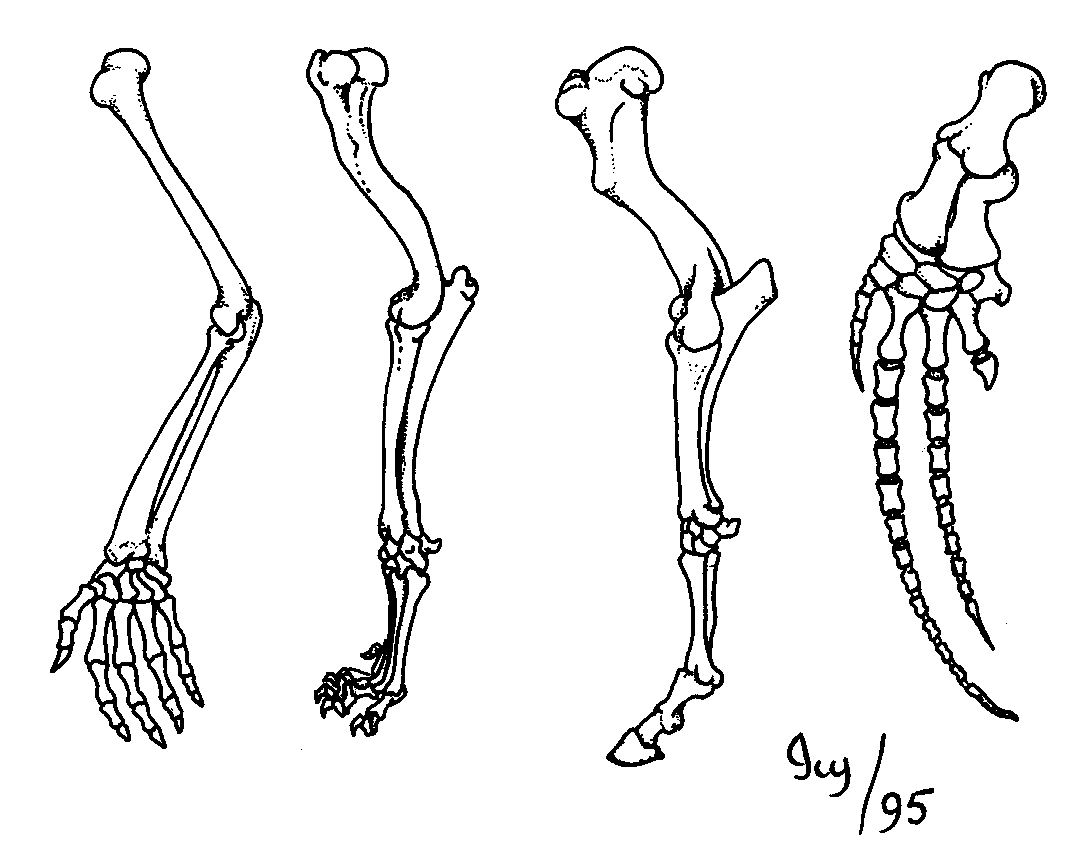
Some organisms that share a common ancestor have features that have different functions, but similar structures.  These are known as
a)
vestigial structures
b)
analogous structures
c)
homologous structures
d)
fossil structures
41.

What causes a new trait/phenotype to appear in a population?

a)

Competition and necessity

b)
Mutation
c)

Speciation

d)
Fitness
42.
In stage one (top row) of these embryos, most of the embryos________
a)
look very similar.
b)
have very different features.
c)
show different stages of development.
d)
have only a tail if they are non-human.
43.

What is an invasive species?

a)

An organism that is new to an environment that has positive effects on the environment.

b)

An organism that is native to an environment that has negative effects on the environment.

c)

An organism that is new to an environment that has negative effects on the environment.

d)

An organism that is native to an environment that has positive effects on the environment.
44.
What does a Secondary Consumer eat?
a)
Tertiary Consumers
b)
Primary Consumers
c)
Producers
d)
Secondary Consumers
45.
An organism that needs to eat other organisms to obtain energy is known as a:
a)
Autotroph
b)
Producer
c)
Consumer
d)
Mutualist
46.
Structures with the same parts have different functions; suggests that organisms share a common ancestry
a)
vestigial structures
b)
homologous structures
c)
adaptive radiation
d)
fossil
47.
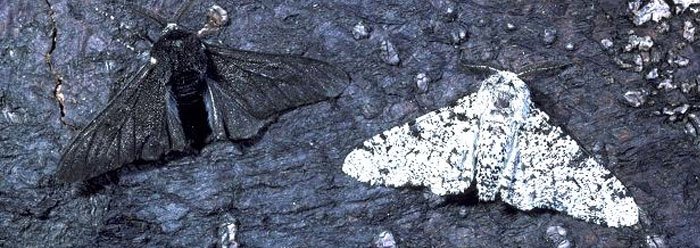
The trees these moths used to live on were white, but have been covered in soot from coal factories. Which moth will be more successful in this environment?
a)
Dark moth
b)
Light moth
c)
Both will be equally successful
d)
Neither will be successful
48.
Where the better adapted organisms survive to pass traits along to offspring.
a)
Evolution
b)
Natural Selection
c)
Extinction
d)
Artifical Selection
49.
Which term correctly describes an individual with a pair of the same alleles for a trait? 
a)
homologous
b)
heterozygous
c)
homozygous
d)
heterologus
50.
 An individual with two different alleles for a specific trait is said to be _____________.
a)
homozygous
b)
heterogenous
c)
homogenous
d)
heterozygous
51.
What do half colored symbols represent?
a)
The individual is a carrier (heterozygous).
b)
The individual expresses the trait.
c)
The individual has both recessive alleles.
d)
The individual has both dominant alleles.
52.

How many males are carriers?

a)

2

b)

3

c)

4

d)

5

53.

How many males are color-blind in this family?

a)

2

b)

3

c)

4

d)

5

54.
T - tall and t = short
In the punnett square below, what belongs in the missing square
a)
tt
b)
Tt
c)
Bb
d)
TT
55.
B = brown fur  b = white fur
In the punnett square, what is the probability for white fur? 
a)
0%
b)
25%
c)
50%
d)
75%
56.
What allele combination should go in the missing box?
a)
AA
b)
Aa
c)
aa
d)
none of these
57.

A relationship between two species where BOTH are HELPED.

a)

parasitism

b)

mutualism

c)

predator-prey

58.

A feeding relationship where one animal kills and the other is killed.

a)

commensalism

b)

mutualism

c)

predator-prey

59.

Which is an example of parasitism?

a)

Shark and seal

b)

Deer and grass

c)

Flea and dog

d)

Seagull and fish

60.
Remora fish are very bony and have a dorsal fin (the fin on the back of fish) that acts like a suction cup. Remora fish use this fin to attach themselves to whales, sharks, or rays and eat the scraps their hosts leave behind. The remora fish gets a meal, while its host gets nothing. Selfish, sure, but neither gets hurt. This is an example of 
a)
mutualism
b)
commensalism
c)
Parasitism:
61.

The process of manipulating an organism's DNA for the benefit of humankind and society is called...

a)

chemical engineering

b)

civil engineering

c)

genetic engineering

d)

electrical engineering

62.
Putting the gene for bioluminescence into a fish is an example of...
a)
Genetic Engineering
b)
Selective Breeding
c)
Artificial Selection
d)
Gene Mutation
63.
What process is shown in the picture?
a)
Gene therapy
b)
Cloning
c)
DNA Fingerprinting
d)
Gene Splicing
64.

GMO stands for

a)

genetically made organism

b)

genetically modified organism

c)

gene manipulated organism

d)

Genetic mutant organism

65.

Genetically Modified Organisms (GMO's) are:

a)

Organisms whose genes / DNA have been edited

b)

Organisms who have received new stem cells to cure a disease

c)

Organisms whose DNA has been copied

d)

Organisms whose entire genome has been sequenced

66.

Choose the statement that best describes gene therapy.

a)

the process of producing crops that are resistant to insects

b)

the process of using DNA taken from a crime scene to identify a suspect

c)

the process of inserting normal genes into human cells to correct genetic disorders

d)

the process of creating an identical organism or gene