wayground logo

Free Printable Worksheets

Font size

S
M
L
XL
Worksheets

Organism Niche and Interactions

Total questions: 70

Worksheet time: 1hrs 5mins

Name
Class
Date
1.

non-living parts of the environment

a)

biotic

b)

abiotic

c)

community

2.

Living part of the environment

a)

abiotic

b)

biotic

c)

limiting factor

3.

Role or position and species has in its environment

a)

habitat

b)

ecological niche

c)

ecosystem

4.

Place where an organism lives

a)

habitat

b)

population

c)

ecology

5.

Any factor in the environment that limits the size of a population

a)

limiting factor

b)

habitat

c)

biotic

6.

All the living and non-living things with which an organism interacts

a)

abotic

b)

liniting factor

c)

environment

7.

An organism’s _______ describes how it interacts with biotic and abiotic factors in the environment.

a)

biome

b)

community

c)

tolerance

d)

niche

8.
Two closely related species of birds live in the same tree.  Species A feeds on ants and termites, while Species B feeds on caterpillars.  The two species coexist successfully because –
a)
each occupies a different niche
b)
they interbreed 
c)
they use different methods of reproduction
d)
birds compete for food
9.
An organisms Niche can be defined as
a)
The role its plays in the ecosystem
b)
It's physical and biological requirements 
c)
the interactions between it and other organisms
d)
All of these
10.

The ecological role an organism performs in their specific environment is considered the organism's...

a)

Habitat

b)

Population

c)

Biome

d)

Niche

11.
The ecological niches of three bird species are shown in the diagram. What is the advantage of each bird species having a different niche?
a)
As more birds feed higher in the tree, available energy increases.
b)
More abiotic resources are available for each bird.
c)
Predators are less likely to feed on birds in a variety of locations.
d)
There is less competition for food.
12.
For plants, ______ can include sunlight, water, and soil nutrients.
For animals, ______can include nesting space, shelter, types of food, and places to feed.
a)
niche
b)
communities
c)
resources
d)
biomes
13.
An organism's _________ is defined as the environment in which it lives.
a)
habitat
b)
niche
c)
social structure
d)
ecosystem
14.
A collection of organisms that belong to different populations but all live in the same area and interact with one another.
a)
population
b)
ecosystem
c)
community
d)
biosphere
15.
A community is defined as
a)
All the different species that live in an ecosystem
b)
All the members of the same species
c)
All the non-living things in an ecosystem
d)
the average number of species in an ecosystem
16.
What is an organisms “job” or role within an ecosystem?
a)
Trophic Level
b)
Niche
c)
Herbivore
d)
Prey
17.
A symbiotic relationship: the Spanish moss hangs high in the trees to collect the sunlight, the tree is uneffected.
a)
mutualism
b)
commensalism
c)
parasitism
d)
preditation
18.
The most common type of population distribution
a)
Random
b)
Uniform
c)
Clumped
d)
Density
19.
When the organisms are arranged in no particular pattern.
a)
clumped
b)
uniform
c)
random
d)
standard
20.
A family of bears would make up a
a)
Species
b)
population
c)
community
d)
biosphere
21.
Bees and flowers
a)
commensalism
b)
parasitism
c)
mutualism
d)
predation
22.
A rabbit and hawk, the hawk is the?
a)
Prey
b)
Predator
c)
Parasite
d)
Host
23.
The swamp is where the alligator lives, the swamp is a
a)
reptile
b)
biotic potential
c)
community
d)
habitat
24.
The living factors of an ecosystem.
a)
biotic
b)
abiotic
c)
community
d)
habitat
25.
The struggle between two organisms to survive in a habitat with few resources is called
a)
limiting factors
b)
predator-prey
c)
habitat
d)
competition
26.
The largest population that an environment can support.
a)
maximum capacity
b)
carrying capacity
c)
optimal capacity
d)
adaptation capacity
27.
The milk snake looks like a poisonous coral snake, this is
a)
an adaptation
b)
camouflage
c)
a niche
d)
mutualism
28.
Some bacteria live and get their nutrients inside your intestines, while creating vitamin K for you.
a)
predator-prey
b)
commensalism
c)
predation
d)
mutualism
29.
Organisms that must eat food are called?
a)
consumers
b)
producers
c)
animals
d)
plants
30.
Organisms that make their own food are called?
a)
consumer
b)
producer
c)
animals
d)
scavengers
31.
When more than one organism uses a resource at the same time
a)
Competition
b)
Resource Use
c)
Symbiosis
d)
Predation
32.
The act of one organism consuming another for food is called what?
a)
Predation
b)
Predator
c)
Prey
d)
Prada
33.
An organism  that pursues another organism with the intent to eat it is called what?
a)
Predator
b)
Prey
34.
An organism that is pursued by another that intends to eat it is called what?
a)
Predator
b)
Prey
35.
What type of symbiotic relationship exists between two or more where both benefit?
a)
Mutualism
b)
Commensalism
c)
Parasitism
d)
Cannibalism
36.
What type of symbiotic relationship exists when one organism benefits and the other neither benefits nor is harmed?
a)
Mutualism
b)
Commensalism
c)
Parasitism
d)
Barbarism
37.
What type of symbiotic relationship occurs when one organism benefits at the expense of another?
a)
Mutualism
b)
Commensalism
c)
Parasitism
d)
Marxism
38.
What type of symbiotic relationship is this?
a)
Mutualism
b)
Commensalism
c)
Parasitism
d)
Cannibalism
39.
What type of symbiotic relationship is this?
a)
Mutualism
b)
Commensalism
c)
Parasitism
d)
Symbolism
40.
What type of symbiotic relationship is this?
a)
Mutualism
b)
Commensalism
c)
Parasitism
d)
Cannibalism
41.
A symbiotic relationship: the Spanish moss hangs high in the trees to collect the sunlight, the tree is uneffected.
a)
mutualism
b)
commensalism
c)
parasitism
d)
preditation
42.
A tick living on a dog and taking its blood is an example of 
a)
commensalism
b)
predation
c)
mutualism
d)
parasitism
43.
Male giraffes fighting for a female giraffe is an example of 
a)
competition
b)
predation
c)
symbiosis
d)
craziness!
44.
Which of these is not a type of interaction among organisms?
a)
Competition
b)
Predation
c)
Symbiosis
d)
Sharing
45.
One animal killing another for food is called:
a)
parasitism
b)
predation
c)
commensalism
d)
mutualism
46.
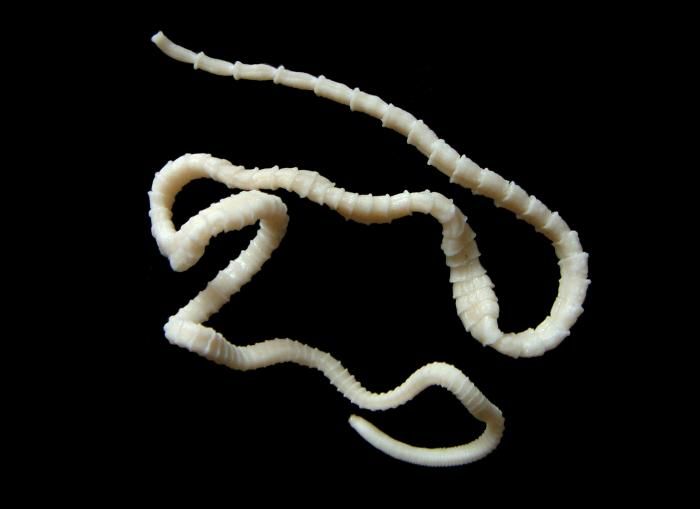
A tapeworm and a cat have this type of relationship.
a)
mutualism
b)
parasitism
c)
commensalism
d)
competition
47.
Barnacles create home sites by attaching themselves to whales. This neither harms nor benefits the whales.  What kind of relationship is this?
a)
Mutualism 
b)
Parasitism 
c)
Commensalism 
48.
Yucca flowers are pollinated by yucca moths. The moths lay their eggs  in the flowers where  the larvae hatch and eat some of the developing seeds. Both species benefit.  
a)
Mutualism 
b)
Parasitism 
c)
Commensalism 
d)
Predator/Prey
49.

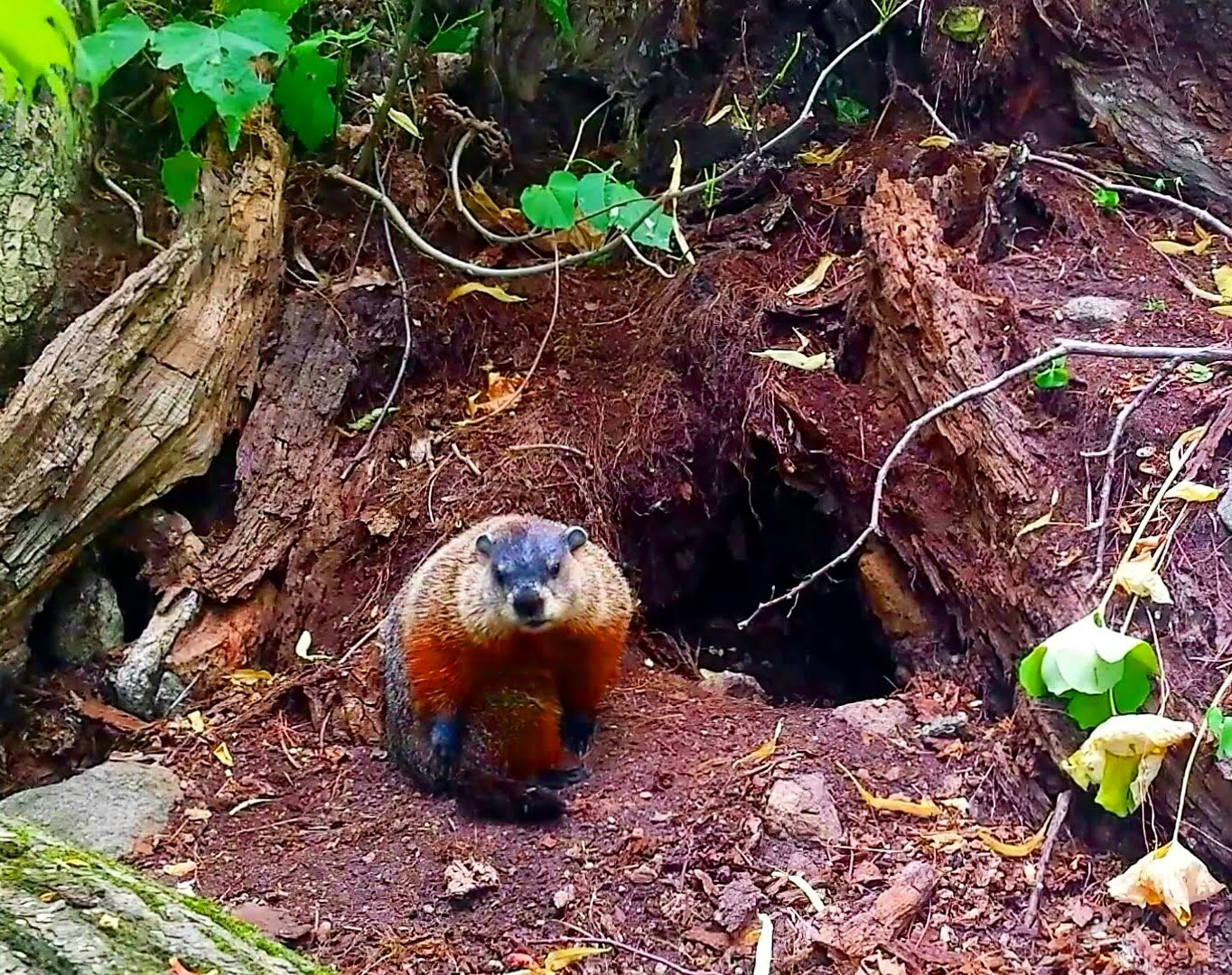
How much wood could a woodchuck chuck if a woodchuck could chuck wood?

a)

700 pounds on a good day

b)

50 pounds

c)

Woodchucks don't chuck wood

d)

What's a woodchuck?

50.

Lipstick contains fish scales.

a)

True

b)

False

51.

A cockroach can live several weeks with it's head cut off.

a)

False

b)

True

52.

Most dust particles in your house are from

a)

not cleaning your house

b)

dead skin

c)

the outside

d)

vacuuming

53.

What is the most popular fast food restaurant in America?

a)

White Castle

b)

McDonalds

c)

Jack in the Box

d)

Wendys

54.
Which of the following symbiotic relationships is considered parasitic?
a)
Ticks feeding on a dog
b)
Bees transporting pollen from flowers
c)
Pilotfish swimming under sharks
d)
Birds eating the insects fromo the back of hippo
55.
Maria and her classmates are observing animals at the pond. They notice that wood storks and ibisies both feed on fish. Which of these describes the relationship between these two birds.
a)
Parasitism
b)
Competition
c)
Predator and prey
d)
Producer and consumer
56.
Which of these describes a mutually beneficial relationship between two organisms?
a)
A dog with worms in its intestine
b)
A turtle and a snail that both eat grass live in a river
c)
A honeybee pollinating a plant and receiving nectar for food
d)
A small fish attached to a shark, eating tiny pieces of the shark's food as it floats
57.
Which pair of organisms listed below are competitors for the same natural resources?
a)
Ticks and dogs
b)
Lions and leopards
c)
Honeybees and flowers
d)
Salmon and brown bears
58.
After walking through a field, you find a tick attached to your leg. What is the tick's relationship to you?
a)
Predator
b)
Decomposer
c)
Producer
d)
Prey
59.
Which of the examples below can BEST be described as mutualism between animals?
a)
A tapeworm lives in the intestine of a bird and consumes the food that the bird has eaten
b)
Mountain lions and wolves fight each other for the same deer
c)
A bird eats parasites off a rhinoceros while the rhinoceros provides protection to the bird
d)
Rats live in the garbage dump of a town and rarely interact with people
60.
Occurs when 2 or more organism use the same resource
a)
Competition
b)
Mutualism
c)
Commensalism
d)
Parasitism
61.
Relationship where both organism benefit
a)
Competition
b)
Commensalism
c)
Mutualism
d)
Parasitism
62.
Relationship where one organism benefits and the other is neither harmed nor helped
a)
Commensalism
b)
Parasitism
c)
Mutualism
d)
Competition
63.
An organism where one organism benefits and another is harmed
a)
Commensalism
b)
Parasitism
c)
Mutualism
d)
Competition
64.
Cattle egrets forage (feed) in fields among cattle. The egret gets easy access to flying insects stirred up by the cattle, and the cattle don't care if they are there or not.
a)
mutualism
b)
commensalism
c)
competition
d)
parasitism
65.
A tapeworm and a cat have this type of relationship.
a)
mutualism
b)
parasitism
c)
commensalism
d)
competition
66.
What type of symbiosis?  Skunks often live in burrows that have been dug and abandoned by woodchucks.  
a)
commensalism
b)
mutualism
c)
parasitism
d)
predation
67.
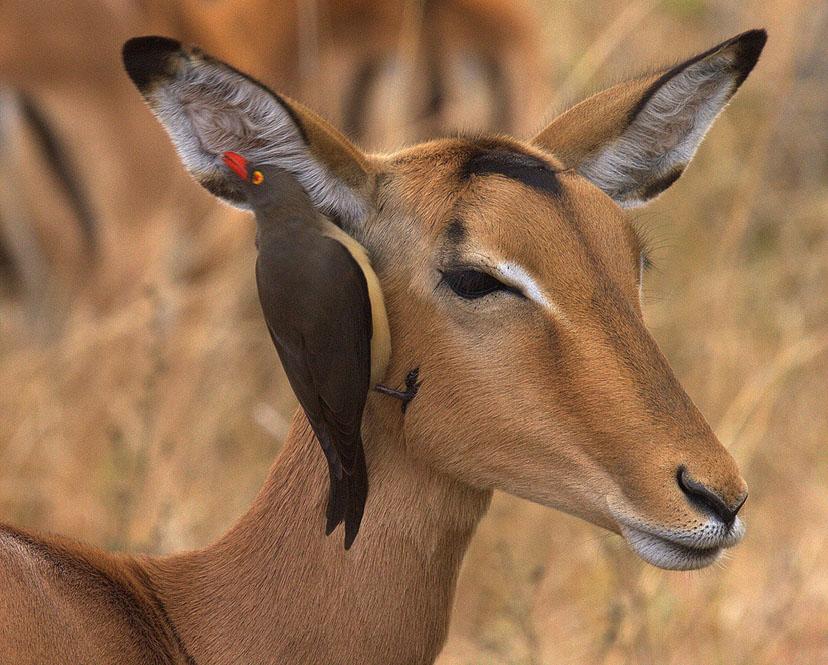
Red-billed oxpeckers are birds that often feed on parasites that infest impala.  This is an example of _______.
a)
commensalism
b)
mutualism
c)
neutralism
d)
competition
68.
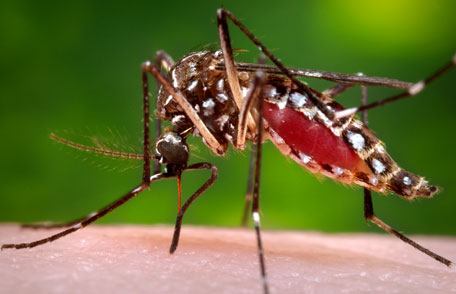
When a mosquito bites you, you are the __________ and the mosquito is the  ____________.
a)
host, hostess
b)
parasite, host
c)
host, parasite
d)
prey, predator
69.
How many types of symbiosis are there?
a)
5
b)
7
c)
3
d)
If you pick this you're silly
1000
70.

Do you like this quiz?

a)

What?

b)

Yes!

c)

No! I love tests!

d)

Nah...