
 Worksheets
Evolution Review
Total questions: 75
Worksheet time: 1hrs 17mins
Name
Class
Date
1.
Who is the father of evolution?
a)
Darwin
b)
Mendel
c)
Newton
d)
Einstein
2.
What is a change in an organism that allows for it to survive in its environment?
a)
homologous
b)
vestigial
c)
variation
d)
adaptation
3.
When all of the organisms of a species have died it is called
a)
evolution
b)
extinction
c)
adaptation
d)
natural selection
4.
What is an organism that has similar characteristics and can reproduce?
a)
species
b)
organism
c)
embryology
d)
vestigial
5.

Which layer is the oldest?
a)
1
b)
2
c)
3
d)
4
6.
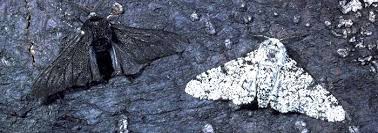
Predict which moth would increase in population
a)
light
b)
dark
7.
When the DNA of an organism is altered it is referred to as…
a)
Mutation
b)
Gene Flow
c)
Genetic Drift
d)
Sexual Selection
8.
Which of the following is NOT an example of natural selection?
a)
People selectively breeding hamsters.
b)
Insect populations developing resistance to certain pesticides.
c)
Bacteria becoming resistant to antibiotics.
d)
Male birds of certain species developing colorful feathers to attract female mates.
9.

Which species’ DNA is most similar to the DNA of the toothed whale?
a)
Hippopotamus
b)
Baleen Whale
c)
Grazing Mammals
d)
Camels
10.
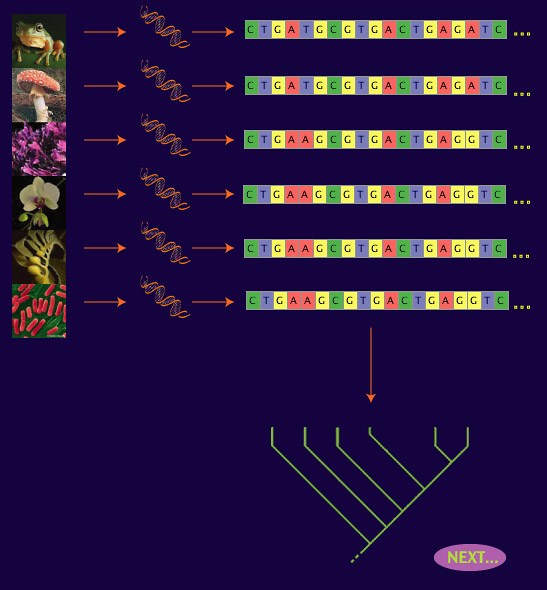
Two organisms that are closely related would have
a)
very similar DNA sequence
b)
exactly the same DNA sequences
c)
no proteins in common
d)
completely different DNA sequence
11.
A remnant or trace of an organism from the past is called a _______.
a)
Ancestor
b)
Skeleton
c)
Fossil
d)
Imprints
12.
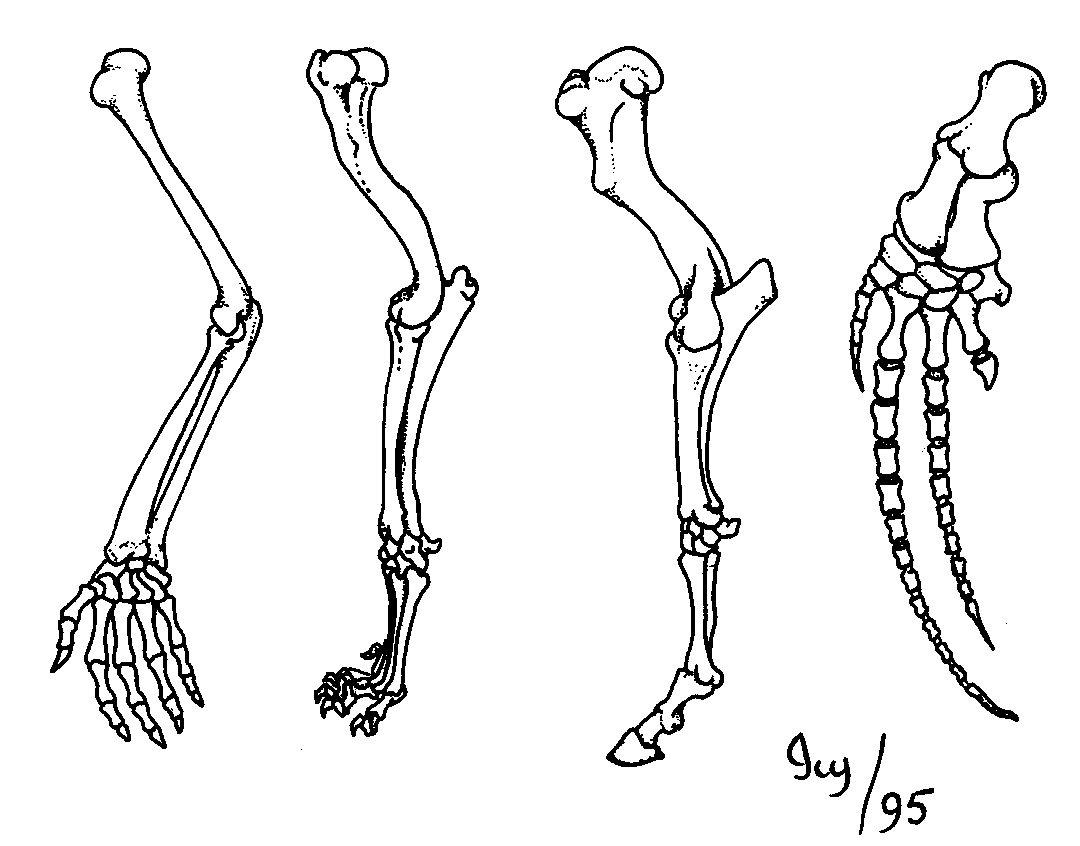
Structures with the same parts have different functions; suggests that organisms share a common ancestry
a)
vestigial structures
b)
homologous structures
c)
adaptive radiation
d)
fossil
13.

The diagram shows fossils in different rock layers. Which of these statements about the age of these fossils is most likely correct?
a)
Fossil A and C are the same age
b)
Fossil B is older than fossil C
c)
Fossils A is older than fossil B
d)
Fossil D is older than fossil C
14.
Why are advantageous traits more likely to be passed onto offspring?
a)
Because they are more likely to survive and reproduce.
b)
Because they come from dominant alleles.
c)
Because they come from recessive alleles.
d)
Because the trait is an acquired phenotype.
15.
The ability of an organism to survive and reproduce in its specific environment
a)
diversity.
b)
evolution
c)
adaptation
d)
fitness
16.

Which of the following is a term for a group of similar organisms that can reproduce fertile offspring?
a)
individual
b)
population
c)
species
d)
fossil
17.
What is suggested by the anatomical similarity of different species of vertebrates?
a)
no evolutionary relationships between the groups
b)
recent common ancestry
c)
similar environments in the past
d)
evolution from a distant common ancestor
18.

If an organism has a vestigial structure, that structure likely once had a function in a(n)
a)
close relative
b)
early ancestor
c)
unrelated organism
d)
embryological stage
19.
What is speciation?
a)
combining of tow species to form one with different traits
b)
isolation that affects mating behaviors
c)
timing of mating that prevents normal sexual selection
d)
divergence of two or more species from an existing one
20.
asexual reproduction produces offspring with
a)
half of a single parent's genes
b)
the same genes as the parent
c)
a mix of genes from two parents
d)
lots of genetic variation
21.

The remnant of an organ that had a function in an early ancestor is known as a(n)
a)
vestigial structure
b)
analogous structure
c)
homologous structure
d)
fossil structure
22.

All the individuals of a species that live in a particular area are called a
a)
group
b)
population
c)
variation
d)
fossil
23.

Vertebrate embryos pass through similar stages of development is evidence for
a)
use and disuse
b)
homologous structures
c)
common ancestry
d)
acquired characteristics
24.

What is the process of which humans breed organisms for certain traits?
a)
artificial selection
b)
descent without modification
c)
inheritance of acquired characteristics
d)
natural selection
25.
What characteristic did Darwin observe about the finches on the Galapagos Islands?
a)
Their feathers
b)
Genotypes
c)
Their beaks
d)
Their body sizes
26.
Which term refers to the process by which individuals that are better suited to the environment survive and reproduce therefore passing down their genes to their offspring?
a)
Evolution
b)
Variation
c)
Adaptation
d)
Natural Selection
27.
Darwin referred to this as survival of the fittest. Over time, it results in changes in the inherited characteristics of a population because organisms with adaptations that make them fit for their environment will survive and reproduce better than those without favorable traits.
a)
Natural Selection
b)
Genetic Variation
c)
Survival of the Fittest
28.
Genetic differences between organisms of the same species
a)
Variation
b)
Adaptation
c)
Behavior
d)
Environment
29.
A well-tested concept that explains a wide range of observations is called a(an):
a)
hypothesis
b)
experiment
c)
cause and effect
d)
scientific theory
30.
A group of similar organisms that can mate with each other and produce fertile offspring is called a species.
a)
True
b)
False
31.
The site of photosynthesis
a)
ribosome
b)
mitochondria
c)
chloroplast
d)
nucleus
32.
This organelle takes food and turns it into ENERGY for plant and animal cells.
a)
Chloroplast
b)
Mitochondria
c)
Lysosome
d)
Ribosome
33.
Which organelle is only found in a plant cell?
a)
nucleus
b)
chloroplast
c)
mitochondria
d)
cell membrane
34.
Which of the following is directly involved in the transportation of materials inside/within the cell?
a)
Endoplasmic Reticulum
b)
Vacuole
c)
Lysosome
d)
Mitochondria
35.
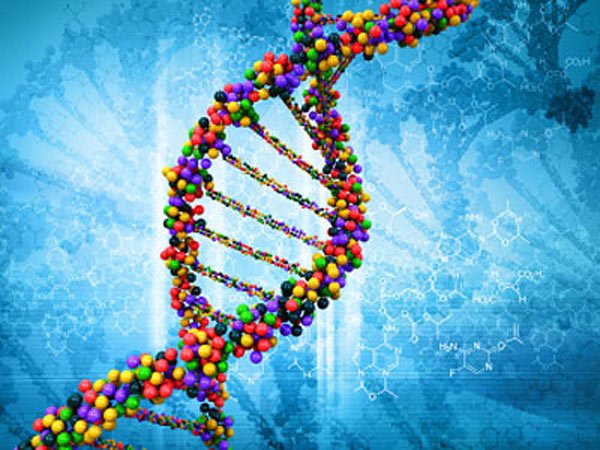
What is the name of the genetic material that is inside the nucleus?
a)
ER
b)
ATP
c)
YOLO
d)
DNA
36.
What is found in both plant and animal cells but is much larger in plant cells?
a)
Nucleus
b)
Mitochondria
c)
Chloroplast
d)
Vacuole
37.
Where are proteins made?
a)
Golgi body
b)
Mitoichondria
c)
Chromosomes
d)
Ribosomes
38.
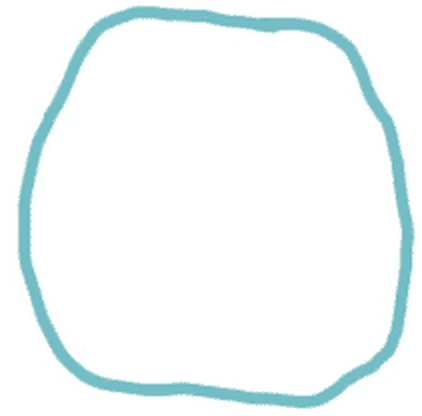
I am the outer most layer of an animal cell. What am I?
a)
cell wall
b)
nucleus
c)
cell membrane
d)
cell skin
39.
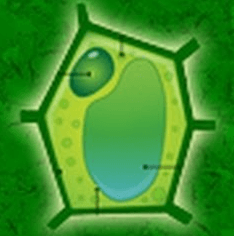
A rigid layer that lies outside the cell's membrane is...
a)
Cytoskeleton
b)
Cilia
c)
Cell Wall
d)
Flagella
40.
What organelle is called the "powerhouse" of a cell?
a)
Endoplasmic Reticulum
b)
Nucleus
c)
Mitochondria
d)
Nucleolus
41.
What is the gel-like substance inside of cells called?
a)
photoplasm
b)
photosynthesis
c)
cytoskeleton
d)
cytoplasm
42.
The individual strands on duplicated chromosomes are called_____________
a)
Centromeres
b)
daughters
c)
Chromatids
d)
Karyotypes
43.
A human cell has 46 chromosomes before mitotic division. How many chromosomes will the daughter cells after mitosis.
a)
12
b)
23
c)
46
d)
92
44.
Cells of organism must replicate for ?
a)
growth
b)
repair of damaged cells
c)
replacement of dying cells.
d)
All of the above
45.
Uncontrollable cell growth is known as _____
a)
obesity
b)
cancer
c)
diabetes
d)
hepatitis
46.
A pair of chromosomes that consists of XX is a __________________.
a)
Male
b)
Female
47.

What would happen to the plant cell without the chloroplasts?
a)
There wouldn't be an organelle that performs photosynthesis
b)
There wouldn't be an organelle that serves as the resevoir for water and waste
c)
There wouldn't be an organelle that regulates what comes in and out of the cell
d)
They wouldn't be an organelle that makes necesary proteins
48.
Most plants appear green because chlorophyll
a)
absorbs green light.
b)
absorbs violet light.
c)
reflects green light.
d)
does not absorb violet light.
49.
The reactants of photosynthesis are
a)
sugar and water.
b)
sugar and oxygen.
c)
carbon dioxide and water.
d)
carbon dioxide and oxygen.
50.

Autotroph or heterotroph?
a)
Autotroph
b)
Heterotroph
51.

Autotroph or heterotroph?
a)
Autotroph
b)
Heterotroph
52.
Which of the following is the correct equation for PHOTOSYNTHESIS?
a)
6CO2 + 6H2O --> 6O2 + C6H12O6
b)
6CO2 + C6H12O6 + 6H2O --> O2
c)
6O2 + 6H2O --> 6CO2 + C6H12O6
d)
C6H12O6 + 6O2 ---> 6H2O + 6CO2
53.
Osmosis is the diffusion of _____ across a selectively permeable membrane.
a)
food
b)
air
c)
water
d)
oxygen
54.
An animal cell placed in a hypertonic (salty) solution will
a)
Stay the same
b)
Shrink- get smaller
c)
Swell- get bigger
55.
In a solution, salt is considered the _______.
a)
solvent
b)
solute
c)
solution
56.
When both inside and outside of a cell have the same amount of water it is said that the cell has reached a state of ___________.
a)
osmosis
b)
equilibrium
c)
diffusion
d)
hypertonic
57.
If the volume of a cell increases when it is placed in a solution, that solution is said to be __________ to the cell
a)
hypertonic
b)
subatomic
c)
isotonic
d)
hypotonic
58.

The cell below is in a _________ solution.
a)
Hypotonic
b)
Hypertonic
c)
Isotonic
59.
DNA molecule segment is : TTACGCAAG
The mutated DNA segment is TTCGCAAG. This is an example of ___ mutation.
The mutated DNA segment is TTCGCAAG. This is an example of ___ mutation.
a)
Substitution
b)
Deletion
c)
Insertion
d)
Inversion
60.
What are the building blocks of proteins call?
a)
DNA
b)
RNA
c)
Ribosomes
d)
Amino Acids
61.
Guanine bonds with ______________.
a)
Adenine
b)
Guanine
c)
Cytosine
d)
Thymine
62.

In a molecule of double-stranded DNA, the amount of Adenine present is always equal to the amount of
a)
cytosine
b)
guanine
c)
thymine
d)
uracil
63.
What mutation has occurred here?
T-G-A-C-C-A
T-G-A-G-C-A
T-G-A-C-C-A
T-G-A-G-C-A
a)
Substitution
b)
Deletion
c)
Insertion
d)
Frameshift
64.

What type of chromosomal mutation is this?
a)
Inversion
b)
Translocation
c)
Deletion
d)
Duplication
65.
Why are insertion and deletion mutations so harmful?
a)
They change all of the codons from the mutation on down the line, which changes the amino acid sequence
b)
They insert things that an organism doesn't need.
c)
They often delete things that organisms need.
d)
Insertion and deletions are not any more harmful than substitution mutations.
66.
Why is the order of amino acids so important?
a)
The order of amino acids dictates what shape the protein will fold into.
b)
It is not important. The protein folding chamber will force the protein to fold into the correct shape.
67.
A type of substitution in which no amino acids change is called
a)
Missense
b)
Nonsense
c)
Silent
d)
Deletion
68.
If a cell has an abnormal number of chromosomes, usually from meiosis, what is this considered? Choose the best answer.
a)
Chromosome mutation
b)
Nondisjunction
c)
Sex-linked mutation
d)
Inversion
69.
A possible explanation to a problem that has not yet been tested.
a)
data
b)
theory
c)
hypothesis
d)
fact
70.
Which is NOT a step in the scientific method?
a)
Make observation
b)
Form a theory
c)
Collect data
d)
Form a hypothesis
71.
In a controlled experiment, how many variables can be worked with at a time?
a)
one
b)
none
c)
two or more
d)
how ever many makes sense.
72.
The factors in an experiment that can be changed.
a)
variables
b)
quantitative data
c)
hypothesis
d)
steps
73.
The study of life.
a)
biology
b)
psychology
c)
metric system
d)
scientific method
74.
An experiment is performed on plants to see how different liquids affect plant growth. Each plant in the experiment is given a different liquid; water, apple juice, or milk. Each plant has the same amount of soil, sunlight, and listens to the same music. In this investigation, the independent variable is ...
a)
The type of plant
b)
The amount of sunlight
c)
The type of music
d)
The type of liquid
75.
What is a dependent variable?
a)
the variable that causes the change
b)
the variable that remains the same
c)
the variable that we expect to be changed
d)
the manipulated variable
100 %

