
 Worksheets
UNIT 9: Blood Review
Total questions: 67
Worksheet time: 17hrs 45mins
The study of blood applied to a crime is called:
Forensic Odontology
Forensic Pathology
Forensic Serology
Forensic Toxicology
What percentage of blood is made of cells?
10%
25%
45%
75%
Red blood cells are also called:
Leukocytes
Erythrocytes
Thrombocytes
Lymphocytes
Two types of white blood cells include:
Lymphocytes and neutrophils
Leukocytes and Erythrocytes
Thrombocytes and Leukocytes
Thrombocytes and Lymphocytes
Small fragments that assist in blood clotting and repair damaged blood vessels are called:
RBCs
WBCs
Lymphocytes
Platelets or Thrombocytes
arteries
carry blood into the heart
carry blood away from the heart
remove wastes
Are very elastic
veins
carry blood into the heart
carry blood away from the heart
remove wastes
are not flexible and if they rupture, they can cause you to bleed out.
Blood typing is done in the forensic's field over DNA profiling from Blood becuase
Blood typing is inexpensive compared to DNA profiling
Blood typing is more complete and is used to individualize blood as evidence
Blood typing takes a longer amount of time and therefore is more reliable
Blood typing requires the presence of a nucleus on cells
If a person has A antigen proteins, they will have what type what blood type?
A
B
O
If a person has both A and B antigen proteins, they will have which blood type?
A
B
AB
0
If a person has only B antigen proteins, the person will more likely have ____ blood type:
A
B
AB
O
Scientist have only been able to discover the ABO proteins on blood cells.
true
false
The clumping of blood cells is called:
Agglutination
grouping
clumping
chunking
The blood stain pattern that helps to reconstruct the events surrounding shootings, stabbings, beatings, etc. is called:
transfer contact
angle of impact
point of origin
blood spatter
The first person to research and analyze blood spatters was:
Balthazard
Locard
Orfila
Lattes
Antibodies are secreted by:
erythrocytes
leukocytes
arteries
veins
blood spatters can help identify the following except:
direction blood traveled
angle of impact
point of origin
specific weapon used
blood sticks together because
cohesion
its round
the blood cells are round
its magnetic
What is the common area in a 3D space to which the trajectories of several drops can be retraced to called?
transfer contact
angle of impact
point of origin
low velocity impact
Spikes are small elongations that protrude out of a blood drop
true
false
If blood is not visible, what can be used to make is visible
If blood is not visible, its impossible to make it visible again
Only fresh blood can be visible
Precipitin
Luminol
Small, secondary droplets around the main blood spatter drops are called:
spikes
satelites
splats
gushes
blood stain pattern created by gravity alone is:
passive drop
flow pattern
low velocity impact spatter
drip pattern
Of the four main human blood types using the ABO system, the largest percentage of the U.S. population is made up of:
Type A
Type AB
Type B
Type O
The presence or absence of particular proteins, found embedded within a cell or plasma membranes of red blood cells, determines a person’s:
DNA
RH factor
Blood Type
Surface Proteins
Blood typing is less expensive and quicker for analyzing blood evidence than DNA profiling. Since many different people share the same type, this blood evidence is considered to be:
Class evidence
Individual evidence
Trace evidence
Biological evidence


What blood spatter pattern is seen in the photo?
Void
Smear
Walking Drip
Flow


The lines in the picture are illustrate the points/lines of ___.
convergence
agreement
tangents
credit

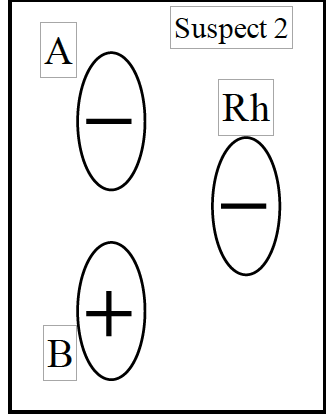

IF mom is heterozygous for Type A blood and Dad is Heterozygous for Type B blood which of the following shows the correct blood type probability for their children?
50% A, 50% B
50% AB, 50% A
25% A, 25% AB, 25% B, 25% O
50% A, 25% AB, 25% B
Blood Typing works because it identifies the presence of particular proteins embedded in the cell
true
false
A person can have more proteins than the ones given by the ABO blood type and the Rh factor. This makes some blood types more unique
true
false
There is a national database with everybodys blood type and its called ELISA
true
false
All mammals, except for camels and llamas have circular red blood cells. Birds and other animals have blood cells that have a different shape.
true
false
A blood spatter can help you identify the type of weapon used at the crime, such as differentiating between a blunt object versus a firearm.
true
false
What gives you your positive or negative on your blood type:
the Rh factor
Monkeys
Depends on your personality
The presence of pus in a wound will indicate the presence of:
monocytes
lymphocytes
neutrophils
erythrocytes
The most common blood type is
A
AB
O
B
The test that uses antibodies that react with human blood to tell is mammal blood is from humans is called
FACES
CODIS
ELISA
AFIS
Blood patterns created when an object moves, removes or alters it original appearance is
wipe
swipe
walking drip
cast- off
which is the test used to test for the presence of blood and it will turn pink
cyanoacrylate vapor
iodine fuming
luminol
Kastle Meyer
Which vessels will create a bloodier mess and they are dangerous because someone can die
arteries
veins
capillaries
Blood stain patterns created or formed by the force of gravity alone are:
low velocity impact spatters
passive drops
high velocity impact spatters
flow patters
Who discovered the fourth AB blood type
Locard
Balthazard
Decastello
Landsteiner
When collecting blood as evidence, one should USE
paper
plastic
What type of spatters are created from a firearm?
medium velocity
high velocity
void
cast-off
Which test can detect the presence of blood, but it must used with a UV light?
Kastle Meyer test
Cyanoacrylate vapor
Iodine fuming
Luminol
Remember to know how to calculate angles of impact & finding point of origin!
Yes, I will make sure to know what to do... I want to ace this test!
Nah.. I'm fine taking the L.

