wayground logo

Free Printable Worksheets

Font size

S
M
L
XL
Worksheets

Grade 9 Chemistry Review

Total questions: 93

Worksheet time: 1hrs 12mins

Name
Class
Date
1.
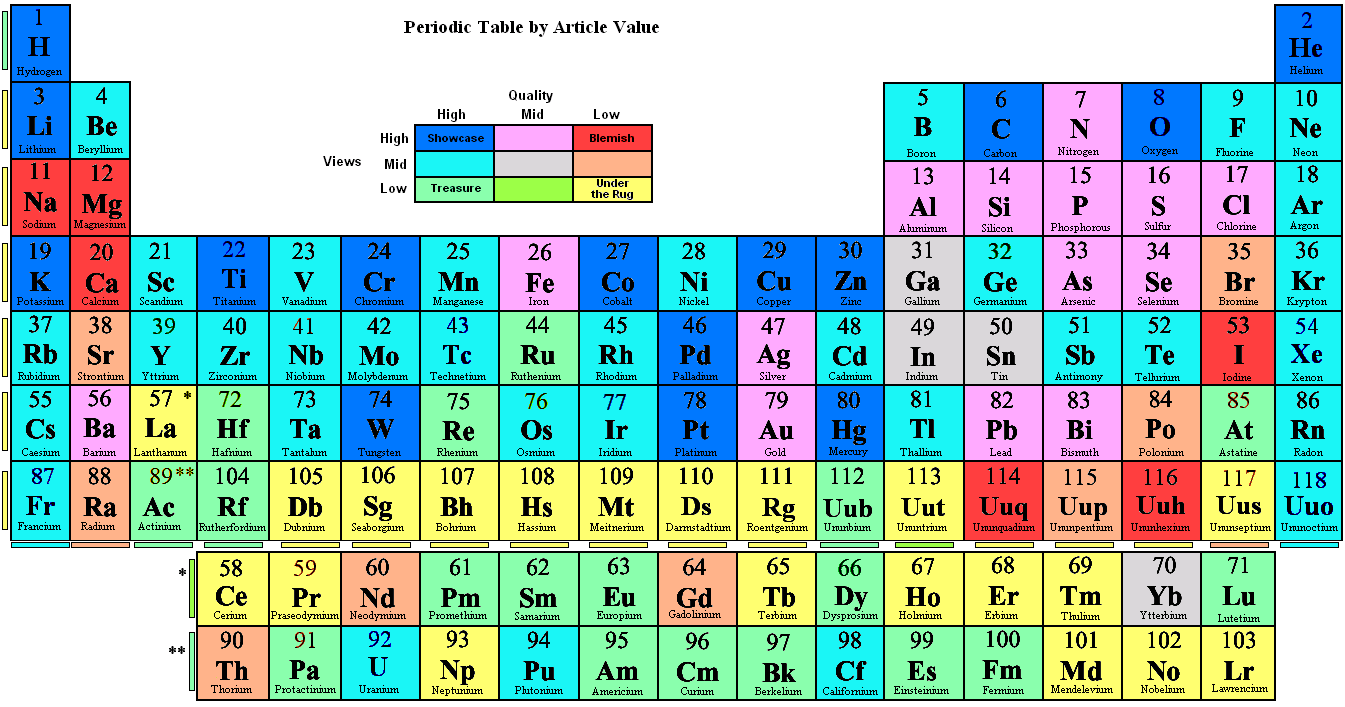
A ___________ is an arrangement of elements in columns
a)
columns
b)
rows
c)
periodic table
d)
electron shell
2.
Each column in the periodic table is called a 
a)
period
b)
group
c)
cluster
d)
unit
3.
The atomic number tells you what?
a)
number of electrons
b)
number of protons
c)
number of neutrons
d)
both electrons and protons in an atom.
4.
Which group of the periodic table is composed of inert (not reactive)  gases?
a)
alkali metals
b)
alkaline earth metals
c)
halogens
d)
noble gases
5.
Elements which are shiny, conduct electricity and heat are called
a)
metal
b)
nonmetal
c)
metalloid
d)
nonexistent
6.
The atoms along the staircase are called 
a)
metals
b)
nonmetals
c)
metalloids
d)
noble gases
7.
Which is a halogen?
a)
Helium
b)
Chlorine
c)
Oxygen
d)
Neptune
8.
Which is an alkali metal?
a)
Magnesium
b)
Iron
c)
Sodium
d)
Europium
9.
A horizontal row of elements in the periodic table.
a)
column
b)
group
c)
period
10.
A vertical column in the periodic table.  Elements share similar properties.
a)
row
b)
group
c)
period
11.
Elements in a ..................have similar chemical properties.  
a)
period
b)
group
c)
row
12.
The simplest substance is..?
a)
Carbon
b)
An element
c)
Water
d)
A simple compound 
13.
A proton is....
a)
A negatively charged subatomic particle
b)
A positively charged subatomic particle
c)
A neutrally charged subatomic particle
d)
The only subatomic particle located in the nucleus
14.
A neutron has a charge of
a)
+2
b)
No charge
c)
-1
d)
+1
15.
How did Mendeleev arrange the elements?
a)
alphabetical 
b)
density
c)
melting point
d)
atomic mass
16.
The number at the bottom of each square on the periodic table is the ...
a)
atomic number
b)
atomic mass
c)
chemical symbol
d)
element name
17.
The number at the top of each square on the periodic table is the ...
a)
atomic number
b)
atomic mass
c)
Chemical Symbol
d)
Element Name
18.
The months of the year are __________ because they repeat in the same order every 12 months.
a)
periodic
b)
group
c)
period
d)
halogens
19.
The yellow atoms are called 
a)
metals
b)
nonmetals
c)
metalloids
d)
noble gases
20.
How many Valance electrons does Iodine Have?
a)
6
b)
16
c)
7
d)
17
21.
How many electrons does Oxygen need to fill its outer shell?
a)
3
b)
4
c)
1
d)
2
22.
The period for Bromine is ___________.
a)
3
b)
2
c)
4
23.
An element's identity is determined by the number of
a)
electrons.
b)
protons.
c)
neutrons.
d)
valence.
24.
Group 18 elements are known as the _____ _____ and have full valence shells.
a)
royal gases.
b)
supreme solids.
c)
noble gases.
d)
legit liquids.
25.
Which elements have the most similar chemical properties?
a)
K and Na
b)
K and Ca
c)
K and Cl
d)
K and S
26.
What period and group is Silver (Ag)? 
a)
Period 2, Group 1
b)
Period 3, Group 16
c)
Period 5, Group 11
d)
Period 2, 14
27.
The elements in this group have 5 valence electrons and include elements N, P, and As.
a)
Group 5
b)
Group 1
c)
Group 18
d)
Group 15
28.
Which of the following is not a property of metals?
a)
brittle
b)
malleable
c)
lustrous
d)
conductive
29.
Rows on the period table are called _____ while columns are called _____.
a)
groups, families
b)
groups, periods
c)
periods, groups
d)
families, groups
30.
How many electrons do atoms need to be stable?
a)
1
b)
2
c)
6
d)
8
31.
What happens in ALL chemical changes?
a)
Change in state of matter
b)
A new substance is formed
c)
Bubbles are produced
d)
An explosion
32.
Which of the following is a sign that a chemical reaction has occurred?
a)
change in shape
b)
melting
c)
formation of a gas
d)
dissolving
33.
What subatomic particles would you find in the nucleus of an atom?
a)
Protons only
b)
Protons and Neutrons
c)
Neutrons and Electrons
d)
Protons and Electrons 
34.
Which subatomic particles contribute the most to the mass of an atom?
a)
Protons, Neutrons, Electrons
b)
Protons only
c)
Protons and Electrons
d)
Protons and Neutrons
35.
What is the number of protons that the element in this image contain?
a)
14
b)
7
c)
15
d)
18
36.
An atom has 10 protons, 15 neutrons and 10 electrons what is its mass number.
a)
20
b)
10
c)
5
d)
25
37.
An element with a mass number of 11 and an atomic number of 5 has how many neutrons?
a)
11
b)
5
c)
6
d)
16
38.
What is the atomic mass of the atom pictured? 
a)
9
b)
10
c)
18
d)
19
39.
What is the atomic number of the atom pictured? 
a)
9
b)
10
c)
18
d)
19
40.
Which scientist conducted experiments using alpha particles and thin gold foil, which later helped him develop his model for the atom? 
a)
Ernest Rutherford
b)
Kneels Bore
c)
Niels Bohr
d)
Earnest Rutherfraud
41.
Which scientist discovered the electron, which helped him develop a model of the atom?
a)
Niels Bohr
b)
John Dalton
c)
Ernst Rutherford
d)
J.J Thompson
42.
How many electron shells/levels does this atom have?
a)
1
b)
2
c)
3
d)
4
43.
How did Rutherford discover the proton?
a)
Cathode tube ray experiment
b)
Gold Foil Experiment
c)
Planetary Model
d)
Plum Pudding Model
44.
What contribution did John Dalton make to atomic theory? 
a)
He discovered that every atom was positively charged. 
b)
He discovered that every element consisted of one type of atom.  
c)
He discovered that atoms had nuclei. 
d)
He discovered that atoms could be divided into smaller parts. 
45.
What scientist is best known for his "Plum Pudding" model of the atom?
a)
J.J. Tomson
b)
Ernest Rutherford
c)
John Dalton
d)
Democritus
46.
J.J. Thomson provided evidence that an atom...
a)
is the smallest particle of matter
b)
contains negatively charged particles
c)
has an overall negative charge
d)
has an overall positive charge
47.
Place the following scientists in order, from earliest to latest: 
A) Ernest Rutherford
B) J.J. Thomson
C) John Dalton
a)
B,C,A
b)
C,A,B
c)
A,C,B
d)
C,B,A
48.
An atom's overall charge is ________.
a)
positive 
b)
depends
c)
neutral 
d)
negative 
49.
Neon has an atomic number of 10 and an atomic mass of 20.180.  How many protons, electrons, and neutrons will it have?
a)
P=10 E=10 N=11
b)
P=5  E=5  N=10
c)
P=10  E=10  N=10
d)
P=10  E=5  N=5
50.
Covalent compounds
a)
Share electrons
b)
transfer electrons
c)
contain a sea of electrons
d)
conduct electricity
51.
What two types of atoms make a covalent bond?
a)
2 Nonmetals
b)
1 Nonmetal and 1 Metal
c)
2 Metals
d)
2 Noble Gases
52.
How many valence electrons does Neon have?
a)
7
b)
8
c)
9
d)
10
53.

The octet rule states that atoms are more stable when they

a)

have more protons than electrons

b)

have more electrons than protons

c)

have a full outer shell

d)

have a partial outer shell

54.
Which one of these is a chemical property?
a)
melting point
b)
boiling point
c)
color
d)
flammability
55.
What is reactability?
a)
the ability of a substance to undergo a chemical reaction, either by itself or with other materials
b)
the ability of a substance to undergo a physical change either by itself or with other materials
56.
Flammability is an example of what property?
a)
Chemical property
b)
Physical property
57.
Which of the following is a chemical property?
a)
ability to rust
b)
ability to conduct heat
c)
volume
d)
magnetic
58.
What kind of properties can only be observed when a substance changes into a different substance?
a)
physical properties
b)
chemical properties
c)
liquid properties
d)
real properties
59.
Which of the following is an example of MATTER?
a)
light
b)
air
c)
gravity
d)
sound
60.
Particles in a _____________ are tightly packed together.
a)
solid
b)
liquid
c)
gas
d)
plasma
61.
What is the change of state from a solid straight to a gas called?
a)
melting
b)
evaporating
c)
freezing
d)
sublimation
62.
An inflated balloon is placed in a refrigerator. Which statement describes the movement of the gas particles in the balloon?
a)
The particles move more slowly and become closer together.
b)
The particles move more slowly and become further apart.
c)
The particles move faster and become closer together.
d)
The particles move faster and become further apart. 
63.
The amount of matter in an object is a measure of the object's ________________.
a)
volume
b)
density
c)
mass
d)
solubility
64.

WHMIS stands for...

a)

Working hard means including smiles

b)

Workplace hazardous materials information system

c)

Workplace hazards must include safety

d)

Workplaces hazardous materials information solution

65.

Which pictogram is for chemicals that could cause immediate and severe effects such as death?

a)
b)
c)
d)
66.

Which is for compressed gas

a)
b)
c)
d)
67.
Part of lab safety includes reading the lab procedure...
a)
before doing the lab
b)
while doing the lab
c)
after doing the lab
d)
only if you think you really need it
68.
After completing an experiment, all wastes should be
a)
left at your lab station for the next class
b)
disposed of according to your teacher's directions
c)
dumped in the sink
d)
taken home
69.
What safety symbol is this?
a)
Flammable 
b)
Oxidizing Agent
c)
No Open Flame
d)
Explosion
70.
The following symbol is for ...
a)
Biohazardous materials
b)
Compressed gas
c)
Oxidizing material
d)
Dangerously reactive material
71.
The following symbol is for ...
a)
oxidizing material
b)
flammable material
c)
materials causing other toxic effects
d)
corrosive material
72.
The following symbol is for ...
a)
Materials causing immediate and serious toxic effects
b)
oxidizing material
c)
corrosive material
d)
materials causing other toxic effects
73.
The following WHMIS symbol is put on ___________ ______________ material
a)
poisonous & infectious
b)
biohazardous infectious
c)
dangerously reactive
d)
flammable & combustable
74.
The following WHMIS symbol represents ...
a)
corrosive material
b)
biohazardous infectious materal
c)
flammable & combustable material
d)
dangerously reactive material
75.

What does the following symbol represent?

a)

Poisonous material causing other toxic effects

b)

Poisonous and infectious material causing immediate and serious effects

c)

Corrosive material

d)

Biohazardous material

76.

What does the following hazard symbol tell you?

a)

Product is flammable

b)

Container is flammable

c)

Product is explosive

d)

Container is explosive

77.

What does the following hazard symbol tell you?

a)

Container is corrosive

b)

Container is flammable

c)

Product is corrosive

d)

Product is explosive

78.

What does the following hazard symbol tell you?

a)

Product is poisonous

b)

Container is poisonous

c)

Consume contents only in small quantities

d)

Do not touch the container

79.

If you wear contact lenses in the school laboratory,

a)

take them out before starting the lab

b)

you do not have to wear protective goggles

c)

advise your science instructor that you wear contact lenses

d)

keep the information to yourself

80.
Ionic Bonding involves...
a)
The transfer of protons
b)
The transfer of nuetrons 
c)
The transfer of electrons
d)
None Of the above
81.
What do atoms that form positive ions tend to do?
a)
Tend to lose electrons 
b)
Tend to lose protons
c)
Tend to gain electrons
d)
Tend to gain protons
82.
What two types of atoms make a covalent bond?
a)
2 Nonmetals
b)
1 Nonmetal and 1 Metal
c)
2 Metals
d)
2 Noble Gases
83.
Covalent compounds
a)
Share electrons
b)
transfer electrons
c)
contain a sea of electrons
d)
conduct electricity
84.
What elements generally make an ionic bond?
a)
metal and nonmetal
b)
2 or more nonmetals
c)
metal
d)
none of the above
85.
What elements generally make a covalent bond?
a)
metal and nonmetal
b)
2 or more nonmetals
c)
metal
d)
none of the above
86.
What is a valence electron?
a)
an electron that is found in the outermost shell of an atom. 
b)
an electron found in the innermost shell of an atom.
c)
an electron found in the middle shell.
87.
What is the number of valence electrons for Beryillum?
a)
1
b)
4
c)
2
d)
7
88.

In an electron dot diagram, the symbol for an element is used to represent

a)

the nucleus

b)

the nucleus and all electrons.

c)

the nucleus and valence electrons.

d)

the nucleus and all non-valence electrons.

89.

Study the electron dot diagrams for lithium, carbon, fluorine, and neon in this figure. Choose the statement that correctly identifies the most stable of the elements

a)

Lithium is the most stable element because it has to lose only one electron to achieve a stable configuration.

b)

Carbon is the most stable element because it can form four bonds.

c)

Fluorine is the most stable element because it has to gain only one electron to achieve a stable configuration.

d)

Neon is the most stable element because its highest occupied energy level is filled

90.

In the compound MgCl2, the subscript 2 indicates that

a)

there are two magnesium ions for each ion of chlorine.

b)

the chloride ion is twice the size of the magnesium ion.

c)

magnesium and chlorine form a double covalent bond.

d)

there are two chloride ions for each magnesium ion.

91.

A positively charged sodium ion and a negatively charged chlorine ion are joined by a(n)____________ to form the compound sodium chloride

a)

ionic bond

b)

covalent bond

c)

negative bond

d)

positive bond

92.

The nitrogen and hydrogen atoms that make up ammonia are held together by a (n) _____________ because the atoms share valence electrons unequally

a)

covalent bond

b)

molecule

c)

ionic bond

d)

polar molecule

93.

The force that holds an atom together is a(n)

a)

ion

b)

ionic compound

c)

chemical bond

d)

molecule