wayground logo

Free Printable Worksheets

Font size

S
M
L
XL
Worksheets

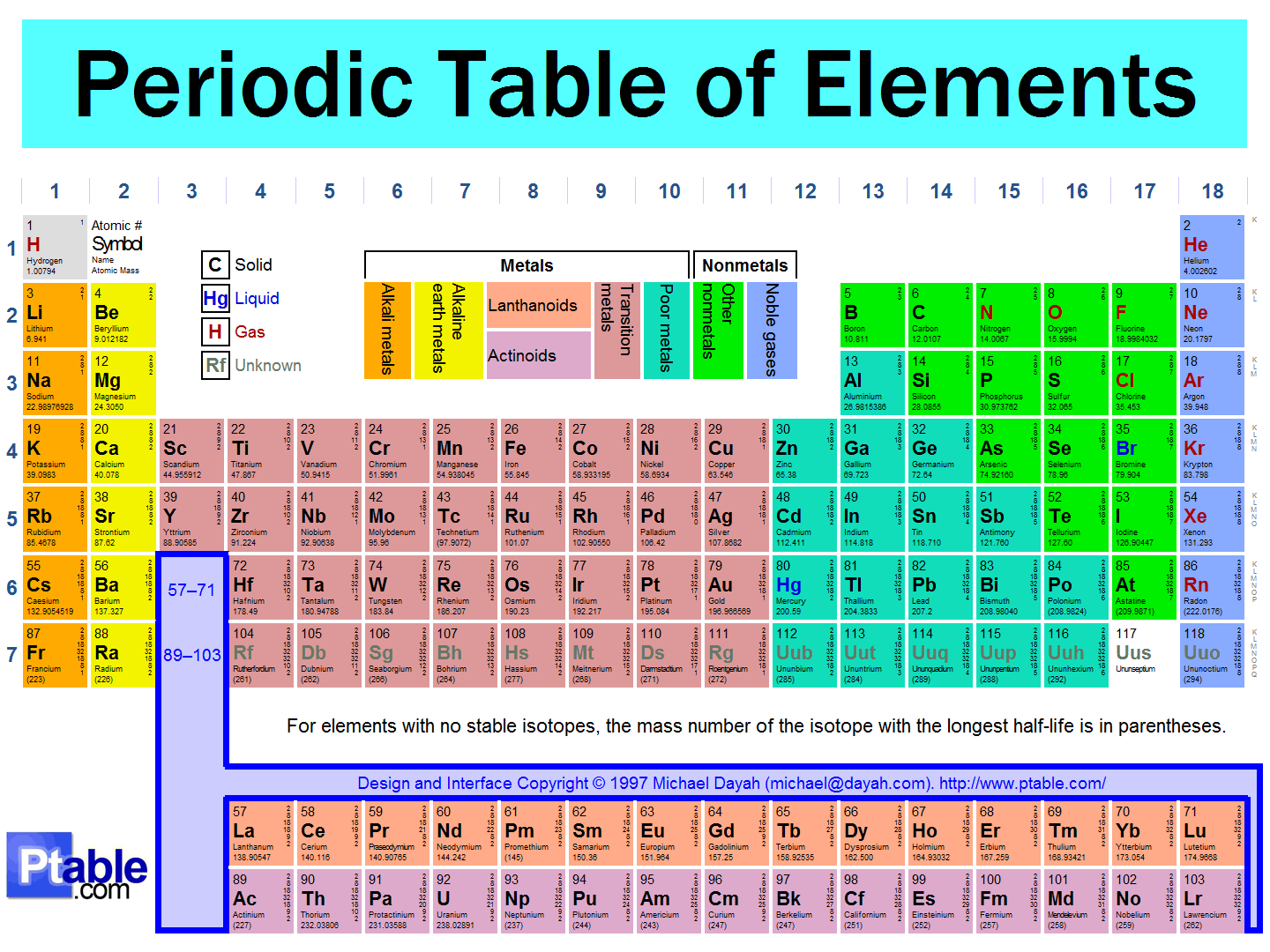
Chapter 5 The Periodic Table

Total questions: 91

Worksheet time: 1hrs 9mins
Name
Class
Date
1.
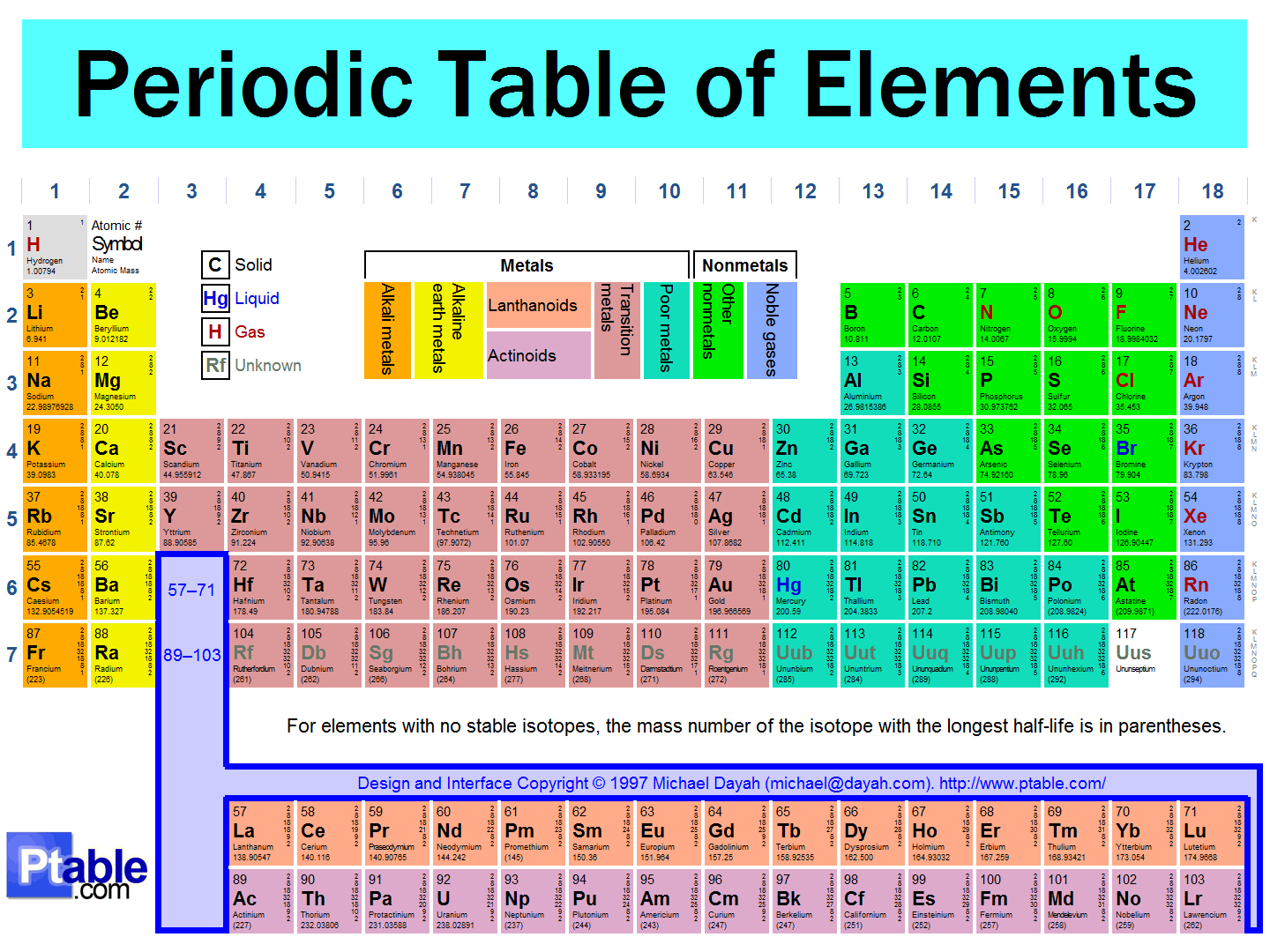
The horizontal row on the periodic table is called a
a)
group
b)
family
c)
period
d)
atomic number
2.
A vertical column is called...
a)
group
b)
tower
c)
period
d)
crew
3.
The number at the bottom of each square on the periodic table is the ...
a)
atomic number
b)
atomic mass
c)
chemical symbol
d)
element name
4.
The number at the top of each square on the periodic table is the ...
a)
atomic number
b)
atomic mass
c)
Chemical Symbol
d)
Element Name
5.
What is the chemical symbol for Lithium?
a)
H
b)
He
c)
Li
d)
N
6.
The months of the year are __________ because they repeat in the same order every 12 months.
a)
periodic
b)
group
c)
period
d)
halogens
7.
How many elements follow the periodic law?
a)
7
b)
98
c)
110
d)
All of them
8.
A rule that states that repeating chemical and physical properties of elements change periodically with the atomic number of the elements is the _________.
a)
periodic law
b)
alkaline-earth metals
c)
actinide
d)
group rule
9.
Pure forms of these elements are stored in oil so they won't react with oxygen and water in the air.
a)
Alkali Metals
b)
Alkaline-earth metals
c)
Halogens
d)
Noble Gases
10.
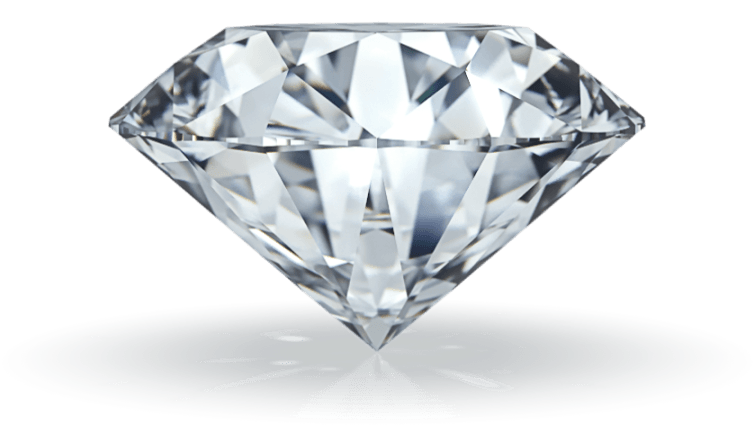
Diamonds are a pure form of what element?
a)
Carbon
b)
Oxygen
c)
Silicon
d)
Silver
11.
All of the actinides are ___________.
a)
stable
b)
radioactive
c)
shiny
d)
named after scientists
12.
Most of the elements on the periodic table are classified as _____.
a)
Metals
b)
Nonmetals
c)
Metalloids
d)
Periods
13.
This class of elements are sometimes called "semiconductors."
a)
Metals
b)
Nonmetals
c)
Metalloids
d)
Groups
14.
The atomic number tells you what?
a)
number of electrons
b)
number of protons
c)
number of neutrons
d)
both electrons and protons in an atom.
15.
Elements which are shiny, conduct electricity and heat are called
a)
metal
b)
nonmetal
c)
metalloid
d)
nonexistent
16.
Which element is not a metal?
a)
H
b)
Re
c)
Al
d)
B
17.
The atoms along the staircase are called 
a)
metals
b)
nonmetals
c)
metalloids
d)
noble gases
18.
Which is a halogen?
a)
Helium
b)
Chlorine
c)
Oxygen
d)
Neptune
19.
Which is an alkali metal?
a)
Magnesium
b)
Iron
c)
Sodium
d)
Europium
20.
Elements in a ..................have similar chemical properties.  
a)
period
b)
group
c)
row
21.
A proton is....
a)
A negatively charged subatomic particle
b)
A positively charged subatomic particle
c)
A neutrally charged subatomic particle
d)
The only subatomic particle located in the nucleus
22.
A neutron has a charge of
a)
+2
b)
No charge
c)
-1
d)
+1
23.
In what section would Transition Metals be found?
a)
orange
b)
light blue
c)
blue
d)
white
24.
Which group of the periodic table is composed of inert (not reactive)  gases?
a)
alkali metals
b)
alkaline earth metals
c)
halogens
d)
noble gases
25.
Elements on the left side of the periodic table are 
a)
metals
b)
nonmetals
c)
metalloids
d)
noble gases
26.
What section is the least reactive? 
a)
yellow
b)
red
c)
dark blue
d)
orange
27.
Which two families on the periodic table react aggressively?
a)
noble gases and alkali metals
b)
alkali metals and halogens
c)
noble gases and halogens
d)
metals and halogens
28.
Nonmetals are located in what section of this periodic table?
a)
Blue
b)
Yellow
c)
Pink
29.
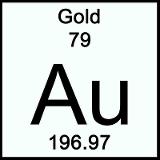
Which number is the atomic mass?
a)
79
b)
196.97
30.
How many electrons does Oxygen need to fill its outer shell?
a)
3
b)
4
c)
1
d)
2
31.
How many Valance electrons does Iodine Have?
a)
6
b)
16
c)
7
d)
17
32.
The period for Bromine is ___________.
a)
3
b)
2
c)
4
33.
Beryllium is in group number______.
a)
Group 2
b)
Group 3
c)
Group 4
d)
Group 7
34.
An element's identity is determined by the number of
a)
electrons.
b)
protons.
c)
neutrons.
d)
valence.
35.
The periodic table has __ periods.
a)
18
b)
8
c)
2
d)
7
36.
Group 18 elements are known as the _____ _____ and have full valence shells.
a)
royal gases.
b)
supreme solids.
c)
noble gases.
d)
legit liquids.
37.
What period and group is Silver (Ag)? 
a)
Period 2, Group 1
b)
Period 3, Group 16
c)
Period 5, Group 11
d)
Period 2, 14
38.
Which of the following is not a property of metals?
a)
brittle
b)
malleable
c)
lustrous
d)
conductive
39.
Which element is not a metal?
a)
H
b)
Re
c)
Al
d)
B
40.
Valence electrons are: 
a)
Electrons farthest away from the nucleus
b)
Electrons closest to the nucleus
c)
Electrons that just come and go - they don't stay with the atom
41.
Ions are: 
a)
atoms with a positive or negative charge
b)
atoms with no charge
c)
atoms with ONLY a positive charge
d)
atoms with ONLY a negative charge
42.
What does the 1.00794 stand for?
a)
Hydrogen
b)
atomic number
c)
atomic mass
d)
atomic explosion
43.
Particles in an atom that are neutral and have no charge are 
a)
negatrons 
b)
electrons 
c)
neutrons 
d)
protons 
44.
What is the atomic mass equal to?
a)
the number of protons
b)
the number of protons and neutrons
c)
the number of neutrons
d)
the number of protons and electrons
45.
In the modern periodic table elements are arranged by:
a)
atomic mass
b)
atomic number
c)
valence electrons
d)
number of isotopes
46.
How did Mendeleev arrange the elements?
a)
alphabetical 
b)
density
c)
melting point
d)
atomic mass
47.
The atomic number tells you what?
a)
number of electrons
b)
number of protons
c)
number of neutrons
d)
both electrons and protons in an atom.
48.
Which group of the periodic table is composed of inert (not reactive)  gases?
a)
alkali metals
b)
alkaline earth metals
c)
halogens
d)
noble gases
49.
Elements which are shiny, conduct electricity and heat are called
a)
metal
b)
nonmetal
c)
metalloid
d)
nonexistent
50.
The atoms along the staircase are called 
a)
metals
b)
nonmetals
c)
metalloids
d)
noble gases
51.
Which is a halogen?
a)
Helium
b)
Chlorine
c)
Oxygen
d)
Neptune
52.
How many electrons does a Copper atom have?
a)
63
b)
29
c)
92
d)
34
53.
Electronegativity is...
a)
how good an atom is at attracting electrons
b)
the ability of an atom to lose electrons
c)
the energy required to remove an electron from a specific atom
d)
how easy it is to make friends. 
54.
Ionization energy is...
a)
the energy required to add an electron to a specific atom
b)
how much energy it takes to remove an electron from an atom
c)
the energy required to shield the outer electrons from the nucleus
d)
a measure of the ability of an atom to attract electrons
55.
Atomic radius generally increases as we move __________.  
a)
down a group and from right to left across a period 
b)
up a group and from left to right across a period 
c)
down a group and from left to right across a period 
d)
up a group and from right to left across a period 
56.
Which atom has the largest atomic radius?
a)
potassium
b)
rubidium 
c)
francium
d)
cesium
57.

As you move from left to right on the periodic table, the number of valence electrons.......

a)

Increases

b)

Decreases

c)

Remains the same

58.

As you move down a group on the periodic table, the number of valence electrons....

a)

Increases

b)

Decreases

c)

Remains the same

59.

Which of the following would be most similar to Phosphorus? (select all that apply)

a)

Nitrogen

b)

Sulfur

c)

Silicon

d)

Germanium

e)

Antimony

60.

Which of the following is the term for a substance in which all the atoms have the same number of protons

a)

a compound

b)

An element

c)

a molecule

d)

a solid

e)

a gas

61.

Which of the following reasons explains why there is a decimal for most atomic masses?

a)

The mass of one atom can have a fraction.

b)

Since electrons are very small mass they only add a little bit, usually only a decimals worth.

c)

It is the average mass of all the potential isotopes of an atom.

d)

Neutrons have a mass of 1.1 meaning that fractions are common.

62.
Sodium (Na) and potassium (K) are in the same group on the periodic table. Based on their locations, which statement about sodium and potassium is true?
a)
Sodium is less electronegative than potassium. 
b)
Sodium has fewer energy levels than potassium. 
c)
Sodium has a larger ionic radius than potassium. 
d)
Sodium has lower ionization energy than potassium. 
63.
Which of these elements has the greatest atomic radius? 
a)
H
b)
N
c)
Cl
d)
Cs
64.
The symbols W, X, Y, and Z represent four elements shown on the outline of a periodic table.
Which element has the highest electronegativity?

a)
W
b)
X
c)
Y
d)
Z
65.
The Periodic Table of the Elements is useful for revealing patterns and trends in the elements. Which statement accurately describes a pattern in the size of atomic radii in the Periodic Table of the Elements?
a)
Atomic radii decrease from left to right across a period and decrease from top to bottom in a group.
b)
Atomic radii increase from left to right across a period and increase from top to bottom in a group.
c)
Atomic radii decrease from left to right across a period and increase from top to bottom in a group.
d)
Atomic radii increase from left to right across a period and decrease from top to bottom in a group.
66.
All elements found on the left side of the Periodic Table of the Elements have what properties in common?
a)
They conduct heat and electricity 
b)
They are all gases 
c)
They are brittle and dull
d)
They are radioactive
67.
What is the family name of this group of elements? 
a)
Alkali metals 
b)
Halogens 
c)
Noble Gases 
d)
Alkali Earth Metals 
68.
Which element has 2 valence electrons? 
a)
cesium (Cs) 
b)
magnesium (Mg)
c)
boron (B)
d)
argon (Ar) 
69.
As you move down the periodic table atoms get bigger.  This is because ____________.
a)
The atoms have more mass.
b)
The atoms have more protons.
c)
The atoms have more energy levels
d)
The atoms have more neutrons
70.
Which of the following will have a larger radius than Zinc?
a)
Gallium
b)
Aluminum
c)
Magnesium
d)
Strontium
71.
The more protons there are, the  ____ .
a)
Weaker the pull
b)
Smaller the electrons
c)
Stronger the pull
d)
The bigger the electrons
72.

What is the atomic radius?

a)

The distance from the nucleus to the outer boundary of an atom

b)

The distance from one side of an atom to the other side

c)

The distance around the atom

d)

The distance between atoms in the gas phase

e)

The distance between atoms in the solid phase

73.
Atomic radius generally increases as we move __________.  
a)
down a group and from right to left across a period 
b)
up a group and from left to right across a period 
c)
down a group and from left to right across a period 
d)
up a group and from right to left across a period 
74.

Which of the following lists contains atoms with the highest reactivity?

a)

He, Ne, Ar

b)

F, Cl, Br

c)

Zn, Cd, Hg

d)

C, Si, B

75.

What are valence electrons?

a)

Electrons in the outermost energy level.

b)

Electrons closest to the nucleus.

c)

Electrons that identify the atom as that of a particular element.

d)

Electrons that release photons and move from a higher to lower energy level.

76.

Which of the following atoms has the largest atomic radius?

a)

potassium (K)

b)

rubidium (Rb)

c)

francium (Fr)

d)

cesium (Cs)

77.

Which has the highest ionization energy?

a)

Arsenic

b)

Iron

c)

ZInc

d)

Cobalt

78.

Ionization energy __________ as you do across a period

a)

has no pattern

b)

stays the same

c)

decreases

d)

increases

79.

Explain why ionization energy decreases as you go down a group.

a)

Outer electrons are further away from the nucleus you go down a group

b)

Electrons feel less pull from the nucleus as you go down a group

c)

Electrons are easier to remove as you go down a group

d)

All of the above

80.

What is Ionization energy?

a)

The energy used in a chemical reaction

b)

Potential energy

c)

The energy it takes to remove one electron from an atom or ion in its gaseous state

81.

Which of the following lists the atoms in order of increasing Ionization energy?

a)

calcium, iron, copper

b)

copper, iron, calcium

c)

calcium, copper, iron

d)

iron, copper, calcium

82.

Which element has a higher electronegativity value?

a)

Niobium

b)

Tin

c)

Cadmium

d)

Iodine

83.

Which is the correct order of electronegativity from lowest to highest?

a)

Zinc, Nickel, Iron, Scandium

b)

Iron, Nickel, Zinc, Scandium

c)

Scandium, Iron, Nickel, Zinc

d)

Scandium, Iron, Zinc, Nickel

84.
Electronegativity is...
a)
how good an atom is at attracting electrons
b)
the ability of an atom to lose electrons
c)
the energy required to remove an electron from a specific atom
d)
how easy it is to make friends. 
85.

How many elements did Dmitri predict?

a)

1

b)

20

c)

4

d)

17

86.

What did Dmitri invent?

a)

Children

b)

Periodic Table

c)

Russian currency

d)

Calculator

87.

How did Dmitri predict elements?

a)

Time traveled

b)

Predicted the properties by the atomic numbers left

c)

Guess and checked

d)

Calculated the atomic mass and properties

88.

When was the original periodic table created?

a)

1959

b)

400 B.C

c)

1869

d)

1776

89.

How many elements does the periodic table currently have?

(Current = 2018)

a)

60

b)

118

c)

181

d)

227

90.

Who arranged the known elements into horizontal rows of increasing atomic mass leaving gaps for as yet undiscovered elements?

a)

Mendeleev

b)

Meyer

c)

Newlands

d)

Moseley

91.

Most elements are in which category?

a)

metals

b)

nonmetals

c)

metalloids

d)

transformers