wayground logo

Free Printable Worksheets

NEW

Font size

S
M
L
XL
Worksheets

UNIT 6- PARTICLES WITH INTERNAL STRUCTURE (REVIEW)

Total questions: 20

Worksheet time: 19mins

Name
Class
Date
1.
J.J. Thomson used a cathode ray tube to find what particle in the atom?
a)
Proton
b)
Neutron
c)
Electron
2.
What are electrons?
a)
Massive, positively charged particles
b)
Tiny, negatively charged particles
c)
Clouds of dust in the nucleus
d)
Neutral particles around the nucleus
3.
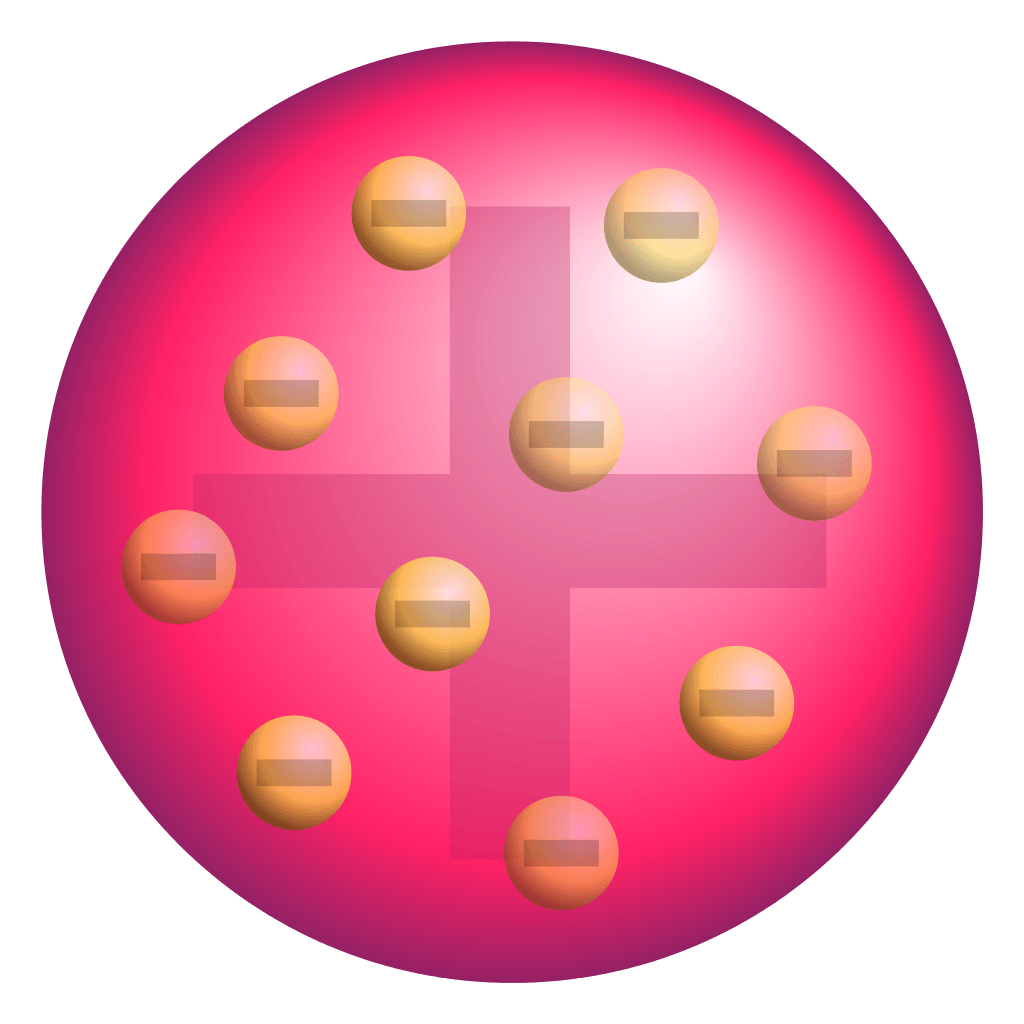
This model was developed after J.J. Thompson discovered electrons, a particle smaller than an atom. Is shows electrons floating freely in a positive space.
a)
The "Plum Pudding Model" of the atom
b)
The "Rutherford Model" of the atom
c)
Democritus's model of the atom
d)
The "Solar System Model" of the atom
4.

One property of nonmetals is that it they are good conductors of electricity.

a)

true

b)

false

5.
What element in Group 1 is not a metal but a nonmetal?
a)
Helium
b)
Lithium
c)
Hydrogen
d)
Oxygen
6.
Iron is a good conductor, malleable and magnetic. What type of element is Iron? 
a)
Metal
b)
Nonmetal
c)
Metalloid
d)
Pretty
7.
Silicon is a semiconductor and has properties of both metals and nonmetals. What type of element is Silicon? 
a)
Metal
b)
Nonmetal
c)
Metalloid
d)
Pretty
8.
Which elements are found on the right side of The Periodic Table?
a)
Metals
b)
Nonmetals
c)
Metalloids
d)
Water
9.
How many total atoms are in the compound C2H8O ?
a)
11
b)
2
c)
8
d)
1
10.
A positive ion is called
a)
A cation
b)
An anion
c)
A negative
d)
A postive
11.
A negative ion is called
a)
A cation
b)
An anion
c)
A negative
d)
A positive
12.

How many atoms are found in the compound (NH4)3PO4

a)

4

b)

15

c)

18

d)

20

13.

How many ions are found in the compound (NH4)3PO4

a)

4

b)

15

c)

18

d)

20

14.

What formula results when Fe+3 and CO3-2 ions combine?

a)

FeCO3

b)

Fe2CO3

c)

Fe2(CO3)3

d)

Fe3(CO3)2

15.

Cu2CO3

a)

copper carbonate

b)

copper (II) carbonate

c)

copper (I) carbonate

d)

copper carbon oxide

16.
What is the formula for tin (II) nitride?
a)
Sn3N2
b)
SnN2
c)
Sn3N
d)
SnN
17.
The name of P₄S₁₀ is
a)
phosphorous sulfide
b)
phosphorus sulfide
c)
tetraphosphorus decasulfide
d)
phosphorus (X) sulfide
18.
The chemical formula of sulfur hexabromide is
a)
SBr₆
b)
S₆Br
c)
S(VI)Br
d)
S6Br
19.

Which of the following is an ionic compound:

a)

CH4

b)

I2

c)

LiBr

d)

CO

20.

Why do transition metals require roman numbers in their naming?

a)

Transition metals can have multiple charges, so roman numerals are used to identify the charge

b)

Transition metals form many chlorides, so roman numerals are used to identify how many can bond

c)

Transiton metals only have one charge, so the roman numeral is meant to represent the only charge it possesses.