wayground logo

Free Printable Worksheets

Font size

S
M
L
XL
Worksheets

Revision

Total questions: 132

Worksheet time: 2hrs 46mins

Name
Class
Date
1.
What is the correct definition of an algorithm?
a)
An algorithm is a set of step by step instructions to solve a problem.
b)
An algorithm is a process of baking bread.
c)
An algorithm is a software used to compute numbers.
d)
An algorithm is the process of breaking problems.
2.
Breaking a complex problem down into smaller problems and solving each one individually.
a)
Decomposition
b)
Abstraction
c)
Programming
d)
Algorithmic Thinking
3.
Abstraction is.....
a)
The process of drawing abstract pictures.
b)
The process of assigning values to variables.
c)
The process of breaking down problems.
d)
The process of removing unnecessary details from a problem.
4.
Which sorting algorithm repeatedly compares two consecutively placed numbers?
a)
Insertion
b)
Bubble
5.
What does a sorting algorithm do?
a)
Puts numbers in order
b)
Puts any data in order
c)
Finds a bit of data
6.

7,5,3,2


A bubble sort is used to sort the numbered array.

Which answer shows the first pass of a bubble sort.

a)

7,5,3,2

5,7,3,2

5,3,7,2

5,3,2,7

b)

7,5,3,2

5,7,3,2

7,3,7,2

5,3,2,7

c)

7,5,3,2

5,7,2,3

5,3,7,2

5,3,2,7

d)

7,5,3,2

3,7,5,2

5,3,7,2

7,3,2,5

7.
What is a sampling rate?
a)
How many samples are taken a second
b)
The amount of characters in a data set
c)
The amount of pixels in an image
d)
The frequency
8.
If i had a higher sampling rate my piece of audio would take up
a)
More Space
b)
Less Space
9.
96khz would be __ hz 
a)
9,600
b)
96,000
c)
960
d)
96
10.
Resolution (Sample Size) is?
a)
Samples taken per second
b)
Samples taken per minute
c)
Number of bits available for each 
d)
Number of bytes available for each sample
11.
Formula for working out file size of a sound is?
a)
Sample Rate x Resolution x Mins of Audio
b)
Sample Rate x Resolution x Sec of Audio
12.
What is real life sound known as?
a)
Analogue Sound
b)
Digital Sound
13.
How is sound stored on a computer
a)
Digital
b)
Analogue
14.
What is the process called for  converting analogue sound into binary (digital format)?
a)
Conversions
b)
Sampling
c)
Bit Rate
d)
Converting
15.

10 Seconds of audio, sample resolution of 8 bits and a sample rate of 2. What is the correct file size?

a)

145

b)

160

c)

180

d)

200

16.

100 Seconds of audio, sample resolution of 4 bits and a sample rate of 10. What is the correct file size?

a)

5000

b)

4000

c)

3500

d)

3850

17.

5 Seconds of audio, sample resolution of 2 bits and a sample rate of 2. What is the correct file size?

a)

10

b)

20

c)

15

d)

32

18.

What is the resolution (bits) of the sound being sampled in the image?

a)

1b

b)

2b

c)

3b

d)

4b

19.

What is the sample rate (Hz) of the sound being sampled in the image?

a)

1

b)

5

c)

2

d)

4

20.

What is the file size?

a)

5

b)

20

c)

2

d)

18

21.
The purpose of data compression is to decrease file sizes .
a)
True
b)
False
22.
When is Run Length Encoding used?
a)
When we want to compress patterns of data
b)
When we want to decompress patterns of data
c)
When we want to encode running videos
23.
Makes the file smaller by deleting parts of the file permanently (forever)
a)
Lossy Compression
b)
Lossless Compression
24.

Compress this ascii using RLE: 00111111 00001111 11110100

a)

16B

b)

16b

c)

2 0, 6 1, 4 0, 8 1, 1 0, 1 1, 2 0

d)

2 0, 6 1, 4 0, 8 1, 1 0, 1 1, 2 1

25.
Convert 00010001 to decimal
a)
17
b)
27
c)
37
d)
47
26.
Convert 11101111 from binary to decimal.
a)
217
b)
229
c)
231
d)
239
27.
Convert 01100011 from binary to decimal.
a)
98
b)
99
c)
80
d)
121
28.

Convert the decimal number 81 to a hexadecimal number

a)

129

b)

51

c)

47

d)

58

29.

Convert the decimal number 30 to a hexadecimal number

a)

1E

b)

28

c)

1D

d)

48

30.

Convert 1101 1011 to Hex

a)

82

b)

DB

c)

D1

d)

9A

31.

Convert 0100 1000 to Hex

a)

48

b)

84

c)

8A

d)

3C

32.

Convert 0011 0011 to Hex

a)

23

b)

13

c)

AA

d)

33

33.

Convert 1011 0010 to Hex

a)

A2

b)

A4

c)

9A

d)

A1

34.

Convert 0111 1010 to Hex

a)

7A

b)

7C

c)

78

d)

8A

35.

Convert 0001 1110 to Hex

a)

1D

b)

19

c)

12

d)

1E

36.

How many bits are used in ASCII

a)

16

b)

1

c)

7

d)

8

37.

HOw many Bytes are used in Unicode

a)

8

b)

16

c)

1

d)

2

38.

The ASCII code is capable of representing non-European languages

a)

TRUE

b)

FALSE

39.

Upper and lower case letters have a different ASCII code

a)

TRUE

b)

FALSE

40.

A character set is...

a)

What language can be used in a computer system

b)

The fonts that a computer has installed

c)

The possible characters that can be represented by a computer system

41.

Using this extract from the extended ASCII table convert the following binary into text characters:

01000011 01000001 01000110 01000101

a)

CAFE

b)

FACE

c)

CABE

d)

BEAC

42.

How many bytes would the following require (8 bit extended ASCII)?

Viva Las Vegas!

a)

11

b)

12

c)

13

d)

15

43.

What are the limitations of ASCII?

a)

It has too many emojis.

b)

It is limited and cannot display foreign languages.

c)

It takes up too much room in memory.

d)

It cannot display all English characters.

44.

How can the limitations of ASCII be overcome?

a)

Unicode

b)

Omnicode

c)

Extended ASCII

d)

ASCIII

45.
What do we call the smallest unit of data that can be represented in an image? (1-4)
a)
Pixel
b)
Dot
c)
Colour
d)
Bit
46.
How many colours can be represented with a 4 bit colour depth? (7-9)
a)
2
b)
4
c)
16
d)
256
47.
What is meant by Colour Depth? (4-6)
a)
Number of pixels in the image
b)
The number of colours available for each pixel
c)
How pixelated the image is
48.
The density of pixels in an image file is known as:
a)
Resolution
b)
Dimensions.
c)
Transparency.
d)
Compression.
49.
How many combinations are there for a '2 bit' colour?
a)
8
b)
4
c)
16
d)
32
50.

What is the resolution?

a)

82 pixels

b)

82 B

c)

64 pixels

d)

64 B

51.

What is the file size in Bytes?

a)

16 pixels

b)

8 B

c)

16 B

d)

64 B

52.

What is the bit depth required for this image?

a)

1

b)

2

c)

3

d)

4

53.

What is the file size in Bytes?

a)

175.5

b)

150.6

c)

172.5

d)

1380

54.

What is the resolution?

a)

450

b)

460

c)

475

d)

499

55.

What is the bit depth required for this image?

a)

1

b)

2

c)

3

d)

4

56.

Pick the largest number

a)

1F

b)

33

c)

0010 0000

d)

A

57.

Pick the SMALLEST number

a)

1F

b)

33

c)

0010 0000

d)

A

58.
How many bits is a nibble made up of?
a)
1
b)
2
c)
3
d)
4
59.
What does 'A' equal in denary?
a)
8
b)
9
c)
10
d)
11
60.
What does 'F' equal in denary?
a)
14
b)
15
c)
16
d)
17
61.
What does 5F equal in denary?
a)
90
b)
95
c)
100
d)
105
62.
What number in hexadecimal comes after 7F?
a)
80
b)
8F
c)
7G
d)
8A
63.

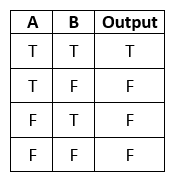
What type of logic is this table showing:

a)

AND

b)

OR

c)

NOT

d)

NOR

64.

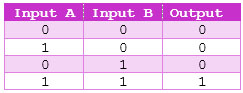
What type of logic is this table showing:

a)

AND

b)

OR

c)

NOR

d)

XOR

65.

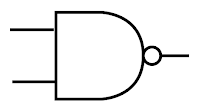
Which logic gate represented by this symbol?

a)

AND

b)

OR

c)

XOR

d)

NAND

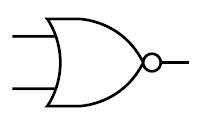
66.

Which logic gate represented by this symbol?

a)

AND

b)

NOR

c)

XOR

d)

NOT

67.

Which logic gate represented by this symbol?

a)

OR

b)

NOR

c)

XOR

d)

NOT

68.

Which logic gate is represented by this truth table?
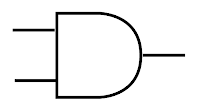
a)
b)
c)
d)
69.

Which logic gate is represented by this truth table?
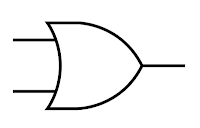
a)
b)
c)
d)
70.
Question 3: This component is located on the motherboard. Name the component. _______
a)
PCI Slots
b)
CPU
c)
RAM
d)
ROM
71.
Question 4: This component is located on the motherboard. Name the component. _______
a)
PCI Slots
b)
CPU
c)
RAM
d)
ROM
72.
Question 6: This is one of the examples of expansion card. Name the card. ________
a)
Network Card
b)
Sound Card
c)
SCSI card
d)
Video Card
73.
Question 7: This is one of the examples of expansion card. Name the card. ________
a)
Network Card
b)
Sound Card
c)
SCSI card
d)
Video Card
74.
Question 13: Which component do we placed on this slot?
a)
RAM
b)
Sound Card
c)
CPU
75.
This is volatile storage
a)
ROM
b)
RAM
c)
Secondary Storage
d)
Hard Disk
76.
How does clock speed affect computer performance?
a)
The higher the clock speed the slower the computer will run.
b)
It improves the amount you can store on the computer.
c)
The higher the clock speed the better the performance.
d)
It will make loading program slower
77.

Which of these is a Hard Disk Drive (HDD)?

a)
b)
c)
d)
78.
Clock speed is measures in
a)
bytes
b)
bits
c)
time
d)
hertz
79.
Von Newmann architecture is also known as a ‘stored program computer’
a)
True
b)
False
80.
A key feature of the Von Neumann architecture is...
a)
Instructions and data are stored together in memory
b)
Instructions and data are stored separately
81.
The fetch execute cycle runs continuously when the computer is turned on.
a)
True
b)
False
82.
Data and instructions are stored in the  (1-4)
a)
Processor
b)
Embedded System
c)
Hard Disk Drive
d)
Main Memory
83.

What is the name of the unit in the CPU that performs arithmetic and logic operations?

a)

ALU

b)

CU

c)

MAR

d)

MDR

84.

This register holds the address of the next instruction when the current instruction is executed by the CPU.

a)

MAR

b)

MDR

c)

PC

d)

CIR

e)

ACC

85.
The correct order is
a)
Fetch, Decode, Execute
b)
Decode, Execute, Fetch
c)
Execute, Decode, Fetch
d)
Decode, Fetch, Execute
86.
CPU cache has lower access time than RAM
a)
true
b)
FALSE
87.
The CPU cache stores
a)
Only instructions
b)
Word documents
c)
Frequently accessed data and instructions
d)
A list of IP addresses
88.
Having a larger cache size on the CPU can improve the performance of the computer.
a)
true
b)
FALSE
89.
ROM is volatile
a)
FALSE
b)
TRUE
90.
RAM is volatile
a)
TRUE
b)
FALSE
91.
The RAM contains the program used to start up the computer
a)
FALSE
b)
TRUE
92.
What does the RAM store?
a)
Operating system, programs and data which are currently being used
b)
A program used to start the computer called the �boot program� or BIOS
c)
All programs and documents stored on the computer
93.
ROM and RAM are both 
a)
Types of Memory
b)
Types of Computer
c)
Types of Food
d)
Types of Work
94.
My job is to load up the computer. What am I?
a)
RAM
b)
ROM
95.
My job is to store programs, applications, and data that are being used by the computer. What am I?
a)
ROM
b)
RAM
96.

Why are they called embedded systems?

a)

They are often found in mattresses

b)

They are part of a larger device

c)

They are often the main part of a computer

d)

They are often found with additional memory capacity.

97.
Which of the logic statements below represents the logic diagram shown.
a)
P = A AND B
b)
P = NOT (A OR B)
c)
P = A OR B
d)
P = NOT B
98.
Which of the logic statements below represents the logic diagram shown.
a)
P = NOT (A OR B)
b)
P = A OR B
c)
P = A AND B
d)
P = NOT (A AND B)
99.
"What you see" when using an operating system?
a)
Hardware Management
b)
User interface
c)
Application interface
d)
Utilities
100.
What helps maintain the operating system?
a)
Hardware Management
b)
User interface
c)
Application interface
d)
Utilities
101.
What feature of the OS helps protect your data?
a)
Hardware Management
b)
User interface
c)
Security
d)
Utilities
102.
Which utility removes files?
a)
Uninstaller
b)
Disk defragmenter
c)
Backup Utility
d)
File Manager
103.
Which utility organizes files efficiently on the hard drive?
a)
Uninstaller
b)
Disk defragmenter
c)
Backup Utility
d)
File Manager
104.
Which utility lists, organizes and allows you to rename files.
a)
Uninstaller
b)
Disk defragmenter
c)
Backup Utility
d)
File Manager
105.
Which of these is not a task of the Operating System?
a)
Writing information to files
b)
Opening, closing and moving windows on the screen
c)
Word processing
d)
Sending information about mouse clicks to an application
106.
Which type of software allows the user to perform tasks?
a)
System Software
b)
Application Software
107.
Hard Disk Drives are a form of what type of storage?
a)
Optical
b)
Solid State
c)
Magnetic
d)
Sequential
108.

Which has higher capacity?

a)

SSD

b)

HDD

109.

Which is cheaper?

a)

SSD

b)

HDD

110.

Which is faster (read/write)?

a)

SSD

b)

HDD

111.

Select ALL the facts about storing/retrieving data on a HDD...

a)

Magnetic 1s and 0s are read and written to the disk.

b)

Read and Written by the head on an arm.

c)

Disks in a HDD are separated into sectors and tracks.

d)

Volatile Storage.

112.
Which of the following is an example of remote data storage?
a)

Saving a digital picture to a hard drive

b)
Saving a digital photo to a CD
c)
Saving a digital photo to an online photo album
d)
Saving a digital photo to a flash drive
113.
One drawback of streaming movies and music from the cloud is that ...
a)
cloud services are expensive.
b)
most songs and movies are not on the cloud yet.
c)
the cloud is not open to the public.
d)
you can't keep the media on your device.
114.
Which of these devices can be accessed remotely across the internet?
a)
Cloud Storage
b)
Solid State Drive
c)
USB Memory Stick
d)
Optical Media
115.
Virtual memory is
a)
a memory management technique
b)
a virus checking utility
c)
a piece of hardware
d)
an series of pixels used to represent an image
116.
Virtual memory typically uses two storage devices, RAM and ______________.
a)
the hard drive
b)
ROM
c)
a secondary piece of RAM
d)
a CD-ROM
117.
Virtual memory is used
a)
when the RAM is not enough to contain all of the programs and data currently being used
b)
every other time a program is used
c)
as a secondary storage medium for long term storage of documents
d)
when the CPU is getting overheated
118.
A program stored in virtual memory may run slower than a program stored on the RAM
a)
TRUE
b)
FALSE
119.
The computer can take programs out of the RAM and store them in virtual memory, this frees up the RAM to be used to open more programs.
a)
TRUE
b)
FALSE
120.

PC A has a dual-core processor with a clock speed of 2GHz.

PC B has a single core processor with a clock speed of 4.1GHz.


Which is faster?

a)

A

b)

B

121.

PC A has a quad-core processor with a clock speed of 2GHz.

PC B has a single core processor with a clock speed of 4.1GHz.


Which is faster?

a)

A

b)

B

122.
Which type of lists or data sets are linear searching algorithms used for?
a)
Unsorted lists or data sets
b)
Sorted lists or data sets
123.
Which type of lists or data sets are binary searching algorithms used for?
a)
Unsorted lists or data sets
b)
Sorted lists or data sets
124.
A binary search is to be performed on the list:
3  5  9  10  23
How many comparisons would it take to find number 9?
a)
0-1
b)
2-3
c)
4-5
d)
I can't find the number 9
125.

A binary search is to be performed on the list:

1 5 10 13 48 68 100 101

How many comparisons would it take to find number 101?

a)

0-1

b)

1-2

c)

3-4

d)

5

126.
Describe an advantage of a binary search algorithm
a)
Data does not need to be in order.
b)
Performs well over large ordered lists.
c)
Can only work on an ordered list.  If unordered must use a linear search.
d)
Slow with large data sets.
127.

Social engineering is the art of manipulating or ‘conning’ individuals into giving away private information such as login IDs, passwords or bank account details, or parting with their cash

a)

True

b)

False

128.

Phishing is receiving an email, one that tricks you into handing over sensitive or personal information (login details, bank details, etc.)

a)

True

b)

False

129.

Shouldering: involves direct observation of a user entering their security details

a)

True

b)

False

130.

Blagging is the act of creating and using an invented scenario to engage a targeted victim. It is used to obtain personal information or money from a victim.

a)

True

b)

False

131.

Is this email genuine?

a)

Yes

b)

No

132.

What social engineering technique is being shown?

a)

Shouldering

b)

Blagging

c)

Credit card fraud

d)

Camping