
 Worksheets
GCSE Computer Science Megaquiz
Total questions: 100
Worksheet time: 52mins
A computer network is ___ computers connected together.
One
Two or more
Three or more
Four or more
What does LAN stand for?
Limited Area Network
Local Assisted Network
Local Area Network
Local Aerial Network
What is TCP?
A network protocol
The internet
An antiseptic
A protocol layer
What does Protocol mean?
The security regulations
A set of rules and procedures
A set of standards
A set of services
Which protocol would you use to transfer HTML, for example, when downloading a web page?
FTP
SMTP
POP3
HTTP
When recording a sound, computers take measurements at regular intervals. This is called
Interval selection
Parameters
Sampling
Digital signals
An audio CD is typically sampled at
44 times per second (44.1kHz)
4,410 times per second (44.1kHz)
44,100 times per second (44.1kHz)
44,100,000 times per second (44.1kHz)
A higher sample rate means (tick all that apply)
A better quality/more accurate recording
A lower quality/less accurate recording
A larger file size required to store the final recording
A small file size required to store the final recording
A common method of reducing the size of a sound file is
Reduction
Compression
Decompression
Squashing
When compressing an audio file, a lossy algorithm tries to
Remove the beginning and end of the file
Remove the audio that humans typically can't hear
Remove every other note
Change the frequency of the recording

The part of the CPU that performs calculations and logic operations
Register
Control Unit
Clock
Arithmetic/logic unit (ALU)

A storage location inside the CPU used to hold an instruction, an address or other single item of data.
Control Unit
Arithmetic/Logic Unit
Register
Clock

The part of the CPU that organises the actions of the other parts of the CPU
Register
Control Unit
Arithmetic/Logic Unit
Clock

An electronic device inside a CPU that 'ticks' at regular intervals and is used to synchronise the actions of the other parts of the CPU
Arithmetic/Logic Unit (ALU)
Register
Control Unit
Clock

Memory that is not lost when the power is turned off
Non-volatile
Volatile
Cache
Random Access memory (RAM)

Memory that cannot be altered and is not lost when the power is turned off.
Volatile
Read Only Memory (ROM)
Magnetic
Random Access Memory (RAM)

Storage that is not accessible by the CPU and is usually used for long term storage of programs and data
Primary Storage
Secondary Storage
RAM
ROM

Secondary storage that works using differences in light reflection from a material
Magnetic storage
Optical storage
Solid State Storage

A system designed to do a specific job, usually as part of a bigger system that might include electrical or mechanical parts such as a car or a washing machine
Virtual system
Simple system
Embedded system
Inbred system
The SQL command to choose which columns will be displayed in a query
SELECT
SHOW
FROM
WHERE
The SQL command which sets conditions for the rows to be shown in the query output
WHERE
SELECT
FROM
WHEN
Complete the following SQL query to find all records for surname = "Khan":
SELECT * FROM Customers ......
IF surname = "Khan"
WHERE surname = "Khan"
AND surname = "Khan"
WHEN surname = "Khan"
What does HTTPS stand for?
Hypertext Transfer Protocol Secure
Hyper Text Protocol Secure
Hidden Text Transfer Protocol Station
Hypertext Transfer Protocol Station
Which of these is not a Protocol?
DNS
FTP
POP
IMAP
Where is a MAC address stored?
In the computer
On the NIC
As a list in the router
On the Internet
A MAC Address is usually represented as....
Binary
Denary
Floats
Hexadecimal
A group of 8 binary bits is called a...
byte
bit
nibble
kilobyte
Why use hexadecimal instead of binary?
It is easier to use as it summarises four binary numbers in one character
It takes up less memory
It is faster for a CPU to process
Computers understand hexadecimal
If a computer has only 8 bits to store a value then the last bit of a 9 bit number will be lost. This is called...
redundancy
a lost bit
an overflow error
an underflow error
The CPU fetches instructions and decodes them in order to find out what to do next. The instructions are in two parts: the OPERATOR and the OPERAND. The OPERATOR or OPCODE represents...
an operation e.g. 'ADD' or 'SUB' or 'DIV'
maths operators like +, -, *, /
further instructions for the CPU
the data that needs to be used in the instruction
What is meant by the term 'stakeholder'?
A person who owns a product or organisation
Anyone who has an interest or concern about a product or organisation
A person who buys products from an organisation
A person who creates the legislation that governs buying/selling of products
Which legislation governs the act of hacking?
The Freedom of Information Act
The Data Protection Act
Creative Commons License
The Computer Misuse Act

Which protocol is used for sending emails?
POP
IMAP
SMTP
FTP
Which best describes packet switching
Exchanging information in two directions
Sending data in small chunks
Stealing data by exchanging other data for it
Sending data twice to be sure it arrives
WLAN stands for
Wide Long Area Network
Wide Local Area Network
Wireless Local Area Network
Wide Legal Area Nework
What is an advantage of IMAP over POP
It is quicker
It can cope with more email messages
It will synchronise all devices with the user's mailbox
It has more space to store old messages
Sequence is when...
...instructions are executed one after another
instructions are executed one after another in a series
instructions are executed by the user
instructions are executed one after another but not always in series
In programming a translator is used to convert different programming languages into machine code. There are three types...
Assembler, interpreter & compiler
Assembler, identifier & compiler
Assembler, identifier & interpreter
Compiler, identifier & interpreter
An integer is a data type that typically takes up 2 bytes of memory. Which of the follow is an integer?
2.6
"2.6"
26
26.0
What is the main difference between a constant and a variable?
A constants value cannot be changed whereas a variable's value may change
A constant's value only changes if a variables value changes
Constants can only be changed by the program whereas a variable can be changed by the user
A constant does not change during a program whereas a variable will.
Which law allows people to find out information about public organisations?
Data Protection Act
Freedom of Information Act
Copyright, Designs and Patents Act
Computer Misuse Act
Which law protects intellectual property from being copied without permission?
Data Protection Act
Freedom of Information Act
Copyright, Designs and Patents Act
Computer Misuse Act
Which law prevents the misuse of your personal information?
Data Protection Act
Freedom of Information Act
Copyright, Designs and Patents Act
Computer Misuse Act
The data subject is...
a person who has data stored about them by an organisation
a person who has a specific subject in relation to their data stored about them by a company
a person who decides how personal data will be stored or processed
something about which data is stored, like a product in a database
The data controller is
a person who has data stored about them by a company or organisation
a person who stores data about a specific subject
a person or company who decides how personal data will be stored or processed
an accountant
People have different access to technology due to where they live or how much money they have. What is this cultural issue known as?
Digital Divide
Wealth Divide
Geographical Difference
Affordability Divide
Which of these is not a sorting algorithm?
Bubble
Insertion
Merge
Binary
Which sorting algorithm is described by: moving through a list repeatedly, swapping elements that are in the wrong order.
Merge
Bubble
Insertion
None of these
Which sorting algorithm is described by: split a list into individual lists, then combine these, two lists at a time.
Bubble
Merge
Insertion
None of these
Which sorting algorithm splits a list of items into individual lists?
Merge
Bubble
Insertion
None of these
What is Virtual Memory?
A section of memory used as secondary storage
A section of secondary storage used as memory
A section of a network used as memory
A section of memory used as a network
In a binary search, which of these is a pre-requisite?
That there are no more than 8 items in the list
That the list has an odd number of values
That the list has an even number of values
That the list be in order
What is the difference between a procedure and function?
A procedure returns a value, a function does not.
A function returns a value, a procedure does not
A function has parameters, a procedure does not
There is no difference
What is the name of the register that holds the results of all calculations in the CPU?
MDR
MAR
ALU
Accumulator
A computer running at 3.8 Ghz completes how many instructions per second?
3.8
3,800
3,800,000
3,800,000,000
What is cache in the processor?
Web history
Fast storage on an external drive
Fast storage inside the processor for commonly used instructions
Slow storage inside the processor
How many BITS in a BYTE?
8
1
4
16
The sample rate directly affects the size of a music file.
No, it has no affect
No, all music files are 1.44MB
Yes, the higher the sample rate the smaller the file size.
Yes, the higher the sample rate the larger the file size.
How does increasing colour depth affect an image file?
Increases range of colours available in an image
Increases resolution of image
Increases the size of the image
Decreases metadata for an image
What is decomposition?
Breaking down a complex problem or system into smaller, more manageable parts
Focusing on the important information only, ignoring irrelevant detail
Looking for similarities among and within a problem
Putting together a step by step solution to a problem
Which of the following is not part of a SQL query
SELECT
WITHIN
FROM
WHERE
The DNS
translates a web address into an IP address
connects lots of devices together in a network
stores the MAC address of each computer
Allocates IP addresses to computers joining a network
Which of the following is a protocol for sending emails
HTTPS
SMTP
IMAP
FTP

What would be the correct data type for an email address?
Integer
String
Real/floating number
Boolean
Which of the following is true of a compiler
Translates the whole program to produce object code
Translates and executes one line at a time
translates assembly language into machine code.
Which of the following is true of Assembly Language
Customers can see the source code so could copy it
A low-level language written in mnemonics
Translates the whole program to produce object code
Needs to be translated into a high level language
Which of the following is not true for Hexidecimal
A=10
D=12
F=15
B=11
Which of the following has the biggest character set
ASCII
Extended ASCII
Unicode
Cleaning up user's input is called
validation
sanitisation
normalisation
authentication

Comments help
your code run better
slow down your code
make your code more maintainable
the computer to understand your code
Why do we need translators?
Computers only understand program's in assembly code.
Computers only understand program's in high-level language.
Computers only understand Norwegian.
Computers only understand program's in machine language.
What validation type would you use to check that numbers fell within a certain range?
Range check
Presence check
Check digit
Type check
What validation type checks a certain number of characters have been entered?
Length check
Format check
Range check
Presence check
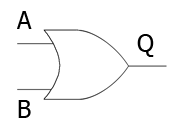
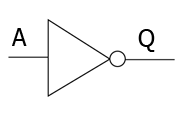


Which symbol represents a decision?


Which are the basic structures of programs?
Decomposition, abstraction, pattern recognition
Sequence, Selection and Iteration
Variables and flowcharts
Arithmetic and logic
What type of storage is a Flash drive?
Optical
Magnetic
Solid State
It is not a storage device
Why is a Hard Disk Drive (HDD) not very portable?
It has moving parts
It is too large
It will break if you touch it
It is too small
How many colours are available for an image where the colour depth is 3?
2
4
3
8
What does MOD do?
returns the remainder
returns the sum of all elements
returns the whole number of division
multiplies the hex number by bin 3
What unit is a sample rate measured in?
Bits per second (bps)
Hertz (Hz)
Megabits per second (Mbps)
Kilobytes
What is the purpose of the CPU?
To be the 'brains' of a computational system
To process computer data
To execute program instructions
To validate user inputs
What is a computer system?
An electronic system that takes inputs and processes them to produce an output
A box with a keyboard, mouse and monitor
A portable electronic device
Just the box with the CPU in it

