wayground logo

Free Printable Worksheets

Font size

S
M
L
XL
Worksheets

Biology Revision

Total questions: 126

Worksheet time: 1hrs 19mins

Name
Class
Date
1.
What are the reactants (what's needed) for photosynthesis?
a)
glucose and oxygen
b)
light, water, and carbon dioxide
2.
What gas is released by plants during photosynthesis?
a)
sulfur
b)
carbon dioxide
c)
oxygen
d)
hydrogen
3.
What is the purpose of photosynthesis?
a)
make glucose
b)
make ATP
c)
make light
d)
release carbon dioxide
4.
What are the products (what's made) during photosynthesis?
a)
glucose and oxygen
b)
water, light, and carbon dioxide
5.
In which organelle (part of the cell) does photosynthesis take place?
a)
mitochondria
b)
chloroplast
c)
nucleus
d)
cell membrane
6.
Which gas is removed from the atmosphere during photosynthesis?
a)
hydrogen
b)
oxygen
c)
nitrogen
d)
carbon dioxide
7.
Most plants appear green because chlorophyll
a)
absorbs green light.
b)
absorbs violet light.
c)
reflects green light.
d)
does not absorb violet light.
8.
What pigment absorbs sunlight for photosynthesis?
a)
chloroplast
b)
thylakoid
c)
grana
d)
chlorophyll
9.
Which gas is removed from the atmosphere during photosynthesis?
a)
hydrogen
b)
oxygen
c)
nitrogen
d)
carbon dioxide
10.
Most plants appear green because chlorophyll
a)
absorbs green light.
b)
absorbs violet light.
c)
does not absorb green light.
d)
does not absorb violet light.
11.
What is the main purpose of leaves?
a)
Perform photosynthesis
b)
Transport food and water
c)
Absorb water
d)
All of these
12.
The stalk that joins a leaf to a stem
a)
Petiole
b)
Xylem
c)
Cortex
d)
Pith
13.
Tightly packed columnar cells make up the _ layer. This layer does most of the photosynthesis.
a)
Palisade
b)
Spongy
c)
Epidermal
d)
Ground
14.
Stomata
a)
tiny holes in the leaves of a plant that allow gases to enter or leave the plant
b)
living things
c)
a plant part that carries out photosynthesis to make food for the plant
d)
the process in which plants use energy from the sun to make their own food
15.
Gases pass in and out of a leaf through the what?
a)
vascular tissue
b)
mouth hole
c)
stomata
d)
cell wall
16.
____________ cells open and close the stomata
a)
palisade
b)
guard
c)
xylem
d)
epidermis
17.

What is the function of upper and lower epidermis?

a)

Absorbing sunlight

b)

Protecting inner tissue layers

c)

Allowing gases to enter and exit

d)

Transporting materials

18.
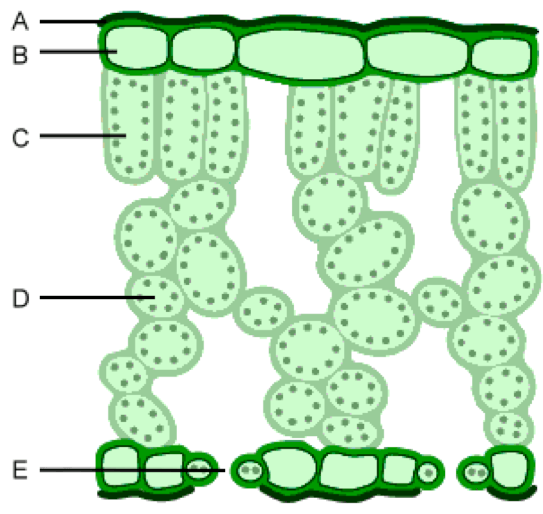
What is B pointing to?
a)
lower epidermis
b)
cuticle
c)
upper epidermis
d)
stomata
19.
What is A pointing to?
a)
lower epidermis
b)
cuticle
c)
upper epidermis
d)
stomata
20.

What is on the top of the leaf

a)

palisade

b)

cuticle

c)

stomata

d)

guard cells

21.
The Xylem in plants transport what throughout the plant?
a)
Sunlight
b)
Oxygen
c)
Blood
d)
Water
22.
In which two layers of the leaf are most active  chloroplasts found?
a)
Palisade and spongy mesophyll
b)
Epidermis and stomata
c)
xylem and phloem
d)
Roots and spongy mesophyll
23.

Substances in food that your body needs to carry out its normal functions.

a)

Nutrition

b)

Protein

c)

Carbohydrates

d)

Nutrients

24.

These help your body fight diseases

a)

protein

b)

carbohydrates

c)

vitamins

d)

minerals

25.

Promotes repairing and rebuilding of muscle tissue

a)

Protein

b)

vitamins

c)

minerals

d)

fats

26.

The body's main source of energy

a)

Protein

b)

Vitamins

c)

minerals

d)

Carbohydrates

27.

This nutrient helps keep your bones and teeth strong

a)

vitamins

b)

carbohydrates

c)

Minerals

d)

Fats

28.

This nutrient keeps your skin healthy and is another source of energy.

a)

Fats

b)

Minerals

c)

Carbohydrates

d)

Protein

29.
You are having a snack before soccer practice.  What nutrient should your snack be high in? 
a)
minerals
b)
carbohydrates
c)
vitamins
d)
protein
30.
What is NOT a function of PROTEINS?
a)
grow and repair cells
b)
store energy to use later
c)
build muscle
d)
defend body and kill bacteria
31.
What helps break down food in our bodies?
a)
enzymes
b)
lipids
c)
carbohydrates
d)
sugars
32.
Amylase breaks down...
a)
Carbohydrates
b)
Vitamins
c)
Proteins 
d)
Lipids
33.
The highlighted organ is the
a)
liver
b)
large intestine
c)
small intestine
d)
stomach
34.
Chewing food is an example of _____________.
a)
chemical digestion
b)
mechanical digestion
35.
The main purpose of the large intestine.
a)
absorb hormones
b)
absorb protein
c)
absorb nutrients
d)
absorb water
36.
What happens when the food goes to the small intestine?
a)
nutrients gets into the blood
b)
the food keeps on going
c)
nothing
37.
The organ in orange represents the:
a)
Liver
b)
Lung
c)
Stomach
d)
Pancreas
38.
Bile is made by which digestive organ?
a)
Gallbladder
b)
Stomach
c)
Rectum
d)
Liver
39.
Stores Bile for later use.
a)
Esophagus
b)
Stomach
c)
Large Intestine
d)
Gallbladder
40.
Nutrients from digested food are absorbed in which digestive organ?
a)
Small Intestine
b)
Stomach
c)
Large Intestine
d)
Gallbladder
41.

What nutrient is broken down in the stomach?

a)

carbohydrates

b)

protein

c)

fat

d)

starch

42.

Which nutrients are digested (broken down) in the small intestine?

a)

carbohydrates

b)

protein

c)

fat

d)

All of the above

43.

What does pancreatic juice (liquid with enzymes) break down?

a)

carbohydrates

b)

protein

c)

fat

d)

All of the above

44.

What does bile break down?

a)

carbohydrates

b)

protein

c)

fat

d)

all of the above

45.

The alimentary canal consists of:

a)

mouth, oesophagus, stomach, liver, gall bladder, pancreas, small intestine, large intestine, anus

b)

mouth, oesophagus, stomach, liver, small intestine, large intestine, anus

c)

mouth, oesophagus, stomach, small intestine, large intestine, anus

d)

mouth, oesophagus, stomach, liver, small intestine, large intestine, anus

46.
How many teeth does an adult have?
a)
30
b)
32
c)
20
d)
36
47.
What is the hard outer covering of the tooth called?
a)
pulp
b)
cementum
c)
dentine
d)
enamel
48.
What tooth is this?
a)
molar 
b)
incisors
c)
canine
d)
premolars
49.

The letter A is pointing to what type of teeth?

a)

A. Incisors

b)

B. Premolars

c)

C. Molars

d)

D. Canines

50.

3. The pulp contains ______, which help us to sense if the ice cream is too cold.

a)

A) Blood vessels

b)

B) Nerves

c)

C) Gum

d)

D) Waves

51.

2. Identify the tooth in the picture .

a)

A) Premolar

b)

B) Molar

c)

C) Canine

d)

D) Dentine

52.

6. What is the main purpose of our teeth?

a)

A. To chew the food we eat, so it can be digested properly

b)

B. To get holes if we eat sweets and junk food

c)

C. To make us look scary if we growl

d)

D. To bite in self-defense, or if we hate someone

53.
Enzymes are considered to be 
a)
Lipids
b)
Carbohydrate
c)
Protein
d)
Nucleic Acid
54.
What is the purpose  of an enzyme?
a)
give permission for the reaction
b)
raise activation energy
c)
speed up reactions
d)
control how many reactions occur
55.

Identify the part of the tooth labelled A.

a)

Dentine

b)

Pulp

c)

Enamel

d)

Root

56.

Identify the structure labelled D

a)

Dentine

b)

Root Canal

c)

Gum

d)

Enamel

57.

Identify the structure labelled K

a)

Crown

b)

Root

c)

Enamel

d)

Dentine

58.

Identify the structure labelled C

a)

Dentine

b)

Enamel

c)

Pulp

d)

Crown

59.
How many types of blood vessels are in our body?
a)
1
b)
2
c)
3
d)
4
60.

Arteries carry oxygen rich blood away from the heart.

a)

True

b)

False

61.

Veins carry oxygen poor blood back to the heart.

a)

False

b)

True

62.

How does the heart work?

a)

It pumps blood first to the lungs, back to the heart and then around the rest of the body.

b)

It pumps blood first to the rest of the body, back to the lungs and then to the heart.

c)

It pumps blood around the rest of the body, back to the heart and then to the lungs,

63.
______________ are the smallest blood vessels.
a)
Arteries
b)
Veins
c)
Capillaries
64.
______________ are the second largest blood vessel. 
a)
Arteries
b)
Veins
c)
Capillaries
65.
The circulatory system works with the ___________ system to provide our body with oxygen.
a)
respiratory
b)
digestive
c)
muscular
d)
skeletal
66.
The circulatory system works with the __________ system to obtain energy from nutrients that we eat. 
a)
respiratory 
b)
digestive
c)
skeletal
d)
nervous
67.
The heart has ___ chambers.
a)
1
b)
2
c)
3
d)
4
68.
What do Red-Blood cells do?
a)
Carry oxygen from the lungs to the body cells and  transport carbon dioxide from the cells back to the lungs
b)
keeps blood flowing in one direction to the heart and prevent blood from flowing backwards
c)
Collects  blood from the capillaries and drain it into the veins
d)
Bring nutriients to the cells and carries away waste materials.
69.
What does blood do?
a)
Carries Water to cells
b)
Carries Oxygen to cells
c)
Carries Food to cells
d)
All of the above 
70.
PLATELETS ARE CELL FRAGMENT THAT 
a)
HELP YOUR BLOOD CLOT
b)
CARRY OXYGEN IN THE BLOOD
c)
FIGHT INFECTION
d)
EXCHANGES GASES IN THE LUNGS
71.
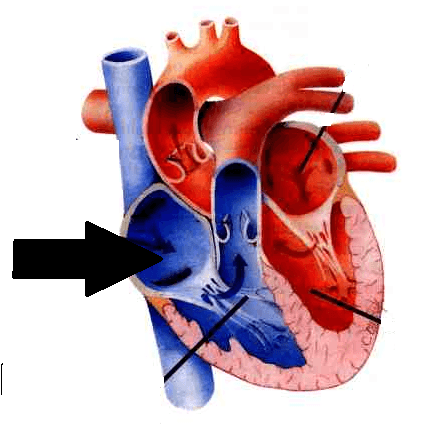
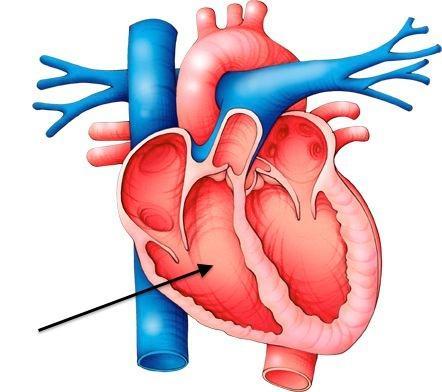
Identify
a)
Left atrium
b)
Right atrium
c)
Left ventricle
d)
Right ventricle
72.
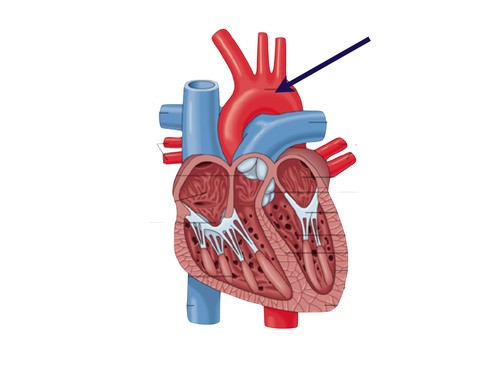
Identify
a)
Pulmonary veins
b)
Pulmonary artery
c)
Aorta
d)
Vena cava
73.
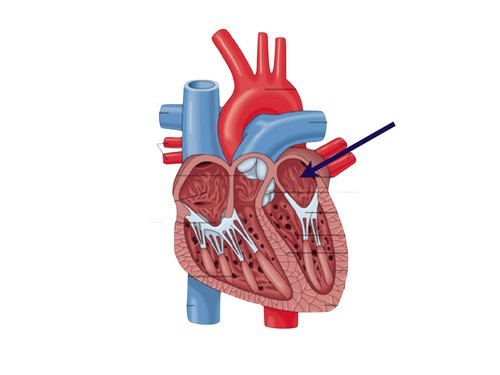
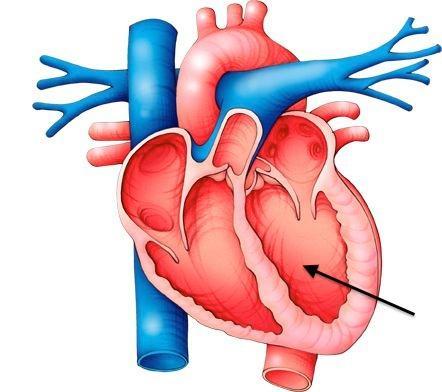
Identify
a)
Left atrium
b)
Right atrium
c)
Left ventricle
d)
Right ventricle
74.
Identify
a)
Left atrium
b)
Right atrium
c)
Left ventricle
d)
Right ventricle
75.
Identify
a)
Left atrium
b)
Right atrium
c)
Left ventricle
d)
Right ventricle
76.
This chamber of the heart RECEIVES blood returning from the body
a)
Right Atrium
b)
Right Ventricle
c)
Left Atrium
d)
Left Ventricle
77.
Which chambers of the heart are the thickest and strongest?
a)
Atria
b)
Ventricles
c)
Valves
d)
Aorta
78.
The aorta is the largest artery in the body. The blood leaving the aorta is full of?
a)
Oxygen 
b)
Carbon Dioxide 
c)
White blood Cells 
d)
Potassium 
79.
What does Deoxygenated mean?
a)
Oxygen-rich
b)
Blood flow
c)
Oxygen-poor
d)
Water Flow
80.
A flap of tissue that prevents blood from flowing backward
a)
Aorta
b)
Atrium
c)
Septum
d)
Valve
81.
What is pulmonary circulation?
a)
Blood travelling to and from the lungs
b)
Blood travelling to and from the body
c)
A blood clot in the lungs
d)
The vessel that brings blood to the lungs
82.
What is the main function of the artery?
a)
It controls your brain and your thought process.
b)
They carry oxygen- poor blood BACK to the heart.
c)
Arteries carry oxygen- rich blood AWAY from the heart.
d)
It receives information (senses) and sends messages to the body about how to react to things.
83.
Which is NOT a function of the circulatory system?
a)
deliver O2 and nutrients to cells
b)
remove CO2 and wastes from cells
c)
break down carbohydrates into glucose
d)
transport other materials through body
84.
Structure(s) that keep the blood flowing in one direction.
a)
Valve(s)
b)
Septum(s)
c)
Neuron(s)
d)
Bronchiole(s)
85.
arteries, veins, and capillaries are three types of __________
a)
heart valves
b)
blood vessels
c)
cells
d)
veins
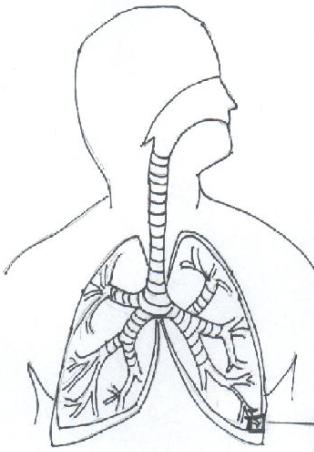
86.
Inhale!!!!
Your lungs are ___________  air
a)
taking in
b)
letting out
87.
EXHALE!!!
My lungs are __________________ air. 
a)
taking in
b)
letting out
88.
What is the main function of the respiratory system?
a)
to provide oxygen and remove carbon dioxide from the body
b)
to bring oxygen to the body
c)
to break down food and absorb nutrients
d)
to remove oxygen from the body and deliver carbon dioxide
89.
What are the main organs of gas exchange in the respiratory system?
a)
diapragm
b)
lungs
c)
trachea
d)
bronchi
90.
When you breathe, your lungs take in ___ and remove ___. 
a)
air/oxygen
b)
oxygen/carbon dioxide 
c)
carbon dioxide/waste 
d)
waste/air 
91.
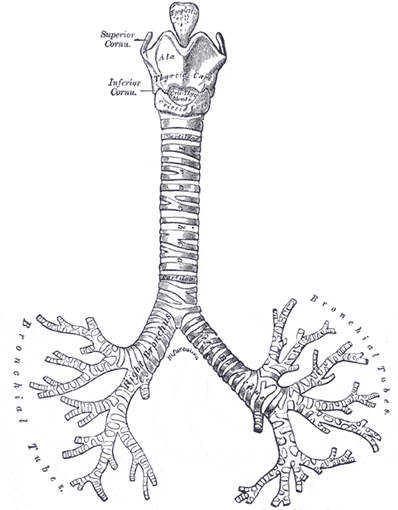
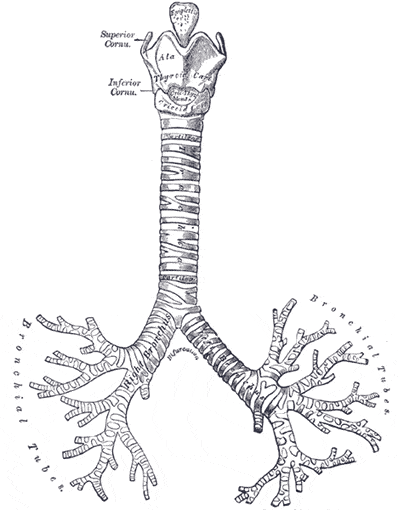
What is the function of the bronchi?
a)
Transport air from nose to lungs
b)
Transport air from trachea to lungs
c)
Transport air from lungs to alveoli
d)
Transport air from alveoli to blood
92.
The two main branches from the trachea (one to each lung)
a)
bronchi
b)
alveoli
c)
capillaries
d)
bronchioles
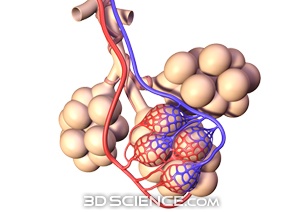
93.
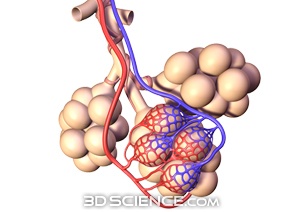
The air sacs that are covered with capillaries where gas exchange takes place
a)
bronchi
b)
lungs
c)
oxygen
d)
alveoli
94.
Within the lungs, the exchange of oxygen and carbon dioxide occurs between the ___ and the capillaries. 
a)
trachea 
b)
bronchi 
c)
alveoli
d)
diaphragm
95.
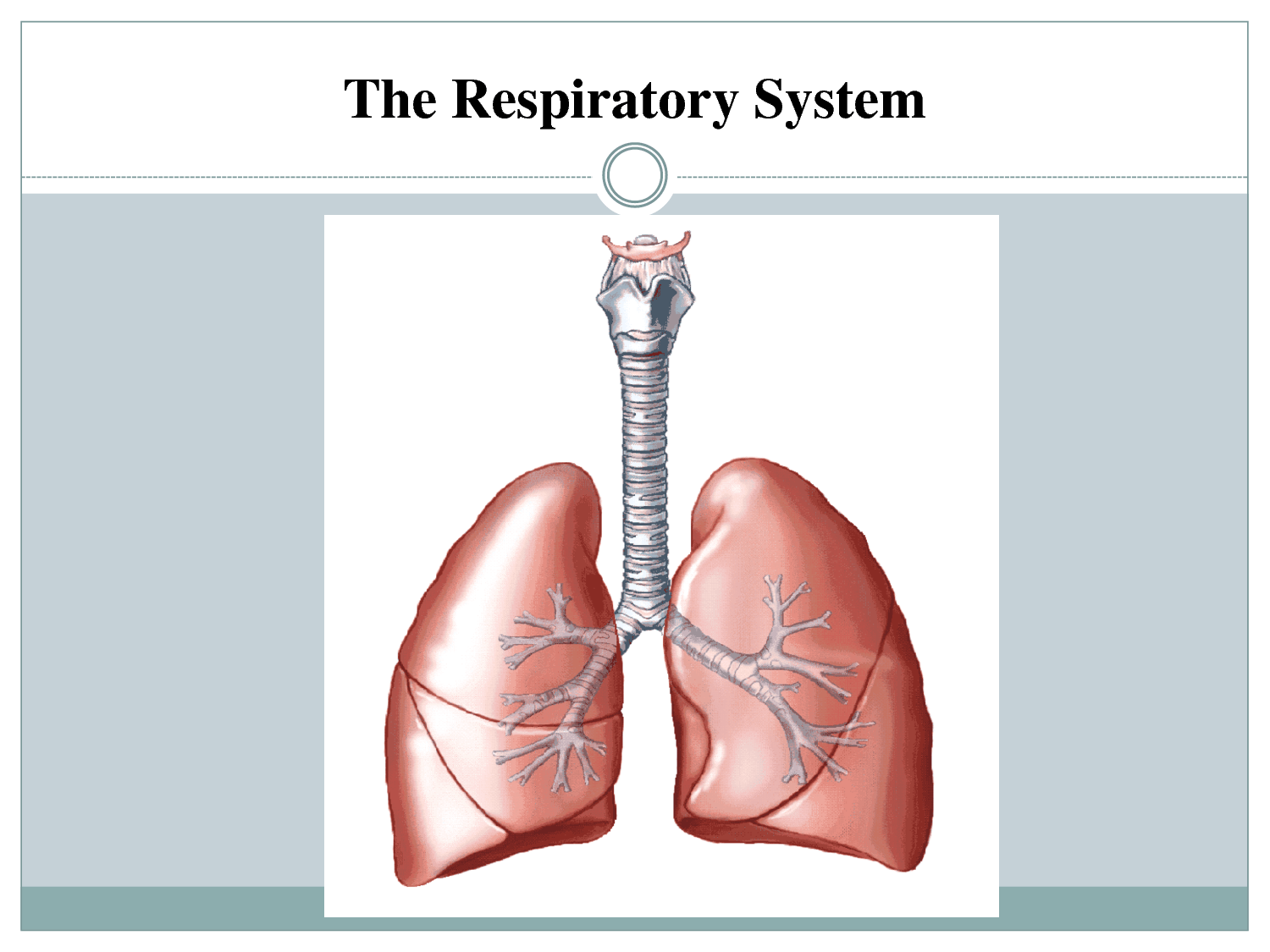
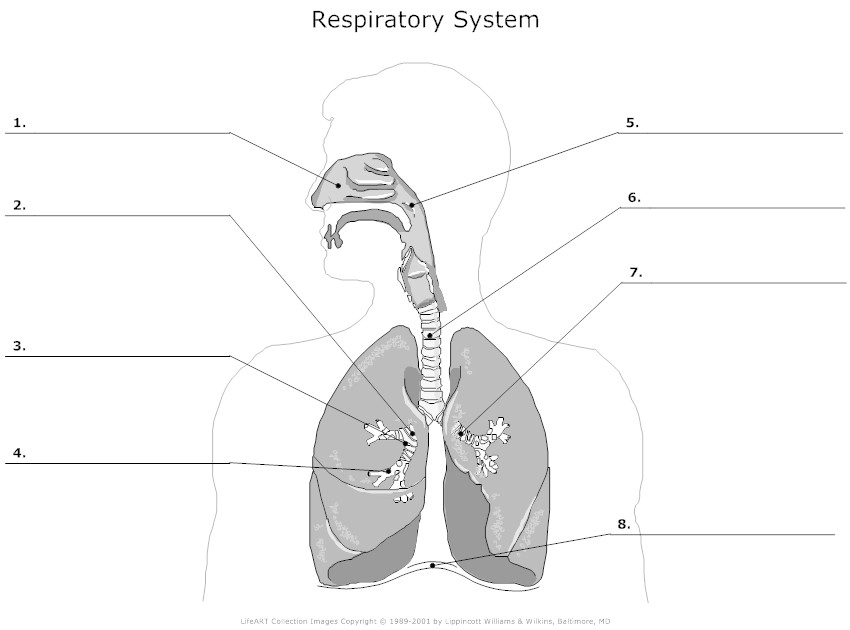
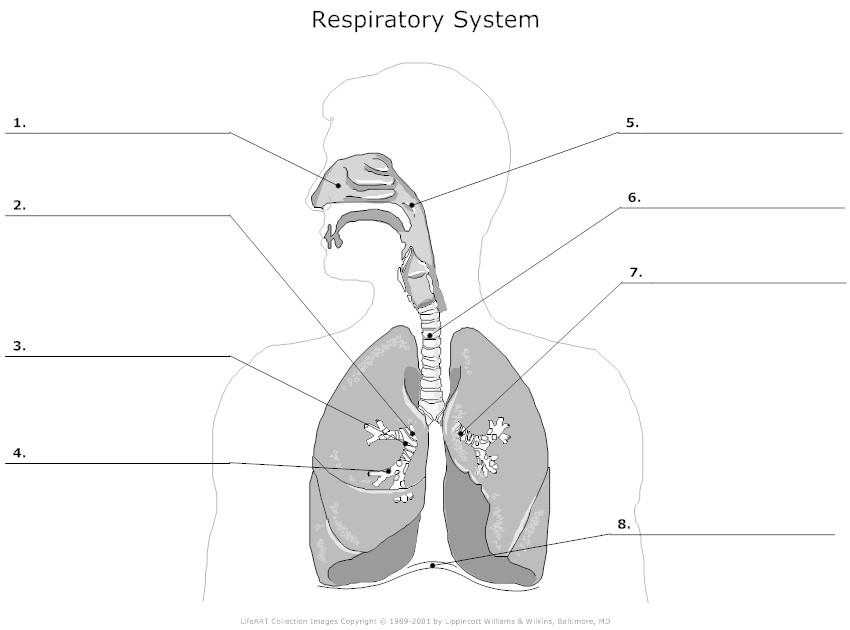
Name the organ label # 6. 
a)
alveoli 
b)
bronchi 
c)
trachea 
d)
lungs 
96.
What is tube that is also known as your wind pipe?
a)
esophogus
b)
bronchi
c)
trachea
d)
alveoli
97.
Name the structure labeled 8 
a)
lungs 
b)
trachea 
c)
diaphragm 
d)
alveoli 
98.

NUMBER 6:

a)

Lungs

b)

Trachea

c)

Mouth

d)

Alveoli

99.

NUMBER 3:

a)

Pharynx

b)

Trachea

c)

Bronchi

d)

Alveoli

100.

NUMBER 2:

a)

Pharynx

b)

Bronchi

c)

Alveoli

d)

Lungs

101.

NUMBER 1:

a)

lungs

b)

pharynx

c)

mouth

d)

alveoli

102.

When we breathe out the diaphragm...

a)

Contracts

b)

Relaxes

103.

When we breath in the diaphragm...

a)

Contracts

b)

Relaxes

104.

Which of these is an adaptation alveoli have for efficient gas exchange?

a)

thick walls

b)

thin walls

c)

small surface area

105.
Energy produced through respiration when oxygen is NOT used is called ____ respiration.
a)
aerobic
b)
anaerobic
106.
Energy produced through respiration using oxygen is called _____ respiration
a)
aerobic
b)
anaerobic
107.
The burning or breaking down of glucose is known as...
a)
photosynthesis
b)
transpiration
c)
respiration
d)
transport
108.

Many chemicals in cigarettes are considered carcinogenic because they cause what?

a)

Emphysema

b)

Cancer

c)

Heart disease

d)

Liver Failure

109.
What is the addictive drug found inside any kind of cigars?
a)
Tobacco 
b)
Liquid Internet
c)
There could be more than one, you never know
d)
Nicotine
110.

Uncontrolled cell division is a characteristic of

a)

regeneration

b)

differentiation

c)

cancer

d)

cleavage

111.

The structure in which the human fetus develops is the

a)

ovary

b)

testes

c)

uterus

d)

scrotum

112.

Sex cells that unite during fertilization form a single cell known as

a)

an embryo

b)

a gonad

c)

a gamete

d)

a zygote

113.
Which organ produces sperms?
a)
A
b)
B
c)
C
d)
D
114.
Which organ produces eggs?
a)
A
b)
B
c)
C
d)
D
115.
After the egg is fertilised, where does the fertilized egg develops?
a)
A
b)
B
c)
C
d)
D
116.
When the egg and sperm cells unite, this is called...
a)
Fertilization
b)
Zygote
c)
Embryo 
d)
Cell Differentiation
117.
What is labeled number 2?
a)
ovary
b)
fallopian tube
c)
vagina
d)
uterus
118.
What is labeled number 4?
a)
uterus
b)
ovary
c)
fallopian tube
d)
vagina
119.
What is labeled number 7?
a)
prostate
b)
scrotum
c)
vas deferens
d)
urethra
120.
The fluid that forms around the baby in the mother's uterus is called ____________ fluid.
a)
tissue
b)
placental
c)
amniotic
d)
lymphatic
121.

Where does the exchange of materials take place between mother and fetus?

a)

oviduct

b)

placenta

c)

uterus

d)

vagina

122.

What is happening when gametes are released by the human female

a)

fertilisation

b)

implantation

c)

menstruation

d)

ovulation

123.
What is the human embryo called after the eighth week of development?
a)
a zygote
b)
an infant
c)
a fetus
d)
a morual
124.
Where does fertilization occur?
a)
The uterus
b)
The fallopian tube
c)
The ovary
d)
The vaginal cannal
125.
How long is the average menstrual cycle?
a)
28 days 
b)
21 days
c)
42 days
d)
16 days
126.
How many chromosomes do humans have?
a)
46
b)
21
c)
10