
 Worksheets
7 Biology quiz
Total questions: 125
Worksheet time: 1hrs 4mins
Organisms which produce their own food are called
Autotrophs
Heterotrophs
Saprotrophs
Parasites
Which of the following component of food contains Nitrogen
Carbohydrate
Protein
Fat
Minerals
Which of the following is a parasite
Fungus
Cuscuta
Mushroom
Bacteria
Which of the following is not necessary for photosynthesis
Chlorophyll
Carbon dioxide gas
Oxygen
Water
Foods synthesized in the process of Photosynthesis by plants is stored as
Starch
Protein
Vitamins
Fats
Ultimate source of energy for all living organisms is
Plants
Atmosphere
Earth
Sun
Living organisms obtain energy from
Carbon Dioxide
Food
Water
Oxygen
Organisms other than plants which contain Chlorophyll are
Algae
Protozoa
Virus
Fungi
The process of Photosynthesis produces
Carbon Dioxide
Nitrogen
Oxygen
Hydrogen
In the absence of which of the following will photosynthesis not occur in leaves?
vacuole
stomata
chlorophyll
cytoplasm
Which of the following statements is/are correct?
(i) All green plants can prepare their own food.
(ii) Most animals are autotrophs.
(iii) Carbon dioxide is not required for photosynthesis.
(iv) Oxygen is liberated during photosynthesis.
Choose the correct answer from the options below:
( i) and (iv)
(ii) only
(ii) and (iii)
(i) and (ii)
minerals obtained by plants are selectively absorbed from
stem
root
leaves
flower
What protects Stomata and helps it in opening and closing?
Guard Cells
Leaf
Stem
Carbon Dioxide
What are absorbed through Soil?
Water
Minerals
Carbon Dioxide
Sunlight
Which bacteria is there in the roots of the plants to convert atmospheric nitrogen to its solid form?
Coronovirus
Nipha Virus
Treponama
Rhizobium
Which of the following is the word equation of photosynthesis?
carbon dioxide + water --> glucose + oxygen
oxygen + water --> glucose + carbon dioxide
carbon dioxide + water --> starch + oxygen
oxygen + glucose --> carbon dioxide + water
Which is a definition for photosynthesis?
Releasing energy from nutrients
The breaking down of large insoluble molecules into small soluble molecules
The process by which plants make carbohydrates from raw materials using energy from light
The movement of particles from a high concentration to a low concentration
Which of the following component of food contains Nitrogen
Carbohydrate
Protein
Fat
Minerals
The bodies of living organism are made of tiny units called (a) .
Most Cells have a distinct, centrally located spherical structure called the ________.
Nucleus
Cytoplasm
Chlorophyll
Mitochondria
What is stored in the form of food in the leaves with the help of chlorophyll?
Nitrogen
Protein
Kinetic Energy
Solar Energy
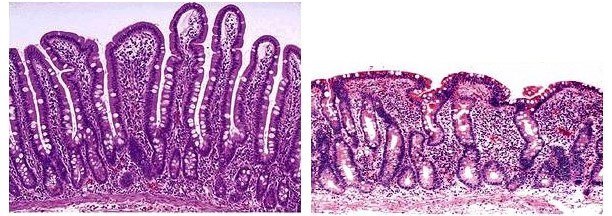
Digestion converts protein into which simpler substance?
(a)
The enzymes present in the saliva convert
fats into fatty acids and glycerol.
starch into simple sugars.
proteins into amino acids.
complex sugars into simple sugars.
The piercing and tearing teeth is called
incisor
Canine
Pre-molar
Molar
Which of the following pair of teeth differ in structure but are similar in function?
canines and incisors.
molars and premolars.
incisors and molars.
premolars and canines.
The basic process of digestion of food and release of energy is not the same in all animals.
TRUE
FALSE
Choose the correct order after reading the statement below.
Digestion is a complex process involving:
Ingestion, Absorption, Digestion, Assimilation, Egestion
Ingestion, Digestion, Assimilation, Absorption, Egestion
Ingestion, Digestion, Absorption, Assimilation, Egestion
Ingestion, Absorption, Assimilation, Digestion, Egestion
______ takes in food by the use of pseudopodia.
Goat
Tiger
Amoeba
Human
Water from the undigested food is absorbed mainly in the_____.
Stomach
Food Pipe
Small Intestine
Large Intestine
The ___ helps in mixing saliva with food.
Heart
Stomach
Nose
Tongue
____ is the largest gland in our body.
Skin
Hand
Liver
Leg
The mode of feeding of the mosquito_____.
Chewing
Cuddling
Scraping
Sucking
Mostly grass eating animals are called____.
Carnivore
Omnivore
Ruminants
Scavenger
______ takes in food by the use of pseudopodia.
Goat
Tiger
Amoeba
Human
The inner walls of the stomach secrete _________.
Mucus & hydrochloric acid
Bile
Lime
Salt
______secretes pancreatic juice.
Liver
Brain
Pancreas
Skin
MilkTeeth fall off in _____.
Children
Adult
Old Man
Old Lady
The Digested food is absorbed by____.
Small Intestine
Large Intestine
Lungs
Brain
Amoeba digests its food in the ____.
Food vacuole
Stomach
Liver
Intestine
Digestion starts from _____.
Mouth
Stomach
Liver
Ribs
Liver secrets _____.
Acid
Bile Juice
Base
Water
The process of breaking down of food is called__.
Digestion
Ingestion
Excretion
Respiration
The process of food intake is known as ______.
Excretion
Calculation
Respiration
Ingestion.
In _____ most of the nutrients are absorbed by the small intestine.
Lotus plant
Rosemary
Human beings
Ant
The longest part of the digestive tract in humans is the ........................
Oesophagus
Stomach
Small Intestine
Large Intestine
Name the finger like projections present in the small intestine which helps in nutrient absorption
Buccal cavity
Duodenum
Pancreas
Villi
The digestive juice which doesnot contain digestive enzymes .
Saliva
Gastric juice
Bile juice
Pancreatic juice
Identify ruminant from the following.
Cat
Cow
Ant
Tiger
In amoeba,ingestion of food takes place with the help of false feet called................
Vacuole
Lysosome
Arms
Pseudopodia
Name the process by which the digested food molecules are taken up by the intestine wall and sent to circulatory system.
Assimilation
Digestion
Absorption
Egestion

What are the products of aerobic respiration?
Carbon Dioxide and Energy
Lactic Acid
Water and Carbon Dioxide
Glycogen and Carbon Dioxide
What are the products of anaerobic respiration in a human cell?
Energy and Lactic Acid
Lactic Acid
Lactic Acid and Carbon Dioxide
Carbon Dioxide and Water
What is the chemical formula for glucose?
C6H12O6
C12H6O12
C6O12H6
6CH2O
Where in the body does respiration take place? Select the best answer.
The lungs
The muscles
All cells
The blood

Yeast is a
Multicellular
Carnivore
Anaerobe
Single-celled organism
Lungs are present in the
Chest Cavity
Nasal cavity
Respiration
Diaphragm
During inhalation diaphragm moves
Down
Left
Right
Up
Small openings on the side of the cockroaches body is called as
Trachea
Spiracles
Glucose
None
Earthworms skin is
Moist and slimy
Moist and rough
Rough and slippery
Rough and slimy
When we inhale air, it passes through our nostrils into the
Nasal cavity
Chest cavity
Tracheae
Spiracles
The respiratory system works with the ________ to help with Cellular Respiration
Nervous system
Circulatory System
Muscular System
Endocrine System
Which of these is a product of cellular respiration?
ATP
Carbon dioxide
Water
All of these are a product of cellular respiration
What is cellular respiration?
The breakdown of glucose to release ATP
The breakdown of glucose to release NADH
The breakdown of glucose to release FADH
The breakdown of glucose to release carbon

When breakdown of glucose occurs with the use of oxygen it is called
aerobic respiration
anaerobic respiration
cellular respiration
anaerobes
Cellular Respiration takes place in
anaerobes
Cells of all organisms
Animals
Humans
When we inhale air, it passes through our nostrils into the
nasal cavity
chest cavity
tracheae
spiracles
Lungs are present in the
Chest Cavity
Nasal cavity
Respiration
Diaphragm
In the cells Oxygen is used to break down
glucose into carbon di oxide
Glucose into carbon di oxide and water
water into carbon di oxide
carbon di oxide into water
In animals like cows buffaloes dog and cat the respiratory organs and the process is similar or different?
similar
different
Is there difference between breathing and respiration
Yes
No
What is respiration
(a)
What is breathing?
(a)

Identify the type of forests.
Tropical Rainforests
Tropical Deciduous forests
Mangrove forests
Deforestation means
large scale planting of trees
large scale cutting down of trees
both of these
none of these
The removal of soil by wind or water is known as
Soil Conservation
Soil Protection
Soil Erosion
Which of these is not true about forests?
Provide home to animals
help in causing rainfall
prevent soil erosion
purify air by absorbing oxygen and releasing carbon dioxide
bark


pine tree


Habitats are areas that
share that same weather, plants and animals
share only the same weather
share only the same plants
have the same weather
Which of the following serve as green lung?
Green pigment of the plants
Forests
Kitchen garden
Greenhouse Gases
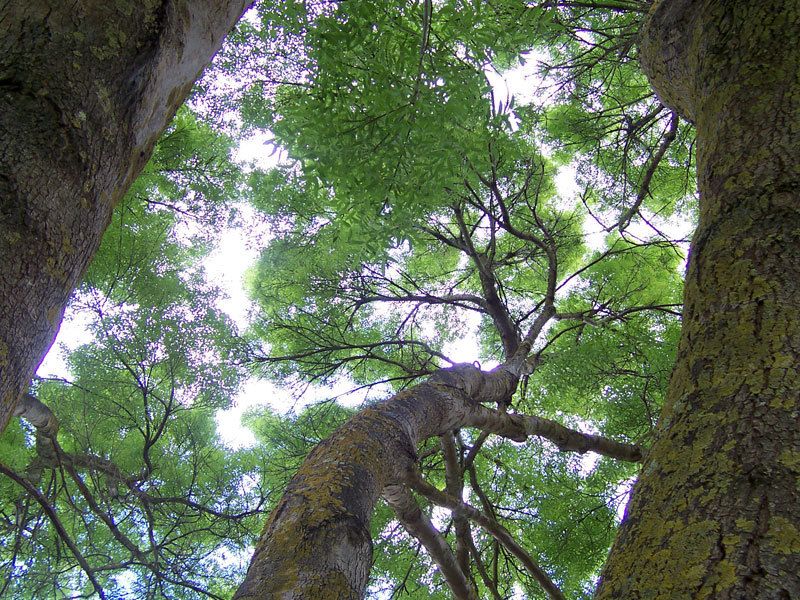
Refers to the upper layer or habitat zone.
Canopy
Crown
Humus
Forest regeneration
a natural home or environment of an animal , plant , or other organism is called a ________________.
Adaptation
Crown
Decomposers
Habitat
State whether the statement is 'True' or 'False'
Evergreen forests remain green throughout the year?
True
False
What are some of the deciduous trees?
Kikar and Babul
Teak, Sal and Sandalwood
None of the above
Deciduous forests are also called _____________.
Evergreen forests
Thorn forests
Monsoon forests
Coniferous forests
____________________ forests are found in areas with very little rainfall.
Evergreen
Thorn
Monsoon
Deciduous
______________forests are found in the deltas of rivers such as Ganga, Mahanadi and Godavari.
Evergreen
Thorn
Coniferous
Mangrove and Tidal
________________ forests are found in Rajasthan, Gujarat and Haryana.
Evergreen
Thorn
Coniferous
Mangrove and Tidal
Deciduous
________________ forests are found in the Himalayan region and Nilgiri Hills.
Evergreen
Thorn
Mountain or Coniferous
Mangrove and Tidal
Deciduous

How many legs does a spider have?
Ten
Six
Eight
Twelve



