
 Worksheets
Sem 1 Final Exam Review- 7th Grade
Total questions: 121
Worksheet time: 2hrs 46mins
Name
Class
Date
1.
An organism that produces its own food supply from inorganic compounds is called a(an)
a)
heterotroph
b)
consumer
c)
detritivore
d)
autotroph
2.
What is the original source of almost all energy in most ecosystems?
a)
carbohydrates
b)
sunlight
c)
water
d)
carbon
3.
Autotrophs make up the _______ level in all ecosystems.
a)
First
b)
Second
c)
Third
d)
Fourth
4.

which symbiosis is this
a)
parasitism
b)
mutualism
c)
commensalism
d)
nonalism
5.

symbiotic relationship in which both organisms benefit
a)
competition
b)
Mutualism
c)
nitrogen fixation
d)
energy pyramid
6.

A living relationship between two species in which one organism is harmed is called...
a)
mutualism
b)
commensalism
c)
parasitism
d)
niche
7.

What does a food web represent?
a)
All connections of energy flow throughout all organisms in a habitat.
b)
The specific ways that mutualism is carried out.
c)
A single pathway or energy flow between organisms.
d)
How carnivores get their food.
8.

The image provided is an example of a(n):
a)
Carnivore
b)
Herbivore
c)
Producer
d)
Autotroph
9.

The image provided is an example of a(n):
a)
Producer
b)
Autotroph
c)
Consumer
d)
Insect
10.
An illustration that uses arrows to show the many possible directions in which matter and energy can pass through the organisms in an ecosystem.
a)
Food chain
b)
Food web
c)
Energy Pyramid
d)
Succession Map
11.
The nonliving aspects of an ecosystem.
a)
Abiotic factors
b)
Biotic factors
12.
The living portions of the ecosystem.
a)
Biotic factors
b)
Abiotic factors
13.
Water temperature would be an example of ...
a)
A biotic factor
b)
An abiotic factor
14.
A collection of organisms that belong to different populations but all live in the same area and interact with one another.
a)
Population
b)
Ecosystem
c)
Community
d)
Ecosphere
15.
A place where an organism lives.
a)
Terrain
b)
Habitat
c)
Community
d)
Population
16.
A collection of organisms that make up a community as well as all of the nonliving aspects of the environment.
a)
Population
b)
Community
c)
Habitat
d)
Ecosystem
17.
Organisms that can capture energy from inorganic, nonliving sources.
a)
Producers
b)
Consumers
c)
Detritivores
d)
Carnivores
18.
Organisms that feed on both living producers and other consumers.
a)
Carnivores
b)
Omnivores
c)
Herbivores
d)
Detritivores
19.
The general name for organisms like animals and fungi that get their energy from eating other organisms.
a)
Producers
b)
Consumers
c)
Detritivores
d)
Carnivores
20.
An organism at the second trophic level would be considered a...
a)
Top carnivore
b)
Producer
c)
Herbivore
d)
Carnivore
21.
A graphic illustration that shows each trophic level and the amount of useable energy contained within.
a)
Food chain
b)
Food web
c)
Energy Pyramid
d)
All of these
22.
True or False: It is possible for a carnivore to be a producer.
a)
False
b)
True
23.

What organism consumes both rabbits and birds?
a)
The Hawk
b)
The Wolf
c)
The Plant
d)
The Mushroom
24.

How many primary consumers are in this food web?
a)
1
b)
2
c)
3
d)
4
25.

Who are the primary producers in this food web?
a)
The lizard and the Hawk
b)
The Grasshopper and the Mouse
c)
The rabbit and the Hawk
d)
The lizard and the snake
26.

What level consumer could you consider the deer?
a)
Primary
b)
Secondary
c)
Tertiary
d)
Quarternary
27.

What level consumer is the owl in the food chain?
a)
Tertiary
b)
Primary
c)
Secondary
d)
Quarternary
28.
Virtually all plants are autotrophic. But there are no autotrophic animals or fungi. What can you infer about autotrophic organisms?
a)
They can move on their own
b)
They are at the top of the food chain
c)
They can make their own energy
d)
They reproduce slowly
29.
A _________________________ is a large area characterized by its climate and the plants and animals that live in the area
a)
stadium
b)
biome
c)
oasis
d)
wasteland
30.

A biome that has snow and ice throughout most of the year is called a _______________________.
a)
valley
b)
tundra
c)
volcano
d)
swamp
31.

A grassland that has scattered clumps of trees and seasonal rain is called a _____________________
a)
savanna
b)
sweetwater
c)
arctic
d)
desert
32.

Which biome is very dry and has the least amount of rainfall?
a)
swamp
b)
grasslands
c)
lagoons
d)
`desert
33.
If you visited a savanna, you would most likely see ______________________
a)
large herds of grazing animals, such as zebras, gazelles, and wildebeests
b)
a large group of seals and whales competing for fish and other food
c)
snow and ice throughout most of the year
d)
huge skyscrapers
34.
Tundras receive very little rainfall. They are also called ______________________
a)
frozen deserts
b)
wetlands
c)
rainforests
d)
rainfall heaven
35.
____________________ is the layer of frozen soil below the surface of the arctic tundra.
a)
permanent marker
b)
frostbite
c)
permafrost
d)
roots
36.
______________________ have huge trees that create canopies. Very little light reaches the ground due to the thick leaves and trees.
a)
deserts
b)
tundras
c)
tropical rainforests
d)
frozen tundra
37.
Name the three types of forests:
a)
cone, decisive, and tropical
b)
burning, smoking, and wet
c)
coniferous, temperate deciduous, and tropical rainforest
d)
blooming, flowering, and canopy
38.

How does the cactus adapt to the limited supply of water in the desert?
a)
the cactus can shoot spines at nearby predators
b)
the cactus can store large amounts of water
c)
the water attracts bees and feeds off of their honey
d)
the cactus uses jackrabbits for protection
39.

True of False?
Animals that live in the desert have adapted to live with little water since the desert gets little rainfall.
Animals that live in the desert have adapted to live with little water since the desert gets little rainfall.
a)
True
b)
False
40.

The climate in a tropical rain forest can be described as
a)
cold and wet
b)
warm and dry
c)
cold and dry
d)
warm and wet
41.

A Biome covered with grasses is called....
a)
Grasslands
b)
Africa
c)
Meadow
d)
Forest
42.
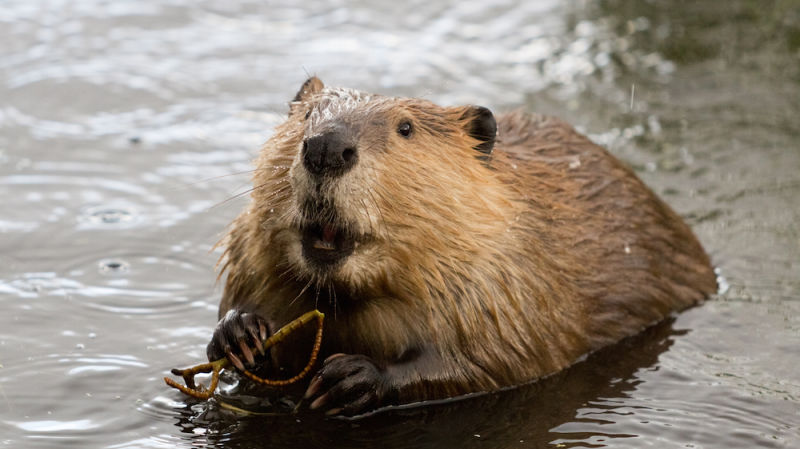
Birds, beavers, fish, and insects live in this biome.
a)
Marine
b)
Freshwater
c)
Tundra
d)
Taiga
43.

This biome includes three zones: intertidal, near-shore, and open ocean zone and includes living thins such as crabs, otters, and whales.
a)
Wetlands
b)
Marine
c)
Ocean
d)
Freshwater
44.
Despite having plenty of sun and rain, the tropical rainforest has very poor _____.
a)
biodiversity
b)
soil
c)
animal life
d)
air quality
45.
In which biome is Georgia located?
a)
tropical rainforest
b)
temperate rainforest
c)
temperate deciduous forest
d)
alpine forest
46.

The plankton that are microscopic and plant like are called
a)
zooplankton
b)
phytoplankton
c)
minnows
47.
What is the ocean floor called?
a)
Photic Zone
b)
Aphotic Zone
c)
Benthic Zone
48.
The "Rainforests of the ocean". These areas are very rich in biodiversity.
a)
Photic Zone
b)
Abyss
c)
Intertidal Zone
d)
Coral Reef
49.

What is a close interaction between two unlike species where at least one species benefits?
a)
Predation
b)
Symbiosis
c)
Adaptation
d)
Prey
50.
List the zones of ocean areas from shallow to deep.
a)
Neritic, intertidal, oceanic.
b)
Oceanic, neritic, intertidal
c)
Intertidal, neritic, oceanic.
d)
Intertidal, oceanic, neritic
51.
Benthos are organisms that live
a)
On the surface of the water
b)
throughout the water column
c)
ocean floor
d)
shallow water
52.
Why doesn’t photosynthesis occur in deep ocean water?
a)
There is no sunlight.
b)
There are not enough nutrients.
c)
The salinity level of the water is too high.
d)
The water temperature is too cold.
53.

What kind of animals live in an estuary?
a)
elephants and birds
b)
cats and dogs
c)
hamsters and rats
d)
Fish and shell fish
54.

What is an estuary?
a)
A little body of water.
b)
water in a gaseous form.
c)
Places where fresh water and streams flow into the ocean.
d)
the presence of an unwated msterial in a given place.
55.

Which organism can be found in coral reefs?
a)
Clownfish
b)
Dragonfish
c)
Whales
d)
Dogs
56.
Which statement is a fundamental principle of the cell theory?
a)
All cells have a cell membrane (plasma membrane)
b)
Eukaryotic cells are larger than prokaryotic cells
c)
Living organisms are composed of cells
d)
The genetic material in cells is DNA
57.
Which statement is true about bacterial cells?
a)
The cells are very large
b)
The cells have no nucleus
c)
The are eukaryotes
d)
They have organelles
58.
Which is present only in eukaryotic cells?
a)
cell membrane
b)
cytoplasm
c)
DNA
d)
nucleus
59.
Which organelle converts sugars into energy?
a)
lysosome
b)
mitochondria
c)
nucleus
d)
ribsome
60.
A scientist at the polar ice cap was studying an ice sample from 100 meters below the surface. He noticed the cell structures of cytoskeleton, mitochondria, nucleus, cell wall and ribosomes. What kind of organism did he find?
a)
animal
b)
bacteria
c)
plant
d)
not enough info
61.
Chloroplasts are organelles that convert light energy to sugars. These organelles are found only in plants. Which organelles are found only in animals?
a)
Golgi apparatus
b)
lysosomes
c)
mitochondria
d)
ribosomes
62.
Some cells, such as human nerve and muscle cells, contain many more mitochondria than do other cells, such as skin cells. Why do some cells have more mitochondria than others?
a)
The cells use more energy
b)
The cells store more nutrients
c)
The cells degrade more proteins
d)
The cells divide more frequently
63.
A cell with numerous ribosomes is probably specialized for
a)
enzyme storage
b)
energy production
c)
cell division
d)
protein synthesis
64.
All cells must have a
a)
cell wall
b)
cell membrane
c)
nucleus
d)
nucleoli
65.
The main difference between prokaryotic and eukaryotic cells is that
a)
prokaryotic cells are always larger
b)
prokaryotic cells do not have a cell membrane
c)
eukaryotic cells have a smaller cell nucleus
d)
eukaryotic cells have a more advanced cellular organization
66.
A cell stores food, water or waste products in
a)
chloroplast
b)
nuclei
c)
ribosomes
d)
vacuole
67.
Which of the following is not part of the cell theory?
a)
cells must contain DNA
b)
all living things are made from cells
c)
cells can only come from other cells
d)
cells are the basic unit of life
68.
Breaks down sugar (glucose) to release energy. "Powerhouse"
a)
Mitochondria
b)
Cell Membrane
c)
Cytoplasm
d)
Vacuole
69.
The basic living unit that makes up organisms
a)
Lysosomes
b)
Cytoplasm
c)
Nucleus
d)
Cell
70.
Which of the following statements is true about cells?
a)
All living things are made up of one or more cells.
b)
The cell is the basic unit of a living organism.
c)
Cells come from other cells.
d)
All the above.
71.
Multicellular means?
a)
only one cell
b)
they contain many cells
c)
cytoplasm
d)
cheese
72.
________ directs the activities of the cell and stores DNA.
a)
Nucleolus
b)
Cytoplasm
c)
The nucleus
d)
Cell Membrane
73.
A thin, flexible covering that surrounds all types of cells.
a)
Cell Membrane
b)
Cytoplasm
c)
Nucleus
d)
Cheese
74.
In plant cells, it is the rigid outer layer that surrounds the cell membrane. It protects the cell and helps plants stay upright.
a)
Chloroplast
b)
Lysosome
c)
Cell Wall
d)
Chloroplast
75.
Jelly-like substance that protects and supports cell organelles
a)
Chloroplast
b)
Cytoskeleton
c)
Cell Wall
d)
Cytoplasm
76.
Tiny _________ are scattered around the cell, they help assemble compounds called proteins.
a)
Ribosomes
b)
Lysosomes
c)
Vacuoles
d)
Golgi Apparatus
77.
Small, ball-shaped organelles that help the cell break down nutrients and old cell parts.
a)
Ribosomes
b)
Vacuoles
c)
Lysosomes
d)
Microtubules
78.
Membrane bound sacs that are filled with fluid, they also store water, food, and waste
a)
Vacuoles
b)
Lysosomes
c)
Nucleus
d)
Endoplasmic Reticulum
79.
Flattened layers that receive proteins, then process them for "shipment" outside of the cell using vesicles.
a)
Vacuoles
b)
Golgi bodies
c)
Cell Membrane
d)
Cell Wall
80.
Large peanut-shaped organelles, are known as the "power plants" of the cell.
a)
Mitochondria
b)
Cytoplasm
c)
Cell Wall
d)
Cell
81.
System of membrane and tubes that twist and turns, the cell usually contains two kinds smooth and rough
a)
Endoplasmic Reticulum
b)
Vacuoles
c)
Cells
d)
Cheese
82.
What is the term for a cell without a nucleus?
a)
Eukaryotic
b)
Plasmic
c)
Prokaryotic
d)
Viral
83.
When the cells of an organism regulate their internal environment in order to be balanced or stable, they are performing ________.
a)
diffusion
b)
osmosis
c)
respiration
d)
homeostasis
84.
complex organisms are made up of ______ systems?
a)
cell
b)
tissue
c)
organ
d)
organ systems
85.
organ systems are made up of
a)
cells
b)
tissues
c)
organs
d)
organ systems
86.
organs are made up of
a)
cell
b)
tissue
c)
organ
d)
organ system
87.
tissues are made up of
a)
cells
b)
tissues
c)
organs
d)
organ systems
88.
cells are made of up of tiny structures that have specific jobs called
a)
cells
b)
organs
c)
tissues
d)
organelles
89.
the integumentary system excretes
a)
water and carbon dioxide
b)
sweat
c)
feces
d)
urine
90.
the respiratory system excretes
a)
carbon dioxide and water vapor
b)
sweat
c)
feces
d)
urine
91.
the urinary system excretes
a)
carbon dioxide and water vapor
b)
sweat
c)
feces
d)
urine
92.
the digestive system excretes
a)
carbon dioxide and water vapor
b)
sweat
c)
feces
d)
urine
93.
what system works with the skeletal system to help with movement?
a)
muscular
b)
lungs
c)
endocrine
d)
skin
94.
what system works with the circulatory system to clean blood?
a)
urinary
b)
nervous
c)
digestive
d)
lymphatic
95.
which organ in the urinary system filters the blood and returns it to the heart?
a)
skin
b)
kidney
c)
stomach
d)
diaphram
96.
which system does the circulatory system work with to get oxygen rich blood and get rid of carbon dioxide?
a)
respiratory system
b)
lungs
c)
digestive system
d)
none
97.
what system does the circulatory system work with to make red blood cells?
a)
skeletal
b)
muscular
c)
reproductive
d)
digestive
98.
what system works with the muscular system to tell the voluntary muscles to contract or your bicep to move?
a)
nervous
b)
endocrine
c)
digestive
d)
kittens
99.
what type of tissue makes up the stomach and diaphragm
a)
connective
b)
muscular
c)
nervous
d)
epithelial
100.
what type of tissue is the brain
a)
epithelial
b)
connective
c)
nervous
d)
muscular
101.
one is made up of a few cells that do a specific job example: epithelial tissue- the other is made of several tissues that work together, example SKIN
a)
cell vs tissue
b)
tissue vs organ
c)
organ vs organ system
d)
organisms vs you
102.
muscle tissue requires more energy than other tissue. Which organelle would you expect to find more of?
a)
nucleus
b)
ER
c)
mitochondria
d)
golgi
103.
which system is most responsible for protecting your internal organs?
a)
skeletal
b)
muscular
c)
reproductive
d)
endocrine
104.
which system is our first line of defense against infection?
a)
skin
b)
integumentary
c)
lymphatic
d)
endocrine
105.
which system triggers puberty?
a)
reproductive
b)
endocrine
c)
nervous
d)
respiratory
106.

What are the reactants (what is needed) for photosynthesis?
a)
glucose and oxygen
b)
light, water, and carbon dioxide
107.
What gas is released by plants from the process of photosynthesis?
a)
air
b)
carbon dioxide
c)
oxygen
d)
hydrogen
108.
Which of the following is the correct equation for PHOTOSYNTHESIS?
a)
carbon dioxide + water --> oxygen + glucose
b)
carbon dioxide + glucose + water --> oxygen
c)
oxygen + water --> carbon dioxide + glucose
d)
glucose+ oxygen ---> water + carbon dioxide
109.

Why is photosynthesis important?
a)
creates oxygen for animals to breath
b)
becomes a food source for animals and humans
c)
creates food for plants to use
d)
all of these are correct
110.
Where does photosynthesis happen?
a)
cells in the leaf act like nature's solar panels to collect light
b)
chloroplasts are structures (aka organelles) inside the leaf cells where photosynthesis occurs
c)
cholorphyll pigment inside the chloroplast absorbs light
d)
all of these answers are correct descriptions of where photosynthesis occurs
111.
When particles move from areas of high concentration to areas less concentrated, this has taken place.
a)
diffusion
b)
mitosis
c)
endocytosis
d)
photosynthesis
112.
What process occurs when WATER diffuses across a membrane?
a)
endocytosis
b)
mitosis
c)
osmosis
d)
nuclear fission
113.
Why is diffusion and osmosis important to cells?
a)
It allows them to take in materials without using energy.
b)
It allows them to reproduce.
c)
It allows them to absorb sunlight.
d)
It allows cells to use all energy.
114.
What does selectively-permeable mean?
a)
The cell controls what passes in and out of the cell
b)
Nothing gets through
c)
The cell lets only large substances through
115.
In passive transport, molecules move from an area of __________ concentration to an area of __________ concentraiton
a)
high, low
b)
low, high
c)
water, salt
d)
active, passive
116.
Which of the following is not a type of passive transport?
a)
Osmosis
b)
Diffusion
c)
Endocytosis
d)
Facilitated Diffusion
117.
The solution that has the highest amount of particles?
a)
Hyptonic
b)
Isotonic
c)
Hypertonic
118.
Which type of transport gets rid of wastes?
a)
Protein Pumps
b)
Endocytosis
c)
Exocytosis
d)
Facilitated Diffusion
119.
In which solution will water move into a cell?
a)
Hypertonic
b)
Hypotonic
c)
Isotonic
d)
Equilibrium
120.

What type of transport is this?
a)
Endocytosis
b)
Exocytosis
c)
Diffusion
d)
Sodium-Potassium Pump
121.

What type of transport is this?
a)
Endocytosis
b)
Diffusion
c)
Exocytosis
d)
Osmosis
100 %

