wayground logo

Free Printable Worksheets

Font size

S
M
L
XL
Worksheets

Biology Paper 1

Total questions: 125

Worksheet time: 1hrs 4mins

Name
Class
Date
1.
The two chambers of the heart which receive blood are known as the _________
a)
atria
b)
ventricles
c)
systemics
d)
pulmonic
2.
The ___________ is the basic unit of life
a)
organ
b)
cell
c)
atom
d)
tissue
3.
This is a example of ........
a)
cell
b)
organ system
c)
organ
d)
tissue
4.
This is a example of........ 
a)
organ system
b)
cells
c)
organ
d)
tissue
5.
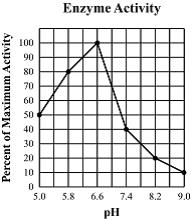
Which of the following conclusions can be drawn from this graph?
a)
The optimum pH of the enzyme is 6.6.
b)
The optimum pH of the enzyme is 5.8
c)
The enzyme’s activity increases as pH increases 5.0 to 9.0
d)
The enzyme’s activity is greater around pH of 8.0 .
6.
An enzyme speeds up a chemical reaction in the cell but can only be used once.  True or False? 
a)
true
b)
false
7.
What is the purpose  of an enzyme?
a)
give permission for the reaction
b)
raise activation energy
c)
speed up reactions
d)
control how many reactions occur
8.
What molecule absorbs sunlight for photosynthesis?
a)
chloroplast
b)
thylakoid
c)
grana
d)
chlorophyll
9.
Which of the following is the correct equation for PHOTOSYNTHESIS?
a)
6CO2 + 6H2O --> 6O+ C6H12O6
b)
6CO+ C6H12O6 + 6H2O --> O
c)
6O2 + 6H2O --> 6CO+ C6H12O6
d)
C6H12O6 + 6O2 ---> 6H2O + 6CO2 
10.
What is the chemical formula for glucose?
a)
C2H6O2
b)
C12H12O12
c)
C2H2O2
d)
C6H12O6
11.
What is the original source of almost all energy in most ecosystems?
a)
carbohydrates
b)
sunlight
c)
water
d)
carbon
12.
Identify letter B.
a)
cell membrane
b)
nucleus
c)
cell wall
d)
cytoplasm
13.
Protective layer around cells
a)
cell blanket
b)
cell membrane
c)
nucleus
d)
chloroplast
14.
Which statement is true about cell walls?
a)
found only in plants
b)
contains chlorophyll
c)
produces energy
d)
it has magical powers
15.
Which invention led to the discovery of the cell?
a)
the telescope
b)
the scopescope
c)
the microscope
d)
the magnifying lense
16.
What job does the chloroplast do?
a)
Collects water
b)
Provides structure for the plant cell
c)
Collects sunlight for photosynthesis
d)
is the cells control center
17.
Which type of microbe releases toxins which damages cells within the body?
a)
A Bacteria
b)
B Fungus
c)
C Virus
d)
D Nucleus
18.
Where do virus pathogens reproduce in the body?
a)
A Within cells
b)
B In the blood
c)
C In the stomach
d)
D In warm wet places
19.
Which of the following is a form of the body’s primary defence system?
a)
A Skin
b)
B White blood cells
c)
C Phagocytosis
d)
D Vaccination
20.
What is phagocytosis?
a)
A The engulfing of foreign bodies
b)
B The production of antibodies
c)
C The splitting of bacteria
d)
D A stage in mitosis
21.
How is the measles virus transmitted?
a)
A Inhalation of droplets from sneezes and coughs
b)
B Sexual contact
c)
C Drinking of contaminated dirty water
d)
D Mosquito
22.
How can antibiotic resistance be reduced?
a)
A Finish the course, only have antibiotics when required.
b)
B Take the dose until you are feeling better and then stop as soon as possible.
c)
C Ensure regular antibiotics are taken to ensure that the body is free of all pathogens
23.
What is the general name for a disease causing organism?
a)
A Cell
b)
B Pathogen
c)
C Yeast
d)
D Microbe
24.
Which cell in the body is responsible for the production of antibodies?
a)
A Red blood cell
b)
B White blood cell
c)
C Bone marrow
d)
D Liver
25.
What does a vaccination contain?
a)
A An active form of a disease
b)
B A dead or weakened form of a disease
c)
C A medicinal cure for a disease
d)
D Antibodies for a disease
26.
Which dose of a drug is the most suitable?
a)
A The maximum possible without damage to the body
b)
B The lowest amount while still being effective and safe
c)
C Any dose as long as it doesn’t cause side effects
d)
D The amount that didn’t kill the cells during preclinical trials
27.
What is the first stage in the testing of a new drug?
a)
A Testing on volunteers
b)
B Testing on tissue
c)
C Testing on patients
d)
D Carrying out a double blind trial
28.
Tobacco Mosaic Virus makes leave discoloured. Which process does this inhibit?
a)
A Respiration
b)
B Photosynthesis
c)
C Cell division
d)
D Root growth
29.
What is the method of transmission, symptoms and treatment of gonorrhoea?
a)
A Sneezing, discharge from genitals, antiviral cream
b)
B Sexual contact, discharge from genitals, antibiotics
c)
C Sexual contact, excess urination, antibiotics
d)
D Sharing needles, vomiting, antibiotics
30.
What type of pathogen causes malaria?
a)
A Virus
b)
B Bacteria
c)
C Protist
d)
D Bacteria
31.
What are painkillers used to treat?
a)
A To kill virus’
b)
B To kill bacteria
c)
C To treat the symptoms of the disease
d)
D To damage pathogens
32.
In a double blind trial, who knows who is taking the drug?
a)
A The patient
b)
B The patient and the doctor
c)
C The pharmaceutical company
d)
C The doctor
33.
Which pathogen causes Black Rose Spot and how is it treated?
a)
A Fungus, pesticide
b)
B Bacteria, herbicide
c)
C Fungus, herbicide
d)
D Virus, pesticide
34.
What is a vector?
a)
A A type of virus
b)
B An organism that gets infected by a virus
c)
C A dangereous microorganism
d)
D An organism that transmits a virus
35.
What is herd immunity?
a)
A A herd of cows with no disease
b)
B Vaccinating most of the population encourages the virus
c)
C Vaccinating some people in the population
d)
D Vaccinating most of the population leaves the virus know one to infect
36.
What did Semmelweis discover?
a)
A He discovered how to do Clinical Trials
b)
B He discovered Asprin
c)
C He discovered that infection could be reduced by doctors washing their hands before treating patients
d)
D He discovered Penicillin
37.
Where does the energy for photosynthesis come from?
a)
A Sunlight
b)
B The ground
c)
C Sugars the plant makes
d)
D Carbon dioxide in the air
38.
What gas is produced during photosynthesis?
a)
A Oxygen
b)
B Carbon dioxide
c)
C Glucose
d)
D Nitrogen
39.

What is the equation for photosynthesis?

a)

A Carbon dioxide + Water = Glucose + oxygen

b)

B Carbon dioxide + water = glucose + oxygen

c)

C Oxygen + glucose = water + carbon dioxide

d)

D Glucose + water = Carbon dioxide + oxygen

40.
What is the best definition of photosynthesis?
a)
A Using light to make proteins
b)
B Using light energy to make starch
c)
C Using light energy to make glucose
d)
D Using light energy to make food.
41.
What has happened to the concentration of oxygen in the Earth’s atmosphere?
a)
A Increased
b)
B Decreased
c)
C Remained the same
d)
D There isn’t any
42.
The rate of photosynthesis can be determined by:
a)
A measuring the volume of oxygen produced in 2 minutes
b)
B measuring the volume of oxygen produced
c)
C measuring the volume of oxygen used in 2 minutes
d)
D measuring the volume of oxygen used.
43.
What are amino acids used for?
a)
A To make proteins
b)
B For an energy storage molecule
c)
C To make fats
d)
D To strengthen cell walls
44.
What is aerobic respiration?
a)
A Respiration with oxygen
b)
B Respiration without oxygen
c)
C Respiration with carbon dioxide
d)
D Respiration without carbon dioxide
45.
What is anaerobic respiration?
a)
A Respiration without any/much oxygen
b)
B Respiration with oxygen
c)
C Respiration using carbon dioxide
46.
Which type of respiration produces the most energy?
a)
A Aerobic
b)
B Anaerobic
c)
C They both produce the same
d)
D Photosynthesis
47.
During exercise, which bodily process increase?
a)
A The heart rate & the breathing rate
b)
B The rate of digestion, the heart rate & the breathing rate
c)
C The heart rate only
48.
What is oxygen debt?
a)
A The extra oxygen required to after exercise to react with the lactic acid.
b)
B The extra oxygen required to before exercise to react with the lactic acid.
c)
C The extra oxygen required to during exercise to react with the glucose.
d)
D The extra oxygen required to after exercise to react with the glucose.
49.
What is starch synthesised from?
a)
A Glucose
b)
B Fatty acids and glycerol
c)
C Enzymes
d)
D Amino acids
50.
What is the best definition of metabolism?
a)
A The rate at which chemical reactions occur in cells and the body
b)
B The rate at which digestion occurs
c)
C The speed at which toxins are broken down by the body
d)
D The speed at which enzymes work in the digestive system
51.
What type of reaction is photosynthesis?
a)
A Bioluminescence
b)
B Endothermic
c)
C Decomposition
d)
D Exothermic
52.
What type of reaction is respiration?
a)
A Neutralisation
b)
B Exothermic
c)
C Endothermic
53.
Why does the heart rate increase during exercise?
a)
A To increase the oxygen supply to the muscles
b)
B To increase glucose and oxygen supply to the muscles.
c)
C To increase the supply of carbon dioxide to the cells
d)
D To increase the supply of oxygen and urea to the cells.
54.
What are fats broken down into?
a)
A Glucose
b)
B Fatty acids and glycerol
c)
C Enzymes
d)
D Amino acids
55.
Which of the following is an example of a metabolic reaction?
a)
A The reabsorption of water in the large intestine
b)
B The formation of amino acids from glucose and nitrate ions
c)
C The absorption of glucose in the small intestine.
d)
D The dilation of blood vessels when hot
56.
What does the symbol C6H12O6 represent?
a)
A Protein
b)
B Starch
c)
C Glucose
d)
D Vitamin C
57.

What cellular organelle absorbs the light energy?

a)

A Mitochondria

b)

B Nucleus

c)

C Cytoplasm

d)

D Chloroplast

58.
Where does respiration occur?
a)
A In the lungs
b)
B In all cells of animals
c)
C in all living cells
d)
D in plants and animals
59.
Respiration…
a)
A produces energy and oxygen
b)
B produces oxygen and releases energy
c)
C produces carbon dioxide and releases energy
d)
D produces energy and releases carbon dioxide
60.

What is the equation for respiration?

a)

A Carbon dioxide + Water = Glucose + oxygen

b)

B Carbon dioxide + water = glucose + oxygen

c)

C Oxygen + glucose = water + carbon dioxide

d)

D Glucose + water = Carbon dioxide + oxygen

61.
What is aerobic respiration in yeast called?
a)
A Combustion
b)
B Decomposition
c)
C Fermentation
d)
D Oxidisation
62.
What is the equation for anaerobic respiration?
a)
A Glucose à lactic oxide
b)
B Glucose à lartic acid
c)
C Glucose à lactic acid
d)
D Glucose à lastic acid
63.
Which biological molecules control the rate of metabolism?
a)
A Glucose
b)
B Fatty acids and glycerol
c)
C Enzymes
64.
What are the limiting factors of photosynthesis?
a)
A Carbon dioxide, water and temperature
b)
B Water, temperature, light intensity and carbon dioxide
c)
C Light intensity, carbon dioxide and water
d)
D Light intensity, carbon dioxide and temperature
65.
Which statement best describes how changing the temperature affects the rate of photosynthesis?
a)
A As temperature increases the rate increases
b)
B As temperature increases the rate decreases then increases
c)
C As the temperature increases the rate decreases
d)
D As the temperature increases the rate increase then decreases.
66.
Glucose can be used for 1) Respiration, 2) to make starch, 3) to make amino acids, 4) to make cellulose. Which are the above are correct?
a)
A 1,2 & 4
b)
B 1, 2 & 3
c)
C None of them
d)
D All of them
67.
Cellulose is made from glucose. What is its function?
a)
A To be used to build cell membranes
b)
B As a storage molecule
c)
C To be used to make proteins
d)
D To strengthen cell walls
68.
Glucose is used to produce amino acids using what?
a)
A Nitrogen
b)
B Magnesium ions
c)
C Nitride ions
d)
D Nitrate ions
69.

Which equation represents anaerobic respiration in plants and yeast cells?

a)

A starch = glucose + ethanol

b)

B glucose = ethanol + oxygen

c)

C glucose = carbon dioxide + water

d)

D Glucose = ethanol + carbon dioxide

70.
What is the build up of carbon dioxide in the muscles known as?
a)
A Breathing debt
b)
B Respiration debt
c)
C Carbon dioxide debt
d)
D Oxygen debt
71.
What type of cell is this?
a)
animal
b)
plant
c)
bacteria
d)
algae
72.
Which of these would you not find in an animal cell?
a)
cell membrane
b)
cell wall
c)
nucleus
d)
ribosome
73.
Which of these would you not expect to find in a bacterial cell?
a)
cell wall
b)
cell membrane
c)
nucleus
d)
cytoplasm
74.
What term is used to describe a single celled organism without a true nucleus?
a)
prokaryote
b)
virus
c)
protoctista
d)
eukaryote
75.
Where in a cell does respiration take place?
a)
ribosome
b)
nucleus
c)
mitochondria
d)
cytoplasm
76.
Which of these shows the correct order, going from the smallest to the largest?
a)
gene, chromosome, nucleus, cell
b)
chromosome, gene, nucleus, cell
c)
nucleus, gene, chromosome, cell
d)
gene, nucleus, chromosome, cell
77.
What is the function of the cell membrane?
a)
respiration
b)
protein synthesis
c)
control of substances in/out of the cell
d)
reproduction
78.
What is the function of the ribosomes?
a)
respiration
b)
protein synthesis
c)
cell replication
d)
DNA replication
79.
When cells become specialised for a particular role, it is known as ...?
a)
cell differentiation
b)
cell replication
c)
cell reproduction
d)
cell mitosis
80.
Which of the following is the correct statement?
a)
Both plant and animal cells differentiate at an early stage.
b)
Animal cells differentiate early, whilst many plant cells can differentiate throughout life.
c)
Plant cells differentiate early, many animal cells can differentiate throughout life.
d)
The majority of both plant and animals cells can differentiate later in life.
81.
Unspecialised cells that can differentiate to form many different types of cell are known as...?
a)
Stem cells
b)
Specialised cells
c)
Differential cells
d)
Special cells
82.
Which type of human stem cell would be able to differentiate into the most type of specialised cells?
a)
Embryonic stem cells
b)
Adult bone marrow stem cell
83.
Cells with a membrane, nucleus and cytoplasm, such as those found in animals and plants, are known as ...?
a)
prokaryotes
b)
eukaryotes
84.
Which type of cell would be the smallest?
a)
Eukaryote
b)
Prokaryote
85.
When using a microscope, how do you work out the real size of an image?
a)
image size ÷ magnification
b)
magnification ÷ image size
c)
image size × magnification
d)
image size + magnification
86.
How do bacteria reproduce?
a)
mitosis
b)
meiosis
c)
simple cell division
d)
they don't
87.
What is the name of the technique that should be used to prepare bacterial plates?
a)
septic
b)
aseptic
c)
sterile
d)
uncontaminated
88.
Q A group of cells with the same structure and function is called?
a)
A a tissue
b)
B an organ
c)
C an organ system
d)
D a sample
89.
15 mm would be equal to how many μm?
a)
150
b)
1 500
c)
15 000
d)
150 000
90.
Q Enzymes are able to do what to molecules?
a)
A build them up and break them down
b)
B build them up but not break them down
c)
C not build them up but break them down
d)
D not build them up and break them down
91.
Q Which of these are proteins broken down into?
a)
A Amino acids
b)
B Fatty acids
c)
C Glycerol
d)
D Simple sugars
92.
Q The name of the blood vessel that goes to the lungs and the name of the blood vessel to the body is:
a)
A pulmonary artery, aorta
b)
B vena cava, coronary artery
c)
C pulmonary vein, vena cava
d)
D vena cava, aorta
93.
Q The function of the red blood cell is best described as to:
a)
A carry oxygen bound to haemoglobin
b)
B deposit carbon dioxide to the lungs
c)
C combine with carbon monoxide
d)
D make the blood red so it carries oxygen
94.
Q Which one of these is not a function of a white blood cell:
a)
A make bone marrow
b)
B engulf and digest
c)
C make antitoxins
d)
D make antibodies
95.
Q The job of something biological is scientifically known as?
a)
A its structure
b)
B its function
c)
C its organisation
d)
D its organ
96.
Q Water is reabsorbed back into the blood by which organ in the digestive system?
a)
A oesophagus
b)
B large intestine
c)
C small intestine
d)
D stomach
97.
Q Enzymes are made of which chemical?
a)
A Fat
b)
B Protein
c)
C Carbohydrate
d)
D DNA
98.
Q which of these is true for an enzyme reaction?
a)
A the substrate stays the same and enzyme changes
b)
B the substrate changes and the enzyme changes
c)
C the substrate stays the same and the enzyme stays the same
d)
D the substrate changes and the enzyme stays the same
99.
Q Where is bile made and stored in the digestive system?
a)
A made in the small intestine stored in the stomach
b)
B made in the liver stored in the gall bladder
c)
C made in the gall bladder stored in the liver
d)
D made in the liver stored in the small intestine
100.
Q Enzymes do not work well above certain temperatures because
a)
A The active site stays the same shape
b)
B The active site changes shape
c)
C They die
d)
D The substrates move too quickly
101.
Q The heart pumps blood to the lungs and upon return out to the body. In the correct order which chambers do this?
a)
A Right ventricle, right atrium
b)
B Right ventricle, left ventricle
c)
C Left ventricle, right ventricle
102.
Q Heart surgery is a serious procedure – a doctor and patient evaluate what before it is carried out?
a)
A side effects v hospital stay length
b)
B benefits v risks
c)
C opportunity v costs
103.
Q The risk of a heart attack is increased if:
a)
A the coronary arteries are widened
b)
B the coronary arteries are narrowed
c)
C blood pressure is low
d)
D the patient takes statins
104.
Q There are many successful treatments for cancer now. Choose the answer that is used to diagnose rather than treat cancer:
a)
A chemotherapy
b)
B CAT scan
c)
C surgery
d)
D radiotherapy
105.
Q Which one of the following structures is only found in a plant cell?
a)
A cytoplasm
b)
B nucleus
c)
C chloroplast
d)
D cell membrane
106.
Q What is the scientific name for muscles moving food along the digestive system?
a)
A active transport
b)
B photosynthesis
c)
C peristalsis
d)
D diffusion
107.
Q Useful substances are absorbed from the digestive system into the blood in which organ?
a)
A Stomach
b)
B oesophagus
c)
C Small intestine
d)
D Large intestine
108.
Q Increasing the temperature of an enzyme catalysed reaction does what to the rate of reaction?
a)
A increases the rate of reaction exponentially
b)
B decreases the rate of reaction
c)
C increases the rate of reaction to a point
109.
Q What do enzymes do above their optimum temperature?
a)
A Die
b)
B Work faster
c)
C Denature
d)
D Work at the same rate
110.
Q What do enzymes do below their optimum temperature as it decreases?
a)
A Denature
b)
B Die
c)
C Become inactive
d)
D Work at the same rate
111.
Q What is the order that air enters the body?
a)
A nose, bronchi, trachea
b)
B Trachea, alveoli, bronchi
c)
C Trachea, bronchi, alveoli
d)
D bronchi, alveoli, nose
112.
Q Blood is a tissue consisting of a what liquid in which cells and platelets are suspended?
a)
A plasm
b)
B plast
c)
C plasma
113.
Q What do heart valves do?
a)
A Let blood flow both ways
b)
B Stop blood flowing forward at times
c)
C Stop blood flowing backwards
d)
D Lower blood pressure
114.
Q What are statins used for?
a)
A Lowering blood pressure
b)
B Lowering heart rate
c)
C Lowering cholesterol
d)
D Stating cholesterol levels
115.
Q Growths of abnormal cells contained within one area, usually in a membrane that do not invade other parts are called:
a)
A malignant tumours
b)
B local tumours
c)
C benign tumours
d)
D harmless tumours
116.
Q The palisade mesophyll is characterised by cells that have many:
a)
A nuclei
b)
B vacuoles
c)
C chloroplasts
d)
D cytoplasms
117.
Q Guard cells surrounding stomata control which process most:
a)
A photosynthesis
b)
B respiration
c)
C transpiration
d)
D neutralisation
118.
Q Digestion is a process to produce which of these to pass into the blood?
a)
A Small insoluble molecules
b)
B Large insoluble molecules
c)
C Large soluble molecules
d)
D Small soluble molecules
119.
Q Which of these are carbohydrates broken down into?
a)
A Fatty acids
b)
B Glycerol
c)
C Amino acids
d)
D Simple sugars
120.
Q What is the role of bile indigestion?
a)
A emulsify amino acids and neutralise stomach acid
b)
B emulsify amino acid and increase stomach acid
c)
C emulsify fat and increase stomach acid
d)
D emulsify fat and neutralise stomach acid
121.
Q Which of the following is not a blood vessel of the body?
a)
A vein
b)
B capillary
c)
C artery
d)
D circulation
122.
Q Haemophilia is a disease where the platelets don’t work properly which means a person would have problems with:
a)
A carrying oxygen
b)
B fighting disease
c)
C making antibodies
d)
D clotting when cut
123.

Q Cancer is when cells:

a)

A lump together which then splits into other cells changing their DNA

b)

B stop dividing but grow bigger into a lump

c)

C are inherited that are abnormal and die early

d)

D change DNA which leads to uncontrollable growth and division

124.
Q Malignant melanoma is a type of skin cancer. Which of these methods is not helpful to prevent it?
a)
A keeping covered in the sun
b)
B applying sunscreen
c)
C checking moles
d)
D sunbathing
125.

Q Which of the following is a plant tissue related to transporting substances:

a)

A meristem tissue

b)

B spongy mesophyll

c)

C epidermal tissue

d)

D xylem and phloem