
 Worksheets
Greenhouse and Radiation
Total questions: 47
Worksheet time: 2hrs 36mins
Which of the following is NOT a greenhouse gas?
Carbon dioxide
Methane
Water vapor
Nitrogen

The greenhouse effect is caused by
more heat arriving at the Earth from the sun
the Earth releasing more heat at night
gases in the air trapping heat released by the Earth

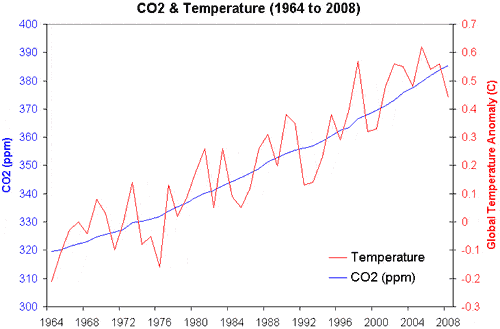
The graph shows us that
the earth temperature is always increasing
the earth's temperature has steadily increased since 1900
the earth's temperature has steadily rising since the 1960s
the earth's temperature decreased during the 19th and 20th centuries

The greenhouse effect comes from
all heat being released by the earth going back into space
some of the heat heat being released by the earth going back into space
some of heat being released by the earth being trapped in the air
all of heat being released by the earth being trapped in the air


In the diagram, which arrow(s) represents the warming that's caused by the greenhouse effect?
1 and 3
2
4 and 6
5
7
The greenhouse effect is caused by…
Too much heat in the atmosphere
Too much sunshine reaching Earth
Greenhouse gases in the lower atmosphere absorbing radiation from the Earth's surface, and preventing much of it escaping into space
Greenhouse gases in the lower atmosphere absorbing solar radiation
Increased carbon dioxide may cause global warming by
allowing more sunlight into the atmosphere.
reflecting more sunlight from clouds.
reducing the amount of oxygen in the air.
trapping more heat in the atmosphere.
The three (3) primary heat absorbing gases in the atmosphere are (CHOOSE THREE):
Carbon dioxide
Water vapor
Nitrogen
Hydrogen
Methane
Greenhouse gasses are molecules that ____ heat.
redirect or trap
do not interact with
produce

The highest gaseous pollutant is
methane
nitrous oxide
carbon dioxide
fluorinated gases

Which of the following are greenhouse gases?
Carbon dioxide
Methane
Water vapor
All answers are correct


The greenhouse effect is natural.
True
False

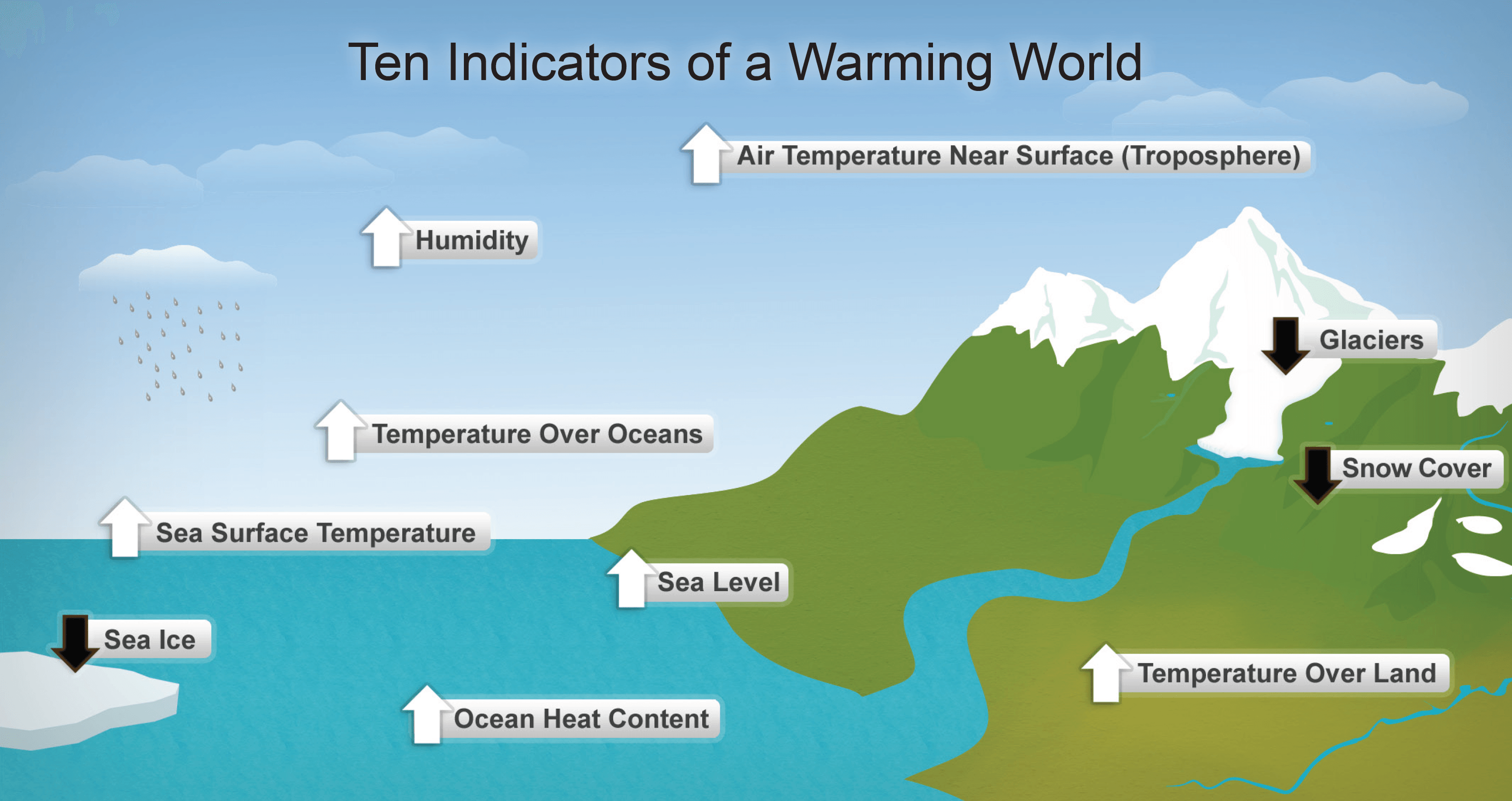
Which of the following are indicators that our world is warming?
Decreased air temperature
Less sea ice
Increasing sea level
Decrease in glaciers
Which in the atmosphere protects us from harmful UV radiation?
Ozone
Water Vapor
Methane
Sulfur Dioxide
Carbon Dioxide


The direct transfer of heat from one substance to another by touching.
heat
convection
temperature
conduction
A measure of the average (kinetic) energy of motion of particles in a substance.
heat
temperature
conduction
all of these
Process by which, in a fluid being heated, the warmer part of the mass will rise and the cooler portions will sink.
conduction
convection
radiation
temperature
Energy that is radiated or transmitted in the form of rays or (electromagnetic) waves or particles.
conduction
convection
radiation
temperature
When light bounces off an object with the same intensity.
reflection
refraction
scattering
radiation
Natural situation in which heat is retained in Earth's atmosphere by carbon dioxide, methane, water vapor, and other gases
greenhouse gases
greenhouse effect
green power house
all of these
The mechanisms that operate to transfer energy between Earth's surface and the atmosphere
conducion, convection, radiation
conduction, convection, radiotion
conduction, convection, radiation
nuclear fusion
Which are considered Greenhouse Gasses?
Sodium Chloride, Sodium dioxide, methanicane, and other gases in the air are considered Greenhouse Gases
Sodium Choride and smoky gasses
Water vapor, carbon dioxide, methane, and other gases in the air
Oxygen and Triglyceride
The energy from the absorbed radiation heats the gases in the air and the gases hold the heat in the Earth’s atmosphere. This process is called the
Electromagnetic Waves
Greenhouse Effect
Heat Transfer
El Niño
The greenhouse effect.....
Protects the ocean from excessive evaporation rates
Is a place where people grow plants because the temperature is regulated
Keeps Earth’s atmosphere at a temperature that is comfortable for most living things

How are a greenhouse and Earth's atmosphere most alike?
Both prevent harmful radiation from reaching Earth.
Both trap heat inside and prevent it from escaping.
Both lower the temperature to be suitable for life
Both contain large amounts of carbon dioxide
Which of the following can impact the global climate?
Volcanic eruptions
Greenhouse gases
Solar activity
Natural fluctuations of the planet
Where does the energy that keeps the surface of the Earth warm come from?
Fossil fuels
The sun
The spin of the Earth
The friction of the Earth's atmosphere
The Moon
Which of the following best describes global warming?
The current temperatures on Earth
The weather during the summer
The increase in the average temperatures on Earth
All of the above


According to the bar chart, which of the following gases are the top 2 major contributors to the greenhouse effect?
Carbon dioxid and methane
Methan and argon
Carbon dioxide and argon
argon and nitrous oxide

What is the main gas found in the atmosphere and air we breathe?
Oxygen
Carbon Dioxide
Nitrogen
Argon

