wayground logo

Free Printable Worksheets

Font size

S
M
L
XL
Worksheets

Bio Revision Sem 2 Set 4

Total questions: 40

Worksheet time: 40mins

Name
Class
Date
1.

Which of these is the most common compound in the cell walls of gram-positive bacteria?

a)

cellulose

b)

lipopolysaccharide

c)

peptidoglycan

d)

phospholipid bilayer

2.

Which of the following is a characteristic of all angiosperm?

a)

Double fertilization

b)

Free-living gametophytes

c)

Carpels that contain microsporangia

d)

Ovules that are not contained within ovaries

3.

3. State the Phylum for the species X.

a)

Apicomplexa

b)

Ciliophora

c)

Euglenophyta

d)

Rhizopoda

4.
Which of the following represents invertebrate chordates?
a)
lancelet
b)
lampreys
c)
snakes
d)
sharks
5.

Choose the correct order

a)

Genus > Species > Order > Class > Family > Phylum > Kingdom > Domain

b)

Kingdom > Domain > Phylum > Class > Order > Family > Genus > Species

c)

Kingdom > Domain > Phylum > Class > Order > Family > Species > Genus

d)

Domain > Kingdom > Phylum > Class > Order > Family > Genus > Species

6.

Which of the following is characteristic of alternation of generations in land plants?

a)

Haploid sporophytes make haploid spores

b)

Gametophytes produce spores that develop into gametes

c)

Sporophytes and gametophytes are typically similar in appearance

d)

Meiosis in sporophytes produces haploid spores

7.

A sponge's skeletal materials (spicules, spongin) are manufactured by the

a)

Epidermal cells

b)

choanocytes

c)

zygotes

d)

amoebocytes

8.

Which of these statements is true of sponges?

a)

They have an open circulatory system

b)

They are segmented animals

c)

They have no true tissues

d)

Food is digested within a gastrovascular cavity

9.
What is the level of organization where the community is interacting with abiotic factors?
a)
community
b)
ecosystem
c)
population
d)
biome
10.
The carrying capacity of an environment for a particular species at a particular time is determined by the
a)
number of individuals in the species.
b)
distribution of the population.
c)
reproductive potential of the species.
d)
supply of the most limited resources
11.
What point on the graph represents the carrying capacity?
a)
A
b)
B
c)
C
d)
D
12.

Which of the following are examples of a density independent factors?

a)

forest fire

b)

seasonal cycles

c)

storms

d)

disease

13.

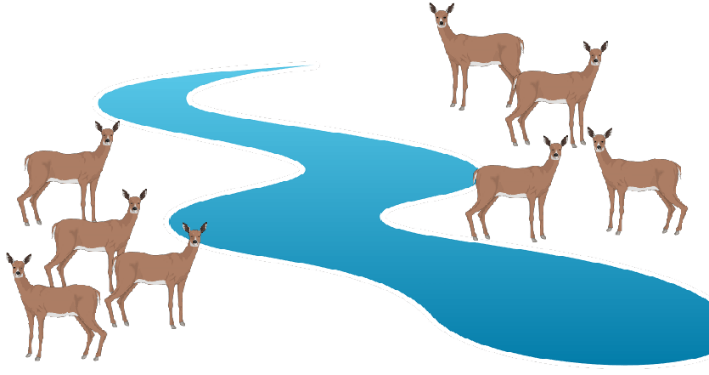
Two populations of the same species are separated by land barriers like rivers or mountains.

a)

geographical isolation

b)

temporal isolation

c)

adaptive ratiation

d)

behavioral isolaton

14.

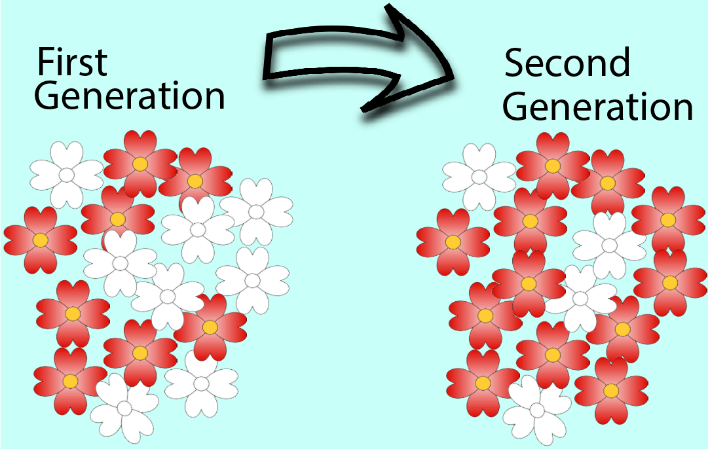
Changes in the gene pool over time.

a)

Mitosis

b)

Genetic Variation

c)

Gene Pool

d)

Genetic Drift

15.

Enzymes function as catalysts because they

a)

Increase the free energy of a chemical reaction

b)

Lower the activation energy of a chemical reaction

c)

Decrease the enthalpy of a chemical reaction

d)

Supply the energy to start a chemical reaction

16.

In non-competitive inhibitor, the allosteric inhibitor

a)

Binds to the active site, preventing the substrate from binding to the enzyme

b)

Binds to the substrate, preventing it from binding to the active site

c)

Binds to the enzyme at a site away from the active site, altering the shape of the enzyme

d)

Changes the pH of the environment that the enzyme acts in

17.
Aerobic respiration occurs in which organelle?
a)
chloroplast
b)
mitochondrion
c)
ribosome
d)
nucleus
18.
The inner membrane of this organelle is highly folded.  What is the advantage of this folding?
a)
It increases the amount of light absorbed by the organelle.
b)
It increases the structural support of the organelle.
c)
It increases the surface area, allowing greater ATP production.
d)
It increases the surface area and the rate of glucose production.
19.

What is the name of the process that helps make beer and wine?

a)

Fermentation

b)

Alcohol fermentation

c)

Lactic acid fermentation

d)

Glycolysis

20.
The final electron acceptor in the ETC is
a)
oxygen
b)
NADH
c)
glucose
d)
CO2
21.

Which of the following is NOT a product of the light dependent reactions?

a)

ATP

b)

NADPH

c)

Oxygen

d)

Glucose

22.

Which enzyme joins CO2 and RuBP?

a)

NADP+ reductase

b)

RUBISCO

c)

ATP synthase

d)

none of the above

23.

In the chloride shift, ________________ move into the erythrocyte to replace the ______________ that move out.

a)

Chloride ions; carbon dioxide molecules.

b)

Carbon dioxide molecules; chloride ions.

c)

Bicarbonate ions; chloride ions.

d)

Chloride ions; bicarbonate ions.

24.

The Bohr shift occurs in region of …

a)

Increased partial pressure of oxygen.

b)

Decreased partial pressure of oxygen.

c)

Increased partial pressure of carbon dioxide.

d)

Decreased partial pressure of carbon dioxide.

25.
Order the phases an action potential travels in the conduction system
a)
SA node--> AV bundle branches--> AV node--> Purkinje fibers
b)
SA node--> AV node--> AV bundle branches-->  Purkinje fibers
c)
Av bundle branches--> AV node--> SA node--> Purkinje fibers
d)
Purkinje fibers--> SA node--> AV node--> AV bundle branches
26.

Which letter/s of the ECG shows the ventricles contracting.....

a)

P

b)

QRS

c)

ST

d)

T

27.
In symplastic pathway water moves from cell to cell through
a)
plasmodesmata
b)
cell walls
c)
stomata
d)
none
28.

Sucrose loading into phloem requires

a)

active transport

b)

passive transport

c)

diffusion

d)

osmosis

29.

What effect does higher ADH levels have on the collecting duct?

a)

Faster at diffusion

b)

Less permeable to water

c)

More permeable to water

d)

Makes it leak

30.
High pressure in Bowman's capsule is caused by a _________ afferent arteriole and a __________ efferent arteriole
a)
large, small
b)
small, large
c)
nutrient rich, nutrient poor
d)
nutrient poor, nutrient rich
31.
The nerve cell that transmits impulses from the brain or spinal cord to a muscle or gland.
a)
Motor Neuron
b)
Relay Neuron
c)
Sensory Neuron
d)
Schwann cell
32.
The gap that a message has to cross to get from one neuron to the other is called the _____
a)
synapse
b)
dendrite
c)
axon
d)
nucleus 
33.

States that the muscle fibers shorten as the actin and myosin filaments pull on each other

a)

threshold stimulus theory

b)

sliding filament theory

c)

neurotransmitter theory

d)

all or none principle

34.
Which neurotransmitter is used to control skeletal muscle contraction?
a)
Dopamine
b)
Seratonin
c)
Norepinephrine
d)
Acetylcholine
35.

Name this process shown in diagram.

a)

eating

b)

phagocytosis

c)

destruction

d)

ingesting

36.
After an initial infection, B-cells recognize the measles virus. How is this helpful in human immune response? 
a)
The B-cells use this recognition to defend the body against other pathogens, such as bacteria.
b)
 The B-cells more quickly recognize and respond to any other virus that invades the body.
c)
The B-cells produce antibodies more quickly if the measles virus is encountered again.
d)
The B-cells transfer this recognition to T-cells, which will then devour the viruses.
37.
Which is an example of passive immunity?
a)
people being vaccinated against disease
b)
people taking vitamins to boost their immune response
c)
people receiving antibodies from their mothers before birth
d)
people producing antibodies against organisms that cause diseases they have had previosuly
38.
Which of the following is not a requirement for glycolysis?
a)
Oxygen
b)
ATP
c)
NAD+
d)
Glucose
39.

At night, CAM plants incorporate CO2 into______, which is stored in the __________ of their cells.

a)

fructose ; vacuoles

b)

glucose ; starch granules

c)

malate ; vacuoles

d)

pyruvate ; starch granules

40.
Which high energy electron carrier is regenerated during fermentation that allows cells to continue to make ATP using glycolysis?
a)
NAD+
b)
NADPH
c)
ATP
d)
ADP