wayground logo

Free Printable Worksheets

Font size

S
M
L
XL
Worksheets

GMAS Review Force & Motion

Total questions: 60

Worksheet time: 46mins

Name
Class
Date
1.

What is Newton's First Law also known as?

a)

The Law of Friction

b)

The Law of Mass

c)

The Law of Inertia

d)

The Law of Gravity

2.
What kind(s) of objects have inertia?
a)
all objects with mass
b)
only objects at rest
c)
only objects in motion
d)
only objects whose motion is being changed
3.
Which type of force(s) will cause a change in an object's motion?
a)
gravity
b)
zero net force
c)
balanced forces
d)
unbalanced forces
4.
An object in motion will stay in what kind of motion as long as the net forces acting on it are zero?
a)
slowing motion in a straight line
b)
accelerating motion in a straight line
c)
constant motion in a straight line
d)
constant motion in an unpredictable direction
5.
What is the name for a push or pull?
a)
A movement
b)
A force
c)
Speed
d)
Density
6.
friction is a force that acts 
a)
in the same direction as the motion
b)
opposite to the direction of the motion
c)
opposite to the applied forces
d)
the same direction as the applied force
7.

What is Newton's First Law?

a)

F=ma

b)

Every action has an equal and opposite reaction

c)

An object at rest stays at rest; an object in motion stays in motion.

d)

Friction

8.
What is the net force for this situation?
a)
17 N Right
b)
17 N Left
c)
3 N Right
d)
3 N Left
9.
A resistance to a change in motion is 
a)
Acceleration
b)
Inertia
c)
Gravity
d)
Velocity
10.
The inertia of an object depends on its
a)
mass
b)
speed
c)
velocity
d)
direction
11.
Net Force not = 0
a)
Balanced
b)
Unbalanced
12.
Does not cause a change in motion
a)
Balanced
b)
Unbalanced
13.
Net Force not = 0
a)
Balanced
b)
Unbalanced
14.
You hit a wall with a stick.  The equal but opposite reaction is _____
a)
the wall pushes against you
b)
the stick pushes against you
c)
you push against the stick
d)
the wall pushes against the stick
15.
What is inertia?
a)
the force that opposes motion
b)
the force of attraction between 2 objects
c)
an object's tendency to stay in motion or to stay at rest
d)
a change in an object's speed and/or direction
16.
Why does an 18-wheeler have more inertia than a bicycle?
a)
it has more mass
b)
it has more volume
c)
it is not as aerodynamic
17.
friction is a force that acts 
a)
in the same direction as the motion
b)
opposite to the direction of the motion
c)
opposite to the applied forces
d)
the same direction as the applied force
18.
If I slowly roll a ball down the hallway, why does it eventually stop?
a)
Because of Newton's First Law
b)
Friction and Air Resistance
c)
Inertia
d)
It wouldn't stop, it would keep going until it hits a wwall.
19.
If forces on an object are balanced, the object is...
a)
Moving
b)
Not moving
20.
Your friend kicks a soccer ball, and it stops a few feet from you. What needs to happen to it in order for it to return to your friend?
a)
Friction has to be applied to the ball.
b)
Force has to be applied to the ball.
c)
Speed has to be applied to the ball.
d)
Inertia has to be applied to the ball.
21.
What is the relationship between heavy objects and inertia?
a)
Only heavy objects have inertia.
b)
Heavy objects have no inertia.
c)
Heavy objects have less inertia.
d)
Heavy objects have more inertia. 
22.
What does the second part of Newton’s first law say about objects at rest?
a)
They cannot move unless they have a lot of friction.
b)
If they are heavy they will stay at rest, but if they are light, they will move. 
c)
They will stay at rest unless an outside force makes them move. 
d)
They have more inertia that objects in motion. 
23.
What unit do we use to measure force?
a)
Newton
b)
Grams
c)
m/s
d)
m
24.
What is the difference between speed and velocity?
a)
Velocity has rate
b)
Velocity is measured in Newtons
c)
Velocity has direction (N, S, E, or W)
d)
Speed has acceleration
25.
Which definition best fits the term inertia?
a)
a force
b)
when something falls forward
c)
resistance to change in state of motion
d)
when an object wants to keep moving
26.
Pick the term that matches the example.
The sprinter was able to increase his speed faster than any other runner in the heat.
a)
Speed
b)
Acceleration
c)
Velocity
27.
Pick the term that matches the example.
The fastest motorcycle in the world went 376 mph.
a)
Speed
b)
Acceleration
c)
Velocity
28.
Pick the term that matches the example.
The plane left the station heading towards the city at 75 mph north.
a)
Speed
b)
Acceleration 
c)
Velocity
29.
Which item has more inertia?
a)
elephant
b)
dog
30.
When an object is in circular motion it is constantly changing its velocity.
a)
True
b)
False
31.
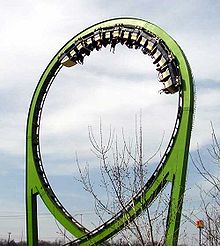
Where is the net force when the rollercoaster is at the top of the loop?
a)
Towards the sky
b)
Towards the Right
c)
Towards the left
d)
Towards the ground
32.
This picture was taken form the International Space Station.  Gravity keeps the space station in orbit.
a)
True
b)
False
33.
As this ride starts to spin in a circular motion the swings move outward.  What is the cause of this outward motion
a)
Gravity
b)
Centripetal Force
c)
Speed
d)
Inertia
34.

moving or tending to move toward a center...

a)

centripetal force

b)

centrifugal force

c)

Tangent

d)

Curvature

35.

Which bucket has more inertia?

a)

The bucket on the left because it has less mass

b)

The bucket on the right because it has more mass

c)

They have the same inertia

d)

The bucket on the right because it has less mass

36.
Reference point can also be described as what?
a)
An ending point
b)
A starting point 
c)
A description
d)
A location
37.
When it comes to describing the location based on the reference point, what must each description always include?
a)
Location and Position
b)
Distance and Position
c)
Direction and Location
d)
Distance and Direction
38.
Your aunt recently flew into town and arrives at Terminal 34.  You and your mother have agreed to pick her up at the front of the airport.  Your aunt calls your mom asking for directions on how to get to the front of the airport.  Based on this information, what is the reference point in this scenario?
a)
Terminal 34
b)
The front of the airport
39.
You agree to meet up with your family at the front of the baseball field before going to watch your little brother’s game.  What is the reference point in this scenario?
a)
The front of the baseball field
b)
The baseball game
40.
The change of position over time is called
a)
position
b)
motion
c)
speed
d)
location
41.
________ is the direction you must travel from the reference point toward an object. 
a)
East 
b)
West
c)
Reference direction
d)
vector
42.
An object is in _____ any time its _____ is changing.
a)
motion, position
b)
distance, motion
c)
speed, position
d)
time, speed
43.
What is speed?
a)
how far you go
b)
how much distance is covered over a period of time
c)
how fast you accelerate
d)
the change in the location of a object
44.
The correct equation to calculate speed is
a)
speed = distance/time
b)
speed = time/distance
c)
speed = distance x time
d)
speed = distance/time2
45.

What are the three ways an object can accelerate? (Select 3 Choices)

a)

Changing Direction

b)

Slowing Down

c)

Motion

d)

Speeding Up

46.
What does this graph represent?
a)
Constant Speed
b)
Acceleration
c)
Not moving
47.
What does this graph represent?
a)
Constant speed
b)
Acceleration
c)
Not moving
48.
What does this graph represent?
a)
Constant speed
b)
Acceleration
c)
Not moving
49.

Match the description to the graph:

"The car is stopped."

a)
b)
c)
d)
50.

Match the description to the graph:

"The car is traveling at a constant speed."

a)
b)
c)
d)
51.

Match the description to the graph:

"The speed of the car is decreasing."

a)
b)
c)
d)
52.

Which runner won the race?

a)

Albert

b)

Bob

c)

Charlie

53.

Which runner stopped for a rest?

a)

Albert

b)

Bob

c)

Charlie

54.

How long did Charlie stop for a rest?

a)

2.5 seconds

b)

2 seconds

c)

3 seconds

d)

5 seconds

55.

Which of the graphs shows that one of runners started in the same place?

a)
b)
c)
d)
56.
What happened during A to B point?
a)
not moving
b)
increasing speed at a constant rate
c)
moving at a constant speed
d)
moving at 10 m/sacceleration
57.
What is the formula to calculate speed?
a)
S = t/d
b)
S = d/t
c)
S = d x t
d)
S = t x d
58.

What does this graph represent?

a)

Constant speed

b)

Acceleration

c)

Object at rest

59.
How does friction affect speed?
a)
more friction decreases speed
b)
more friction increases speed
c)
less friction decreases speed
d)
less friction doesn't affect speed
60.
A type of friction that occurs when air pushes against a moving object causing it to decelerate.
a)
surface area
b)
air resistance
c)
velocity
d)
gravity