
 Worksheets
Ocean Mid-term Review
Total questions: 105
Worksheet time: 1hrs 17mins

This is a picture of?
Gulf Stream
Global Conveyor Belt
Surface Current
Gyre
When surface currents meet continents they ___?
Stop moving
Are refracted (change paths)
Continue in the direction they were going
A Longshore current runs...to the beach.
Parallel
Perpendicular
North-south
East-west
What causes tides?
The Moon & Sun
Wind and Sun
Earthquakes and volcanoes
People and animals

Circular surface currents are called.
Deep ocean currents
Longshore currents
Rip currents
Gyres
Ocean currents move:
Heat
Nutrients
Animals
All of the above
A wave can make a leaf bob up and down on the water, but it cannot move the leaf toward the shore. This is because waves only transfer ________
Matter
Energy
Media
Crests
Stronger winds create __________ waves.
Larger
Smaller

Approx what percentage of the planet is covered in water?
61
71
81
76
Salinity is a measure of the __________ dissolved in water.
Oxygen
Hydrogen
Salt
NaCl
In order for there to be life there must be sunlight present
TRUE
FALSE
Organisms in the deep sea zone normally have the following adaptation?
Large gills due to minimal oxygen at such depths.
Bioluminescent
Venom for prey
Large dorsal fins due to less buoyant water.
Continetal shelf usually extends?
200-500km
20-50m
20-50km
200-500m
The place where the fresh water and salt water meet is called
Brackish water
Saltier water
Ocean water
Brackets water

Collection of ice cores to learn about the history of Earth's ...
Atmosphere
Sediment
Satellites
Dinosaurs
The relatively flat underwater extension of the continent
Shelf
Slope
Rise
Basin

Underwater volcanic mountains
Mid-ocean ridge
Seamounts
Abyssal Mounts
Basin Mounts

Long, narrow depressions, forms when one tectonic plate moves under another one
Mid-ocean ridge
Deep-ocean basin
Ocean Trench
Seamount

Long undersea mountain chain
seamounts chain
mid-ocean ridge
abyssal plain
continental slope
Physical characteristics of ocean water include
temperature and density
density and mass
temperature and mass
density and distance
Density is
mass times volume
mass divided by volume
volume times mass
volume divided by mass
1. The Vikings discovered ____________ and Greenland.
Europe
The Atlantic Ocean
Iceland
gold
1. In 1943 Jacques Cousteau invented the ___________ which was the 1st generation of SCUBA.
Iron Lung
Snorkel
Aqualung
Aquafins
1. Magellan died ___________.
in 1583
at sea
in Hawaii
in the Phillipines
1. _____________ is the Father of Physical Oceanography.
Matther Maury
Christopher Columbus
Jacques Cousteau
James Cook
Particles of organic or inorganic matter that accumulate loose, unconsolidated form are called:
Hydrologic Cycle
Metamorphic Rocks
Sediments
Igneous Rocks
A sediment derived from land and transported to the ocean by wind and flowing water is called a:
Biogenous Sediment
Cosmogenous Sediment
Hydrogenous Sediment
Terrigenous Sediment
A sediment of biological origin is called a:
Biogenous Sediment
Cosmogenous Sediment
Hydrogenous Sediment
Terrigenous Sediment
A sediment formed directly by precipitation (and is also called an authigenic sediment) is called a:
Biogenous Sediment
Cosmogenous Sediment
Hydrogenous Sediment
Terrigenous Sediment
The measure of the force of water pressing on its surroundings.
water pressure
buoyancy
density
air pressure
Which of the following would not cause salinity to increase?
Melting
Increased volcanic activity
Evaporation
Freezing
Word used to characterize a body of water that has oriented in layers defined by density.
Elongated
Stratified
Quantified
Enumerated
The largest constituent in sea water is
Potassium
Magnesium
Sodium
Chlorine
The largest ocean on Earth is the....
Pacific
Arctic
Atlantic
Antarctic
The submersible that discovered the wreckage of the Titanic was called
The Trieste
HMS Beagle
Alvin
The JOIDES Resolution
Who established the center at Sagres, Portugal?
Alexander the Great
Ben Franklin
Prince Henry
Matthew Maury
Who is known as the "Father of Oceanography"?
Matthew Maury
Prince Henry
Eratosthenes
Christopher Columbus
True or False: Christopher Columbus discovered the New World (North America)?
True
False
Which ocean layer is closest to the surface?
Epipelagic
Mesopelagic
Abyssopelagic
Hadalpelagic
Which ocean layer is also called the twilight zone?
epipelagic
mesopelagic
bathypelagic
midnight zone
In which layer to the majority of organisms live?
sunlight layer
twilight layer
midnight layer
trenches
In which zone does photosynthesis take place?
epipelagic zone
twilight zone
hadalpelagic zone
midnight zone
Which layer has the greatest pressure?
twilight layer
midnight layer
abyss
trenches
Which of these is not a name for the topmost layer of the ocean?
epipelagic layer
sunlight zone
abyssopelagic layer
euphotic zone
True or False: Life can be found in every layer of the ocean.
True
False
It depends on which ocean.
Which layer is the deepest?
Abyssopelagic
Mesopelagic
Hadalpelagic
Bathypelagic
Which statement correctly describes the ocean's aphotic zone?
The ocean's aphotic zone is the portion that receives sunlight in the summer.
The ocean's aphotic zone is the portion that receives some sunlight.
The ocean's aphotic zone is the portion that receives abundant sunlight.
The ocean's aphotic zone is the portion that receives no sunlight.
Which statement about the oceans is true?
Some animals living in the midnight zone can make their own light.
The bottom of an ocean is too dark and cold to support life.
Plants can grow in the sunlit, twilight, and midnight zones of oceans.
The energy in an ocean is transferred from the bottom towards the top.

Which zone will you find the warmest waters?
twilight (mesopelagic)
abyss (abyssopelagic)
midnight (bathypelagic)
sunlight (epipelagic zone)

Animals that can use their bodies to make light are called _______________.
magic
shiny
amazing
bioluminescent

As oceans become deeper, the water pressure ___________________.
increases
decreases
stays the same

The midnight zone is also known as the __________________ zone.
frozen
aphotic
frightening
dark

There’s very little life, immense pressure and absolutely no sunlight in this zone. Name it.
sunlight (epipelagic zone)
twilight (mesopelagic)
midnight (bathypelagic)

Sunlight allows ________________ to occur in the sunlight zone.
bioluminesence
transpiration
photosynthesis
voting


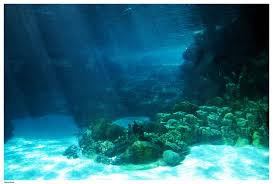
Which would you find covering the ocean floor?
Mud
Ice
Rocks
Sand

What do the arrows on the map represent?
Size of waves
Water density
Ocean currents
Time between tides
______ causes surface currents.
The Coriolis Effect
gravity
density differences
wind
______ causes deep ocean currents
The Coriolis Effect
gravity
wind
density differences
Nutrients are brought to the surface for phytoplankton to use at _______.
gyres
eddies
upwellings
the equator
_______ causes the Coriolis Effect
Earth's rotation
gravity
wind
density
The __________ is a surface current that flows along the eastern US and brings warm water to Europe.
California Current
Gulf Current
North American Gyre
Arctic Current
Gyres in the southern hemisphere are surface currents that turn _________ due to the Coriolis Effect.
clockwise
counterclockwise
toward the right
toward the bottom of the ocean
Currents in the northern hemisphere go in a counter-clockwise motion.
True
False
Which is NOT a factor that affects deep currents?
Density
Color
Salinity
Temperature
A curving path of oceans and winds due to Earth's rotation.
Surface Currents
Deep Currents
Coriolis Effects


How many official oceans are there?
3
5
4
7
The British Isles are at a high latitude, the climate in the isles is very mild. What is the most likely reason?
The British Isles receive a great deal of sunshine
The British Isles are located near a warm water surface current
The British Isles are located near an area of upwelling
The British Isles are located near a cold water surface current

Which best describes the eastern coast of South America
and the western coast of South America?
Both coasts are affected by a warm current
The eastern coast is affected by a cold current and the western
coast is affected by a warm current.
The eastern coast is affected by a warm current and the western
coast is affected by a cold current.
Both coasts are affected by a cold current.
Southern California has cooler temperatures than Arizona, which is at the same latitude, but farther inland. What causes this temperature difference?
the shade provided by the large number of tress in California
a cold-water surface current off California's coast
winds formed high in California's mountains
a warm-water current off California's coast.

