wayground logo

Free Printable Worksheets

Font size

S
M
L
XL
Worksheets

Anatomy Midterm Practice

Total questions: 100

Worksheet time: 1hrs 5mins

Name
Class
Date
1.
The maintenance of an organism’s internal environment is called:
a)
compensating
b)
homeostasis
c)
balancing
d)
routine
2.
a body system that controls growth and homeostasis by secreting hormones from glands.
a)
skeletal system
b)
nervous system
c)
endocrine sytem
d)
integumentary system
3.
Organ system that takes nutrients from your food and absorbs it into your body.
a)
Circulatory
b)
Digestive
c)
Respiratory
d)
Endocrine
4.
Organ system that SENDS and RECEIVES MESSAGES to different parts of your body.
a)
Circulatory
b)
Nervous
c)
Integumentary
d)
Digestive
5.
What is a group of similar cells?
a)
Tissue 
b)
Organ
c)
Cell group
d)
Organ system
6.
What is a group of similar tissues?
a)
Tissue 
b)
Organ
c)
Cell group
d)
Organ system
7.
What does muscle tissue do?
a)
carries messages to and from the brain
b)
provides structure and support
c)
causes movement
d)
forms the protective outer layer of skin
8.
What does nervous tissue do?
a)
carries messages to and from the brain
b)
provides structure and support
c)
causes movement
d)
forms the protective outer layer of skin
9.
The thoracic cavity and the abdominopelvic cavity are both contained within the _______ cavity.
a)
dorsal
b)
ventral
c)
cranial
d)
spinal
10.
Which body cavity is located above the diaphragm and is surrounded by the rib cage?
a)
abdominal
b)
pelvic
c)
thoracic
11.
This body cavity is created by the bones of the skull to protect the brain.
a)
cranial
b)
spinal
c)
vertebral
12.
Abdominal region
a)
Region between the thorax and pelvis
b)
The ribs
c)
The area between the pod and the pelvis
d)
What even?
13.
What is the sole of the foot named?
a)
Instep of the foot
b)
Sternal
c)
Plantar
14.
What is the carpal?
a)
The wrist
b)
The neck
c)
The ankle
d)
The elbow
15.
Which system helps with voluntary and involuntary movement; helps circulate blood and move food through the digestive tract
a)
muscular
b)
skeletal
c)
immune
d)
excretory
16.
This system transport oxygen, nutrients, and wastes and collects fluid lost from blood vessels and returns it to the bloodstream
a)
circulatory
b)
respiratory
c)
skeletal
d)
digestive
17.
This system fights pathogens (germs) and produces and stores white blood cells.
a)
immune
b)
muscular
c)
endocrine
d)
integumentary
18.
Sends and receives information
a)
Nervous
b)
Immune
c)
Lymphatic
d)
Muscular
19.
crural
a)
shin
b)
calf
c)
kneecap
d)
thigh
20.
Which is an example of the negative feedback mechanism?
a)
Blood sugar levels being controlled by negative feedback loop (food being consumed and digested causes blood level glucose to rise)
b)
Temperature
c)
Controlling the amount of water lost through the excretory system
d)
Osmoregulation (regulating amount of water reabsorbed from glomerular filtrate in kidney tubes, etc.)
21.
In what organelle is the genetic material found inside?
 
a)
Endoplasmic Reticulum
b)
Golgi Complex
c)
Nucleolus
d)
Nucleus
22.
What organelle is called the "powerhouse" of a cell?

a)
Endoplasmic Reticulum
b)
Nucleus
c)
Mitochondria
d)
Nucleolus
23.
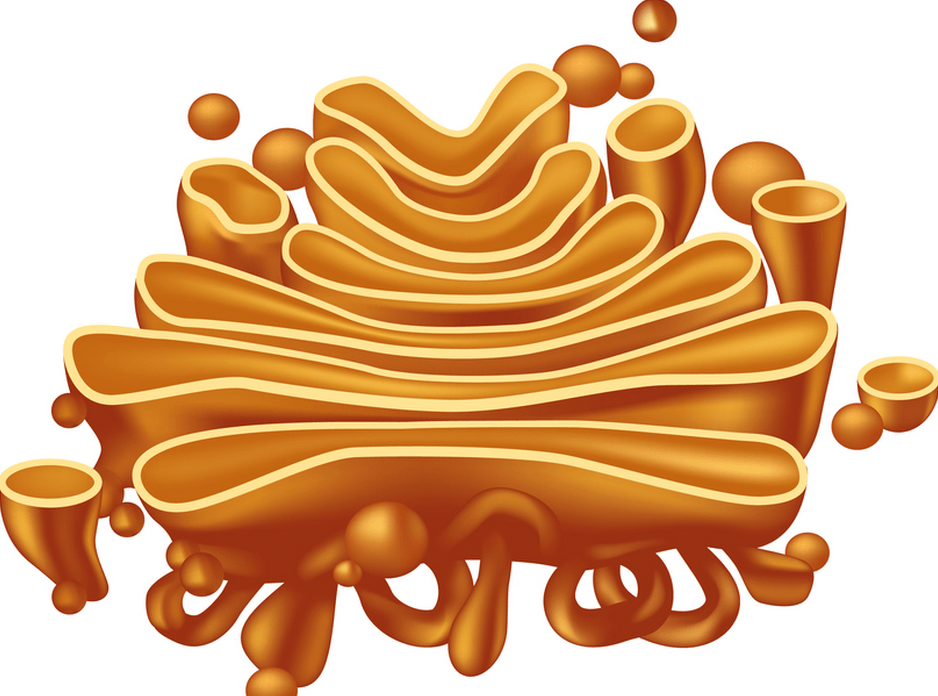
I am a protein packaging and shipping machine! Who am I?
a)
vacuole
b)
ribosome
c)
mitochondrion
d)
golgi apparatus
24.
What is the gel-like substance inside of cells called?

a)
photoplasm
b)
photosynthesis
c)
cytoskeleton
d)
cytoplasm
25.
Where are proteins made?
a)
Golgi body
b)
Mitoichondrion
c)
Chromosomes
d)
Ribosomes
26.
What makes the endoplasmic reticulum rough?
a)
Vessicles
b)
Vacuoles
c)
Ribosomes
d)
Chromosomes
27.
which tissue is this?
a)
Pseudostratified columnar
b)
Stratified Squamous
c)
Simple Columnar
d)
Transitional
28.
What type of Connective Tissue are TENDONS and LIGAMENTS
a)
Dense Connective Tissue
b)
Osseous Tissue
c)
Loose connective Tissue
d)
Cartilage
29.
What type of tissue SIGNALS the intestines to move food along?
a)
Nervous Tissue
b)
Blood Tissue
c)
Smooth muscle tissue
d)
Skeletal Muscle Tissue
30.
Which type of epithelial tissue stretches and is found in the bladder and other urinary organs?
a)
Transitional
b)
Simple Cuboidal
c)
Stratified Squamous
d)
Stratified Columnar
31.
Identify:
a)
Pseudostratified
b)
Smooth Muscle
c)
Transitional
d)
Stratified Squamous
32.
Used in places needing protection from scrapes and abrasions such as the skin and esophagus
a)
Cuboidal
b)
Pseudostratified
c)
Simple Squamous
d)
Stratified Squamous
33.
What tissue is this
a)
Bone
b)
Cartilage
c)
Blood
d)
Adipose
34.
Name this tissue
a)
Skeletal
b)
Cardiac
c)
Smooth
35.
Outer layer of skin about as thick as a sheet of paper.
a)
epidermis
b)
dermis
c)
hyperdermis
36.
One of the unique things about the stratum basale layer of the epidermis is 
a)
mitosis
b)
meiosis
c)
it's pink
37.
These structures are considered part of the DERMIS LAYER - the middle layer of your skin.
a)
nerves, fat, blood vessels
b)
sweat glands and hair follicles
c)
protein layers and melanocytes
38.
Burns without blisters are most likely what degree of burn?
a)
1st
b)
2nd
c)
3rd
39.
# 3
a)
sebaceous gland
b)
hair follicle
c)
arrector pili
40.
#4
a)
sebaceous gland
b)
hair follicle
c)
sudoriferous gland
41.
#5
a)
hair root
b)
hair shaft
c)
hair follicle
42.
a)
Temporal Bone
b)
Parietal Bone
c)
Occipital Bone
43.
Phalanges are your_________________
a)
fingers.
b)
toes. 
c)
both fingers and toes.
d)
fingers only.
44.
The mandible is also known as____________
a)
the skull.
b)
the mouth.
c)
the jaw. 
45.
what bone is highlighted
a)
shoulder blade
b)
Clavicle
c)
shoulder
d)
Scapula
46.

Make new bone and help repair damage.

a)

Osteoblast

b)

Osteoclast

c)

Osteocytes

d)

Osetoblank

47.
Common name for the patella is
____________________
a)
thigh
b)
knee cap
c)
fingers
d)
shin
48.
What is the flexible rubbery tissue that helps cushion bones where they meet called?  
a)
ligaments
b)
cartilage
c)
tendons
d)
knee pads
49.

What bone is the arrow pointing to (the bone closest to the thumb)?

a)

ulna

b)

humerus

c)

radius

d)

vertebrae

50.
The number of bones in the human skeleton is 
a)
260
b)
206
c)
266
d)
602
51.
Name this bone.
a)
tibia
b)
fibula
c)
femur
52.

What are the two types of bone tissue?

a)

Tendon & Ligaments

b)

Spongy & Compact

c)

Osteon & Trabecular

d)

Connective & Osseous

53.

Found at the ends of bone, it is the most abundant type of cartilage in the body

a)

Fibrocartilage

b)

Collagen cartilage

c)

Elastic

d)

Hyaline

54.
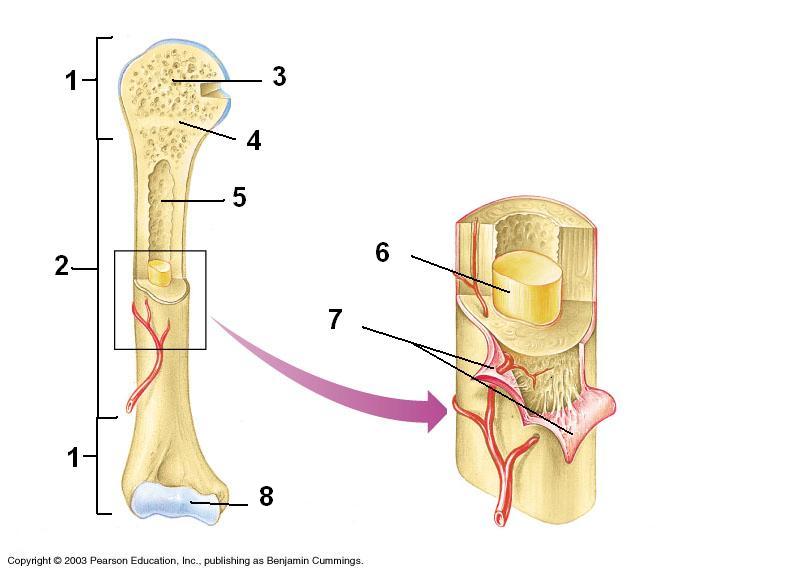
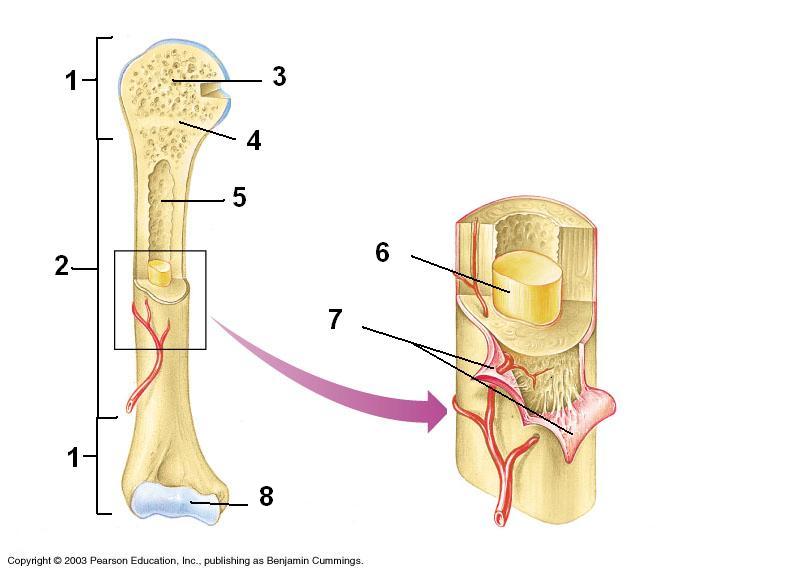
Structure #2 is the 
a)
medullary cavity
b)
periosteum
c)
epiphysis
d)
diaphysis
55.
Structure #7 is the 
a)
medullary cavity
b)
periosteum
c)
epiphysis
d)
diaphysis
56.
Involuntary
a)
skeletal
b)
cardiac
c)
smooth
d)
smooth and cardiac
57.
Striated
a)
smooth
b)
cardiac
c)
skeletal
d)
skeletal and cardiac
58.
attached to bones
a)
cardiac
b)
smooth
c)
skeletal
59.
The contractile unit of a muscle is called the __________.
a)
Sarcolemma
b)
Sarcoplasmic reticulum
c)
Sarcoplasm
d)
Sarcomere
60.
Condition of feeling tired or weary.
a)
tetanus
b)
actin
c)
fatigue
d)
origin
61.
The mechanism of muscle contraction.
a)
sarcoplasmic reticulum
b)
fasciitis
c)
sliding filament mechanism
d)
muscle cramps
62.
Skeletal muscle fatigue occurs because of
a)
inadequate numbers of mitochondria
b)
the feedback loop is not working
c)
a total lack of ATP
d)
insufficient intracellular quantities of ATP due to excessive consumption
63.
Calcium:
a)
causes ATP binding to actin
b)
increases the action potential along the sarcolemma
c)
binds to proteins on myosin
d)
triggers the binding of myosin to actin
64.
What occurs when muscles are not used?
a)
muscular dystrophy
b)
botox
c)
atrophy
d)
rigor mortis
65.
a bundle of muscle fibers
a)
actin
b)
mysoin
c)
fascicle
d)
sarcomere
66.
the chemical that accumulates in muscles when oxygen is depleted
a)
myoglobin
b)
hemoglobin
c)
lactic acid
d)
carbon dioxide
67.

What molecule is responsible for providing energy for muscle contraction?

a)

ADP

b)

ATP

c)

GTP

d)

Calcium

68.

when a muscle contracts, ____________pull on the __________

a)

actin/myosin

b)

myosin/actin

c)

actin/z line

d)

myosin/zline

69.
a)
Quadriceps
b)
Satorius
c)
Hamstring
d)
Gastronecmius
70.
a)
Latissmius Dorise
b)
Erectors
c)
Deltoids
d)
Abdominal
71.
a)
Tricep
b)
Deltoid
c)
Hamstring
d)
Bicep
72.
a)
Trapezius
b)
Gluteals
c)
Deltoid
d)
Hamstring
73.
a)
Glutueal
b)
Hamstring
c)
Quadricep
d)
External Oblique
74.
a)
Pectoral
b)
Tricep
c)
Bicep
d)
Deltoid
75.
What muscle is this?
a)
Gastrocnemius
b)
Quadriceps
c)
Pectorals
d)
Trapezius
76.
Name this muscle.
a)
Tricep
b)
Trapezius
c)
Bicep
d)
Tres Major
77.
What is Dendrite
a)
nerve fibers that carry message to cell body
b)
allow nerve impulses to pass from one neuron to next neuron
c)
nerve fibers that carry message from the cell body
d)
fat covering of the neuron
78.
How many nerves do we have in our body?
a)
3 nerves
b)
about a billion nerves
c)
a thousand nerves
79.
What two things are found in the central nervous system?
a)
brain/spinal cord
b)
spinal cord/motor neurons
c)
motor/sensory neurons
d)
only brain
80.
Which part of a neuron RECIEVES information?
a)
axon
b)
dendrite
c)
cell body
d)
axon terminal
81.
Which part of the neuron is a long fiber that send information to other cells?
a)
dendrite
b)
terminal
c)
cell body
d)
axon
82.

Which of the following nervous systems contains motor and sensory neurons?

a)

central nervous system

b)

peripheral

c)

motor

d)

sensory

83.
If I step on a nail...what type of neuron take that signal TO the CENTRAL NERVOUS SYSTEM?
a)
interneurons
b)
motor
c)
sensory 
d)
receptors
84.

What is an example of the autonomic nervous system at work?

a)

skipping

b)

jumping

c)

sitting

d)

organ functions

85.

What is an example of the somatic nervous system at work?

a)

heart beat

b)

breathing

c)

skipping

d)

digestion

86.

What are nerves

a)

bundle of neurons

b)

neurons

87.
Identify the part of the neuron
a)
axon
b)
axon terminal
c)
dendrite
d)
Node of Ranvier
88.
The gap that a message has to cross to get from one neuron to the other is called the _____
a)
synapse
b)
dendrite
c)
axon
d)
nucleus 
89.
If I step on a nail...what type of neurons take the response to my muscles?
a)
motor
b)
interneurons
c)
sensory
d)
not neurons, muscle tissue sends the response
90.
What is another word for autonomic?
a)
voluntary
b)
involuntary
c)
central 
d)
brain
91.
The nervous system is composed of the ___, ___, and ___.
a)
heart, brain, kidneys
b)
lungs, liver, stomach
c)
brain, spinal cord, nerves
d)
eyes, pancreas, veins
92.
The maintenance of an organism’s internal environment is called:
a)
compensating
b)
homeostasis
c)
balancing
d)
routine
93.
This is the gap or space between two neurons
a)
Dendrites
b)
Cell Body
c)
Synapse
d)
Axon
94.
Identify #6 of this neuron.
a)
dendrites
b)
axons
c)
axon terminals
d)
cell body
95.
Identify #4 of this neuron.
a)
Schwann Cell
b)
myelin sheath
c)
node of Ranvier
d)
Cell body
96.
Identify #3 of this neuron.
a)
dendrite
b)
axon
c)
axon terminal
d)
cell body
97.
A nerve cell can also be termed
a)
Neuron
b)
Cell Body
c)
Dendrite
d)
Axon
98.
Label the Neuron-What does the letter "E" represent?
a)
Schwann Cell
b)
Node of Ranvier
c)
Axon Terminal
d)
Myelin Sheath
99.
Surrounds axons in the PNS
a)
Schwann cells
b)
Satellite Cells
c)
Oligodendrocytes
d)
Treponema Pallidum 
100.

Microglial cells help to?

a)

phagocytize bacteria cells

b)

provides structural support

c)

produce myelin