
 Worksheets
REVIEW for MIDTERM PT 1
Total questions: 100
Worksheet time: 1hrs 23mins
Click on the example of CONDUCTION in the picture!
Label the image.
The direct transfer of heat between objects that touch (a)
Label the picture.
Hot Water
Cold Water

In a lava lamp, the cooler (a) wax (b) and the warmer (c) wax (d) .

Peter is investigating how thermal energy is transferred when he takes food out of the refrigerator. Which statement describes how he could collect data to explain this and what the expected result would be?
Measure how long it takes the food to reach the same temperature as the interior of the refrigerator. The food will likely gain thermal energy from the cold refrigerator and decrease in temperature until it is the same temperature as the refrigerator.
Measure the temperature of the refrigerator and the air, and time how long the food is out of the refrigerator for. The cold food will likely gain thermal energy from the warmer air and increase in temperature until it is a little warmer than the air.
Measure the temperature in the food when it is taken out of the refrigerator at various time intervals. The cold food will likely lose thermal energy to the warmer air and increase in temperature until it is the same temperature as the air.
After taking the food out of the refrigerator, measure the temperature of the food at even time intervals. The cold food will likely gain thermal energy from the warmer air and increase in temperature until it is the same temperature as the air.
What would you expect to happen to the gas inside a sealed container when the temperature drops, and why?
The particles would spread out more because decreasing the temperature causes the particles to have more kinetic energy.
The particles would spread out more because decreasing the temperature causes the particles to have less kinetic energy.
The particles would move faster because decreasing the temperature causes the particles to have more kinetic energy.
The particles would move more slowly because decreasing the temperature causes the particles to have less kinetic energy.
Amari wanted to see how the temperature of her coffee is affected by the cool air in her car when she uses different types of mugs. To investigate this, she filled a coffee mug and a thermos with some hot coffee and left it in her car while at school. When she checked them after school, she realized both coffees had ____ thermal energy. She concluded that the material the mugs were made of allowed energy to be transferred through them through __________________________. Which terms best complete the paragraph?
gained; radiation
gained; conduction
lost; conduction
lost; convection
What is thermal energy?
Thermal energy is the total kinetic energy of all the particles in a substance, which is related to its temperature.
Thermal energy is the energy stored in the bonds of chemical compounds.
Thermal energy is the energy associated with the motion of an object in a gravitational field.
Thermal energy is the energy released during nuclear reactions.
What happens to molecules when thermal energy increases?
Molecules move slower and their kinetic energy decreases.
Molecules move faster and their kinetic energy increases.
Molecules remain stationary and their kinetic energy remains the same.
Molecules break apart and lose their kinetic energy.


What unit do scientist use to measure force?
Grams
Newtons
Meters
Liters

Is this a balanced or unbalanced force?
Balanced
Unbalanced

Is this a balanced or unbalanced force?
Balanced
Unbalanced
You and your friend are moving a couch from one side to another. You push with a force of 20 N to the right and your friend pushes with a force of 25 N to the right.
5 N to the right
45 N to the left
45 N to the right

What is the net force?
10 N to the right
10 N to the left
130 N to the left
130 N to the right

What is the net force?
10 N to the left
10 N to the right
50 N to the right
60 N to the left
A change in motion is caused by
Balanced forces
Unbalanced forces

Which variable is on the X axis?
Position (Distance)
Time
Speed
None of these
Which variable is on the Y axis?
Position (Distance)
Time
Speed
None of these

Where was the object at 4 seconds?
20 meters
40 meters
60 meters
80 meters

How far had the car traveled at 8 seconds?
50 meters
100 meters
150 meters
175 meters

What is the average speed (m/s) at 4 seconds?
.04 m/s
22 m/s
25 m/s
.05 m/s
What is the definition of distance?
The length of the path taken from the starting point to the final point
The straight-line distance between the starting point and the final point
The time taken to travel from the starting point to the final point
The difference between the starting point and the final point
Which of the following best describes displacement?
The length of the path taken from the starting point to the final point
The straight-line distance between the starting point and the final point
The time taken to travel from the starting point to the final point
The difference between the starting point and the final point
What does direction refer to?
The length of the path taken from the starting point to the final point
The straight-line distance between the starting point and the final point
The time taken to travel from the starting point to the final point
The angle or orientation of the final point relative to the starting point
How do distance and displacement differ?
Distance is always positive, while displacement can be positive or negative
Distance is always negative, while displacement can be positive or negative
Distance and displacement are always the same value
Distance and displacement are unrelated
Speed = _______________
Distance + time
Distance – time
Distance x time
Distance / time
Another way to explain the speed and direction of a object would be to describe it’s ________
Speed
Velocity
Acceleration
Velocity = _______________
Speed – direction
Speed + direction
Speed x direction
Speed / direction
At what speed would a car have to move in order to travel 20 kilometers in 2 hours.
5 km/hr
10 km/hr
20 km/hr
40 km/hr


What is this?
"This airplane is traveling at 500 mph, West"
Speed
Velocity
Acceleration
Distance
Displacement
The car traveled a total of 150 kilometers.
Speed
Velocity
Distance
Displacement
Which of the following is the correct equation for calculating SPEED?
s = d / t
s = d x t
s = t / d
s = d - t

Kelsey ran 130 m in 15 seconds, What was Kelsey's average speed in m/s?
Organize these options into the right categories.
Change in color
Change in Temperature
Change in shape
Change in size
Change in state of matter
Unexpected production of gas
Precipitate is formed (a solid in a liquid)
Cutting up a piece of paper
Metal rusting
A new substance is created
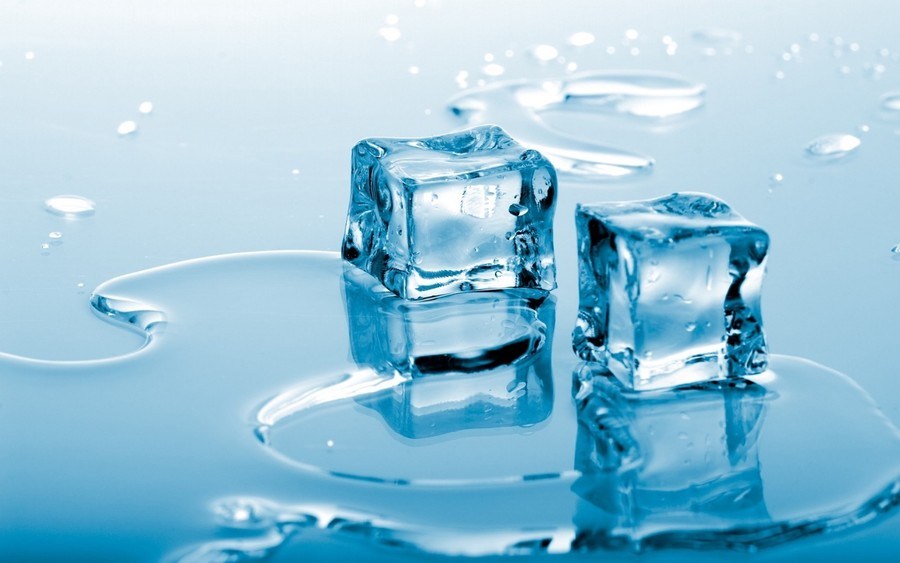
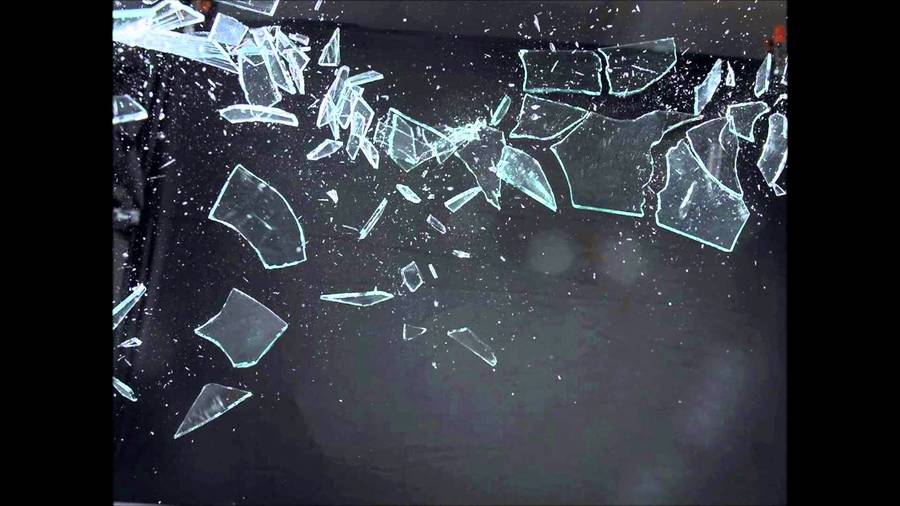


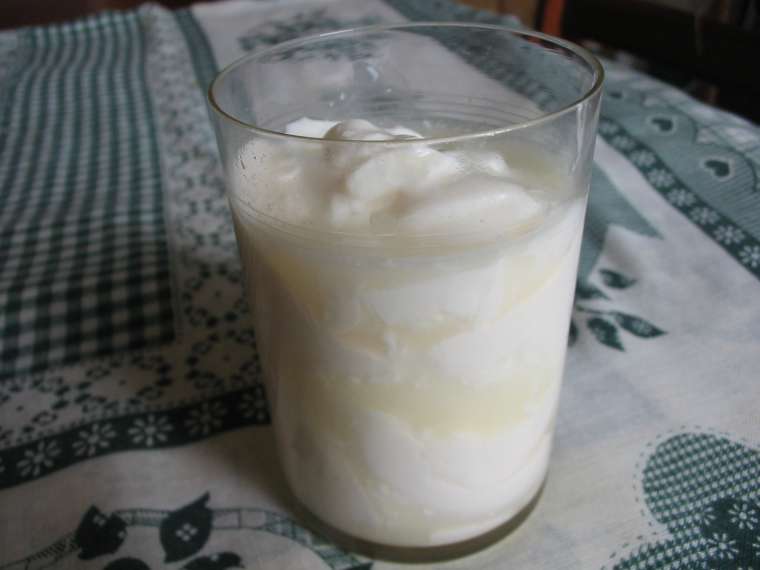


How many atoms of Hydrogen are in H2O
1
2
3
more than 3
How many different elements are present in H2COCH2
5
4
3
2
The ______ are numbers found on the lower right-hand side of an element symbol.
Coefficient
Exponent
Multiplier
Subscript
Coefficients in chemical formulas...
Multiply just the first atom
Add to the subscripts at the end of the molecule
Multiply elements without subscripts
Multiply EVERYTHING!
4CF2Cl2
C = 4, F = 4, Cl = 2
C = 1, F = 8, Cl = 8
C = 4, F = 8, Cl = 8
C = 1, F = 4, Cl = 8
H2SO4
H = 2, S = 4, O = 4
H = 2, S = 1, O = 4
H = 8, S = 4, O = 4
H = 2, SO = 4
How many different elements are present in this molecule?
3 NH4C2H3O2
15
36
5
4
A ______ is a number written in front of a chemical formula.
Coefficient
Subscript
Exponent
Coordinator
How many Hydrogen atoms are in 4H2O?
6
8
2
4
How many Sodium atoms are in 6NaCl?
1
12
6
All matter is made of what
energy
atoms
electrons
compounds
The central region of an atom where its neutrons and protons are is called it's __________ .
nucleus
electron cloud
core
center

Is this a compound or element?
compound
element


This chart is called a ...?
Periodic Table of Elements
Atom table
The Table of Molecules
Data that can be counted or measured is
Qualitative data
Quantitative data
an Inference
an Observation
Information that cannot actually be measured is
Qualitative data
Quantitative data
an Inference
an Observation
An act of using one or more of your senses to gather information and take note of what occurs is
Qualitative data
Quantitative data
an Inference
an Observation
A logical explanation of an observation that is drawn from prior knowledge or experience is
Qualitative data
Quantitative data
an Inference
an Observation

Match the statement below to the correct description:
The boy must be staying home, because he is sick.
Inference
Observation

Match the statement below to the correct description:
There are five birds on the limb.
Qualitative data
Quantitative data

Match the statement below to the correct description:
That man is very tall.
Qualitative data
Quantitative data

Match the statement below to the correct description:
Those dogs have a stick.
Inference
Observation
Match the statement below to the correct description:
The volume of water was 32 mL.
Qualitative data
Quantitative data

What safety symbol is this?
Eye Safety
Clean Up
Caustic Substance
Poison

What symbol is this?
Heating Safety
Fire Safety
Poison
Plant Safety

Playing around disrupting other students in the laboratory is -
helpful.
allowed
dangerous.
the quickest way to do a job.
Whose responsibility is it to help clean up the lab and classroom?
1st period, the next morning
custodians.
each and every student.
only the teacher.

