
 Worksheets
Topic 6 Cotton, Cattle, Railroads, & Oil
Total questions: 81
Worksheet time: 1hrs 2mins
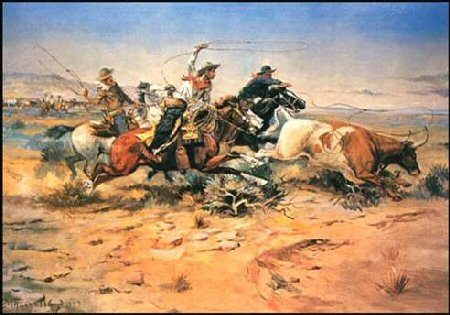
Bad weather, cattle rustlers, Indians, and stampedes are all examples of what?
Dangers on an oil rig.
Dangers during the battle of the Alamo.
Dangers on a cattle drive.
Dangers of farming.
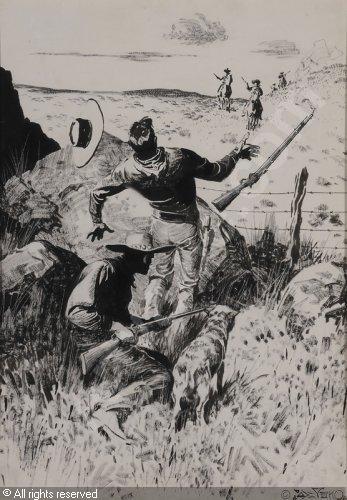
Barbed wire helped close off most of the western frontier, as a result, farmers and ranchers engaged in....
peace talks.
range wars.
elections.
celebrations.
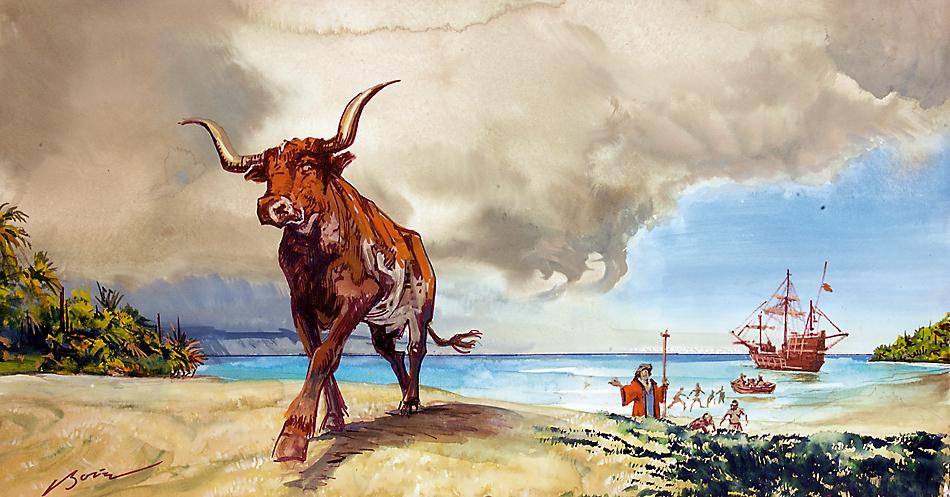
Which country brought cattle to Texas and the rest of the United States?
Spain
England
France
United States
Why did so many African American men choose to live life in the open range and not in the cities?
Pork and beans was a meal only given on cattle drives
Less discrimination on the open range
Less discrimination in the city
Indians were more friendly on the open range

What inventions changed West Texas after the Civil War and encouraged settlement in the west?
Cars and planes
Books and water bottles
cell phones and laptops
Windmills, barbed wire, and railroads
Why was it necessary to move cattle from Texas?
People in Texas didn't eat beef.
There was an over-supply of cattle in Texas and the demand for beef was greater in the Northeast.
There was a terrible drought in Texas and the cattle couldn't get enough food.
Cattle never even lived in Texas.

The cattle industry grew after the Civil War because:
Railroads came to Texas.
The demand for beef increased in the North.
Pork and chicken were overpriced.
The South won and wanted to promote its business.
African Americans often faced less discrimination because ranchers were not interested in the color of their skin, but they were interested in their ...
skill.
age.
height.
race.
Why did ranchers drive their cattle north?
warmer weather
cooler weather
over population in Texas
to sell them and put them on the railroads that took them east
Why did cattle drives come to an end?
All the cowboys took different jobs because they didn't want to do them anymore.
No one wanted beef anymore.
The cattle got sick and couldn't travel.
Homesteaders built barbed wire fences and railroads expanded to the south.
Who was in charge on the cattle drive?
The oldest rider
The flanker
The scout
The trail boss
What breed of cattle is the result of mixing two other breeds of cow?
Texas Longhorn
Bovine
Angus
Brahma
When were cattle drives common?
1841-1845
1860's-1880's
early 1900's
They still are
The purpose of cattle drives was
To make cattle lose weight from the exercise.
To give cowboys rodeo skills practice.
To move cattle from Southern Texas to the railroad yards so they could be quickly transported to people in the North and East.
To spread out the herds to other parts of the country.
Which of the following is not one of the job titles on the drive crew?
wrangler
trail boss
cook
rustler
Which of the following is not a cattle trail?
Goodnight-Loving Trail
Chisholm Trail
Western Trail
Trail of Tears
What was the cowboys' job?
Their job was to entertain people as they traveled west watching rodeos.
Their job was to steal cattle before it made it to market.
Their job was to keep the herd together, protect the herd, and keep it moving.
Their job was to ride with the herd on its railroad journey east.
How was life rough for cowboys?
Rough? Being a cowboy was easy and lots of fun.
They spent months on the trail, faced bad weather, risky river crossings, stampedes, and attacks.
They worked five hours each day and only got a thirty-minute lunch break.
All of these answer are correct.
The daily life of cowboys was much more glamorous than what is usually shown in movies.
True
False

What is commercial agriculture?
Growing crops to sell.
Growing crops to eat.
Growing too many crops.
Not growing enough crops.

What is subsistence agriculture?
Growing crops to sell.
Growing crops to eat.
Growing too many crops.
Not growing enough crops.


How did the Cotton Gin increase slavery?
It created cottonseed oil which needed to be churned by slaves to produce margarine.
It allowed farmers to control the weather more accurately in order to produce more cotton.
It allowed slaves to plow fields quicker in order to grow cotton faster.
It allowed farmers to get more seeds out of cotton so they were able to grow more.

One geographic change caused by the railroad in Texas was urbanization,
so American Indians were relocated.
so trains move oil and farm products to market.
so new cities grew up along rail lines.
so horses were not needed for transportation.
The climate of West Texas affects the economic development and the..........
region is too dry to support farming so ranching prevailed.
region is perfect for establishing tobacco farms.
constant threat of thunderstorms make farming too difficult.
threat of hurricanes damaging farms and ranches built in area.
What caused the Range Wars in Texas in the late 1800's?
Immigrants moved into Texas and started claiming public land
Railroads were interfering with the transport of cattle.
Native Americans were required to move to reservations.
Farmers and ranchers were fencing land with barbed wire.
Based on this newspaper heading, what year is it?
An awesome oil well found in Texas called Spindletop was the biggest in the world at that time!
That was in 1900.
That was in 1901.
That was 1920.
That year was 1914.

What conclusion can you draw from the map above?
All cattle trails that started in Texas led to towns in the East.
After the war, ranchers used the trails to bring cattle from other states to Texas.
After the war, several trails were added to support the growing cattle industry in Texas.
Before the war, increased settlement encouraged Texas ranchers to find new market for their cattle.

____________ grew rapidly in the areas surrounding active oil fields.
Segregation
Cattle Drives
Reservations
Boomtowns
What geographic change did the American Indians have to deal with after the end of the Civil War?
They found work building railroads all over Texas.
Tribes switched to farming and ranching after the buffalo herds moved away.
Tribes were forced to move to reservations in Oklahoma.
Tribes experienced an abundance of food and industrial supplies.
Many people are surprised to know that early cowboys included many...
immigrants, soldiers, and American Indians.
Spaniards, longhorns, and vaqueros.
African Americans, Mexican Americans, and women.
cattle drivers afraid of hurricanes.

Which of the following is true of a tenant farmer
Tenant farmers were typically supposed to provide the labor, seed, tools, and work animals while the landowner provided the land.
Tenant farmers worked on their own land and had to give their crops to government.
Tenant farmers worked on land for a share of the crop.
Tenant farmers were able to save enough money to buy their own land.
What is Joseph Glidden famous for?
starting cattle drives
inventing the cattle brand
inventing barbed wire
discovering oil at Spindletop
What did ranchers use to tell the difference between their cattle?
brands
collars
fences
braiding
When ranchers fenced off their land with barbed wire, what was the result?
It caused range wars
It closed the open frontier and created large ranches
It ended the cattle drives
All of the above

Name the largest ranch found in Texas?
JA Ranch
UT Ranch
Matador Ranch
King Ranch
In 1901 what resource was discovered at Spindletop?
Railways
Water
Cattle
Oil

This is built to help wildcatters look for oil underground. What is it?
Oil derrick
Oil change
cotton gin
refinery

Spindletop, Texas' first oil gusher, was located near what city?
Dallas
Beaumont
San Antonio
El Paso
What is the historical significance of Spindletop?
Cattle were traded there.
The Texas frontier began there.
Buffalo soldiers were stationed there.
The Texas petroleum industry began there.

What is the purpose of a windmill?
To measure wind speed
To pump water up from under ground
To look cool
To power a car
The land that formed the XIT ranch in the Texas Panhandle was traded by the State of Texas to _____________ in payment for the construction of a new ______________.
investors, Capitol building
McDonalds, McDonaldland playground.
U.S. Congress, Alamodome
The State of Oklahoma, Indian Casino.

The discovery of oil at Spindletop occurred during which year?
1900
1901
1902
1903
Which clothing below is something a cowboy used?
chaps
bridle
stirrups
saddle

What role did railroads play in Texas’ economy?
Railroads brought very few people to Texas.
The trains were made to transport people only.
The railroads made it harder to transport goods to the East.
A relatively fast way to transport goods to market.

Based on the map, in 1881 the most railroad lines in Texas were to be found—
on the plains of West Texas
along the Rio Grande
in the eastern third of the state
in the Panhandle

What was the cattle drive position of the 2 cowboys in front?
flank
drag
swing
point
The herd was put in a circle, the cattle being a comfortable distance apart. When the drive was first started and the cattle were fresh, I used a double guard. That is, half the men guarded the first part of the night; the other half the latter part. In storms and stampedes we were all on duty. After the herd had been out fifteen days, it was “trail broke” and four men were sufficient to guard three thousand cattle. If we were out two or three months, the last month, two men on duty at a time were sufficient… The guards rode around the herd facing each other; in this way they passed each other twice as they went around. If a rattlesnake was heard in the guard line, the men hearing it informed their companion of its whereabouts and the next morning someone would go and kill it—rattlesnakes do not move at night. Cattle feared a rattlesnake and would give him a wide berth.
When the cattle are first started, the risk of stampedes is great. They are nervous and easily frightened; the slightest noise may startle them into running. Some cattle are stampeders by nature… A herd was more likely to run on a dark night than on a moonlight night. The remarkable thing about it was that the whole herd started instantly, jarring the earth like an earthquake….,
Taking it all in, my life on the trail was the happiest part of it. I wish I could find words to describe the companionship and loyalty of the men towards each other. It was beyond imagination… Bullies and tyrants were unknown among them. They kept their places around a herd under all circumstances; and if they had to fight they were always ready. Timid men were not known among them—the life did not fit them…. Fewer cowboys have been tried for crimes than any other class of men.
--Charles Goodnight, description of a trail drive as quoted in H.T. Burton’s “History of the J.A. Ranch,” in Southwestern Historical Quarterly, 1928
Which of the characteristics does that author say BEST describes a cattle driver?
unfriendly and angry
criminal and unfriendly
unselfish and reliable
selfish and unreliable
Using the reading above, what did a cattle drive boss MOST fear?
rainstorms
stampedes
snakes
poor weather

The Galveston Hurricane
Had no impact on Galveston at all
Destroyed the majority of the island
Destroyed all of Texas
Improved Galveston's stading as a port city
How did the hurricane negatively affect Galveston after the disaster?
Oil production never returned to the city
Major industries left Galveston and lost it's popularity
Farmlands were permanently damaged by the storm
The disaster caused a 10 year long depression
Which of the following describes an impact of the 1900 Galveston Hurricane?
The city government was restructured to divide the mayor’s duties among a council-charter, made up of leaders from all over the city.
The city quickly recovered and once again became the leading commercial center in the state.
Major modifications to the environment were made that would protect the city from similar disasters in the future.
The city received very little support from outside organizations, such as the American Red Cross.
•Booming trade center
•Major seaport for shipping cotton
•Largest city in Texas.
The above list describes Galveston...
Before the hurricane
After the hurricane
Durig the hurriane
Today
Which of the following was NOT true about the City of Galveston before the Hurricane?
The city was a major center of commerce (business)
Galveston served as a port of entry for immigrants
Galveston was the largest city in Texas for the time
The city had the highest population of African Americans in Texas
After the Civil War, groups of Native American tribes were moved to reservations. However, many Indians resisted. What was the nickname given to the African American regiments of the U.S. Army that helped to keep peace among American Indians in the West?
Black Soldiers
Ghost Soldiers
Buffalo Soldiers
Rough Riders
Cattle ranching was started in south Texas by the __________________.
Native Americans
Spanish
French
English
How did Governor James Hogg work to protect Texans from unfair business practices and railroad monopolies?
Creating the Texas Railroad Commission
Creating the Texas Department of Transportation
Creating the Texas Department of Safety
Made all railroads companies in Texas government owned

