wayground logo

Free Printable Worksheets

NEW

Font size

S
M
L
XL
Worksheets

Review General Biology 2

Total questions: 80

Worksheet time: 50mins

Name
Class
Date
1.
What is the top layer of the skin called?
a)
Dermis
b)
Hypodermis
c)
Epidermis
d)
Subcutaneous
2.
What is the largest organ in the human body?
a)
Skin
b)
Hair
c)
Nails
d)
All of the Above 
3.
Which layer of the skin contains lots of adipose tissue and connects the skin to muscle?
a)
Dermis
b)
Epidermis
c)
Keratin
d)
Subcutaneous
4.
This function of the skin allows  the body to retain or lose heat.
a)
body temperature regulation
b)
storage
c)
excretion
d)
absorption
5.
This Part of the integumentary system is used as a tool for precise activities 
a)
tendons
b)
muscles
c)
skin
d)
nails
6.

Smooth muscles that produce "goose flesh" when they contract are the

a)

papillae

b)

cuticle

c)

medulla

d)

arrector pili

7.

Sebum

a)

lubricates hair and skin, which prevents drying

b)

is produced by sweat glands

c)

consists of dead cells from hair follicles

d)

is responsible for body order

8.
In homeostasis, the kidney regulates the:
a)
levels of electrolytes 
b)
amount of water in the body
c)
pH
d)
all of the above
9.
Which stage of urine production involves returning water, nutrients, and electrolytes to the bloodstream?
a)
filtration
b)
excretion
c)
secretion
d)
reabsorption 
10.
Which stage of urine production involves the removal of substances from the bloodstream?
a)
reabsorption
b)
excretion
c)
filtration
d)
secretion
11.
How many kidneys do you have?
a)
1
b)
3
c)
5
d)
2
12.
Which of the following parts is not found in the urinary system?
a)
Ureters
b)
Urethra
c)
Bladder
d)
Rectum 
13.

How is the female urethra different from the male urethra?

a)

It is longer

b)

It is wider

c)

It is shorter

d)

It is more narrow

14.

UTIs are most common in

a)

men

b)

women

15.
Which is NOT an organ of the urinary system?
a)
kidney
b)
bladder
c)
ureter
d)
liver
16.
Urine is stored here until you’re ready to void(pee):
a)
Kidneys
b)
Bladder
c)
Garage
d)
Urethra
17.
Urine exits the bladder and the body through a tube called the:
a)
Ureter
b)
Urinary tract
c)
Urethra
d)
Bladder
18.

How many bones are in an adult body?

a)

600

b)

206

c)

300

d)

210

19.

Which is not a function of the skeletal system?

a)

shape and support

b)

movement

c)

protection

d)

gas exchange

20.

Name the center of your skeleton

a)

Pelvic girdle

b)

vertebral column

c)

patella

d)

femur

21.

What makes up the vertebral column?

a)

tendons

b)

ligaments

c)

vertebrae

d)

cartilage

22.

What is a joint?

a)

The place where 2 or more bones meet.

b)

A thin membrane that covers the surface of bone.

c)

A band of tissue that hold bones together.

d)

Connective tissue

23.

What is the function of marrow?

a)

To make protein

b)

To make red blood cells and store fat.

c)

reduce friction

d)

to hold bones together

24.

A tough band of tissue that holds bones together at the joint are called a __________________________.

a)

tendon

b)

cartilage

c)

periosteum

d)

ligament

25.
Which of these is not part of the axial skeleton?
a)
Skull
b)
Ribs
c)
Radius
d)
Spine
26.
Which of these is not a function of the skeletal system?
a)
Converting oxygen to blood.
b)
Helping in movement and providing shape
c)
Protecting the organs
d)
Produces blood and storing vitamins.
27.
What mineral are bones made of?
a)
Vitamin C
b)
Calcium
c)
Zinc
d)
Vitamin B
28.

The bones in your back are made up of what?

a)

Fingers

b)

Phalanges

c)

Vertebrate

d)

Toes

29.

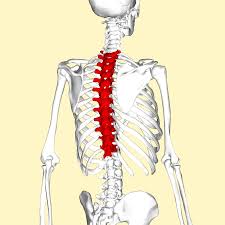
What bone is highlighted?

a)

Ribs

b)

Vertebrae

c)

Clavicle

d)

Femur

30.

An example of a long bone is?

a)

Spinal Cord

b)

Wrist Bone

c)

Thigh Bone

d)

Sternum

31.
Muscles are responsible for?
a)
Movement of the body
b)
Framework of the body
c)
Elimination of body waste
d)
Circulation of blood
32.
What is the primary function of a tendon?
a)
Attach bone to bone
b)
Attach muscles to bones
c)
Attach muscles to organs
d)
Attach muscles to fascia
33.
What type of muscle is found in the hollow organs and is considered to be involuntary without striations?
a)
Cardiac
b)
Skeletal
c)
Smooth
d)
Cartilage
34.
What type of muscle is found only in the heart and is involuntary with striations?
a)
Cartilage
b)
Skeletal
c)
Smooth
d)
Cardiac
35.

How many types of muscles are there?

a)

2

b)

4

c)

3

d)

1

36.

Smooth Muscle is found in the?

a)

Heart

b)

Facial

c)

Organs

d)

Legs

37.
What are the two classifications of muscles in your body?
a)
Voluntary and Controllable
b)
Flabby and Strong
c)
Involuntary and Voluntary
d)
Hard and soft
38.

Which cerebral lobe is this?

a)

frontal

b)

parietal

c)

occipital

d)

temporal

39.

What information does the occipital lobe process?

a)

motor

b)

touch

c)

visual

d)

auditory

40.

Which cerebral lobe is this?

a)

frontal

b)

parietal

c)

occipital

d)

temporal

41.

Which part of the peripheral nervous system deals with "flight or fight" activities?

a)

somatic

b)

autnomic

c)

sympathetic

d)

parasympathetic

42.

Which part of the peripheral nervous system deals with voluntary activities?

a)

somatic

b)

autnomic

c)

sympathetic

d)

parasympathetic

43.

Which part of the peripheral nervous system deals with involuntary activities?

a)

somatic

b)

autnomic

c)

sympathetic

d)

parasympathetic

44.
What is the central nervous system (CNS) made of?
a)
brain and spinal cord
b)
brain and cranial nerves
c)
spinal cord and spinal nerves
d)
cranial nerves and spinal nerves
45.
What are the 2 major divisions of the peripheral nervous system (PNS)?
a)
Sensory & Motor
b)
Peripheral & Central
c)
Somatic & Autonomic
d)
Brain & Spinal Cord
46.
Sensory neurons carry nerve impulses from the sense organs and internal organs (like your stomach) to the
a)
peripheral nervous system (PNS)
b)
central nervous system (CNS)
c)
muscles
d)
sense organs
47.
What is NOT part of the peripheral nervous system (PNS)?
a)
axons
b)
sensory receptors
c)
spinal cord
d)
motor neurons
48.
This part of the nervous system regulates involuntary actions such as heart function, blood pressure, breathing, digestion.
a)
Autonomic Nervous System
b)
Sensory Nervous System
c)
Motor Nervous System
d)
Peripheral Nervous System
49.

Basic unit of the nervous system and another name for a nerve cell.

a)

brain stem

b)

axon

c)

dendrites

d)

neuron

50.

What is the function of the nervous system ?

a)

pumps blood

b)

communicate and react to the environment

c)

provides support to the muscles

d)

provide oxygen to all the cells in the body

51.
What is the endocrine system?
a)
senses the hormone levels in the blood
b)
controls all other endocrine glands
c)
A group of glands that work together with the nervous system to coordinate all body functions
d)
decreases bone calcium levels
52.

This part of the brain that links the nervous system and the endocrine system.

a)

Pancreas

b)

Hypothalamus

c)

Pituitary gland

d)

Pineal gland

53.

The process by which an organism’s internal environment is kept stable in spite of changes in the external environment.

a)

Positive Feedback

b)

Negative Feedback

c)

Homeostasis

d)

Targeted Cells

54.

The chemical product of an endocrine gland.

a)

Homeostasis

b)

Hormone

c)

Nerve Cell

d)

Neurotransmitter

55.

The "master gland" of the endocrine system, a gland that controls many body activities.

a)

hormone

b)

pituitary gland

c)

hypothalamus

d)

adrenal gland

56.

Which gland secretes insulin?

a)

Pancreas

b)

Ovaries

c)

Pituitary

d)

Thymus

57.

What hormone is responsible for the "fight or flight" response?

a)

Testosterone

b)

Cortisol

c)

Adrenaline

d)

Parathyroid Hormone

58.

What does melatonin do?

a)

Raises our blood sugar

b)

Regulates our blood pressure

c)

Regulates our metabolism

d)

Regulates our sleep cycle

59.

Letter I is pointing to

a)

Testes

b)

Oviducts

c)

Ovaries

d)

Adrenals

60.

Letter J is pointing to

a)

Ovaries

b)

Pineal Gland

c)

Adrenal

d)

Testes

61.

What structure is this?

a)

Pancreas

b)

Thyroid

c)

Parathyroid

d)

Adrenal glands

62.
A fertilized egg undergoes several stages before it is successfully implanted. The diagram below shows these stages as the fertilized egg travels through the female reproductive system. In which of the following structures of the female human reproductive system is the blastocyst implanted during normal human 
a)
ovary
b)
uterus
c)
vagina
d)
amniotic sac
63.
Sperm are created through meiosis in an area of the testes called the seminiferous tubules. Through which structure do the sperm travel to exit the testes? 
a)
vas deferens
b)
 seminiferous tubules
c)
scrotoum
d)
 epididymis
64.
The 3 functions of the MALE reproductive system:
a)
produce sex hormones, produce eggs, provide nourishing environment for the baby
b)
produce sex hormones, produce/store sperm. deliver sperm to female reproductive system
c)
produce hormones, urination, cleansing of reproductive organs
65.
Where does fertilization usually occur?
a)
ovary
b)
uterus
c)
vagina
d)
fallopian tube
66.
The Pathway of the Sperm:
a)
testes, vas deferens, seminal vesicles, prostate gland, bulbourethral glands, urethra
b)
seminal vesicles, vas deferens, testes, prostate gland, bulbourethral glands, urethra
c)
vas deferens, testes, seminal vesicles, prostate gland, bulbourethral glands, urethra
67.
The ___________ is the fetus' link to life.
a)
umbilical cord
b)
fallopian tubes
c)
placenta
68.
producing one mature egg cell each month
a)
penis
b)
ovaries
c)
menstrual cycle
d)
fertilization
69.
reproductive glands in which eggs are produced
a)
penis
b)
ovaries
c)
menstrual cycle
d)
fertilization
70.
sac of skin surrounding the testicles
a)
scrotum
b)
semen
c)
vagina
d)
ejaculation 
71.
hollow, muscular, pear-shaped organ
a)
uterus
b)
semen
c)
vagina
d)
ejaculation 
72.

Where does the sperm meet the egg?

a)

The sperm meets the egg in the vagina.

b)

The sperm meets the egg in the testosertones.

c)

The sperm meets the egg in the fallopian tubes.

d)

The sperm meets the egg in the ovaries.

73.
A homozygous dominant dog with brown fur is crossed with a heterozygous dog with brown fur. What are the percentages of the possible genotypes?
a)
100% BB
b)
75% BB and 25%Bb
c)
50 % BB and 50% Bb
d)
50% Bb and 50% bb
74.
The man who studied genetics and came up with genetics is
a)
Watson
b)
Crick
c)
Mendel
d)
Darwin
75.
What law states that in Tt the person will only show the dominant allele
a)
law of segregation
b)
law of independent assortment
c)
law of dominance
d)
law of punnett squares
76.
Genotype refers to the ...
a)
physical expression of the genes
b)
the possible combination of alleles in a gene
c)
whether an allele is dominant or recessive
d)
how an organism will appear
77.
An offspring will receive how many alleles from each parent to determine a specific trait?
a)
one
b)
two
c)
three
d)
five
78.
Which of the following is a phenotype?
a)
BB
b)
Bb
c)
bb
d)
Blue eyes
79.
What is a phenotype
a)
The genetic make up (code)
b)
The physical trait
80.
Two brown eyed parents (Bb) have a baby. What is the chance the baby is blue eyed?
a)
0 %
b)
25%
c)
50%
d)
75%