wayground logo

Free Printable Worksheets

Font size

S
M
L
XL
Worksheets

DNA and Cell Cycle Review

Total questions: 78

Worksheet time: 4hrs 17mins

Name
Class
Date
1.
Which of the following best describes a DNA molecule?
a)
double helix
b)
contains ribose
c)
made of amino acids
d)
contains Uracil
2.
Which of the following units are repeatedly joined together to form a strand of DNA? (This is the MONOMER of DNA.) 
a)
amino acids
b)
nucleotides
c)
fatty acids
d)
polysaccharides
3.
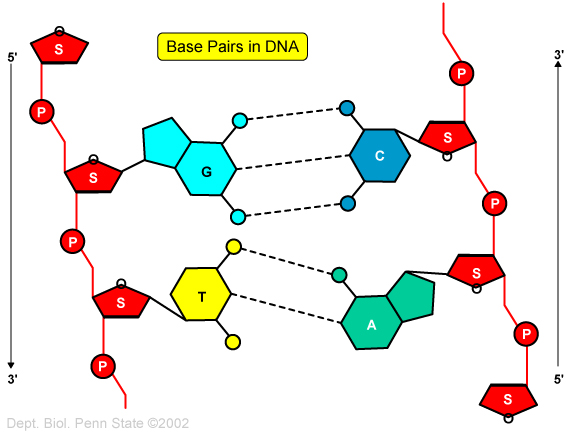
Adenine bonds with ______________.
a)
Guanine
b)
Thymine
c)
Cytosine
d)
Adenine
4.
Guanine bonds with ______________.
a)
Adenine
b)
Guanine
c)
Cytosine
d)
Thymine
5.
Why is DNA important?
a)
it is very small and very complicated
b)
it's in everything
c)
it serves as the blueprint for traits of all living things
d)
because we eat it every day for energy
6.
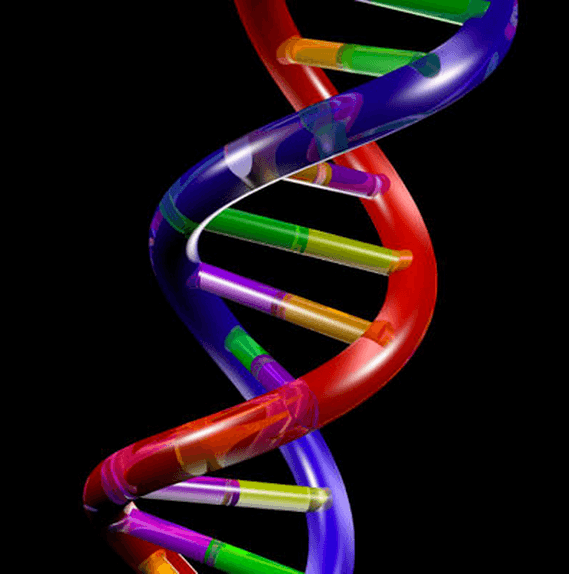
Name this structure
a)
double helix
b)
nucelotide
c)
twisted ladder
d)
hydrogen bond
7.
What are the 4 nitrogen bases?
a)
adenine, thymine, cytoplasm, and guanine
b)
adenine, thymine cytosine, and guanine
c)
adenine, thymine, cytosine, and gylcerol
d)
adenine, thymine, cytosine, and glucose
8.
Which 2 molecules forms the sides (backbone) of the DNA ladder?
a)
deoxyribose and adenine
b)
deoxyribose and a hydrogen bond
c)
sugar and the nucleus
d)
deoxyribose (sugar) and phosphate
9.
In Eukaryotes, which organelle is DNA found in?
a)
cell membrane
b)
vacuole
c)
chloroplast
d)
nucleus
10.
The process by which a DNA molecule is copied is called _____.
a)
binary fission
b)
mitosis
c)
DNA replication
d)
translation
11.
What bonds the nitrogen bases in the center of the DNA strand?
a)
Covalent Bonds
b)
Ionic Bonds
c)
Hydrogen Bonds
d)
Metallic Bonds
12.
Which sequence of DNA bases would pair with this partial strand
ATG TGA CAG
a)
ATG TGA CAG
b)
TAC ACT GTC
c)
GTA AGT GAC
d)
CAT TCA CTG
13.
Where does DNA replication take place in a Eukaryotic Cell?
a)
Nucleus
b)
Ribosome
c)
Cytoplasm
d)
Golgi Body
14.
What part of the cell cycle is DNA replicated?
a)
Prophase
b)
Metaphase
c)
Interphase
d)
Telophase
15.
Before the cell divides, what process needs to happen?
a)
Transcription
b)
Translation
c)
DNA Replication
d)
Protein synthesis
16.
In which stage of the cell cycle does the nucleus and its contents divide?
a)
synthesis
b)
growth/gap 1
c)
mitosis 
d)
growth/gap 2
17.
Which of the following phrases best describes cytokinesis?
a)
division of the cytoplasm
b)
division of the nucleus
c)
division of DNA
d)
division of surface area
18.
During which phase of mitosis do sister chromatids separate away from each other
a)
Prophase
b)
metaphase
c)
anaphase
d)
telophase
19.
Which phrase best describes cancer?
a)
absence of cyclins
b)
multiple gene mutations
c)
uncontrolled cell growth
d)
precesnce of genetic defects
20.
During interphase, a cell grows, duplicates organelles, and...
a)
copies DNA
b)
divides the nucleus
c)
divides the cytoplasm
d)
produces a new cell
21.
DNA is replicated during what phase of interphase?
a)
S
b)
G1
c)
M
d)
G2
22.
The chromosomes line up across the middle of the cell
a)
Anaphase
b)
Interphase
c)
Prophase
d)
Metaphase
23.
The chromatids are pulled apart, to opposite ends of the cell
a)
Metaphase
b)
Anaphase
c)
Telophase
d)
Cytokinesis
24.
in this Phase, The chromatin forms chromosomes, nuclear membrane dissolves.
a)
Interphase
b)
Prophase
c)
Metaphase
d)
Anaphase
25.
Cells of organism must replicate for ?
a)
growth
b)
repair of damaged cells
c)
replacement of dying cells.
d)
All of the above
26.
The cell spends most of it's life in ________________.
a)
mitosis
b)
cytokinesis
c)
Interphase
d)
None of the above
27.
In the G1 stage of interphase_______________
a)
the cell grows
b)
the nucleus divides
c)
the cell membrane divides
d)
the DNA is replicated
28.
Which of the following shows the correct sequence of the cell cycle?
a)
Mitosis-> G1->S->G2->cytokinesis
b)
S->G1-> G2-> mitosis-> cytokinesis
c)
cytokinesis->mitosis->G1->S->G2
d)
 G1->S->G2->mitosis->cytokinesis
29.
This enzyme is responsible for breaking the Hydrogen bonds between the Nitrogen bases
a)
Helicase
b)
Gyrase
c)
DNA Polymerase
d)
Ligase
30.
This enzyme brings over complementary base pairs to both strands of DNA
a)
Helicase
b)
Gyrase
c)
DNA Polymerase
d)
Ligase
31.
How many Hydrogen bonds hold together Adenine and Thymine?
a)
1
b)
2
c)
3
d)
4
32.
How many Hydrogen bonds hold together Guanine and Cytosine?
a)
1
b)
2
c)
3
d)
4
33.
The genetic code...
a)
is composed of lipids
b)
is composed of protein
c)
is composed of carbohydrates
d)
is composed of nucleotides
34.
Which of the following units are repeatedly joined together to form a strand of DNA?
a)
amino acids
b)
nucleotides
c)
fatty acids
d)
polysaccharides
35.
What determines the code, or information, of a DNA molecule?
a)
the shape (structure) of the nitrogen bases
b)
the order (sequence) of the nitrogen bases
c)
the color of the nitrogen bases
d)
the frequency (number) of nitrogen bases
36.
Nitrogenous bases are joined by which type of bond?
a)
polar bonds
b)
ionic bonds
c)
covalent bonds
d)
hydrogen bonds
37.
What are the three components of a nucleotide?
a)
sugar, hydrogen, nitrogen base
b)
sugar, oxygen, nitrogen base
c)
sugar, phosphate, nitrogen base
d)
sugar, phosphate, protein
38.
Order the stages of Mitosis from beginning to end:
a)
Interphase, Prophase, Metaphase, Anaphase, Telophase, Cytokinesis
b)
Prophase, Metaphase, Anaphase, Telophase
c)
Prophase, Metaphase, Anaphase, Telophase, Cytokinesis
d)
Metaphase, Anaphase, Telophase, Cytokinesis
39.
If a cell with 16 chromosomes goes through the cell cycle and mitosis, how many chromosomes will be present in the resulting daughter cells?
a)
16
b)
8
c)
32
d)
4
40.
What determines your traits and codes for protein?
a)
Deoxyribose (sugar)
b)
Phosphate
c)
Nitrogen Base
d)
Lipid
41.
What is the complementary strand of this DNA strand: TAG CCC GAT
a)
ATC GGG CTT
b)
ATG CCC ATA
c)
ATC GGG CTA
d)
ATC GCG CTA
42.
This image shows that DNA Replication is _______.
a)
Conservative
b)
Semiconservative
c)
Dispersive
d)
Spontaneous
43.
Before the cell divides, what process needs to happen?
a)
Helicase seperates bonds between nitrogen bases
b)
Gyrase seperates bonds between nitrogen bases
c)
Helicase seperates bonds between sugar and phosphate
d)
Gyrase seperates bonds between sugar and phosphate
44.
In a molecule of double-stranded DNA, the amount of Adenine present is always equal to the amount of
a)
cytosine
b)
guanine
c)
thymine
d)
uracil
45.
What is the proper acronym for remembering the steps of Mitosis?
a)
PMAT
b)
MATP
c)
ATPM
d)
MPTA
46.
Why is cytokinesis important?
a)
It lines up the chromosomes
b)
It separates sister chromatids
c)
It splits the cytoplasm in two
d)
It isn't
47.
Uncontrolled cell division and cell production results in:
a)
Cancer
b)
Homeostasis
c)
Active Transport
d)
Osmosis
48.

Which structure below represents the deoxyribose component of the DNA backbone.

a)

4

b)

1

c)

2

d)

3

49.

A student rendered the drawing below depicting a DNA process. What statement best describes the DNA molecule made from this process.

a)

Two DNA molecules that contain the same genetic code as the original DNA molecule are produced.

b)

As nucleotides match up with the DNA code, amino acids sequence form the appropriate protein

c)

New DNA molecules are formed that have new sequences of DNA nucleotides from the original.

d)

A new mRNA molecule is manufactured that will carry a copy of DNA.

50.

The sequence of nitrogenous bases in DNA varies widely. The sequence of the bases in DNA is most important for which of the following?

a)

Allowing the DNA to have the shape necessary for replication.

b)

Helping form the sugar-phosphate backbone of DNA molecules

c)

Providing the instructions for the traits of an organism.

d)

Preventing mutations from occurring during DNA replication.

51.

What would be the result if mitosis were not accompanied by cytokinesis?

a)

two cells, each with their own nucleus

b)

one cell with no nucleus

c)

one cell with two nuclei

d)

two cells, each without a nucleus

52.

This enzyme is capable of breaking Hydrogen bonds found between the bases of DNA

a)

Topoisomerase

b)

DNA Helicase

c)

DNA Polymerase

d)

Exonuclease

53.
Which enzyme seals okazaki fragments together on the lagging strand?
a)
Topoisomerase
b)
Helicase
c)
Polymerase
d)
Ligase
54.
What do we call DNA replication since new DNA has 1 parent strand and 1 new strand?
a)
Conservative 
b)
Semiconservative 
c)
Dispersive
55.
Why is it crucial that living things are able to replicate their DNA?
a)
Each cell must have its own DNA
b)
Less copies of DNA are needed when a new cell is created
c)
A cell needs multiple copies of DNA
d)
Only muscle cells need DNA 
56.

The separation of the two single strands of DNA creates a ‘Y’ shape?

a)

enzyme

b)

unzip

c)

A replication fork

57.

This enzyme helps helicase unzip DNA by relieving supercoiling

a)

Topoisomerase

b)

Exonuclease

c)

DNA Primase

d)

DNA Polymerase

58.

This enzyme is responsible for creating telomeres added to the ends of DNA

a)

Topoisomerase

b)

Telomerase

c)

DNA Helicase

d)

DNA Primase

59.

Which enzyme is responsible for checking DNA for errors, and fixing it?

a)

DNA Polymerase

b)

DNA Primase

c)

DNA Helicase

d)

RNA Polymerase

60.

In what direction does the Leading strand run?

a)

3' ----> 5'

b)

5' -----> 3'

c)

It doesn't matter

d)

Both directions

61.

Okazaki fragments are found on the _______________ strand

a)

Leading

b)

Lagging

62.

This enzyme ONLY works in one direction which is 5'------> 3'

a)

DNA Polymerase

b)

DNA Helicase

c)

Topoisomerase

d)

Telomerase

63.

Okazaki fragments are unified into a single continuous strand by the use of this enzyme

a)

DNA Helicase

b)

DNA Ligase

c)

Topoisomerase

d)

Telomerase

64.

The process of DNA replication is called semi conservative because it results in

a)

none of these

b)

Two DNA molecules.  One original molecule and one with two new strands

c)

two exact copies with new strands

d)

two DNA molecules, each with 1 original strand and one new.

65.

Which enzyme is responsible for gluing together the Okasaki fragment on the lagging strand during DNA replication?

a)

Ligase

b)

Helicase

c)

Amaylase

d)

DNA polymerase

66.

Which enzyme is responsible for unzipping or the DNA molecule when replication begins?

a)

Helicase

b)

DNA breakase

c)

Primase

d)

DNA polymerase

67.

Where does the DNA molecule unzip at during DNA replication?

a)

Between the sugar and phosphate

b)

Between the sugar and nitrogen bases

c)

Between the nitrogen bases

68.
The enzyme that comes first temporarily gets the single strand ready to add new nucleotides is called
a)
Helicase
b)
Primase
c)
Polymerase
d)
Nuclease
69.
The enzyme that adds more nucleotides (monomers into a polymer) is called
a)
helicase
b)
primase
c)
polymerase
d)
 nuclease
70.

Which letter in the picture below depicts the lagging strand in DNA replication?

a)

Letter A since it is copied from 5' to 3'

b)

Letter A since it is copied from 3' to 5'

c)

Letter B since it is copied from 3' to 5

d)

Letter B since it is copied from 5' to 3'

71.

Which letter in the picture below depicts the leading strand in DNA replication?

a)

A

b)

C

c)

B

d)

None of the above

72.

Okazaki fragments are found on the _______________ strand

a)

Leading

b)

Lagging

73.

Place the following in sequential order
1. Two new strands, each with old and new
2. Helicase "unzips" DNA by breaking H bonds
3. Primase shows Polymerase where to add nucleotides
4. Ligase joins new fragments together

a)
1, 2, 3, 4
b)
3, 4, 2, 1
c)
3, 2, 4, 1
d)
2, 3, 4, 1
74.

Match the following

a)

Helicase

1.

The unzipper

b)

Primase

2.

Tells where to start

c)

DNA Polymerase

3.

Builds the new strand

d)

Ligase

4.

Glues fragments together

75.

Label the parts!

76.

Proteins that DNA winds itself around to for Chromosomes

a)

Histone

b)

Double Helix

c)

Chromatin

d)

Chromatin

77.

In what direction does the Leading strand run?

a)

3' ----> 5'

b)

5' -----> 3'

c)

It doesn't matter

d)

Both directions

78.

This enzyme helps helicase unzip DNA by relieving supercoiling

a)

Topoisomerase

b)

Exonuclease

c)

DNA Primase

d)

DNA Polymerase