wayground logo

Free Printable Worksheets

NEW

Font size

S
M
L
XL
Worksheets

HBS: Unit 1

Total questions: 75

Worksheet time: 43mins

Name
Class
Date
1.
Which types of muscle tissue are voluntary
a)
Cardiac Muscle
b)
Smooth Muscle
c)
Skeletal Muscle
d)
Skeletal Muscle and Smooth Muscle
2.
What are the THREE types of Muscles?
a)
cold, hot, and warm
b)
Smooth, Rough, and Skeletal
c)
Skeletal, Smooth, and Cardiac
3.
fingers and toes
a)
phalanges
b)
metacarpals
c)
metatarsals
d)
fibula
4.
The Five regions of the spine are:
a)
Vetebrae,Lumbar,
Thoracic
Sacrum,
Coccygeal
b)
Fascicle, Lumbar, Sacrum, Thoracic
c)
Cervical, Thoracic, Lumbar, Sacrum, Coccyx
d)
Cervical, Thoracic, Lumbar, Sacrum, 
5.
My nose is ______________ to my shoulders
a)
inferior
b)
superior
6.
What term means AWAY from the midline of the body?
a)
Medial
b)
Lateral
c)
Contralateral
d)
Ipsilateral
7.
A nucleotide includes...?
a)
pentose sugar
b)
nitrogenous base
c)
phosphate group
d)
all of the above
8.
What does DNA stand for?
a)
Deoxyribonucleic acid
b)
Denitrogenous acid
c)
Deribonucleic acid
d)
Diribonucleic acid
9.
Fingerprint scan, vein recognition, and facial recognition are just a few examples of
a)
biometrics
b)
forensic anthroplogy
c)
bioinformatics
d)
epigenetics
10.
How do restriction enzymes cut DNA?
a)
making random cuts
b)
following programmed instructions
c)
recognize sequences
d)
making cuts at every 12 base pairs
11.
Tissue that is used to transmit messages throughout the body is _____ tissue.
a)
muscle
b)
nervous
c)
connective
d)
adipose
12.
Situated toward the front of the body
a)
Anterior
b)
Distal
c)
Deep
d)
Dorsal
13.
Away from the body surface; more internal
a)
Deep
b)
Distal
c)
Anterior
d)
Dorsal
14.
Terms used to explain where one body structure is in relation to another
a)
Locational Terms
b)
Medical Local
c)
Omin-Directional Terms
d)
Directional Terms
15.
Situated away from the point of attachment or origin or from a central point; located away from the center of the body
a)
Distal
b)
Anterior
c)
Dorsal
d)
Anterior
16.
Being or located near, on, or toward the back or posterior part of the human body; opposite of ventral
a)
Dorsal
b)
Deep
c)
Distal
d)
Anterior
17.
The distinguishing character or personality of an individual
a)
Characteristic
b)
Identifier
c)
Character
d)
Identity
18.
Situated below and closer to the feet than another and especially, than another similar part of an upright body, especially of a human being
a)
Lateral
b)
Inferior
c)
Medial
d)
Posterior
19.
Of or relating to the side, especially of a body part
a)
Inferior
b)
Lateral
c)
Medial
d)
Posterior
20.
Lying or extending in the middle; especially of a body part
a)
Inferior
b)
Medial
c)
Lateral
d)
Posterior
21.
Situated at or toward the hind part of the body
a)
Inferior
b)
Posterior
c)
Lateral
d)
Medial
22.
Situated next to or near the point of attachment or origin or a near a central point
a)
Medial
b)
Posterior
c)
Proximal
d)
Inferior
23.
Anatomical terms that refer to specific visible landmarks on the surface of the body
a)
Local Terms
b)
Body Region Terms
c)
Regional Terms
d)
Interior Terms
24.
Of, relating to, or located near the surface
a)
Superior
b)
Ventral
c)
Superficial
d)
Inferior
25.
Situated toward the head and further away from the feet than another and especially, than another similar part of an upright body, especially of a human being
a)
Ventral
b)
Superficial
c)
Inferior
d)
Superior
26.
A group of body organs or structures that together perform one or more vital functions
a)
Tissue
b)
Organ group
c)
System
d)
Cell Group
27.
Pertaining to the anterior or front side of the body; opposite of dorsal
a)
Superficial
b)
Inferior
c)
Superior
d)
Ventral
28.
Connective tissue in which fat is stored; has the cells distended by droplets of fat
a)
Adipose tissue
b)
Agarose tissue
c)
Peritumium
d)
Muscle Tissue
29.
Bones of the limbs and limb girdles that are attached to the axial skeleton
a)
Axial Skeleton
b)
Appendicular Skeleton
c)
Appendage Skeleton
d)
Superior Skeleton
30.
The skeleton of the trunk and head
a)
Axial Skeleton
b)
Appendicular Skeleton
c)
Medial Skeleton
d)
Vertebral Skeleton
31.
Animal tissue that functions mainly to bind and support other tissue; has a sparse population of cells scattered through an extracellular matrix
a)
Muscle Tissue
b)
Bone Tissue
c)
Blood Tissue
d)
Connective Tissue
32.
Sheets of tightly packed cells that line organs and body cavities
a)
Muscle Tissue
b)
Epithelial Tissue
c)
Adipose Tissue
d)
Connective Tissue
33.
The proximal bone of the hind or lower limb that is the longest and largest bone in the human body; extends from the hip to the knee
a)
Tibia
b)
Fibula
c)
Femur
d)
Humerus
34.
The branch of physical anthropology in which anthropological data, criteria, and techniques are used to determine the sex, age, genetic population, or parentage of skeletal or biological materials in questions of civil or criminal law
a)
Anthropological Morphology
b)
Forensic Cytology
c)
Anthropological Geneology
d)
Forensic Anthropology
35.
The longest bone of the upper arm or forelimb extending from the shoulder to the elbow
a)
Humerus
b)
Tibia
c)
Fibula
d)
Femur
36.
A basin-shaped structure in the skeleton of many vertebrates that is formed by the pelvic girdle together with the sacrum and often various coccygeal and caudal vertebrae and that in humans is composed of the two hip bones bounding it on each side and in front while the sacrum and coccyx complete it behind
a)
Pelvis
b)
Sacrum
c)
Illiac
d)
Pelvic Cradle
37.
The skeleton of the head forming a bony case that encloses and protects the brain and chief sense organs and supports the jaws
a)
Cramium
b)
Skull
c)
Head
d)
Occipital Bones
38.
The inner and usually larger of the two bones of the leg between the knee and ankle that articulates above with the femur and below with the talus; also called�shinbone
a)
Fibula
b)
Femur
c)
Tibia
d)
Humerus
39.
An integrated group of cells with a common structure and function
a)
Organ group
b)
System
c)
Cell Group
d)
Tissue
40.
A polysaccharide obtained from seaweed that is used as the supporting medium in gel electrophoresis.
a)
Agarose
b)
Aprapose
c)
Adipose
d)
Agarese
41.
The measurement and analysis of unique physical or behavioral characteristics (as fingerprint or voice patterns) especially as a means of verifying personal identity.
a)
Biomorphology
b)
Biodynamics
c)
Biometrics
d)
BioMeasurement
42.
A double-stranded, helical nucleic acid molecule capable of replicating and determining the inherited structure of a cell�s proteins.
a)
Ribonucleic Acid (RNA)
b)
Deoxyribonucleic acid (DNA)
c)
Diribonucleic Acid (DNA)
d)
Denaturedribonucleic acid (DNA)
43.
The separation of nucleic acids or proteins, on the basis of their size and electrical charge, by measuring their rate of movement through an electrical field in a gel.
a)
Gel Electrolysis
b)
Gel Electromagnetism
c)
Gel Bath
d)
Gel electrophoresis
44.
A degradative enzyme that recognizes specific nucleotide sequences and cuts up DNA.
a)
Restriction enzyme
b)
Induction Enzyme
c)
Control Enzyme
d)
Reduction Enzyme
45.
Differences in DNA sequence on homologous chromosomes that can result in different patterns of restriction fragment lengths (DNA segments resulting from treatment with restriction enzymes).
a)
Restriction fragment lethal polymorphism (RFLP)
b)
Reduction fragment length polymorphism (RFLP)
c)
Restriction fragment length polymorphisms (RFLPs)
d)
Restriction fragment leg polymorphism (RFLP)
46.
What muscle allows you to kiss?
a)
orbicularis oris
b)
orbicularis oculi
c)
buccinator
d)
triangularis
47.
What muscle allows you to wink or squint?
a)
orbicularis oris
b)
frontalis
c)
orbicularis oculi
d)
triangularis
48.
Identify bone 2. 
a)
Mandible 
b)
Maxillae 
c)
Parietal 
d)
Zygomatic 
49.
Identify this (these) bone(s):
a)
tibia
b)
humerus
c)
fibula
d)
femur
50.
Identify this (these) bone(s):
a)
fibula
b)
humerus
c)
tibia
d)
femur
51.
Identify this (these) bone(s):
a)
radius
b)
ulna
c)
femur
d)
humerus
52.

This pelvis most likely belongs to a

a)

male

b)

female

53.

This laboratory procedure is known as

a)

CLONING

b)

gel electrophoresis

c)

chromatography

d)

use of a dichotomous key

54.

In preparation for an electrophoresis procedure, enzymes are added to DNA in order to

a)

convert the DNA into gel

b)

cut the DNA into fragments

c)

change the color of the DNA

d)

produce longer sections of DNA

55.

The parents of a new baby believe they brought the wrong child home from the hospital. Gel electrophoresis was performed using DNA samples from the parents and the child. A section of the gel

electrophoresis results is shown below. Which conclusion is valid based on the gel electrophoresis results?

a)

They have the correct child, because her genetic information is identical to that of the father.


b)

They have the wrong child, because her genetic information does not match that of either parent.

c)

They have the correct child, because her genetic information came from both parents.


d)

They have the wrong child, because her genetic information matches only that of the mother.

56.

A student performed a gel electrophoresis experiment. The results are represented in the diagram

below. Compared to the fragments at the top of the gel, the fragments at the lower end are

a)

larger, and move slower

b)

larger, and move faster

c)

smaller, and move faster

d)

smaller, and move slower

57.

Which chemicals are used to cut DNA into fragments for a gel electrophoresis procedure?

a)

enzymes

b)

molecular bases

c)

hormones

d)

ATP molecules

58.

Gel electrophoresis is used to separate DNA fragments on the basis of which property?

a)

size

b)

color

c)

functions

d)

chromosomes

59.
Based on these results whose blood was found in the blood stain at the crime scene?
a)
Bob
b)
Sue
c)
John
d)
Lisa
60.
DNA fingerprinting works because
a)
Most genes are dominant
b)
All organisms contain RNA
c)
The most important genes are different among most people
d)
No two people, except identical twins, have exactly the same DNA 
61.
Why do the fragments of DNA in gel electrophoresis travel away from the negative electrode?
a)
DNA is negatively charged so attracted to the positive end of the unit
b)
DNA is positively charged to attracted to the negative end of the unit
c)
the agarose gel in negatively charged
d)
the agarose gel is positively charged
62.
Which is an example of a ball-and-socket joint?
a)
elbow
b)
knee
c)
wrist
d)
shoulder
63.
Which body system gets oxygen from the environment and removes carbon dioxide and other wastes from the body?
a)
Circulatory
b)
Respiratory
c)
Digestive
d)
Skeletal
64.
Which system transports materials from the digestive system and respiratory system to the cells?
a)
circulatory
b)
respiratory
c)
digestive
d)
skeletal
65.
The main purpose of the ____________ system is to break food particles into pieces that can be used.
a)
circulatory
b)
respiratory
c)
digestive
d)
skeletal
66.
a)

smooth muscle

b)

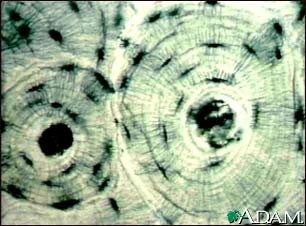
bone

c)

nerve

d)

blood

67.
a)
nerve
b)
elastic cartilage
c)
fibrocartilage
d)
cardiac muscle
68.
What is the function of epithelial cells?
a)
Act as barriers between the external environment, or between organs and fluidfilled cavities
b)
Provide movement by pulling on bones
c)
Provide secretions which help to digest food
d)
Act as the messaging pathway between different areas of the body
69.
Define tissue with regards to anatomy
a)
A group of structurally and functionally related cells that come together to perform common functions
b)
Multiple sheets of thin paper used to clean your nose
c)
A series of different cells in the same area
d)
The smallest structural and functional unit of an organism
70.
Which type of muscle tissue would line the intestines?
a)
Smooth
b)
Cardiac
c)
Skeletal
d)
Transitional
71.
What tissue type is this?
a)
Adipose tissue
b)
Cardiac muscle
c)
Nervous tissue
d)
Skeletal muscle
72.
What tissue type is this?
a)
Skeletal muscle
b)
Nervous tissue
c)
Adipose tissue
d)
'Specialised' connective tissue
73.
The femoral region is ___________ to the calf region.
a)
proximal
b)
medial
c)
distal
d)
lateral
74.
What region is this?
a)
Antecubital
b)
Buccal
c)
Brachial
d)
Femoral
75.
What region is this?
a)
Carpal
b)
Digital
c)
Femoral
d)
Oral