
 Worksheets
IGCSE 0654 B10 Reproduction all
Total questions: 72
Worksheet time: 1hrs 22mins

(a)

(a)
Which of these are characteristics of Asexual reproduction?
Produces offspring of a different species
Needs male and female gametes
Produces offspring genetically identical to the parent
Needs two parents
Only needs one parent
The diagrams show examples of reproduction, which show Asexual reproduction?


Sperm and egg cells have a nucleus which is haploid.
State the number of chromosomes in a human haploid nucleus.
(a)

(a)

(a)
Organisms pass on their genetic information in their gametes.
State the name of the cell formed when the nuclei of two gametes join together
(a)
What is an advantage of sexual reproduction for a population of flowering plants in the wild?
A disease is less likely to affect the whole population
Large numbers of offspring can be produced quickly
Pollen can easily be transferred within the same flower
The offspring show genetic variety
Which statement about sexual reproduction is correct?
Gametes are produced by mitosis only
Gametes fuse together to form a zygote
Genetically identical nuclei are formed
It occurs in animals, but not in plants

A
B
C
D
Which of these are correct for Sexual reproduction?
involves gametes
always involves only one parent
results in the formation of a zygote
includes the process of fertilisation
only occurs in animals
State the name of the process that involves the fusion of the nuclei of two gametes (sex cells) to form a zygote and the production of offspring that are genetically different from one another
(a)
State the name of the process that results in the production of genetically identical offspring from one parent?
(a)

A
B
C
D

(a)

fertilisation
pollen tube growth
pollination
seed dispersal
A plant develops seeds and fruit after pollination has occurred.
Name one agent of pollination
(a)
The pollen grains of wind and insect pollinated flowers are different.
Suggest one feature that would help pollen grains be dispersed by wind
(a)
Where does fertilisation occur in a flowering plant?
anther
bud
ovule
stigma
Which part of a flower produces pollen grains?
anther
ovary
sepal
petal
Which features are characteristic of insect-pollinated flowers?
Bright petals, large feathery stigmas
Bright petals, rough sticky pollen
large feathery stigmas, nectaries
small light pollen, nectaries

(a)

State the name of the part in the diagram that protects the bud of the flower
(a)

What kind of pollination are these flowers?
wind
water
animal
insect
State the name of the transfer of pollen grains from the anther to the stigma
(a)
Which of these environmental conditions are needed for a seed to germinate?
Light
Water
Oxygen
Temperature below 10 degrees celsius
Temperature above 10 degrees celsius
Which if these features would be an advantage to an insect pollinated pollen grain
covered in spikes
light
large
small
Which of these are an advantage of Asexual reproduction?
Offspring have greater genetic variation
Offspring retain the genetic adaptions of the parent
Offspring can have the same valuable characteristics the parents has to give advantage in the environment
Greater variation mean adaptability to changing environmental conditions
Large numbers of offspring can be produced quickly
Which of these are an advantage of Sexual reproduction?
Offspring have greater genetic variation
Offspring retain the genetic adaptions of the parent
Offspring can have the same valuable characteristics the parents has for the environment
Greater variation mean adaptability to changing environmental conditions
Large numbers of offspring can be produced quickly
Which of these are disadvantages of Sexual reproduction
Genetic disadvantages are passed onto offspring eg: susceptibility to a disease
Have to spend time and energy looking for a mate
Offspring may have variation which does not give an advantage when the environmental conditions change
Energy may be used producing gametes which do not get fertilised and develop into offspring
Lack of genetic variety means it is harder for natural selection to happen in response to environmental changes
Which of these are disadvantages of Asexual reproduction
Genetic disadvantages are passed onto offspring eg: susceptibility to a disease
Have to spend time and energy looking for a mate
Offspring may have variation which does not give an advantage when the environmental conditions change
Energy may be used producing gametes which do not get fertilised and develop into offspring
Lack of genetic variety means it is harder for natural selection to happen in response to environmental changes
Where in the female body do the egg and sperm fuse?
Cervix
Uterus
Ovary
Oviduct

What is the question mark pointing to?
Bladder
Urethra
Penis
Testicles

What is the question mark pointing to?
Penis
Vas Deferens
Seminal Vesicles
Testicles


What is the question mark pointing to?
Testicles
Epididymis
Vas deferens
Scrotum
In which of the following structures of the female human reproductive system is the blastocyst implanted during normal human development?
Ovary
uterus
vagina
amniotic sac
The main function of the placenta is to :
allow direct exchange of blood between the mother and fetus for nutrition.
facilitate gas and nutrient exchange between the fetus and mother.
support the weight of the developing fetus in the uterus.
store gases and nutrients for later delivery to the fetus.
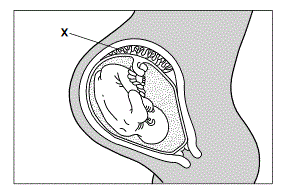
Which statement best describes an important
process carried out by structure X
Milk passes from the mother to the fetus
Materials are exchanged between fetal and maternal blood.
Maternal blood is converted into fetal blood
Oxygen diffuses from fetal blood to maternal blood.
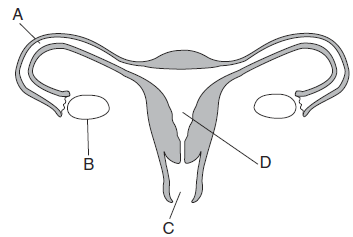
The human female reproductive system is represented below. Where will the embryo attach itself after fertilization?
A
B
C
D


Name Z
(a)
Name X
(a)

Were is fluid that is added to the sperm made?
A
B
C
D
E
Were are sperm and urine carried out of the body?
A
B
C
D
E
Were are sperm made?
A
B
C
D
E

Where does implantation of the zygote occur?
A
B
D
E
F
Where does fertilisation occur?
A
B
D
E
F
Where are eggs made?
A
B
C
D
E

Check all of the functions of the placenta
To protect the baby from injury by absorbing shocks
To transfer nutrients
To kill pathogens
To transfer waste products
To transfer carbon dioxide
Check all of the adaptive features of a human male gamete
Has stores of energy
Is motile, can swim
Has enzymes to allow fertilisation to occur
Has a jelly coat which changes after fertilisation
Check all of the adaptive features of an egg cell
Has stores of energy
Is motile, can swim
Has enzymes to allow fertilisation to occur
Has a jelly coat which changes after fertilisation

Name the cell S
(a)
Name the process R
(a)

ovary --> oviduct --> uterus --> cervix
ovary --> uterus --> cervix --> vagina
vagina --> cervix --> uterus --> oviduct
vagina --> uterus --> cervix --> oviduct

(a)
Choose all ways that Sexually Transmitted Infection spread be controlled?
Condoms use
Abstinence
Wearing masks
Washing after sexual contact
Testing and treatment of STIs
Which of these are ways that HIV can be transmitted from infected to uninfected person
Using the same toilet seat
Kissing / exchanging saliva
Unprotected sex
Mother to baby in breast milk
In blood products, eg sharing a needle for drug use
Describe an effect of HIV on the immune system
(a)

