wayground logo

Free Printable Worksheets

NEW

Font size

S
M
L
XL
Worksheets

Light

Total questions: 47

Worksheet time: 50mins

Name
Class
Date
1.
A tiny bundle of energy by which light travels
a)
Photographs
b)
Photos
c)
Photons
d)
Friends
2.
Allows little to no light through.
a)
Transparent
b)
Translucent
c)
Opal
d)
Opaque
3.
Curve Out
a)
Converse
b)
Concave
c)
Convex
d)
Convection
4.
Curve in
a)
Converse
b)
Convex
c)
Convection
d)
Concave
5.
The bending of waves as they pass from one substance into another.
a)
Reaction
b)
Reflection
c)
Refraction
d)
Repost
6.
Band of color in a rainbow, or from a light passing through a prism.
a)
Spectrum
b)
Space
c)
Prism
d)
Refraction
7.
The distance between one peak and the next in a wave
a)
Transpartent
b)
Scattering
c)
Wavelength
d)
Waste Pro
8.
The term for any wave that hits a surface and bounces off
a)
Transparent
b)
Translucent
c)
Refraction
d)
Reflection
9.
Blurs light as it passes through
a)
Transparent
b)
Translucent
c)
Opaque
d)
Refraction
10.
Transfer of energy when a wave disappears into a surface
a)
Transparent
b)
Refraction
c)
Reflection
d)
Absorption
11.
Allows most light through
a)
eflection
b)
Refraction
c)
Translucent
d)
Transparent
12.
A substance through which light travels.
a)
Wavelength
b)
Opaque
c)
Frequency
d)
Medium
13.
Light travels on straight lines.
a)
Light Bulb
b)
Sunshine
c)
Light Rays
d)
Frequency
14.
Which are the two type of light sources?
a)
Artificial and Natural
b)
Natural and Invented
c)
Artificial and Not Artificial
d)
All of them
15.
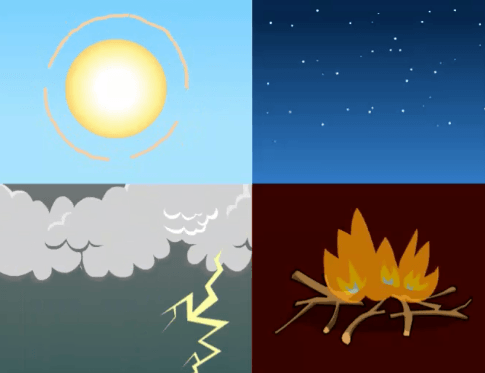
Which of these are examples of NATURAL sources of light?
a)
Sun 
b)
Stars
c)
Lightning
d)
ALL of them
16.
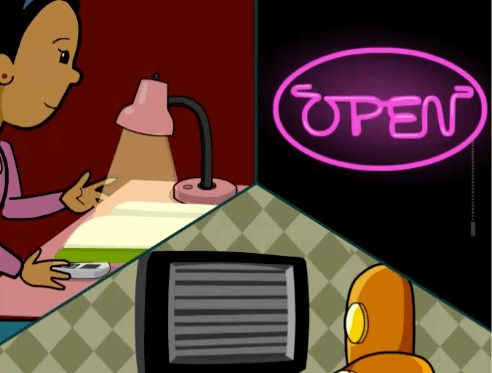
Which of these are examples of ARTIFICIAL sources of light?
a)
Lightbulbs
b)
Neon signs
c)
Televisions
d)
ALL of them
17.
How does light travel/move?
a)
In ONE direction, VERY fast
b)
In ALL directions, VERY fast
18.
_______ is when light hits and object and it BOUNCES off.
a)
Reflection
b)
Refraction
19.
Which objects REFLECT more light?
a)
Shiny objects
b)
Dull objects (not shiny)
20.
Which of these objects use REFRACTION?
a)
Telescope
b)
Magnifying glass
c)
Microscope
d)
ALL of them
21.
A Magnifying glass uses refraction to make things look closer.
a)
TRUE
b)
FALSE
22.
The three primary colors of light are
a)
Red, Blue, Yellow
b)
Pink, Green, Blue
c)
Violet, Green, Red
d)
Blue, Green, Red
23.
How does light travel
a)
It curves around corners
b)
Really slow
c)
In a straight line
d)
In circles
24.
Sunlight is
a)
not light at all
b)
red light
c)
yellow light
d)
white light
25.
Light enters this part of the eye first.
a)
Retina
b)
Cornea
c)
Lens
d)
Cones
26.
Humans can see colors because of these photo receptor cells in the Retina called 
a)
rods
b)
optic cells
c)
cones
d)
sclera
27.
Objects that reflect ALL colors will appear _____?
a)
Black
b)
White
c)
Gray
d)
Multi-colored
28.
Objects that ABSORB all colors of light will appear _______.
a)
white
b)
black
c)
multi-colored
d)
gray
29.
Which explains why the fork looks different under water?
a)
light can't pass through the glass
b)
the wavelength of light lengthens
c)
the amount of light increases when going through water
d)
light is refracted at an angle
30.

When light shines through a prism it creates ________________

a)

visible light

b)

infrared radiation

c)

ultraviolet rays

d)

electromagnetic wave

31.
What three things may happen to light that strikes an object? 
a)
The light may be reflected, transmitted or absorbed.
b)
The light may be reflected and refracted.
c)
The light may be absorbed and transmitted.
32.
What does it mean to reflect?
a)
bounce off
b)
bend
c)
refract
d)
energy
33.
What does it mean to refract?
a)
bounce off
b)
to bend
c)
curve outward
d)
reflect
34.
Why do we see a GREEN leaf?
a)
because humans color it that color
b)
because it absorbs green and reflects all the other colors
c)
it absorbs every color except for green
35.
This is an example of? 
a)
Absorb
b)
Reflect
c)
Refract
d)
Transmit
36.

True or False: Mirrors are the only objects that are reflective.

a)

true

b)

false

37.

Light comes from all of the following EXCEPT ______

a)

sun

b)

light bulbs

c)

our eyes

d)

lasers

38.
What particles make up light?
a)
Photons
b)
Neutrons
c)
Protons
39.
What color has the shortest wavelength, or the highest frequency?
a)
yellow
b)
blue
c)
red
d)
violet
40.

What type of waves does light travel in?

a)

transverse

b)

longitudinal

c)

high and low waves

d)

waves like the ocean

41.

Why does light refract?

a)

speeds up

b)

gets hot

c)

slows down

d)

gains energy

42.
The full spectrum of light energy is called the__________
a)
broad spectrum
b)
electromagnetic spectrum
c)
helium spectrum 
d)
natural light spectrum
43.
Which of the following types of radiation has the shortest wavelength and the highest frequency?
a)
Radio Waves
b)
Infrared
c)
Visible
d)
X-Rays
44.

What conditions must happen to cause a rainbow?

a)

When the sun is behind you and falling water is in front of you.

b)

When the sun in in front of you and falling water is behind you.

c)

When a pack of skittles fall from the sky.

d)

All of the above.

45.

Why does your shadow change at various times during a sunny day?

a)

Early or late in the day, the sun is low in the sky so your shadow is long. At noon, the sun is high in the sky so your shadow is shorter.

b)

You can get close to the sun for your shadow to look longer or move far away from the sun for your shadow to look shorter.

c)

Both A and B

d)

Your shadow looks the same all the time

46.

People who are farsighted use which type of lens?

a)

Concave

b)

Convex

47.

People who are nearsighted need which type of lens?

a)

Convex

b)

Concave