wayground logo

Free Printable Worksheets

NEW

Font size

S
M
L
XL
Worksheets

Geology, Geologic Time, & Change Over Time Review

Total questions: 54

Worksheet time: 53mins

Name
Class
Date
1.
Which type of rock results from melting and cooling of magma?
a)
Igneous
b)
Metamorphic
c)
Sedimentary
d)
Extrusive
2.
Which type of rock forms from extreme heat and pressure?
a)
Igneous
b)
Sedimentary
c)
Organic
d)
Metamorphic
3.
Rock that forms when sediment from older rocks get pressed and cemented together.
a)
Sedimentary Rock
b)
Metamorphic Rock
c)
Igneous Rock
4.
Wind, water, and ice breaking down rock is called
a)
Erosion
b)
Deposition
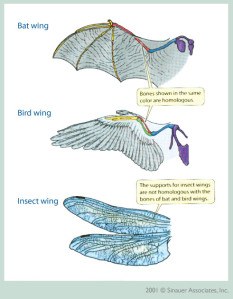
c)
Compaction
d)
Weathering
5.
What is the MAIN way rocks are classified?
a)
Their color and shapes
b)
How they form
c)
Mineral bands
d)
Where they form
6.
Fossils are often found in ____________ because it is formed from the remains of once living things.
a)
metamorphic
b)
magma
c)
igneous
d)
sedimentary
7.
What type of fossil is this?
a)
Mold
b)
Cast
c)
Preserved remains
d)
Trace fossil
8.
Which layer is oldest?
a)
A
b)
W
c)
G
d)
Z
9.

Which is an example of a trace fossil?

a)

animal tracks

b)

nests

c)

burrows

d)

all of the answers given here

10.
What is an example of an index fossil?
a)
t-rex fossils
b)
insect in amber
c)
trilobites or ammonites
d)
woolly mammoth fossils
11.
What is a fossil?
a)
the remains or physical evidence of an organism preserved by geologic processes
b)
fossils can be preserved in rock, amber, asphalt, or ice
c)
any naturally preserved evidence of animal activity
d)
fossil of an organism that lived during a relatively short period of time
12.
Which of the following would NOT help an organism become fossilized?
a)
shell 
b)
skeleton 
c)
buried quickly with sediment 
d)
soft body parts 
13.
A _______ is a hollow area in sediment in the shape of an organism or part of an organism.
a)
mold
b)
cast
c)
petrified fossil
d)
trace fossil
14.
_______________ are fossils in which minerals replace all or part of an organism.
a)
carbon films
b)
trace fossils
c)
petrified fossils
d)
amber
15.
All the information that paleontologists have gathered about past life is called the _____
a)
geologic time
b)
geologic eras
c)
fossil eras
d)
fossil record
16.
This type of fossil is a stone "copy"....also called petrification.
a)
preserved remains
b)
mineral replacement
c)
cast
d)
mold
17.
Which of the following orders the rock layers accurately from oldest to youngest?
a)
A, B, C, D, E, F, G, H
b)
B, F, G, C, D, H, A, E
c)
B, G, C, D, E, H, A, F
d)
F, A, H, E, D, C, G, B
18.

Earth elements decay and change into another element in a process called_____________.

a)

radiation

b)

isotope

c)

radioactive decay

d)

half-life

19.

The __________of rocks is the numerical age and real age of rocks.

a)

relative age

b)

half-life

c)

absolute age

d)

earth age

20.

All organisms contain the element_________, so it is used to find the ages of fossils.

a)

carbon-14

b)

carbon-12

c)

carbon

d)

carbon age

21.

Geologist use the time it takes for a radioactive isotope to decay to half its original mass called a___________.

a)

radioactive decay

b)

isotope

c)

half-life

d)

carbon dating

22.

The statement that the oldest layer will be at the bottom in an undisturbed sequence of rock layers is called the Law of ....

a)

Inclusions

b)

Unconformities

c)

Cross-Cutting Relationships

d)

Superposition

23.
The age of a rock compared to the ages of other rocks is the rock's
a)
absolute age
b)
geologic age
c)
sedimentary age
d)
relative age
24.
Letter "F" is a....
a)
inclusion
b)
intrusion
c)
fault
d)
unconformity 
25.
Which is the most accurate form of absolute dating?
a)
radiometric dating
b)
erosion rate
c)
deposition rate
d)
index fossils
26.
Which is the most recent era of time- the one that we are currently in?
a)
Mesozoic 
b)
Paleozoic 
c)
Cenozoic 
d)
Precambrian 
27.
Paleozoic, Mesozoic & Cenozoic are all
a)
Epochs
b)
Eras
c)
Periods
d)
Eons
28.
Known as the age of the mammals?
a)
Mesozoic Era
b)
Holocene Epoch
c)
Cenozoic Era
d)
Cambrian
29.
The disappearance of a species.
a)
Evolution
b)
Extinction
c)
Migration
d)
Mutation
30.
The era that dinosaurs ruled the Earth's land, air and oceans.
a)
Cenozoic
b)
Paleozoic
c)
Precambrian
d)
Mesozoic
31.

What era did the formation of the earth occur?

a)

Paleozoic

b)

Precambrian

c)

Cenozoic

d)

Cambrian

32.

What type of event usually marks the end of an Era

a)

A Mass Extinction

b)

A Quinceanera

c)

An earthquake

d)

A Volcanic Eruption

33.

What are the four eras in order from OLDEST to NEWEST?

a)

Pre-Cambrian, Paleozoic, Mesozoic, Cenozoic

b)

Pre-Cambrian, Mesozoic, Paleozoic, Cenozoic

c)

Cenozoic, Mesozoic, Paleozoic, Pre-Cambrian

d)

Mesozoic, Pre-Cambrian, Cenozoic, Paleozoic

34.

What era did trilobites, fishes, and other marine organisms dominate?

a)

Precambrian

b)

Paleozoic

c)

Mesozoic

d)

Cenozoic

35.

90% of Earth’s history occurred during which era?

a)

Precambrian

b)

Paleozoic

c)

Mesozoic

d)

Cenozoic

36.

At the end of this era, multi-cellular organisms like sponges, jellyfish and worms filled the oceans.

a)

Precambrian Era

b)

Paleozoic Era

c)

Mesozoic Era

d)

Cenozoic Era

37.
Which era ended with the K-T extinction, probably due to an asteroid?
a)
Paleozoic
b)
Phanerozoic
c)
Cenozoic
d)
Mesozoic
38.

Which of the following are not early invertebrates that existed during the Paleozoic era?

a)

arachnid

b)

trilobite

c)

amphibians

d)

crustaceans

39.

Select the best definition for adaptation:

a)

trait or characteristic that causes an organism to survive & reproduce

b)

survival of the fittest

c)

only the strong will survive

d)

evolution by means of natural selection

40.

Which of the following is NOT an example of structural adaptation?

a)

molar teeth

b)

large wingspan

c)

pointed ears

d)

camouflage

41.
What was the name of the scientist who had the theory of evolution?
a)
Lamarck
b)
Einstein
c)
Washington
d)
Darwin
42.
Why are advantageous traits more likely to be passed onto offspring?
a)
Because they are more likely to survive and reproduce.
b)
Because they look cooler.
c)
Because they come from recessive alleles.
d)
Because the trait is an acquired phenotype.
43.
What is it called when better adapted organisms survive to pass traits along to their offspring.
a)
Evolution
b)
Natural Selection
c)
Extinction
d)
Artifical Selection
44.
Mutations are a change in what?
a)
DNA
b)
tRNA
c)
genotype
d)
phenotype
45.
"Survival of the Fittest" describes which theory
a)
a) natural selection
b)
b) gravity
c)
c) heredity
d)
d) string theory
46.
What are the evidences for Evolution?
a)
Fossil Records
b)
Embryology
c)
Similar body structure
d)
All the above
47.

Change in a kind of organism over time; process by which modern organisms have descended from ancient organisms.

a)

Extinction

b)

Genetic variation

c)

Natural Resources

d)

Evolution

48.
Differences among individuals in the composition of their genes or other DNA segments.
a)
Natural Selection
b)
Derived traits
c)
Genetic Variation
d)
Adaptation
49.
An example of an analogous structure includes:
a)
wing of a butterfly and bird wing
b)
bird wing and human arm
c)
rat appendix and human appendix
50.
  The diagram shows an image of a Pterosaur wing, bat wing, and bird wing.  These are all different organisms, but share similar wing structures.  If these structures are similar due to common ancestry, which of the following best describes them?
a)
a.  Vestigial Organ
b)
b.  Embryological Similarities
c)
c.  Homologous Structures
d)
d.  Analogous Structures
51.
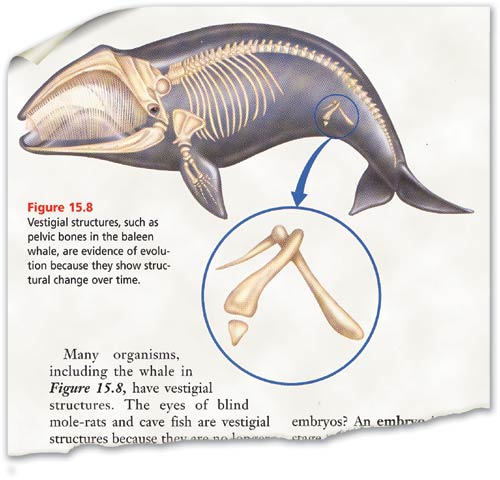
The hind leg bones in a whale are examples of
a)
homologous structures
b)
analogous structures
c)
fossils
d)
vestigal structures
52.

What shows scientists how the environment has changed over time?

a)

size of the human population

b)

locations of rain forests

c)

average daily temperature

d)

fish fossils in desert regions

53.

What information can we learn from ice cores?

a)

We can learn how the climate has changed.

b)

We can learn how the dinosaurs died

c)

We can learn about droughts

54.
What does the principle of uniformatarianism say?
a)
forces that act to gradually change the Earth's surface today have acted upon the Earth's surface in the past
b)
layer's of sedimentary rocks contain many fossils
c)
older rocks are below younger rocks
d)
the Earth's continents were once joined