Wayground logo

Free Printable Worksheets

Font size

S
M
L
XL
Worksheets

Ecosystems

Total questions: 50

Worksheet time: 3595secs

Name
Class
Date
1.
An ecosystem is made up of _______ and ________ things.
a)
Living and nonliving
b)
Alive and dead
c)
Plants and animals
d)
Land and water
2.
What does the word organism mean?
a)
Living thing
b)
Nonliving thing
c)
Organs in your body
d)
Organ player
3.
All of the nonliving parts of an ecosystem are __________.
a)
biotic
b)
biology
c)
abiotic
d)
biography
4.
The place where an organism lives is its __________.
a)
habitat
b)
ecosystem
c)
organism
d)
population
5.
All of the living AND non-living things in an area that interact with each other are called a/an __________.
a)
community
b)
habitat
c)
population
d)
ecosystem
6.
What are biotic factors?
a)
dead things
b)
living things/ organisms
c)
weather
d)
plants
7.
Biotic factors are ...
a)
living things/ organisms
b)
atmosphere
c)
dead things
d)
algae
8.
Which is an example of an ABIOTIC factor?
a)
hummingbird
b)
water
c)
dead tree branch
d)
skunk
9.
Which is an example of a BIOTIC factor?
a)
lightning
b)
algae
c)
sand
d)
clouds
10.
Organisms that hunt other organisms for food are called __________.
a)
predators
b)
prey
c)
producers
d)
heterotrophs
11.
A bird in a tree watched as a lion stalked, attacked, and then ate a zebra. Which of these animals was the prey?
a)
bird
b)
lion
c)
zebra
d)
all of the above
12.
Carnivores, herbivores, omnivores, and scavengers are all examples of __________.
a)
producers
b)
consumers
c)
decomposers
d)
abiotic factors
13.
An individual living thing is a/an ___________.
a)
habitat
b)
ecosystem
c)
organism
d)
population
14.
What is the energy source for the water cycle?
a)
the sun
b)
the earth
c)
water
d)
the moon
15.
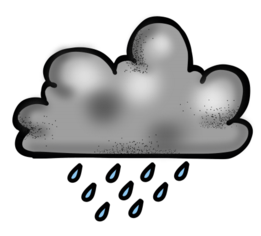
What part of the water cycle does this picture show?
a)
condensation
b)
precipitation
c)
evaporation
16.
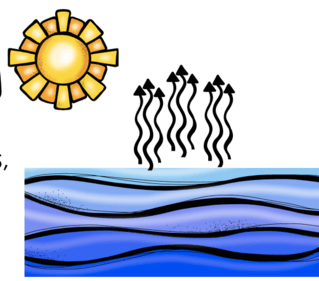
What part of the water cycle does this picture show?
a)
condensation
b)
precipitation
c)
evaporation
17.
What is condensation?
a)
The part of the water cycle when the sun heats up water, turning it from a liquid into water vapor or steam. It rises from the ground into the air.
b)
The part of the water cycle when the water vapor in the air gets cold. The water turns back into a liquid and forms clouds.
c)
The part of the water cycle when clouds get heavy and can no longer hold the liquid water. This causes the water to fall from the sky to the earth as rain, snow, sleet, or hail.
18.
What is it called when plants give off water vapor as a waste product?
a)
condensation
b)
evaporation
c)
sublimation
d)
transpiration
19.
Soil formation begins with the weathering of_______.
a)
Humus
b)
Subsoil
c)
Litter
d)
Rock
20.
Humus is.....
a)
the dead parts of plants and animals in soil.
b)
A food we eat with pretzels.
c)
The tiny particles inside of soil
d)
The roots that come off of a plant and live in soil.
21.
The MAIN  thing Decomposers do for the the soil is the following:
a)
Store moisture
b)
Burrow deep in the soil
c)
Make space for air and water
d)
Break down and digest dead organisms
22.
Which of the following processes will most likely contribute to the development of soil?
a)
Volcanic eruptions that make new land
b)
Building up of snow in very cold areas
c)
Migration of animals to warmer climates
d)
Breaking down of rock by wind, water, and ice
23.
Which of the following organisms is a herbivore.
a)
butterfly
b)
snake
c)
fox
d)
ladybird
24.
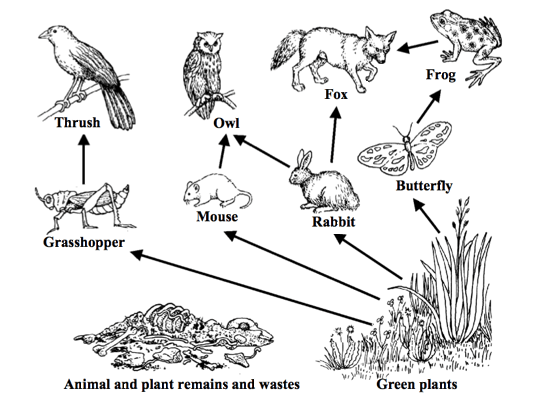
The owl receives energy from which organisms?
a)
grasshopper and mouse
b)
mouse and rabbit
c)
rabbit and butterfly
d)
butterfly and frog
25.
The owl receives energy from which organisms?
a)
grasshopper and mouse
b)
mouse and rabbit
c)
rabbit and butterfly
d)
butterfly and frog
26.
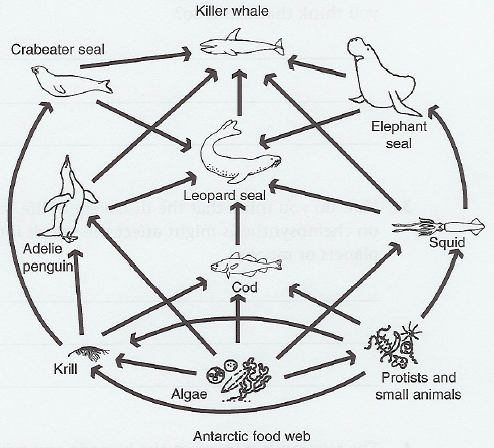
How many predators does the squid have?
a)
1
b)
2
c)
3
d)
4
27.
Which consumer receives energy from the leopard seal?
a)
blue whale
b)
penguin
c)
killer whale
d)
elephant seal
28.
What type of consumer is the wolf?
a)
herbivore
b)
omnivore
c)
carnivore
d)
decomposer
29.
What is a producer?
a)
an organism that gets energy from eating other organisms
b)
an organisms that uses sunlight to make its own food
c)
an organism that gets energy from eating dead organisms, non-living material or waste
d)
an organism that uses chemical energy to make its own food
30.
An organism that gets energy from eating other organisms is a ______________.
a)
producer
b)
consumer
c)
decomposer
d)
prey
31.
An organism that gets energy from breaking down dead organisms, non-living material or waste is a(an) ___________.
a)
producer
b)
consumer
c)
decomposer
d)
autotroph
32.

What does biodiversity mean?

a)

Only one species in an area.

b)

The different amount of species in an area

c)

All abiotic life

d)

Nitrogen fixation

33.

A population is...

a)

A group of one species in one area

b)

Multiple species that live in one area

c)

All of the living and nonliving things in an area

d)

None of these

34.

An animal that eats only plants.

a)

scavenger

b)

omnivore

c)

herbivore

d)

carnivore

35.

An animal that eats both plants and animals.

a)

carnivore

b)

omnivore

c)

herbivore

d)

scavenger

36.

A diagram that shows the transfer of energy from one organism to another (who is eaten by what).

a)

ecosystem

b)

environment

c)

food chain

d)

food web

37.

A diagram that shows the transfer of energy in an ecosystem by using several food chains.

a)

ecosystem

b)

food web

c)

environment

d)

food chain

38.
What does it mean when an animal is endangered?
a)
Something once lived but no longer exists.
b)
Animals that is at risk of extinction.
c)
Place that protects animals at risk.
39.
What does it mean when an animal is extinct?
a)
Something once lived but no longer exists.
b)
Animals that is at risk of extinction.
c)
Place that protects animals at risk.
40.

What type of consumer is it?

a)

Primary consumer

b)

secondary consumer

c)

tertiary consumer

41.

What type of consumer is it?

a)

Primary consumer

b)

secondary consumer

c)

tertiary consumer

42.

What type of consumer is it?

a)

Primary consumer

b)

secondary consumer

c)

tertiary consumer

43.

Fleas feed on blood from dogs. There is no benefit to the dog and the itching and bites might lead to infection

a)

Parasitism

b)

Predation

c)

Competition

d)

Mutualism

44.

The cattle egret follows herds of cattle and eats the insects that the cattle stir up as they move through the grassland. The cattle appear to be unaffected by the egrets.

a)

Parasitism

b)

Predation

c)

Mutualism

d)

commensalism

45.

The Remora fish swim alongside the shark and take scraps of food that the shark drops during feeding. The shark does not eat the Remora and appears unaffected by its presence.

a)

Parasitism

b)

Predation

c)

Competition

d)

commensalism

46.
Mistletoe extracts water and nutrients from a spruce tree. The spruce tree is harmed. 
a)
parasitism
b)
commensalism
c)
mutualism
47.
Barnacles create home sites by attaching themselves to whales. This relationship neither harms nor benefits the whales. 
a)
parasitism
b)
commensalism
c)
mutualism
48.
In a parasitic relationship, one organism is ___________ and one organism is benefiting. 
a)
helped
b)
harmed
c)
not effected
d)
happy
49.
1.  A bee and a flower work together to benefit each other. This is an example of _________________. The bee helps the flower by pollinating it and the flower helps the bee by providing it with nectar. 
a)
commensal relationship 
b)
parasitic relationship 
c)
mutual relationship 
50.
A tick is a parasite to a horse. Which statement best describes the relationship between the tick and the horse? 
a)
a.  The tick helps the horse get food. 
b)
a.  The tick harms the horse by feeding on its blood. 
c)
a.  The horse harms the tick by feeding on its blood. 
d)
The tick does not affect the horse.