wayground logo

Free Printable Worksheets

NEW

Font size

S
M
L
XL
Worksheets

Unit 9 Review - Global Studies II

Total questions: 47

Worksheet time: 58mins

Name
Class
Date
1.

Social class consisting of the clergy before the French Revolution.

a)

1st Estate

b)

2nd Estate

c)

3rd Estate

d)

The CHURCH!

2.

The bourgeoisie lead this estate and it was made up of merchants, artisans, cooks, servants, peasants etc.

a)

1st Estate

b)

2nd Estate

c)

3rd Estate

d)

1.2.3.. BOURGEOISIE!

3.

An assembly of representatives from all three estates that met for the first time in 175 years when Louis XVI called them together.

a)

Estates General

b)

National Assembly

c)

Legislative Assembly

d)

Declaration of the Rights of Man and of Citizen

4.
Most of the people of France belonged to the 
a)
1st 
Estate
b)
2nd Estate
c)
3rd Estate
d)
4th Estate
5.

The Second Estate was composed of

a)

Church leaders

b)

Nobility

c)

Peasants

d)

none of the above

6.
The National Assembly set down the ideas of the Revolution in 
a)
the Declaration of Independence
b)
the Declaration of the Rights of Man
c)
the US Constitution
d)
The Edict of Nantes
7.
When the other estates refused to change voting rules the 3rd Estate 
a)
met separately
b)
declared themselves the new government
c)
Created the National Assembly
d)
all of the above
8.

Simon Bolivar's main goal was to establish ________ in South America.

a)

A utopian society

b)

Thriving industry and commerce

c)

A strong military

d)

Independent, democratic nations

9.

What was Simon Bolivar's great accomplishment?

a)

Bolivars forces defeated Spain in South America

b)

Bolivar's forces liberated all of South American from European rule

c)

Bolivars forces united all of South American into one large nation

d)

Bolivars forces united North and South America

10.
What influenced the leaders of Latin American independence movements?
a)
the English Civil War
b)
the French and Indian War
c)
the Enlightenment
d)
the Crusades
11.
the process of moving from an agricultural society, in which most goods are handmade, to a society that thrives on machine-manufactured goods
a)
textile
b)
economy
c)
industrialization
d)
technology
12.
In what country did the Industrial Revolution begin?
a)
United States
b)
France
c)
Great Britain
13.
The _______________ is the name for the change from goods being made by hand at home to making them by machine in factories.
a)
French Revolution
b)
Machine Revolution
c)
Industrial Revolution
d)
Technological Revolution
14.
Who wrote the Communist Manifesto?
a)
Charles Darwin
b)
Adam Smith
c)
Karl Marx
d)
Alfred Nobel
15.
What is the name for the working class during the Industrial Revolution?
a)
darwinist
b)
proletariat
c)
communist
d)
dynamo
16.
Which of these would a black South African had to have done during apatheid?
a)
carry a passbook
b)
see a doctor
c)
vote for government officials
d)
attend a white school
17.
Which of these would be a benefit of being a white South African during apartheid?
a)
being able to vote
b)
carrying a passbook
c)
living in a homeland
d)
poor healthcare
18.
Who was the first black president of South Africa?
a)
F.W. de Klerk
b)
Nelson Mandela
c)
Jomo Kenyatta
d)
Kwame Nkrumah
19.
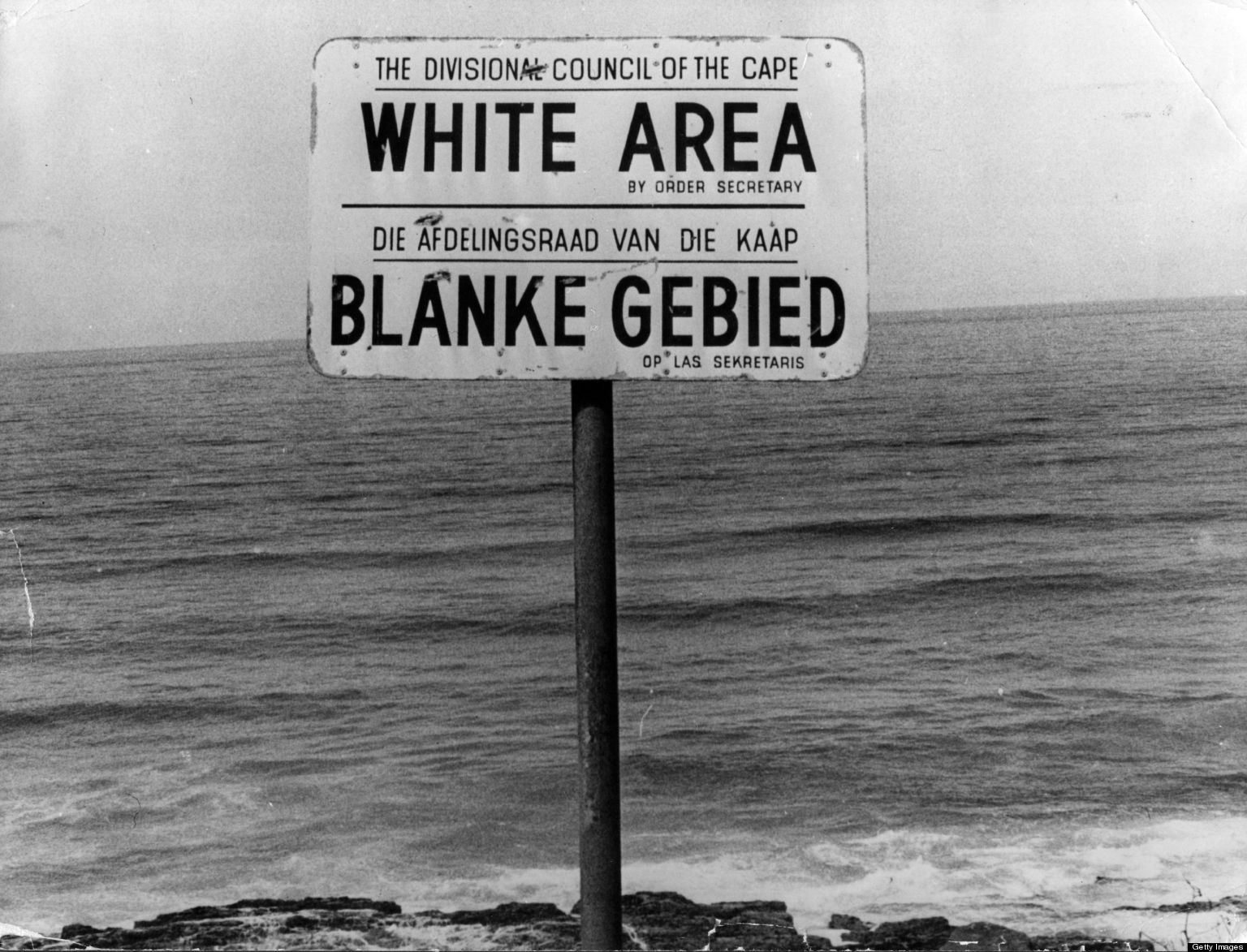
In what African country would you likely have seen this sign during 1975? (Click text to reveal the picture)
a)
Nambia
b)
Egypt
c)
United States
d)
South Africa
20.
Apartheid is an Afrikaans word meaning? 
a)
A state of being apart
b)
Separate but equal
c)
Equality for all
d)
Racism
21.
What was apartheid? 
a)
equality for all
b)
western-style democracy
c)
constitutional monarcy
d)
segregation of races
22.
What was the significance of Nelson Mandela's election to office in South Africa? 
a)
he became the first black president
b)
he released political prisoners
c)
he united the Zulu and Ashanti people to win the election
d)
he won the election with the support of the British
23.
What did Stalin call his programs that were meant to catch Russia's industry up with the rest of the world?
a)
5 Day Plans
b)
5 Month Plans
c)
5 Year Plans
d)
5 Decade Plans
24.
What was the name of the wealthy peasants that Stalin accused of sabotage and tried to eliminate/kill?
a)
The Kulaks
b)
The Turks
c)
The Dutch
d)
The Magyars
25.
Starting in 1932, what nation (a Soviet Republic) saw a terrible famine that may have killed as many as 7 million people?
a)
Ukraine
b)
Mongolia
c)
Estonia
d)
Latvia
26.
Large, government owned farms were called:
a)
Communist Farms
b)
Collective Farms
c)
Independent Farms
d)
Gulags
27.
What is a command economy?
a)
an ecomony with private ownership of businesses
b)
an economy with state ownership of businesses
c)
an economy where the consumer makes all economic  decisions
d)
an economy where the government makes all economic decisions
28.
The modernization of Japan during the Meiji Restoration resulted in:
a)
a return to a feudal system of government
b)
an alliance between China, Korea, Russia, and Japan
c)
the rise of Japan as an imperialistic nation
d)
a strengthening of Japan's isolationist policies
29.

• Sino-Japanese War 1894–1895

• Russo-Japanese War 1904–1905

• Annexation of Korea 1910


These events in the history of Japan reflect its

a)

resistance to trade

b)

vulnerability to attack by neighbors

c)

emergence as an imperialistic country

d)

abundance of natural resources

30.

Why was Japanese rule unpopular in Korea?

a)

The Japanese brought modern transportation systems to Korea

b)

The Japanese allowed all Koreans to vote in elections

c)

The Japanese imposed feudalism on Korea

d)

The Japanese imposed harsh rule and set out to erase the Korean culture and language

31.
During which war did the U.S. create the atomic bomb?
a)
World War I
b)
World War II
c)
Korean War
d)
Vietnam War
32.
Why did the United States decide to drop the bomb rather than invade Japan with soldiers?
a)
wanted to see if the bomb worked
b)
 did not think they could defeat the Japanese
c)
did not have the soldiers or weapons left to attack Japan
d)
They estimated that 500,000 to 1 million Allied soldiers would die in an invasion
33.
Where is Hiroshima?
a)
China
b)
Korea
c)
Japan
d)
Guam
34.
When was the atomic bomb dropped?
a)
1941
b)
1943
c)
1945
d)
1944
35.

The purpose of Mohandas Gandhi's actions such as the Salt March and the textile boycott was to

a)

begin a cycle of armed revolution

b)

draw attention to critical issues

c)

increase the strength of the military

d)

resist the power of religious leaders

36.

Base your answer to the following question on the passage below and on your knowledge of social studies.


...Indeed whilst on the one hand civil disobedience authorizes disobedience of unjust laws or unmoral laws of a state which one seeks to overthrow, it requires meek and willing submission to the penalty of disobedience and therefore cheerful acceptance of the jail discipline and its attendant hardships....


Which individual is the author of this passage?

a)

Otto von Bismarck

b)

Mohandas Gandhi

c)

Ho Chi Minh

d)

Fidel Castro

37.

One reason India gained its independence from Great Britain in 1947 was that

a)

Great Britain was defeated in World War II

b)

the Treaty of Versailles required Great

Britain to give up its colonies

c)

Great Britain did not have the resources

to maintain an empire after World War II

d)

India had supported the Axis Powers

during World War II

38.
The first president of Turkey was:
a)
Mao Zedong
b)
Kemal Ataturk
c)
Kwame Nkurmah
39.
One change that Kemal Ataturk made as President of Turkey was:
a)
Collective Farming
b)
abolished Filial Piety
c)
separated government from religion
40.

In what way were Kwame Nkrumah, Patrice Lumumba, and Jomo Kenyatta similar?

a)

They all led nationalist movements.

b)

They all opposed communism.

c)

They all supported non-violent resistance.

d)

They all supported imperialism.

41.

In South Africa after the end of apartheid,

a)

the crime rate dropped.

b)

whites retained most of the land.

c)

blacks held most of the economic power.

d)

the country became prosperous.

42.

Which organization led the struggle for majority rule in South Africa?

a)

Black Majority Caucus

b)

Anti-Apartheid League

c)

African National Congress

d)

United Nations

43.

Mao became one of the founders of the Chinese Communist Party.

a)

True

b)

False

44.

A founder of the Chinese Communist Party (1921) that overthrew the Nationalists. He led the Long March, created the Great Leap Forward and the Cultural Revolution.

a)

Mao Zedong

b)

Deng Xioping

c)

Ho Chi Mihn

45.

Mao believed that countries with a low standard of living would eventually rebel against wealthier nations.

a)

True

b)

False

46.

A poorly planned development that spreads a city’s population over a wider and wider geographic area is

a)

industrialization

b)

urban sprawl

c)

urbanization

d)

metropolitan area

47.

Urban areas function as centers of

a)

employment

b)

education

c)

healthcare

d)

all of these