wayground logo

Free Printable Worksheets

NEW

Font size

S
M
L
XL
Worksheets

Weathering, Erosion & Deposition

Total questions: 41

Worksheet time: 35mins

Name
Class
Date
1.
Bobby observed that a metal trash can was covered with rust.  What type of weathering caused the rust on the trash can?
a)
Mechanical weathering 
b)
Wind weathering
c)
Chemical weathering
d)
Erosion weathering
2.
Which diagram represents mechanical weathering?
a)
G
b)
F
c)
H
d)
J
3.
The surfaces of old concrete statues are often covered with small holes or pits. Which of these MOST LIKELY causes these holes or pits?
a)
The concrete becomes pitted as water freezes in small cracks in the statue.
b)
The concrete is chipped away by sand particles blown by strong winds
c)
The concrete is chemically weathered by acid rain.
d)
Long exposure to sunlight causes the pits to form.
4.
What is the weathering process in which rocks are broken down into smaller pieces (sediments) and do not change the rock composition?
a)
Acid weathering 
b)
Gravity weathering
c)
Chemical weathering
d)
Mechanical weathering
5.
What is the process that picks up and moves weathered rocks?
a)
deposition
b)
landslide
c)
weathering
d)
erosion
6.
How are canyons formed?
a)
Wind blows sand into high piles, which form the canyon walls.
b)
Rivers erode soil and rock over time, leaving behind canyon walls.
c)
Gravity causes rocks to fall from mountain sides onto valley floors.
d)
Ice freezes and thaws in cracks of rocks, and the cracks become canyons.
7.
A cliff formed near the ocean.  Which statement best describes how this cliff formed?
a)
Warm air melted the rock.
b)
Sun rays evaporated the rock.
c)
Ocean waves washed away rock.
d)
Plant roots pushed away the rock.
8.
Weathering causes rocks and minerals to break into smaller pieces.  Which event is the best example of weathering?
a)
a raindrop splashing in a lake
b)
a snowball rolling down a mountain
c)
a tree root growing into the crack of a rock
9.
Over long periods of time, deposition may change the Earth’s surface by _____.
a)
forming new land features
b)
breaking down large rocks into smaller ones
c)
washing away beaches
d)
severely draining topsoil
10.
Sarah does the investigation described below using a model to study how rivers erode earth materials.
·  She pours 600 mL of sand onto a plate.
·  She pours 150 mL of water onto the pile of sand.
·  She measures how much of the sand washes off the edge of the plate.
·  She notices that less sand washes off the plate when she pours water slowly than when she pours it faster.
How is the model similar to real rivers eroding earth materials?
a)
The model shows that faster-moving water makes sand stick to the bottom of a river.
b)
The model shows that slower-moving water makes sand float to the top of a river.
c)
The model shows that slower-moving water erodes less earth materials than faster-moving water.
d)
The model shows that faster-moving water erodes less earth materials than slower-moving water.
11.
Deposition changes the Earth’s surface because eroded materials _____.
a)
stop the river's flow
b)
make rich farmlands
c)
are dropped in new places
d)
move very slowly
12.
What has the greatest erosion effect on our beaches?
a)
waves
b)
gravity
c)
glaciers
d)
wind
13.
The natural chemical or physical processes that breaks down rock on Earth's surface.
a)
weathering
b)
erosion
c)
deposition
d)
jackhammering
14.
The process by which water, ice, wind or gravity moves weathered rock and soil from one place to another.
a)
weathering
b)
erosion
c)
deposition
d)
dumptruck
15.
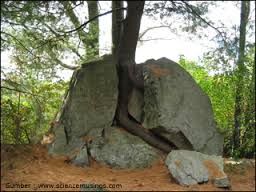
These rocks were broken apart from the continuous freeze/thaw of water in the cracks of the rocks. This is an example of:
a)
ice wedging
b)
acid rain
c)
permeability
d)
abrasion
16.
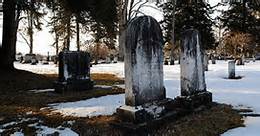
These gravestones have slowly broken down and turned a blackish color due to the action of:
a)
ice wedging
b)
abrasion
c)
acid rain
d)
mechanical weathering
17.
How is mechanical weathering different from chemical weathering?
a)
Chemical weathering happens over much shorter time frame than mechanical weathering.
b)
Chemical weathering changes the chemical composition of rocks; mechanical weathering does not.
c)
Chemical weathering occurs only in tropical climates; mechanical weathering occurs only in cool climates.
d)
Chemical weathering occurs only in the mountains; mechanical weathering occurs only on flat land.
18.
Weeds growing into the cracks in a sidewalk and the sidewalk begins to crumble is an example of:
a)
mechanical weathering
b)
chemical weathering
19.
A metal statue slowly turning green after years of being outside is an example of:
a)
mechanical weathering
b)
chemical weathering
20.
A piece of sandstone changing color (from brown to rusty red) from exposure to water and air is an example of:
a)
mechanical weathering
b)
chemical weathering
21.
Lichens (small green plants) growing on a large boulder release enzymes and other acids that slowly break the rock apart. This is an example of:
a)
mechanical weathering
b)
chemical weathering
22.

What is erosion?

a)

The movement of sediment

b)

The breaking of sediment

c)

The dropping of sediment

23.

Water carrying sediment down a hill is an example of...

a)

weathering

b)

erosion

c)

deposition

24.

Beach waves dropping sand to create a beach is an example of...

a)

weathering

b)

erosion

c)

deposition

25.

Small pieces of rock that have been weathered from a larger rock are known as...

a)

sand

b)

sediment

c)

soil

26.

A landform made of sediment that is deposited where a river flows into an ocean or lake is called a...

a)

sea cave

b)

mountain

c)

delta

27.
Which of the following actions causes the deposition of sand at a delta?
a)
river water slowing as it enters the ocean
b)
salt water & fresh water mixing together
c)
ocean waves transporting sand toward land
d)
ocean water slowing as it reaches the coast
28.
Sediment deposited as fast-flowing river reaches a flatter area of land is
a)
river dleta
b)
floodplain
c)
alluvial fan
d)
oxbow lake
29.
What causes a valley to form first?
a)
earthquake
b)
running water
c)
landslide
d)
erosion by wind
30.
What force is responsible for erosion and deposition in landslides?
a)
gravity
b)
ice
c)
wind
d)
temperature
31.
What is responsible for the formation of sand dunes?
a)
Wind
b)
Water
c)
Gravity
d)
Ice
32.
Many landforms are created through the process of weathering and erosion.  Which statement correctly compares weathering and erosion?
a)
Erosion can make weathering happen slower by breaking up rocks.
b)
Weathering can help erosion happen faster by breaking up rocks.
c)
Weathering and erosion must always take place at the same time.
d)
Weathering and erosion are two names for the same process.
33.
How does freezing water cause the weathering of rocks?  The freezing water—
a)
keeps the rocks in place
b)
makes the rocks last longer
c)
expands cracks and breaks rocks
d)
causes rocks to fall in landslides
34.
Layers of sediment forming at the bottom of the ocean floor is an example of
a)
Weathering
b)
Erosion
c)
Deposition
d)
Awesome Science
35.
How do plants weather rocks?
a)
During photosynthesis
b)
When roots grow into cracks of rocks and expand the rock breaks.
c)
When the plant moves water from the roots to the leaves, the rock breaks.
d)
Plants don't weather rocks.
36.

The picture shows a kind of glacier that can be many meters thick. In this landscape, which of the following is most likely directly affected by this kind of glacier?

a)

The average height of plants on the mountainside

b)

the average mass of trees near the lake

c)

the shape of clouds that form above the glacier

d)

the shape of the valley between the mountains

37.

Canyons and V-Shaped Valleys are formed by

a)

weathering and erosion by rivers

b)

weathering and erosion by glaciers

c)

weathering and erosion by wind

d)

weathering and erosion by waves

38.

U-Shaped Valleys are formed by

a)

weathering and erosion by glaciers

b)

weathering and erosion by rivers

c)

weathering and erosion by wind

d)

weathering and erosion by waves

39.

Arches, Hoodoos & Mesas are formed by

a)

deposition of sediment by rivers

b)

weathering and erosion by rivers

c)

weathering and erosion by glaciers

d)

weathering and erosion of rock by the wind

40.

A deposition landform at the mouth of a river formed by deposited sediment

a)

Sand Dune

b)

Delta

c)

Sand Bar

d)

Sand Castle

41.

You drive down an unpaved road on a dry day, and the dust blows up in clouds behind you. When you get home, you see that your car is entirely covered in dirt. What process or processes occurred?

a)

The dust in the air is undergoing erosion. The dust settling on your car has undergone deposition.

b)

The dust in the air is undergoing erosion. There is no deposition.

c)

The dust in the air is undergoing deposition. There is no erosion.

d)

The paint on your car is undergoing erosion. There is no deposition.