
 Worksheets
Respiratory system
Total questions: 45
Worksheet time: 25mins
Smaller tubes within the lungs that leads air into and out of alveoli
This structure leads air and food to the larynx and esophagus, respectively
Passage way that moistens and warms the air as it enters the body
nasal cavity
bronchi
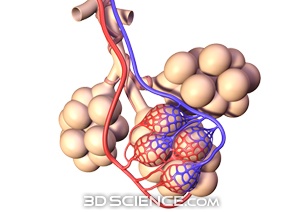
alveoli
larynx
Inner membrane layer which covers the lungs and helps create the pleural cavity
visceral pleura
parietal pleura
alveolar membrane
capillaries
A flap of tissue that closes when we eat so food doesn't not go down the trachea
When you exhale, the diaphragm
moves upwards
moves downwards
flattens
none of the above
Tiny, hairlike projections in the airway that move in a wavelike manner.
alveoli
cilia
villi
capillaries
1. larynx
2. nasal cavity
3. pharynx
4. trachea
Which of the following is the correct order that air would flow during inhalation.
The process of diffusing oxygen from the blood, into the interstitial fluid and into the cells.
inspiration
expiration
internal respiration
external respiration
The process of exchanging oxygen and carbon dioxide in the lungs.
inspiration
expiration
internal respiration
external respiration
Pulmonary ventilation is...
Gas exchange between lungs and capillaries
Movement of air in and out of lungs
Gas exchange between capillaries and body cells
Which statement(s) is/are true?
Increase in volume= increase in pressure
decrease in volume= increase in pressure
decrease in volume= decrease in pressure
Increase in volume= decrease in pressure
What causes change in pressure when we breathe?
Carbon dioxide levels
Oxygen levels
Diaphragm movement
Hypoxia
Which respiratory structure is supported by rings of cartilage?
trachea
alveolus
bronchiole
pharynx
Which sequence correctly indicates the branching pattern of the human respiratory system?
trachea -> bronchi -> bronchioles -> alveoli
trachea -> bronchioles -> bronchi -> alveoli
alveoli -> trachea -> bronchioles -> bronchi
alveoli -> bronchioles -> trachea -> bronchi
The cellular process which uses oxygen and sugar to produce energy is called
photosynthesis
cell division
cellular respiration
DNA replication
What is the direct cause of asthma attacks?
Blood clots in the trachea
Swelling and excess mucous in the airways
Excess fluid in the air sacs
Infection of the lungs
What term best describes what goes on inside the alveoli?
Exchange of gases
Inhalation of oxygen
Circulation of blood
Exhalation of carbon dioxide

What is Tidal volume?
The volume of air breathed in and out during one breath
The maximal amount of air a person can expel
The amount of blood pumped from the heart
The additional air that can be forcibly inhaled after normal inspiration

Resting Tidal Volume is around:
3000mL
2400mL
1200mL
500mL

The maximum amount of air exhaled following a maximum inhalation
Vital Capacity
Total Lung Capacity
Residual Volume
Inspiratory Reserve Volume
The volume of air remaining in the lungs even after a forcible expiration is called
Total lung capacity
Tidal volume
Residual volume
Remaining volume
The maximum air you can get in and out of your lungs
Vital Capacity
Total Lung Capacity
Residual Volume
Inspiratory Reserve Volume
Atmospheric pressure at sea level is
760 mmHg
159 mmHg
104 mmHg
40 mmHg
The partial pressure of oxygen in the atmosphere at sea level is
104 mmHg
45 mmHg
40 mmHg
0.3 mmHg
The partial pressure of carbon dioxide in the atmosphere is _____ its partial in the alveoli
greater than
less than
equal to
The partial pressure of oxygen in alveoli is less than its partial pressure in the atmosphere because of... (choose all that apply)
added moisture through inspiration
increased carbon dioxide in the alveoli
an increase in altitude
a greater volume of nitrogen
Carbon dioxide moves from _____. (choose all that apply)
blood to alveoli
body cells to blood
alveoli to blood
blood to body cells

State which cell contains hemoglobin
Neutrophils
Erythrocytes
Lymphocytes
Mast cells
Describe the nature of movement of oxygen within the blood and surrounding tissues
Moves down its electrochemical gradient
Moves down its partial pressure
Requires protein channels to diffuse across membranes
Moves out into the alveolar space from the capillaries
This best describes positive cooperativity of hemoglobin
As 1 O2 binds to a heme group, it causes a sudden shift of polarity, attracting more O2
As 1 O2 binds to a heme group, a conformational change occurs, making it more likely for additional O2 to bind
As 1 O2 binds to a heme group, hemoglobin becomes slightly less hydrophilic
As 1 O2 binds to a globin group, the binding site of O2 within the molecule becomes more exposed
Carbon dioxide is mostly transported through blood back to the lungs via...
bicarbonate and carbonic acid
dissolved in blood plasma
attached to hemoglobin
Exercise does what to blood? (choose all that apply)
increases CO2
decreases pH
increases the temperature
increases pH
Carbon monoxide has a _____ affinity for hemoglobin.
greater
lesser
The peripheral chemoreceptor consists of..
Medulla oblongata
Pons
Carotid arteries
Aortic bodies
The central chemoreceptor consists of..
Medulla oblongata
Pons
Carotid arteries
Aortic bodies
Chemoreceptor that detect the chemical changes (drop of pH) of cerebrospinal fluid is
Medulla oblongata
Pons
Carotid arteries
Aortic bodies
Peripheral chemoreceptor and central chemoreceptor detects all of the following, except
PCO2
pH
H+
blood pressure

