wayground logo

Free Printable Worksheets

Font size

S
M
L
XL
Worksheets

Benchmark 2 Review

Total questions: 132

Worksheet time: 2hrs 47mins

Name
Class
Date
1.
All of the following are examples of renewable resources except _____. 
a)
hydroelectric
b)
photovoltaic
c)
wind turbines
d)
Natural Gas
2.
________ are traceable back to green plants that convert sunlight into plant material through photosynthesis.
a)
Biomass
b)
leaves
c)
stems
d)
roots
3.
Why are not American's roofs crammed with more solar panels? 
a)
They are ugly.
b)
They are uninformed.
c)
Expensive start-up cost
d)
People enjoy paying bills. 
4.
_____ uses dams to turn flowing water into electricity.
a)
hydropower
b)
tidal power
c)
biomass
d)
nuclear
5.
Hydropower uses _________ to turn turbines that run generators.
a)
steam
b)
moving water
c)
uranium
d)
tides
6.

When does a nuclear power plant create energy?

a)

when uranium is added

b)

when water is added

c)

when steam turns a turbine

d)

when heat is added

7.

What is produced by a hydrogen-oxygen fuel cell?

a)

Water and Carbon Dioxide

b)

Carbon Dioxide

c)

Water

8.

What do you call the process of drilling and injecting fluid into a ground at a high pressure in order to break or fracture the shale rocks to release natural gas inside?

a)

Drilling

b)

Fracking

c)

Perforation

d)

Sedimentation

9.

What is desertification?

a)

Land is gradually turned into a desert, usually on the edges of an existing desert.

b)

Area of desert with low precipitation

c)

The process of turning an cake into a dessert

d)

Area at risk of high precipitation

10.

What do wind turbines, hydro electric dams, and ethanol plants have in common

a)

All produce electrical current without pollution

b)

All use generators to produce electrical current

c)

All convert gravitational potential energy to electric current

d)

All convert thermal energy to electrical energy

11.
Geothermal energy uses heat energy from under the earth’s surface to heat buildings and also to generate –
a)
building materials
b)
solar power
c)
fossil fuels
d)
electric energy
12.
Corn, wheat, and soybeans can be made into a substance called ethanol. In some places, ethanol is part of a mixture used to power cars and trucks. What type of alternative energy resource is ethanol?
a)
Hydroelectric
b)
Geothermal
c)
Biofuel
d)
Solar
13.
The poster shown below advertises tours of a power plant.
This power plant produces electricity most likely by using-
a)
fossil fuels
b)
biofuels
c)
solar energy
d)
geothermal energy
14.
Situation in which pastures intensively grazes in land is classified as:
a)
forestation
b)
overgrazing
c)
over cultivation
d)
deforestation
15.
Is solar energy a renewable or a non-renewable source of power?
a)
Renewable
b)
Non-renewable
c)
Half/Half of both
d)
Neither
16.
Photovoltaic cells convert sunlight into:
a)
Heat
b)
Motion
c)
Light
d)
Electricty
17.
How can farmers prevent/slow down soil erosion?
a)
Cover their crops with a tarp 
b)
Water the soil everyday in order to weigh it down 
c)
Plant crops, plants, etc. to hold the soil in place
d)
Cut down all of the trees and crops. 
18.
Soil conservation includes all of the following EXCEPT_______.
a)
Desertification
b)
Contour plowing
c)
Terracing
d)
Crop rotation
19.

What human activity was a part of the cause of the Dust Bowl?

a)

Driving

b)

Building

c)

Baseball

d)

Overplowing

20.
Energy from deep within the Earth is called  ____ energy.
a)
solar
b)
wind
c)
biomass
d)
geothermal
21.
Energy from the sun is called - 
a)
solar
b)
wind
c)
biomass
d)
geothermal
22.
Which energy source does NOT use turbines?
a)
wind
b)
hydropower
c)
solar
d)
nuclear
23.

How many river basins are in North Carolina?

a)

11

b)

17

c)

30

d)

100

24.

The drainage area of a river is called a ___________?

a)

Estruary

b)

River Basin

c)

Ocean

d)

Beach

25.
The natural chemical or physical processes that breaks down rock on Earth's surface.
a)
weathering
b)
erosion
c)
deposition
d)
jackhammering
26.
The process by which water, ice, wind or gravity moves weathered rock and soil from one place to another.
a)
weathering
b)
erosion
c)
deposition
d)
dumptruck
27.
This type of weathering occurs when rock is physically broken down into smaller pieces of rock.
a)
mechanical weathering
b)
chemical weathering
c)
erosion weathering
d)
deposition
28.
This type of weathering occurs when rocks weaken then break down due to chemical changes in the composition of the rock.
a)
mechanical weathering
b)
chemical weathering
c)
erosion weathering
d)
deposition
29.
These rocks were broken apart from the continuous freeze/thaw of water in the cracks of the rocks. This is an example of:
a)
ice wedging
b)
acid rain
c)
permeability
d)
abrasion
30.
Weeds growing into the cracks in a sidewalk and the sidewalk begins to crumble is an example of:
a)
mechanical weathering
b)
chemical weathering
31.

Which type of weathering explains why the Grand Canyon has a red hue?

a)

oxidation

b)

water

c)

vegetation

d)

liquefaction

32.
What is liquid rock called within the Earth's surface?
a)
core
b)
lava
c)
magma
d)
volcanic ash
33.
What is the elevation of point B?
a)
800 ft
b)
850 ft
c)
900 ft
d)
1000 ft
34.

What color on a geologic map represents volcanic rock?

a)

red

b)

orange

c)

yellow

d)

black

35.

Soil is formed from

a)

Dirt

b)

Rocks and Organic Matter

c)

Dirt and Rocks

d)

Dirt and Organic Matter

36.

Organic Matter is made up of

a)

plant, animal, or microbes that may be new to the soil or fully decomposed

b)

fills spaces around soil particles (called pores or pore spaces)

c)

spaces between particles

d)

made up of rocks and minerals of various sizes (sand, silt, and clay)

37.

Weathering is

a)

wearing away or change in the appearance or texture of something by long exposure

b)

the loss of nutrients and material that have been dissolved as they move through soil.

38.
A huge undersea earthquake off the Alaskan coastline could produce what natural hazard? 
a)
Tsunami 
b)
Cyclone 
c)
Hurricane 
d)
Drought 
39.
In Georgia and much of the southeastern United States, heavy rainfall often comes from _____________ and tropical storms.
a)
ice caps melting
b)
the Ice Age
c)
hurricanes
d)
April showers
40.
This hazard is caused by the chemical dissolution process in sandstone or chemical dissolution of carbonate rocks that causes erosion of the soil beneath the ground.
a)
sinkhole
b)
liquefaction
c)
land subsidence
d)
ground rupture
41.
Rock underground suddenly breaks along a fault causing tectonic movement, causing what natural hazard? 
a)
Volcanic Eruption 
b)
Cyclone
c)
Earthquake
d)
Hurricane
42.
Landslide may be triggered by rain or ground shaking due to earthquakes.
a)
TRUE
b)
FALSE
43.
A disaster when a lot of snow moves quickly down a mountain.
a)
aftershock
b)
famine
c)
flood
d)
avalanche
44.

If an area become saturated and water cannot seep into the soil, what most likely will occur when precipitation will not stop?

a)

sinkhole

b)

flooding

c)

earthquake

d)

groundwater pollution

45.
This layer of Earth is solid Iron and Nickel
a)
Outer Core
b)
Mantle
c)
Inner Core
d)
Crust
46.
What is the name of the layer that contains the uppermost mantle and crust
a)
Asthenosphere
b)
Mesosphere
c)
Lithosphere
d)
Transosphere
47.
Which type of plate boundary would cause mountains to form
a)
Transform
b)
Convergent
c)
Divergent
d)
Reform
48.
What is the driving force to plate tectonics occurring when warm magma rises and cooler magma sinks? 
a)
An oceanic current
b)
A conventional current
c)
A convection current
d)
A magnetic current
49.
The plates float on top of the __________________________. 
a)
lithosphere
b)
mesophere
c)
asthenosphere
50.
Which type of rock results from melting and cooling of magma?
a)
Igneous
b)
Metamorphic
c)
Sedimentary
d)
Extrusive
51.
Which type of rock forms from extreme heat and pressure?
a)
Igneous
b)
Sedimentary
c)
Organic
d)
Metamorphic
52.
Wind, water, and ice breaking down rock is called
a)
Erosion
b)
Deposition
c)
Compaction
d)
Weathering
53.
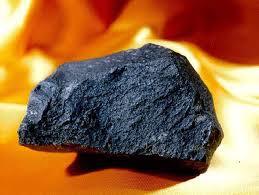
This rock was found near the mouth of a volcano. What type of rock is this?
a)
Sedimentary
b)
Igneous
c)
Metamorphic
54.
A giant landmass that existed 200 million years ago
a)
Wegener
b)
Pangaea
c)
Archyopteryx
d)
Ammonite
55.

The Hawaiian Islands were created by....

a)

Hot spots

b)

Island arc

c)

Geysers

d)

convergent plate boundaries

56.
An instrument that records vibrations in the ground and determines the location and strength of an earthquake. 
a)
Seismograph
b)
Shakeograph
c)
Seismogram
d)
Epicenter
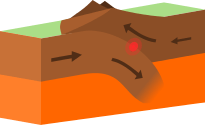
57.
What type of plate boundary is this?
a)
Plate
b)
Divergent
c)
Convergent
d)
Transform
58.
What type of event will occur at this boundary?
a)
Earthquake
b)
Volcano Eruption
c)
Tornado
d)
Mountain Building
59.
A fault is formed by the movement of a __________ plate boundary
a)
Transform
b)
Convergent
c)
Divergent
60.
What is the shaking of the Earth’s crust caused by a release of energy?
a)
Earthquake
b)
Epicenter
c)
Fault
d)
Plate
61.
Where is the point at which the first movement occurs during an earthquake?
a)
Epicenter
b)
Focus
c)
Fault
d)
Plate
62.
Where is the point on the Earth’s surface directly above the focus of an earthquake?
a)
Epicenter
b)
Fault
c)
Hypocenter
d)
Tremor
63.
Which type of wave is the first to arrive after an earthquake occurs?
a)
P Wave
b)
Rayleigh Wave
c)
S Wave
d)
Shear Wave
64.
Which body waves cause particles of rock material to move at right angles to the direction in which the waves are traveling?
a)
Body Waves
b)
P Waves
c)
S Waves
d)
Surface Waves
65.
What is the measure of the amount of energy released in an earthquake?
a)
Earthquake
b)
Epicenter
c)
Magnitude
d)
Seismogram
66.
Which scale measures the intensity of the ground movement?
a)
Mercalli Scale
b)
Richter Scale
c)
Seismogram Scale
d)
Bernoulli Scale
67.
What is the temporary state in which loose soil and rock materials take on the property of a liquid?
a)
Aftershock
b)
Liquefaction
c)
Seismic Gap
d)
Tsunami
68.
What is a smaller earthquake that follows a larger earthquake?
a)
Aftershock
b)
Liquefaction
c)
Seismic Gap
d)
Tsunami
69.
What is Magma when it reaches the surface of Earth?
a)
Lava
b)
Mafic Magma
c)
Felsic Magma
d)
None of these
70.
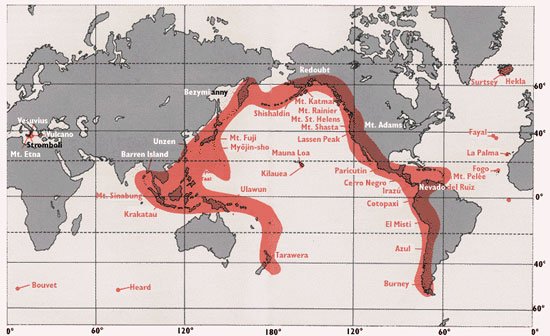
This is the name for the chain of volcanos around the edge of the Pacific Plate.
a)
Circle of Fire
b)
Ring of Lava
c)
Ring of Fire
d)
Circle of Magma
71.
What is molten rock that has formed deep within the Earth?
a)
Hot Spot
b)
Magma
c)
Lava
d)
Volcano
72.
What is the principal ingredient to all types of magma?
a)
Iron
b)
Magnesium
c)
Silica
d)
Water
73.
What is the resistance of a liquid, such as lava, to flow?
a)
Elasticity
b)
Pyroclasticity
c)
Silica
d)
Viscosity
74.
What are solid rock fragments that are ejected during a volcanic eruption?
a)

Lahar

b)
Magma
c)
Pyroclastic Material
d)
Silica
75.
What do you call a large crater formed by the collapse of a volcano?
a)
Caldera
b)
Cinder Cone
c)
Composite Volcano
d)
Shield Volcano
76.
What geologic feature/event would you most likely to find at a divergent boundary between two pieces of continental crust?
a)
Mid-Ocean Ridge
b)
Mountain
c)
Rift Valley
d)
Island Arc
77.
What geologic feature/event would you most likely to find at a divergent boundary between two pieces of oceanic crust?
a)
Rift Valley
b)
Mid-Ocean Ridge
c)
Island Arc
d)
Flat land
78.
How much does a richter scale go up each time? 
a)
5x
b)
20x
c)
10x
d)
1x
79.
What type of fault is at the transform boundary? 
a)
normal fault
b)
strike slip fault
c)
reverse fault
80.

What agent of chemical weathering, causes rocks to break down and change composition?

a)

burrowing animals

b)

roots of plants

c)

acid rain

d)

wind abrasion

81.

a destructive mud flow on the slopes of a volcano

a)

lahars

b)

pyroclastic flow

c)

avalanche

d)

landslide

82.

a vent (opening) in the Earth's surface through which magma erupts; the landform that is created by the eruptive material

a)

volcano

b)

caldera

c)

tephra

d)

crater

83.
What type of galaxy is shown in the picture?
a)
spiral
b)
elliptical
c)
irregular
d)
circular
84.
Which best describes the most accepted theory about the origin of the universe?
a)
It began with a big explosion
b)
It began as a large galaxy
c)
It began as an exploding star
d)
It began as a black hole
85.
Stars radiate their own energy by
a)
burning calcium and iron
b)
fuel from near objects
c)
pulling matter from black holes
d)
nuclear fusion
86.
All stars begin as a __________?
a)
giant
b)
black hole
c)
white dwarf
d)
nebula
87.
Stars are formed in a large cloud of gas and dust called a
a)
cumulonimbus cloud
b)
nebula
c)
neutron star
d)
black hole
88.
Our galaxy is called the
a)
Earth Nebula
b)
The Hubble Galaxy
c)
The Milky Way
d)
The Snickers
89.
Galaxies are composed of (best answer)
a)
stars
b)
stars and gas
c)
stars, dust, and gas
d)
stars, dust, and gas held together by gravity
90.
Place these objects in order from smallest to largest.
a)
Planets, solar system, universe, galaxy
b)
Solar system, planets, galaxy, universe
c)
Planets, solar system, galaxy, universe
d)
Galaxy, solar system, planets, universe
91.
What best describes the doppler effect?
a)
An apparent change in frequency of a wave due to the relative motion between a wave source and an observer
b)
When sound changes pitch
c)
When light changes color
d)
An apparent change in the amplitude of a wave due to the relative motion between a wave source and an observer.
92.
If a star is being observed from Earth and it's light has shifted towards the blue side of the electromagnetic spectrum it would be...
a)
Moving towards the Earth
b)
Moving away from the Earth
c)
This is a trick question that cannot be answered
d)
It isn't a star, it is a very large blueberry.
93.
If a star is being observed from Earth and it's light has shifted towards the red side of the electromagnetic spectrum it would be...
a)
Moving towards the Earth
b)
Moving away from the Earth
c)
This is a trick question that cannot be answered
d)
It isn't a star, it is a very large blueberry.
94.
The vast majority of galaxies in our universe are moving away from us.  We know this because we observe __________ in the galaxies absorption spectra.
a)
Redshift
b)
Blueshift
c)
Turbulance
d)
Superposition
95.
A wave with a large wavelength will have a ______ frequency and _____ energy
a)
high, low
b)
high, high
c)
low, high
d)
low, low
96.
Select the correct order of waves on the EMS 
a)
Radio, Micro, Infra, Visible, Ultra, X-ray, Gamma
b)
Gamma, X-ray, Ultra, Vis, Infra, Micro, Radio
c)
Vis, Micro, Infra, Ultra, X-ray, Gamma, Radio
d)
Micro, Radio, Vis, Infra, Ultra, X-ray, Gamma
97.
Which section of the spectrum is the ONLY one we can see?
a)
X-rays
b)
Visible Light
c)
Gamma Rays
d)
Ultraviolet Rays
98.
A[n] ______________ tide occurs when the sun is at right angles to the line between Earth and the moon. 
a)
high
b)
neap
c)
low
d)
spring
99.
Differences in the moon's and sun's pull on different sides of the Earth cause _________.
a)
gravity
b)
lunar phases
c)
tides
d)
dabbing
100.
A[n] ___________ tide occurs when the sun, Earth, and the moon are nearly in a line. 
a)
spring
b)
high
c)
low
d)
neap
101.
The bulge of water on the side of the Earth closest to the moon produces ___________.
a)
high tide
b)
low tide
c)
neap tide
d)
spring tide
102.
A neap tide is a tide with the greatest difference between low and high tides
a)
true
b)
false
103.
Neap tides occur once a month. 
a)
True
b)
False
104.
Changes in the positions of Earth, the moon, and the sun affect the height of high tides during a month. 
a)
True
b)
False
105.
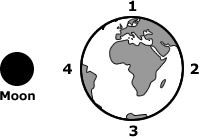
The diagram below shows Earth and the moon.In which position(s) will Earth's tidal bulge(s) occur?
a)
4 only
b)
1 and 4
c)
3 and 4 
d)
2 and 4
106.
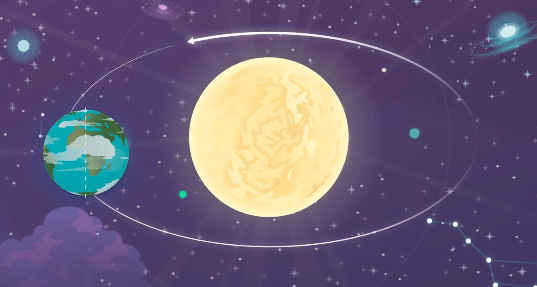
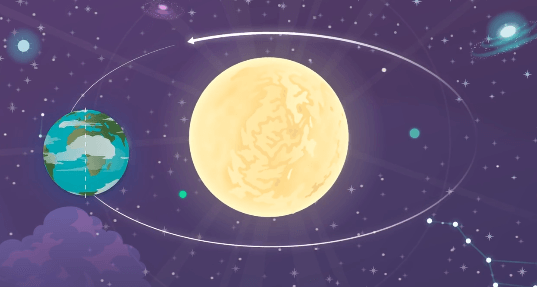
How long does it take for the Earth to make one full orbit around the Sun?
a)
one day
b)
one week
c)
one month
d)
one year
107.
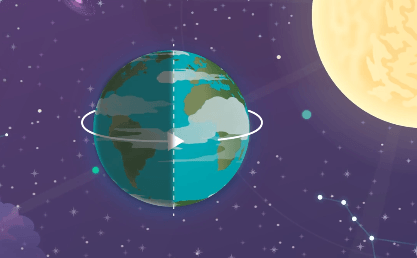
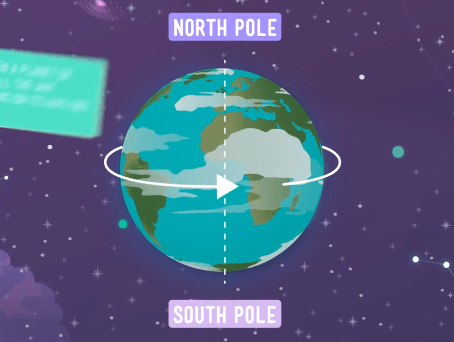
The Earth is rotating on its axis, creating _____
a)
the 12 months
b)
the years
c)
the seasons
d)
day and night
108.
As the Earth travels around the Sun, it creates a pattern that makes _____
a)
the months
b)
the years
c)
the seasons
d)
day and night
109.
When the Earth completes a full orbit around the Sun, it has completed _____ rotations or days
a)
7
b)
30
c)
91
d)
365
110.
What looks to be the motion of the Sun in the sky is really caused by the motion of _____
a)
the Earth
b)
the stars
c)
the planets
d)
the Earth's axis
111.
The spinning movement of the Earth about its axis is called the Earth's _____
a)
revolution
b)
rotation
c)
precession
d)
orbit
112.
The movement of the Earth around the Sun is called its _____
a)
revolution
b)
rotation
c)
precession
d)
gyration
113.

It is the slight cone-shaped movement of where in the sky Earth's axis points.

a)

Rotation

b)

Revolution

c)

Precession

d)

Perihelion

114.

In regards to revolution, which of the following terms describes when Earth is farthest from the sun?

a)

perihelion

b)

celestial

c)

precession

d)

aphelion

115.

It is when the moon moves in a line directly between Earth & the sun casting a dark shadow on Earth?

a)

lunar eclipse

b)

solar eclipse

c)

perigee

d)

apogee

116.
Earth's orbit follows an elliptical path.
a)
Kepler's 1st law
b)
Kepler's 2nd law
c)
Kepler's 3rd law
d)
Nutation
117.
When Earth orbits around the sun, it slows down when it is close to the sun. It speeds up its orbit when it is further from the sun. This is because the sun's gravity is stronger when you are closer to it.
a)
Kepler's 1st law
b)
Kepler's 2nd law
c)
Kepler's 3rd law
d)
Nutation
118.

When the moon revolves around the Earth, the Earth's axis wobbles a little because the moon's gravity is tugging on it.

a)

Nutation

b)

Precession

c)

Barycenter

d)

Revolution

119.
Which statement is NOT true?
a)
The moon has craters.
b)
The moon has gravity.
c)
The moon reflects the Sun's light.
d)
The moon produces its own light.
120.
Space and all the matter and energy in it.
a)
Space
b)
Solar System 
c)
Universe
d)
Sun
121.
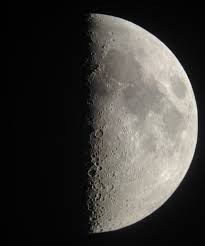
Name the moon phase
a)
First Quarter
b)
Last Quarter
c)
New Moon
d)
Full Moon
122.
Name the moon phase
a)
First Quarter
b)
Last Quarter
c)
New Moon
d)
Full Moon
123.

78% of the Earth's atmosphere is ___________ and 21% of the Earth's atmosphere is _____________.

a)

Oxygen, Nitrogen

b)

Nitrogen, Oxygen

c)

Nitrogen, Carbon Dioxide

d)

Oxygen, Carbon Dioxide

124.

In what layer of the atmosphere do all weather events occur?

a)

Stratosphere

b)

Exosphere

c)

Mesosphere

d)

Troposphere

125.

In the troposphere, the temperature _____ as altitude increases.

a)

Increases

b)

Decreases

c)

Stays the same

d)

Goes up and down

126.

The ozone layer is a sublayer of the ________ layer.

a)

Troposphere

b)

Stratosphere

c)

Exosphere

d)

Mesosphere

127.

This layer is the hottest layer of the atmosphere?

a)

Troposphere

b)

Stratosphere

c)

Mesosphere

d)

Thermosphere

128.
How do we name air masses?
a)
Water and temperature
b)
Air pressure
c)
Humidity and temperature
d)
Cold and warm
129.
What's the humidity and temperature of a maritime tropical air mass?
a)
Wet and cold
b)
Dry and warm
c)
Wet and warm
d)
Dry and cold
130.
A rapidly moving cold air mass runs into a warm air mass. The cold air slides under the warm air. This is called a(n)  .....
a)
cold front
b)
warm front
c)
stationary front
d)
occluded front
131.
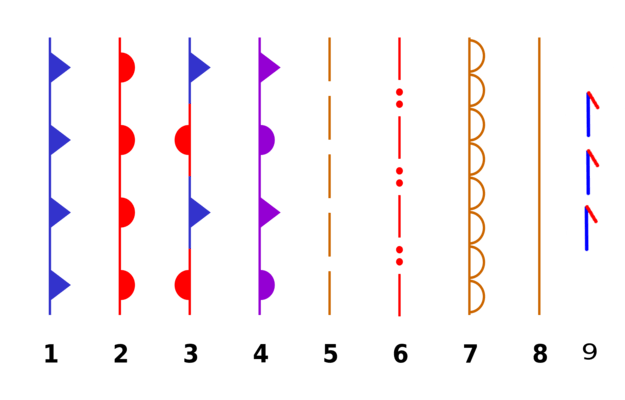
What does symbol # 3 mean?
a)
stationary front
b)
occluded front
c)
warm front
d)
cold front
132.
Which most likely produces clear, cool weather?
a)
zero air pressure
b)
stable air pressure
c)
a low pressure system
d)
a high pressure system