Wayground logo

Free Printable Worksheets

Font size

S
M
L
XL
Worksheets

Physics Review

Total questions: 64

Worksheet time: 1hrs 24mins

Name
Class
Date
1.
"An object in motion (or at rest) will to stay in motion (or at rest) until an outside force acts upon it."
a)
Newton's 1st Law
b)
Newton's 2nd Law
c)
Newton's 3rd Law
d)
Newton's 4th Law
2.
Force = Mass x Acceleration
a)
Newton's 1st Law
b)
Newton's 2nd Law
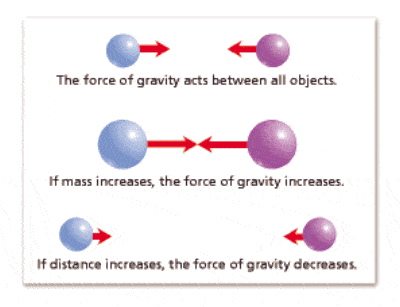
c)
Newton's 3rd Law
d)
Newton's 4th Law
3.
"For every action, there is an equal and opposite reaction."
a)
Newton's 1st Law
b)
Newton's 2nd Law
c)
Newton's 3rd Law
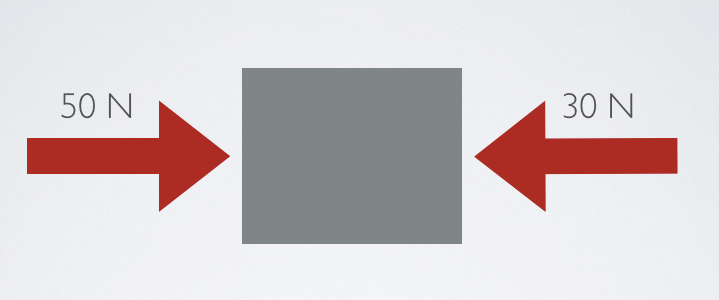
d)
Newton's 4th Law
4.
A magician pulls a tablecloth out from under dishes and glasses on a table without disturbing them.
a)
Newton's 1st Law
b)
Newton's 2nd Law
c)
Newton's 3rd Law
5.
Pushing a child on a swing is easier than pushing an adult on the same swing, because the adult has more inertia.
a)
Newton's 1st Law
b)
Newton's 2nd Law
c)
Newton's 3rd Law
6.
This person bought coffee and put it on the seat next to them. If they stopped quickly and the coffee spilled which law would that represent?
a)
Newton's 1st Law
b)
Newton's 2nd Law
c)
Newton's 3rd Law
7.
When you step on a Lego. You push on the Lego and the Lego pushes back on you.
a)
Newton's 1st Law
b)
Newton's 2nd Law
c)
Newton's 3rd Law
8.

What is this graph representing? ( the variables are distance and time.. what the product inside the graph?

a)
Constant Speed
b)
Acceleration (speeding up)
c)
Deceleration (slowing down)
d)
No motion
9.
The speedometer on your car tells you
a)
average velocity
b)
instantaneous velocity
c)
average speed
d)
instantaneous speed
10.

What two measurements are necessary for calculating speed? ( look at your triangle)

a)
Mass and time
b)
Temperature and mass
c)
Mass and distance
d)
Distance and time
11.
A measurement of how fast an object is moving
a)
Velocity
b)
Speed
c)
Vector
d)
Acceleration
12.
A description of the speed and direction of an object's motion
a)
Velocity
b)
Speed
c)
Acceleration
d)
Vector
13.
The unit we use to measure acceleration is ___. 
a)
meters / second 
b)
meters 
c)
seconds 
d)
meters / second / second 
14.
Acceleration is a change in ________. 
a)
direction 
b)
speed 
c)
velocity 
d)
distance 
15.
As you walk you make a right turn. Do you have acceleration? 
a)
yes 
b)
no
16.
What force ultimately slows the roller coaster to a stop?
a)
Applied
b)
Normal
c)
Friction
d)
Magnetic
17.
An _______ force must act on an object for it to CHANGE it's motion
a)
balanced
b)
unbalanced
c)
gravitational
d)
electrical
18.
Jupiter has about 317 times more mass than Earth. What can you infer from this fact? 
a)
That Jupiter’s gravitational force is much weaker than on Earth’s gravitational force.
b)
That Jupiter’s gravitational force is much stronger than Earth’s gravitational force.
c)
That Jupiter’s and Earth’s gravitational forces are equal.
d)
Mass has no effect on the gravitational force between two objects
19.

What is defined as a push or pull?

a)

force

b)

motion

c)

vector

d)

speed

20.

If the net force is equal to zero, the forces acting on the object are

a)

balanced

b)

unbalanced

21.

What is the net force? Click on the picture to make it bigger

a)
5000 N right
b)
4000 N right
c)
40 N left
d)
4000 N left
22.
A box is moving to the left up a ramp. Which way is the force of friction pointing?
a)
down the ramp to the right
b)
up the ramp to the left
c)
there is no friction
d)
straight up
23.
What symbol do we use to represent a "body" in a free-body diagram?
a)
small dot
b)
small box
c)
an outline of a human body
d)
small triangle
24.

An object is falling downward through Earth's atmosphere. In which direction is the air resistance force?

a)

Down

b)

Up

c)

Around the object

d)

Through the object

25.

The upward force which is exerted against a falling object is

a)

gravity

b)

terminal velocity

c)

air resistance

d)

intertia

26.

A force which causes objects to fall is

a)

weight

b)

gravity

c)

air resistance

d)

absorbency

27.

The amount of matter in an object is its _____________.

a)

Weight

b)

Mass

c)

Force

28.

What makes objects fall to the earth

a)

Gravity

b)

Wind

c)

Force

d)

Air Pressure

29.

If you jump out of an airplane, which two forces are acting on you?

a)

Gravity and friction

b)

Force and gravity

c)

Gravity and Air Resistance

30.
Two factors effecting the magnitude of the force of gravity between 2 objects are...
a)
mass and distance 
b)
mass and matter
c)
distance and weight 
d)
weight and mass
31.
As mass increases, what happens to gravitational force?
a)
increases
b)
decreases
c)
stays the same
d)
i don't know
32.

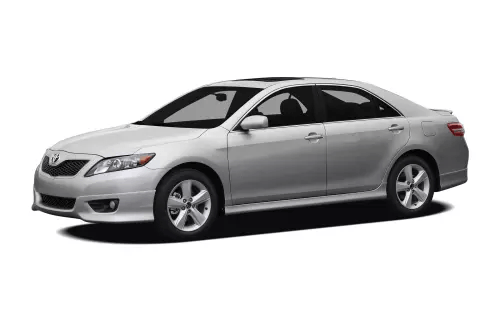
Look at the pictures of the cars. Which car will have the most air resistance force acting upon it? They will be moving at the same speed.
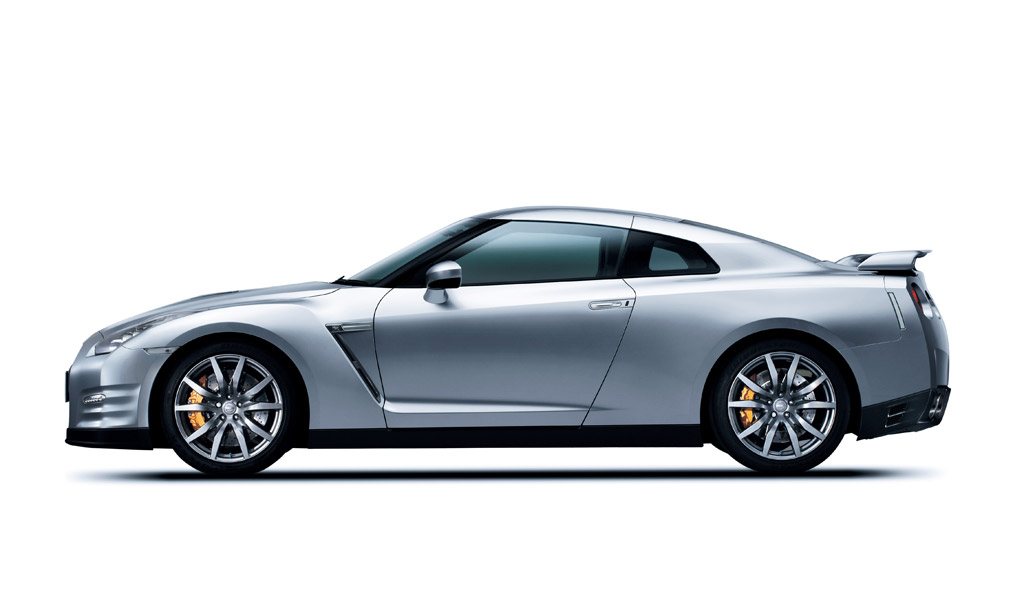
a)
b)
c)
d)

All will have equal air resistance force.
33.
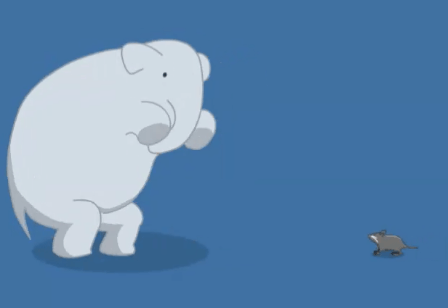
Which objects have a STRONG force of gravity?
a)
Objects with GREATER mass, like elephants
b)
Objects with LESS mass, like mice
34.
What is the SI unit used to measure force? 
a)
pounds 
b)
grams 
c)
newtons 
d)
friction
35.
Which of the following never changes no matter where in the universe?
a)
weight
b)
force
c)
mass
d)
pounds
36.
45 m/s2 is the... 
a)
Mass
b)
Force 
c)
Acceleration
d)
weight
37.
If a force of 26 N is exerted on two balls, one with a mass of 0.52 kg and the other with a mass of 0.78 kg, which ball will have the greater acceleration?  (F=ma)
a)
The one with a mass of .78 kg will have the greatest acceleration.
b)
The one with a mass of .52 kg will have the greatest acceleration.
c)
They will both accelerate at the same rate.
38.
Unit of mass
a)
m/s 2
b)
m/s
c)
newtons
d)
kg
39.

A girl weighs 300 N what is her mass here on Earth? (use the triangle-- divide by gravity on Earth)

a)

40.8 kg

b)

41 kg

c)

30.6 kg

d)

300 N

40.

If the mass of a rhino is 1,080 kilograms on Earth , what is its weight?

a)

2,400 Newtons

b)

10,800 kg

c)

10,800 Newtons

d)

10,584 kg

41.
How will this object move? 
a)
It won't move. 
b)
It will move to the right. 
c)
It will move to the left. 
d)
It will move up. 
42.
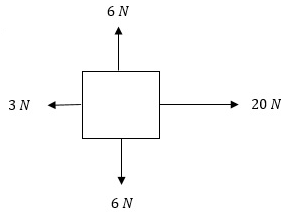
What is the net force?
a)
30 N left
b)
25 N right
c)
5 N left
d)
55 N right
43.
What is the net force?
a)
40 N left
b)
0 N Balalnced
c)
400 N right
d)
40 N right
44.
Calculate the Net Force. 
a)
40N, Left
b)
40N, Right
c)
0N, Balanced
d)
75N, Right
45.
Which of the following is a unit for acceleration?
a)
km/s
b)
m/s2
c)
mi/hr
d)
ft
46.
When a car goes around a corner at 20 mph, why do we say it  accelerates?
a)
The car is accelerating because of the velocity is constant
b)
The car accelerates because it's going 20 mph
c)
Cars always accelerate when they are in motion
d)
The car is accelerating because it's changing direction
47.

Which of the following scenarios involves friction?

a)

A ball rolling on a smooth floor

b)

A book sliding down a ramp

c)

A fish swimming in water

d)

Both A and B

48.

What is the formula to calculate average speed?

a)

Distance ×\times Time

b)

Distance ÷\div Time

c)

Time ÷\div Distance

d)

Speed ÷\div Time

49.

What is inertia?

a)

The tendency of an object to resist changes in its motion

b)

The speed of an object in motion

c)

The force that pulls objects to the ground

d)

The force that moves objects in a circular path

50.
A space shuttle only has enough fuel to get it out of Earth’s atmosphere. Once the space shuttle is in space (where there is no friction/ air resistance) it will continue moving even without any fuel because of ________.
a)
Newton's First Law
b)
Newton's Second Law
c)
Newton's Third Law
d)
The Law of Space and Redundancy Law
51.
Which is an example of VELOCITY?
a)

A dog running at 3 m/s

b)

A deer sprinting at 4 m/s

c)

A migrating bird headed south for the winter at 3 m/s

d)

A person not moving at all

52.
When the speed of an object is doubled, its momentum
a)
remains unchanged in accord with the conservation of momentum.
b)
doubles
c)
quadruples
d)
decreases
53.
How can a tennis ball and a bowling ball have the same momentum?
a)
have the same speed
b)
have different speeds
c)
one is moving backwards
d)
they can't
54.

After collision, the two objects move off with different velocity. What type of collision is this?

a)

Inelastic

b)

Elastic

55.

The momentum of an object depends upon the object's ___________&_____________.

a)

size and shape

b)

mass and speed

c)

mass and veloctiy

d)

mass and energy

56.

What do the arrows or vectors represent?

a)

Forces acting on the object

b)

All the acceleration acting on the object

c)

All the ways an object can move

57.

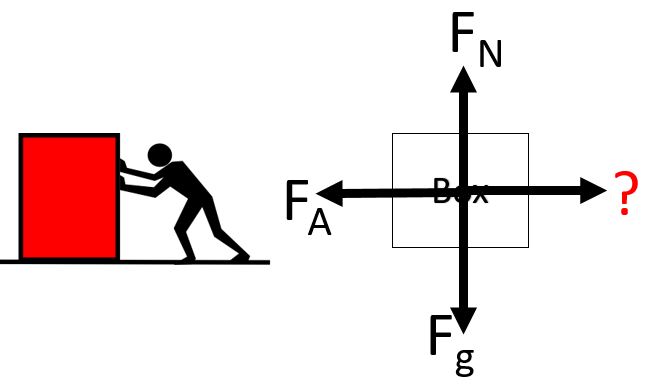
Name the missing force...

a)

Frictional force

b)

Weight force

c)

Thrust

d)

Buoyant force

58.

What is the net force of this diagram?

a)

17 N, right

b)

17 N, left

c)

23 N, right

d)

12 N, up

59.

This object could be moving in which directions? (pick all that are correct):

a)

Up

b)

Down

c)

Left

d)

Right

60.

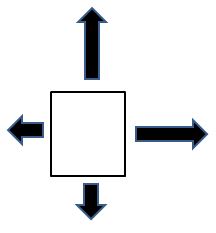
The down-arrow in this diagram most likely represents:

a)

gravity

b)

normal

c)

a push or pull

d)

friction

61.

When two forces act in the same direction, how would you calculate the net force?

a)

Subtract the forces

b)

Balance the forces

c)

Add the forces

d)

Divide the forces

62.

SELECT ALL THAT APPLY

How are mass and weight different?

a)

mass never changes

b)

weight depends on gravity

c)

mass depends on gravity

d)

weight never changes

63.

If your weight is 504 N on Earth and 84 N on the moon, which of the following would be true on if you were able to travel to Neptune, a planet larger than Earth.

a)

Your weight would be the same.

b)

Your weight would be more due to a greater gravitational pull.

c)

Your weight would be less due to a greater gravitational pull.

d)

Your weight would be less due to a smaller gravitational pull.

e)

Your weight would be less due to a smaller gravitational pull.

64.

A person would weight less on the moon than on the Earth because:

a)

the moon has more mass and therefore more gravity.

b)

the moon has more mass and therefore less gravity.

c)

the moon has less mass and therefore more gravity

d)

the moon has less mass and therefore less gravity.