
 Worksheets
Inter the science challange if you DARE !!!!
Total questions: 80
Worksheet time: 2hrs 0mins


Which of the following statements is true?
Earth rotates once a year and revolves every 24 hours.
Earth rotates every 24 hours and revolves once a month.
Earth rotates once every 24 hours and revolves once a year.
Earth rotates and revolves once every 365 days.


The apparent __ is how a star looks from Earth.
dimmer
closer
brightness
farther
Our sun is a __- sized star.
small
medium
large
extra small
Stars that are far away appear __ even though they might be brighter than our own Sun.
brighter
farther
closer
dimmer
The Sun supplies __ and __ to Earth.
light and heat
gas and light
gas and heat
energy and gas
The Sun supplies __ and __ to Earth.
light and heat
gas and light
gas and heat
energy and gas

The Sun is the biggest star in the sky.
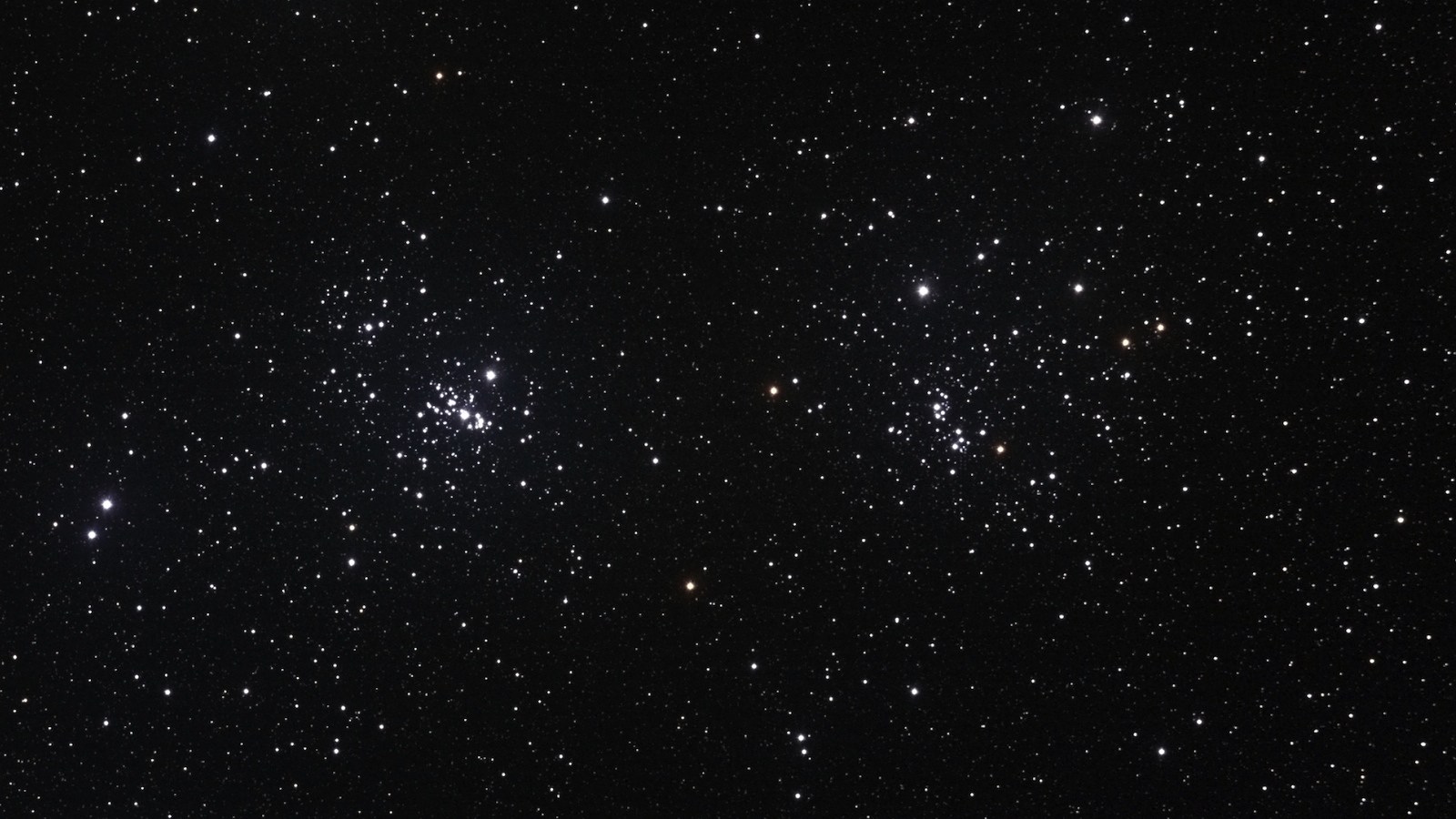
Why do other stars appear so much smaller than the sun?
They are much smaller.
They are so far away.
They are not as bright.
They are dwarf stars.

The only objects in our Universe that produce (make) and emit (give off) their own light are _____.
asteroids
comets
planets
stars
Which measurement allows astronomers to compare the brightness of stars?
parallax
red shift
absolute brightness
apparent brightness
Because the Earth is 93 million miles from the Sun, the light from this star takes about _____ to reach us.
8 hours
1 hour
8 minutes
A less bright star can seem to be brighter because it is
really huge.
far away.
cooler in temperature.
closer.
A very bright star can seem to be dimmer because it is
farther away.
very close.
cooler in temperature.
sparkling.
Brightness of a star as seen from Earth is
temperature.
apparent brightness (magnitude).
absolute brightness (magnitude).
luminosity.
Absolute magnitude (brightness) is _______.
how far a star is
how bright a star really is
how bright a star looks from a distance
how much energy a star gives
Absolute magnitude (brightness) is _______.
how far a star is
how bright a star really is
how bright a star looks from a distance
how much energy a star gives
Apparent magnitude is _________.
how far a star is
how bright a star really is
how bright a star looks from a distance
how much energy a star gives
How many stars are in our solar system?
1
0
5
billions
What is the distance light can travel in one year?
a long way
light year
astronomical unit
a galaxy
Stars M and W have about the same apparent brightness, but Star W is about twice as far from Earth as Star M. Which star has the greater absolute brightness?
M
W
They have the same absolute brightness.
Barnard's Star is 5.9 light years from Earth and Luyten 726-8 is 8.7 light years away. Which star would most likely appear to be the brightest based solely on this information?
Barnard's Star
Luyten 726-8
both
neither

Students on a field trip observed a valley and wondered how it was formed. The three major characteristics of the valley were recorded. This valley was most likely formed by...
a rapid series of earthquakes
volcanic activity
a flood with rapidly moving water
the movement of a glacier

The abalone is a type of sea snail. Adult abalones slowly crawl over rocks near the shore, while larvae float in the water. Which organisms have a life cycle that is most like that of abalones?
humans
frogs
birds
snakes

This circuit has five light-emitting diode, or LED, lights. It also has one battery and one switch. Which LEDs produce light when the switch is in the position shown?
LEDs 1, 3, and 4 only
LEDs 1, 2, 3, and 4
LEDs 3 and 4 only
LEDs 1, 3, 4, and 5

Students are investigating properties of objects. They observe four objects and record observations for each object in the table. Based on the students' observations, which of these tables properly identifies the objects?


This diagram shows two stages in the life cycles of ladybird beetles and grasshoppers. Based on the diagram, which statement best compares the life cycles of these two types of organisms?
Young ladybird beetles take many years to develop into adults. Young grasshoppers develop into adults quickly.
Young grasshoppers live in a habitat that is different from that of adults. Young ladybird beetles live in the same habitat as adults.
Young grasshoppers undergo incomplete metamorphosis to become adults. Young ladybird beetles undergo complete metamorphosis to become adults.
Young ladybird beetles have a nymph stage before becoming adults. Young grasshoppers are larvae before becoming adults.

The Grand Canyon is more than 400 km long and in some places almost 2 km deep. Which model best represents the main process that formed the Grand Canyon?
F) water faucet, soil, and drain
G) fan, moving air, and sand
H) marble and mud
J) hammer, chisel, and rock

Students design an experiment to determine how much force is needed to move blocks of wood of different masses slowly across a lab table. Which procedure should students include in their design?
Conduct five trials, using a different scale to pull each block of wood
Conduct five trials, pulling a different side of each block each time
Conduct five trials, using a different table for each trial
Conduct five trials, pulling each block of wood in the same way for each trial

The leaves of two types of plants that live in different environments are shown in the pictures. The leaves of both plants have different structures. What differences in the structure of the leaves of these plants likely help them survive in their environments?
The pan-like shape of the giant water lily leaves helps them catch rainwater. The slim shape of the mesquite leaves helps them avoid sunlight.
The broad shape of the giant water lily leaves helps them stay on the water surface. The slim shape of the mesquite leaves helps them prevent water loss.
The pan-like shape of the giant water lily leaves helps them attract small fish. The slim shape of the mesquite leaves helps them avoid herbivores.
The broad shape of the giant water lily leaves helps them attract aquatic birds. The slim shape of the mesquite leaves helps them attract pollinators.

A teacher asks students to explain what they see in this picture. Four student explanations are shown in the box. Which of the students gave a correct explanation?
Student 1 only
Students 2 and 4 only
Student 2 only
Students 1 and 3 only

A family takes a group picture in a park where bluebonnets are blooming. The family notices that some of the blooms are white and others are blue. The color of the blooms is most likely determined by...
air temperature
the age of the plant
the types of consumers that eat the plant
inheritance from parent plants
A beaker with 115 mL of solution has a temperature of 21°C. The solution contains 5 g of salt and 115 mL of water. Students added two ice cubes to the solution and stirred the solution with a stirring rod. Which properties of the solution changed as the ice cubes melted?
The color and physical state of the solution
The temperature, mass, and volume of the solution
The volume, temperature, and mass of the salt in the solution
The physical state and temperature of the solution

A student conducts an investigation by shining a flashlight toward a flat mirror. The student changes the angle of the mirror and observes the path of the reflected light. As the mirror changes direction, the light reaching the mirror can reach the ceiling because the light...
travels in straight lines and reflects from the surface of the mirror
refracts in the glass of the mirror and is spread out all over the room
enters the mirror and changes direction when it is refracted by the back of the mirror
travels through air and does not change its direction in air

