
 Worksheets
Unit 1 and 2 Chemistry Review Regents
Total questions: 85
Worksheet time: 56mins
A mixture of crystals of salt and sugar is added to water and stirred until all solids have dissolved. Which statement best describes the resulting mixture?
The mixture is homogeneous and can be separated by filtration.
The mixture is homogeneous and cannot be separated by filtration.
The mixture is heterogeneous and can be separated by filtration.
The mixture is heterogeneous and cannot be separated by filtration.
A mixture of crystals of salt and sugar is added to water and stirred until all solids have dissolved. Which statement best describes the resulting mixture?
The mixture is homogeneous and can be separated by filtration.
The mixture is homogeneous and cannot be separated by filtration.
The mixture is heterogeneous and can be separated by filtration.
The mixture is heterogeneous and cannot be separated by filtration.
Which statement describes a mixture of sand and water at room temperature?
It is heterogeneous, and its components are in the same phase.
It is heterogeneous, and its components are in different phases.
It is homogeneous, and its components are in the same phase.
It is homogeneous, and its components are in different phases.
Compared to a 26-gram sample of NaCl(s) at STP, a 52-gram sample of NaCl(s) at STP has
a different density
a same mass
the same chemical properties
the same volume
Which type of matter is composed of two or more elements that are chemically combined in a fixed proportion?
solution
compound
homogeneous mixture
heterogeneous mixture
A large sample of solid calcium sulfate is crushed into smaller pieces for testing. Which two physical properties are the same for both the large sample and one of the smaller pieces?
mass and density
mass and volume
solubility and density
solubility and volume
A student measures the mass and volume of a sample of aluminum at room temperature, and calculates the density of Al to be 2.85 grams per cubic centimeter. Based on Table S in the Chemistry Reference Table, what is the percent error for the student's calculated density of Al?
2.7%
5.3%
5.6%
95%
Which statement describes H2O(l) and H2O2(l)?
Both are compounds that have the same properties.
Both are compounds that have different properties.
Both are mixtures that have the same properties.
Both are mixtures that have different properties.
Which sample of matter is a mixture?
Br2 (l)
K (s)
KBr (s)
KBr (aq)
Bronze contains 90 to 95 percent copper and 5 to 10 percent tin. Because these percentages can vary, bronze is classified as
a compound
an element
a mixture
a solution

Which statement describes the type of change and the chemical properties of the product and reactants?
The equation represents a physical change, with the product and reactants having different chemical properties.
The equation represents a physical change, with the product and reactants having identical chemical properties.
The equation represents a chemical change, with the product and reactants having different chemical properties.
The equation represents a chemical change, with the product and reactants having identical chemical properties.
Copper is an element with two isotopes: Cu-65 and Cu-63. The average atomic mass of copper is 63.55 amu. Given this information, which statement about the percent abundance of each isotope is true?
It is impossible to determine the relative abundance.
Cu-63 is approximately 75% of all the copper and Cu-65 is approximately 25%.
Cu-63 is 63.55% of all the copper and Cu is 36.45%.
Cu-65 is approximately 75% of all the copper and Cu-63 is 25%.
Which of the following shows the correct number of protons, neutrons, and electrons in a neutral cesium-134 atom?
P=55
N=55
E=55
P=55
N=79
E=55
P=55
N=134
E=55
P=134
N=55
E=134
The atom that contains only one electron in the highest occupied energy sublevel.
S
Ca
Ga
Br
In the periodic table, as the atomic number increases from 11 to 17 what happens to the atomic radius?
it remains constant since the number of electron shells is constant.
it increases only since more electrons take up more room.
it increases, then decreases since different sublevels are being filled.
it decreases only because the effective nuclear charge is increasing as the number of protons increase.

Which energy-level change shown in the diagram below emits the highest energy?
an electron moving from E6 to E5
an electron moving from E2 to E4
an electron moving from E2 to E3
an electron moving from E2 to E1
Ernest Rutherford fired positively charged alpha particles at gold foil. A few of the alpha particles were deflected slightly or bounced off. From this data scientists concluded
The nucleus is very small and has no charge.
The nucleus is very diffuse and the protons and neutrons are very far apart.
The nucleus is very small and is positively charged.
The nucleus contains electrons which attracted the positively charged alpha particles.
Choose the statement below that accurately describes the number of neutrons in Argon-41.
It is impossible to know how many neutrons are in Argon-41.
Argon-41 contains 18 neutrons in an atom.
Argon-41 contains 41 neutrons in an atom.
Argon-41 contains 23 neutrons in an atom.
Which statement below is NOT a true statement about the structure of an atom?
The majority of an atom is empty space associated with the electron cloud.
The nucleus of an atom is very large and contains protons and neutrons.
The nucleus possesses a positive charge associated with protons.
The nucleus contains neutrons which carry no charge.

Element
Compound
Homogeneous Mixture
Heterogeneous Mixture
Sweet Tea, everything is mixed evenly and looks the same.
Heterogeneous Mixture
Homogeneous Mixture
H2 is an example of a(n)...
Element
Compound
Molecule
Heterogeneous Mixture

Element
Compound
Homogeneous Mixture
Heterogeneous Mixture

Element
Compound
Homogeneous Mixture
Heterogeneous Mixture
A molecule is created when the same _________ is bonded together. For example: C10
Element
Compound
Homogeneous Mixture
Heterogeneous Mixture

Element
Compound
Homogeneous Mixture
Heterogeneous Mixture

Element
Compound
Homogeneous Mixture
Heterogeneous Mixture

Element
Compound
Homogeneous Mixture
Heterogeneous Mixture

Homogeneous Mixture
Heterogeneous Mixture
2 or more different elements that are bonded together is called...
A. element
B. compound
C. mixture
D. solution

What is CO2 and example of?
element
molecule
compound
Jay combines water, sugar, and lemon juice to form lemonade. What type of substance was made?
Element
Molecule
Mixture
The chemical formula: N2 would represent what type of substance?
Element
Compound
Mixture
Molecule
Element
Compound
Homogeneous Mixture
Heterogeneous Mixture

a change that alters a substance without changing its chemical composition or its identity
Chemical Change
Physical Change
Chemical and Physical Change
Matter

a characteristic of a pure substance that describes how it interacts with other substances
chemical property
physical property
intensive property
extensive property

a characteristic of a pure substance that can be observed or measured without changing the substance’s chemical identity
chemical property
physical property
intensive property
extensive property

tendency of a substance to undergo chemical changes
Ductility
Malleability
Compressibility
Reactivity

anything that has mass and takes up space
Compressibility
Malleability
Reactivity
Matter

a physical property that does not depend on the amount of substance present
chemical property
physical property
intensive property
extensive property

a physical property that depends on the amount of matter present
chemical property
physical property
intensive property
extensive property

the mass of a substance per unit volume
viscosity
solubility
density
reactivity

a sample of matter with both definite and constant composition and distinct chemical properties
Pure Substance
Mixture
Matter
Density

Indefinite shape and definite volume describe which state of matter
Solid
Liquid
Gas
Plasma

Reactivity, flammability, and the ability to rust are examples of
Physical Properties
Chemical Properties

Color, hardness, malleability, solubility, electrical conductivity, density, melting point, and boiling point are examples of
Physical Properties
Chemical Properties

Density is the comparison of the mass and volume of an object. A 2 foot wood plank has a density of 0.85 g/cm3. What is the density of the wood if the wood plank is cut into a 1 foot section?
1.7 g/cm3
0.85 g/cm3
0.425g/cm3
0.085g/cm3

Formation of ice
physical change
chemical change

Reaction between acid and sucrose
physical change
chemical change

When two or more elements chemicall combine to form new properties the substance is called a ...
element
compound
homogeneous mixture
heterogeneous mixture

Elements and Compounds are known as ....
Pure Substances
Mixtures
Which of the following is a compound
water
hydrogen
nitrogen gas
oxygen
Uranium has an atomic number of 92 and an atomic mass of 238. What is the number of neutrons in Uranium?
(a)
Elements with similar qualities are located in the same
(a)
which of the following is not an example of a chemical change?
Burning wood
sawing wood
baking a cake
digesting food
which of the following is not an example of a physical change?
Mixing and pouring concrete
Melting ice
burning wood
tearing paper

Look at Penny in the picture, did she violates any lab safety?
No, she obeys all lab safety
Yes, she isn't wearing gloves when putting on makeup
Yes, she's putting on makeup while in the lab
No, Penny just having fun
How many Significant Figures to the number below:
0.00001020
(a)

What is the correct volume of fluid in the graduated cylinder?
(a)
Convert 500,000 mL into scientific notations
5.0 x 10^6
50 x 10^5
5.0 x 10^5
500 L
John Dalton stated:
Atoms are tiny, invisible particles.
Atoms of one element are all the same.
Atoms of different elements are different.
Compounds form by combining atoms.
All of the statements listed.
Light is emitted when electrons
move from one atom to another.
collide with one another, releasing energy.
move from a lower energy level to a higher energy level.
move from a higher energy level to a lower energy level.

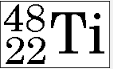
1s22s22p63s2
Negatively charged particle that surrounds the nucleus of an atom.
Gluon
Electron
Proton
Neutron
A chart of the elements showing the repeating pattern of their properties
Elemental Table
Periodic Table
Elemental Chart
Periodic Chart

What is density?
The amount of heat needed to raise the temperature of one gram of a substance by one degree Celsius
This is how much matter is packed into a given area
The process of warm air cooling as it rises and releasing moisture in the form of a liquid
Water found on the surface of the Earth

What phases of matter is this?
Solid
Liquid
Gas
Plasma

What phase of matter is this?
Solid
Gas
Liquid
Plasma
Attraction:
to resist or keep something away
to draw objects together
Electronic configuration is the distribution of electrons in
Sub-shells in their decreasing energy order
Shells in their decreasing energy order
Outermost shells only
Shells and sub shells with increasing energy order
Mass of Proton is approximately equal to
Mass of electron
Mass of C-12
Mass of Hydrogen atom
Mass of oxygen atom

