wayground logo

Free Printable Worksheets

Font size

S
M
L
XL
Worksheets

SKELETAL SYSTEM

Total questions: 69

Worksheet time: 45mins

Name
Class
Date
1.

Which system is responsible for creating red blood cells?

a)

skeletal

b)

muscular

c)

respiratory

d)

nervous

2.

Which of the following best describes the job of the skeletal system?

a)

Gives shape and support to the body.

b)

Sends messages from the stomach to the brain.

c)

Brings in and breaks down all nutrients for the body

3.

This attaches bone to muscle.

a)

cartilage

b)

tendon

c)

ligament

4.

What makes up the vertebral column?

a)

tendons

b)

ligaments

c)

vertebrae

d)

cartilage

5.

What is a joint?

a)

The place where 2 or more bones meet.

b)

A thin membrane that covers the surface of bone.

c)

A band of tissue that hold bones together.

d)

Connective tissue

6.

What is hard bone?

a)

Cartilage

b)

Tendon

c)

Spongy Bone

d)

Compact Bone

7.

A living bone's surface is covered with a tough, tight-fitting membrane called the _________________________.

a)

periosteum

b)

cartilage

c)

marrow

d)

compact bone

8.

What are the ends of bone covered with that helps reduce friction when two bones are rubbed together?

a)

periosteum

b)

ligament

c)

tendon

d)

cartilage

9.

What is the largest bone in the body?

a)

scapula

b)

humerus

c)

femur

d)

carilage

10.

What is the purpose of the rib cage?

a)

Helps us to think

b)

Carries blood throughout the body

c)

Protects our brain

d)

Protects our vital organs

11.

Where would you find the humerus?

a)

head

b)

leg

c)

arm

d)

knee

12.
What mineral are bones made of?
a)
Vitamin C
b)
Calcium
c)
Zinc
d)
Vitamin B
13.

What is the name for the first cervical vertebra?

a)

Axis

b)

Dens

c)

Atlas

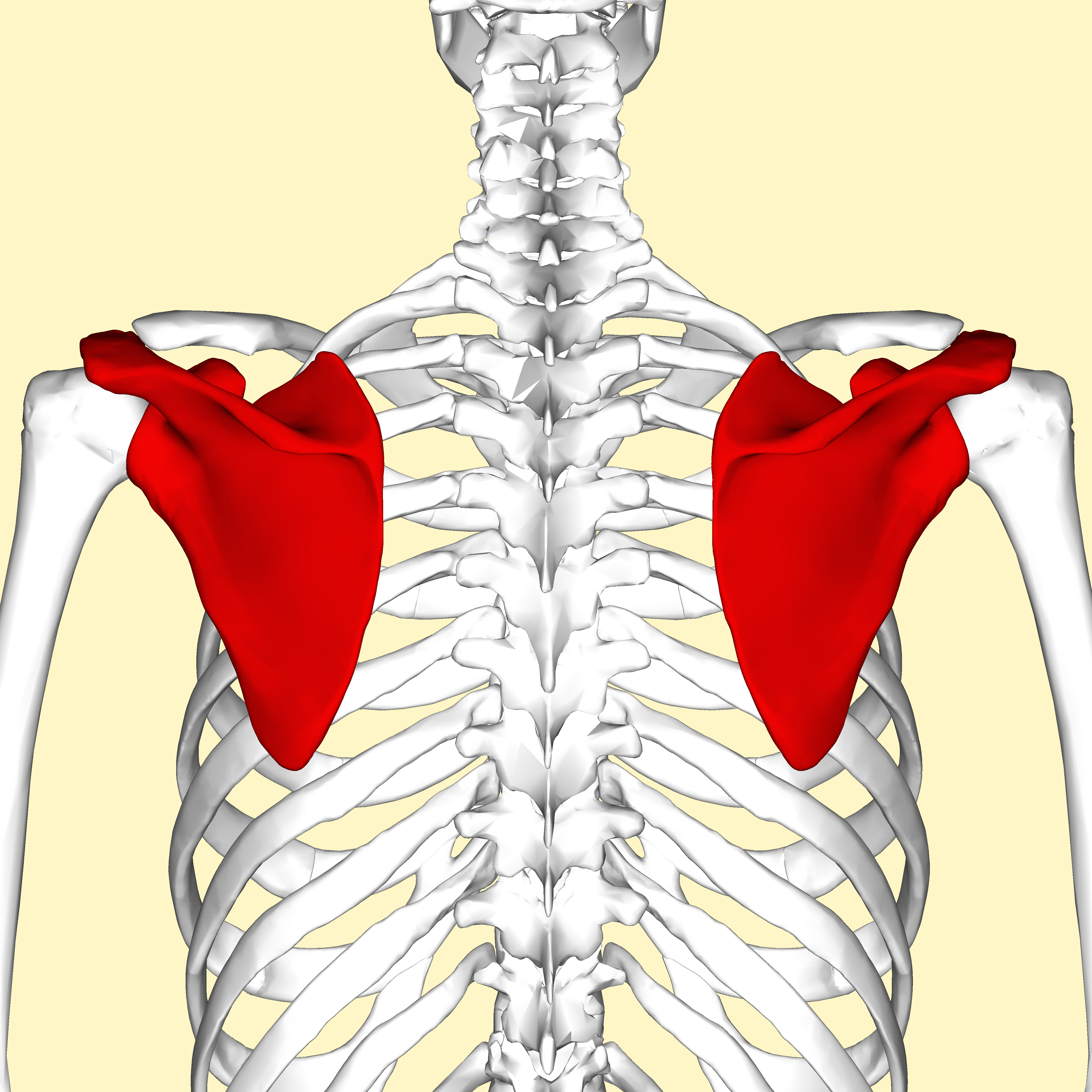
14.

What bone is highlighted?

a)

Skull (Cranium)

b)

Mandible

c)

Clavicle

d)

Scapula

15.

What bone is highlighted?

a)

Skull (Mandible)

b)

Clavicle

c)

Mandible

d)

Scapula

16.

What bone is highlighted?

a)

Radius

b)

Ulna

c)

Humerus

d)

Carpals

17.

What bone is highlighted?

a)

Radius

b)

Ulna

c)

Humerus

d)

Carpals

18.

From wrist to fingertip, what is the order of bones?

a)

Carpals, metacarpals, phalanges

b)

Phalanges, metacarpals, carpals

c)

Carpals, phalanges, metacarpals

d)

Metacarpals, carpals, phalanges

19.
What is another name for the kneecap?
a)
Patella
b)
Tibia
c)
Fibia
20.
a)
tibia
b)
fibula
c)
radius
d)
calcaneus
21.
a)
metacarpals
b)
phelanges
c)
tarsals
d)
metatarsals
22.
a)
metacarpals
b)
metatarsals
c)
tarsals
d)
carpals
23.
a)
pelvis
b)
tibia
c)
sternum
d)
sacrum
24.
What bones is represented in the  picture?
a)
Clavicle
b)
Scapula
c)
Sternum
d)
Carpals
25.
These 8 tiny bones make up the wrist.
a)
carpals
b)
tarsals
c)
metacarpals
d)
metatarsals
26.
a)
sacrum
b)
coccyx
c)
fibula
d)
pelvis
27.
a)
Lumbar Vertebrae
b)
Sacrum
c)
Thoracic Vertebrae
d)
Cervical Vertebrae
28.
a)
Tarsals
b)
Metatarsals
c)
Phalanges
d)
Metacarpals
29.
The shaft of the bone is also called the
a)
epiphysis
b)
diaphysis
c)
endosteum
d)
periosteum
30.
Which of these is a long bone?
a)
Femur
b)
Patella
c)
Scapula
d)
Carpal
31.
Which of these is a flat bone?
a)
Vertebra
b)
Tibia
c)
Fibula
d)
Frontal
32.
This type of bone is porous, allowing blood vessels to move through it and containing bone marrow.
a)
Compact Bone
b)
Spongy or Cancellous Bone
33.
Which of the following is filled with yellow marrrow? 
a)
medulary cavity
b)
spongy bone
c)
periosteum
d)
compact bone
34.
Where are blood cells made? 
a)
Yellow marrow 
b)
Red marrow
c)
Spongy Bone 
d)
Periosteum
35.
If cartilage remains in this "specific" area, then growth is still occurring; it is located at the end of long bone
a)
Epipyseal plate
b)
 Medulary Cavity 
c)
Diaphysis 
d)
Endosteum 
36.
This lines the medullary cavity
a)
Periosteum 
b)
Endosteum 
c)
Diaphysis 
d)
Osteoblasts 
37.
The ends of the long bone are anatomically referred to as the: 
a)
Epiphyseal plate 
b)
Medulary Cavity 
c)
Periosteum 
d)
Epiphysis 
38.
OUTER COVERING OF BONE THAT COVERS DIAPHYSIS AND IS LOCATION WHERE MUSCLES ATTACH
a)
ARTICULAR CARTILAGE
b)
OSTEON
c)
HAVERSIAN CANAL
d)
PERIOSTEUM
39.
Freely movable joint
a)
diarthrosis
b)
amphiarthrosis
c)
synarthosis
40.
Immovable joint
a)
synarthrosis
b)
diarthrosis
c)
amphiarthrosis
41.
Most of the joints of the human body
a)
amphiarthrosis
b)
diarthrosis
c)
synarthrosis
42.
Which of the following is NOT part of the axial skeleton?
a)
Humerus
b)
Skull
c)
Vertebral column
d)
Thoracic cage
43.
The jawbone is also known as the...
a)
Mandible
b)
Maxilla
c)
Zygomatic
d)
Humerus
44.
How many thoracic vertebrae are there?
a)
12
b)
7
c)
5
d)
9
45.
Where are the lumbar vertebrae found?
a)
Lower back
b)
Upper back
c)
Neck
d)
Head
46.
What bone is pictured here?
a)
Clavicle
b)
Scapula
c)
Humerus
d)
Mandible
47.
What bone is pictured here?
a)
Scapula
b)
Clavicle
c)
Femur
d)
Tibia
48.
What bone is pictured here?
a)
Sacrum
b)
Scapula
c)
Radius
d)
Trapezium
49.
What is the biggest bone in your body?
a)
fibula
b)
humerus
c)
pelvis
d)
femur
50.
The functional unit of the muscle cell is the: 
a)
Sarcomere
b)
Osteon
c)
Myofilament
d)
Muscle fiber
51.
The thick filament is composed of: 
a)
Myosin
b)
Actin
52.
The thin filament is composed of: 
a)
Myosin
b)
Actin
53.

What type of muscle is the esophagus?

a)

smooth

b)

cardiac

c)

skeletal

d)

involuntary

54.

What tissue connects muscle to bone?

a)

tendons

b)

ligaments

c)

string

d)

turkey leg

55.

What do muscles do for you?

a)

produce heat

b)

helps you move

c)

gives you form and shape

d)

supports you

e)

Surrounds bones and organs

56.

What is an action you can preform with skeletal muscle?

a)

Talk

b)

make your heart beat

c)

sneeze

d)

cough

57.

What type of muscle is the stomach?

a)

Smooth

b)

voluntary

c)

striated

d)

troublesome

58.

What so muscle produce?

a)

heat

b)

water

c)

cold

d)

none of these

59.

This muscle rotates the head.

a)

biceps

b)

deltoids

c)

triceps

d)

Sternocleidomastoid

60.

Identify the highlighted muscle

a)

Deltoid

b)

Biceps

c)

Trapezius

d)

Hamstring

61.

Identify the highlighted muscle

a)

Latissimus dorsi

b)

Deltoid

c)

Oblique

d)

Quadriceps

62.

Identify the highlighted muscle

a)

Biceps

b)

Gluteus Maximus

c)

Triceps

d)

Deltoid

63.

Identify the highlighted muscle

a)

BIceps

b)

Triceps

c)

Oblique

d)

Trapezius

64.

Identify the highlighted muscle

a)

Hamstrings

b)

Quadriceps

c)

Sartorius

d)

Gastrocnemius

65.

Identify the highlighted muscle

a)

Deltiod

b)

Trapezius

c)

Latissimus Dorsi

d)

Sartorius

66.

Identify the highlighted muscle

a)

Hamstrings

b)

Quadriceps

c)

Oblique

d)

Gluteus Maximus

67.

Identify the highlighted muscle

a)

Tibialis Anterior

b)

Gastrocneminus

c)

Deltoid

d)

Biceps

68.

Identify the highlighted muscle

a)

Hamstring

b)

Gastrocnemius

c)

Achilles Tendon

d)

Trapezius

69.

Identify the highlighted muscle

a)

Hamstrings

b)

Deltoid

c)

Gluteus Maximus

d)

Oblique