
 Worksheets
DPM 1 Review 25-26
Total questions: 67
Worksheet time: 1hrs 10mins
What is the formula for calculating average speed?
s=d×t
s=td
s=d+t
s=t−d
Which term describes the rate at which an object changes its position?
Velocity
Acceleration
Speed
Force
What does a horizontal line on a distance-time graph represent?
The object is moving at a constant speed
The object is accelerating
The object is at rest
The object is moving backward
Which of the following is NOT a planet in our solar system?
Mars
Earth
Jupiter
Oort Cloud
What force keeps the planets in orbit around the Sun?
Magnetism
Gravity
Friction
Electricity
A car travels 120 km in 2 hours. What is its average speed?
60 km/h
240 km/h
122 km/h
62 km/h
A runner moves 100 meters east in 10 seconds. What is the runner’s velocity?
10 m/s east
10 m/s west
0.1 m/s east
100 m/s east
Which of the following objects is found in the Kuiper Belt?
Mercury
Comet Halley
Pluto
The Sun
If the Sun’s gravity were suddenly removed, what would happen to the planets?
They would continue orbiting the Sun
They would move in straight lines away from the Sun
They would collide with each other
They would stop moving
A student records the time and distance for a moving object and plots the data on a graph. How can the student determine the average speed from the graph?
By finding the area under the graph
By dividing the total distance by the total time
By counting the number of points
By measuring the highest point
A distance-time graph shows a curved line. What does this indicate about the object’s motion?
The object is moving at a constant speed
The object is changing speed
The object is at rest
The object is moving backward
Compare the physical properties of comets and asteroids.
Both are made mostly of ice
Comets are icy and have tails; asteroids are rocky and do not have tails
Both orbit the Sun in the Kuiper Belt
Asteroids are icy and comets are rocky
Explain how gravity affects the motion of meteors as they enter Earth’s atmosphere.
Gravity slows down meteors
Gravity pulls meteors toward Earth, increasing their speed
Gravity pushes meteors away from Earth
Gravity has no effect on meteors
If a train travels 150 km in 3 hours, what is its average speed?
50 km/h
53 km/h
45 km/h
150 km/h
Which of the following best describes velocity?
Speed with direction
Speed without direction
Distance divided by time
Acceleration
What does a steep slope on a distance-time graph indicate?
Slow speed
Fast speed
No movement
Changing direction
Which of the following is a physical property of the Sun?
It is a planet
It is a star
It is an asteroid
It is a comet
Why do moons orbit planets instead of the Sun directly?
The Sun’s gravity is weaker than the planet’s gravity
The planet’s gravity is stronger for objects close to it
Moons are repelled by the Sun
Moons do not experience gravity
On a distance-time graph, the line becomes steeper as time increases. What does this indicate?
The object is moving slower
The object is moving faster
The object has stopped
The object is moving backward
If a distance-time graph shows a line that curves upward, what does this mean about the object's speed?
The object is moving at a constant speed
The object is slowing down
The object is speeding up
The object is at rest
A position-time graph shows a line that slopes downward from left to right. What does this indicate about the object's motion?
The object is moving away from the starting point
The object is moving toward the starting point
The object is at rest
The object is accelerating

Which runner stopped for a rest?
Charlie

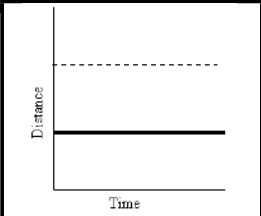
Changing speed
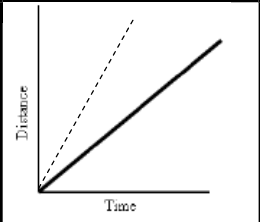
Changing speed


Changing speed
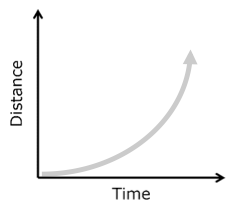


Speeding up
Slowing down


- What is the distance covered through the second segment, which is between 50 seconds, and 70 seconds?
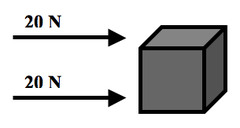

Which of the following is an example of an unbalanced force?


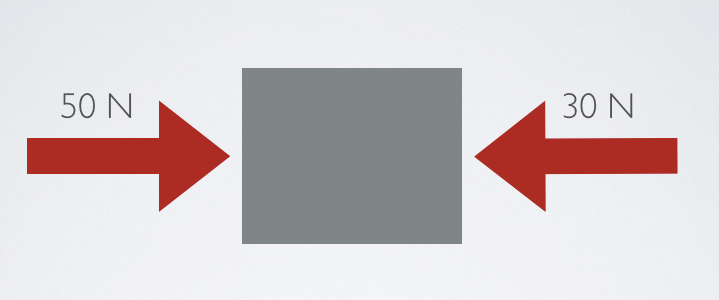


The sum of all forces acting on an object is
balanced.
unbalanced.
friction.
the net force.


If these teams are pulling with the same amount of force what will happen?
The boy in blue will win.
They will not move at all.
The boy in red will win.
Both will fall down.
The tendency of an object to resist change in motion
Mass
Resistance
Inertia
Force
Objects in motion tend to stay in motion
Newtons 1st Law
Newtons 2nd Law
Newtons 3rd Law
None

What Newtons law does this picture represent
Newtons 1st law
Newtons 2nd law
Newtons 3rdt law
Newtons 4rth law
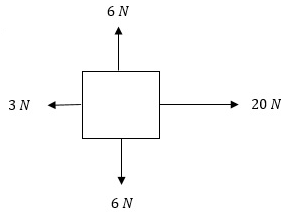
What is the NET FORCE of this diagram?
17 N, right
17 N, left
23 N, right
12 N, up


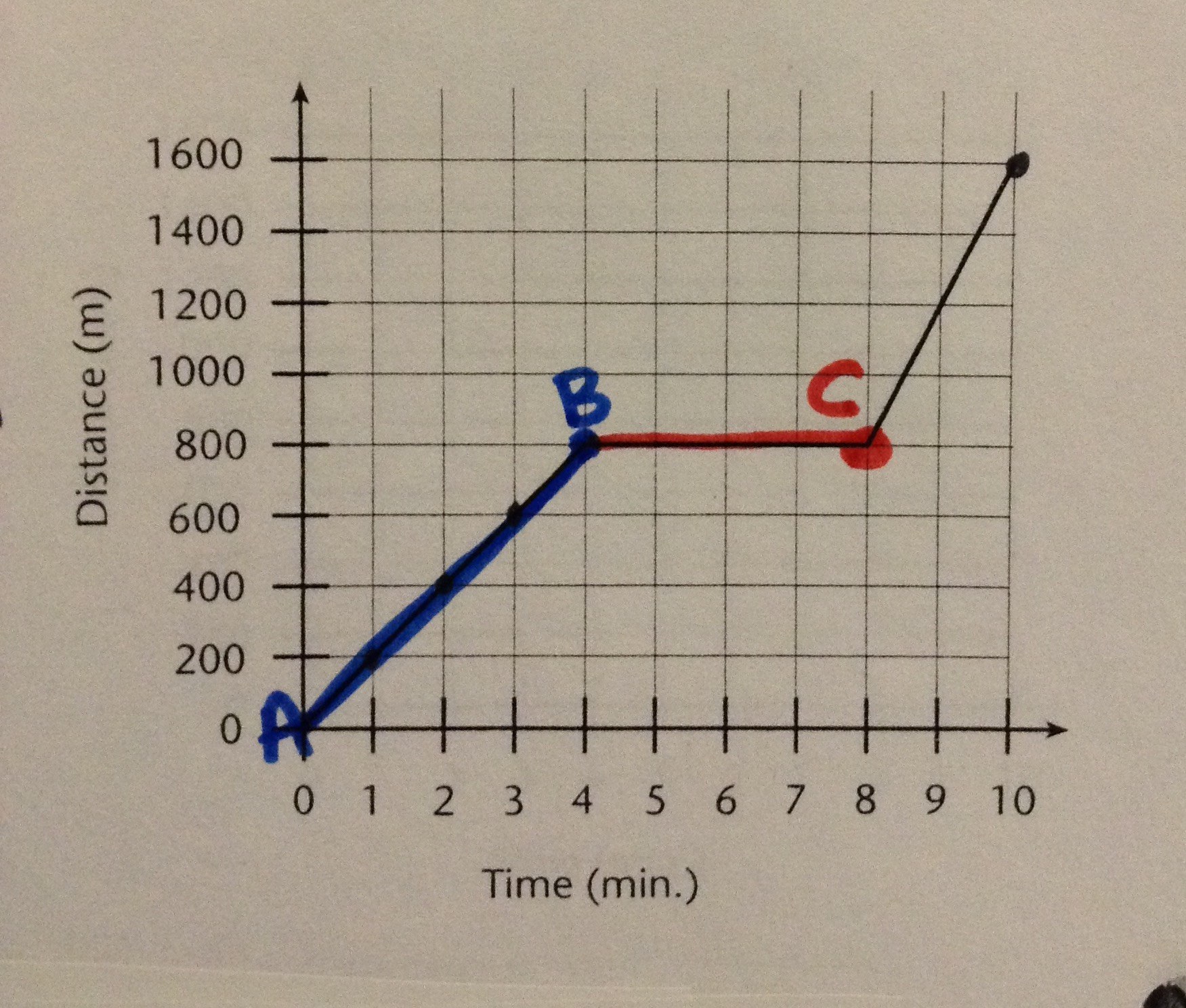
What is occurring from point A to point B?

The graph shows Ashley riding her bike to Maria's house.
What is occurring from point B to point C?
Orbits are created by
Gravity and gas pressure
Gas pressure and inertia
Nuclear fusion and gravity
Inertia and gravity
A(n) _______ galaxy has arms, and it is the type of galaxy that we live in.
Spiral
Elliptical
Irregular
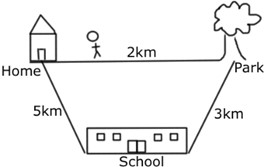
Jerry walked from home to school, then from the school to the park. What is his total distance?
2 km
5 km
8 km
10 km
Jerry walked from home to school, then from the school to the park. What is his total displacement?
2 km
5 km
8 km
10 km

