
 Worksheets
Digestion and Excretory Systems Test
Total questions: 65
Worksheet time: 59mins

Tube that carries swallowed food to the stomach
(a)
What happens when the food goes to the small intestine?
nutrients get absorbed into the blood
water is absorbed
mechanical digestion takes place
waste is compressed

The organ in orange represents the:
(a)

Chewing food is an example of (a) digestion.
The main purpose of the large intestine.
absorb nutrients
mechanically digest materials
transform toxins
absorb water and dissolve fats

Which is NOT a function of the DIGESTIVE System?
Remove heat from tissues
This organ does not actually touch the food but it creates chemicals to break down foods.
(a)

Which organ is hi-lighted?
Pancreas
Stomach
Small Intestine
Liver

What does the mouth do? Click all the correct choices!
Break down the food to make it easier to swallow
Blocks food from entering the lungs
Adds chemicals to digest carbs
Absorbs nutrients
What does the stomach do?
Absorbs nutrients
Adds digestive juices while churning the food
Releases solid waste
Adds bile to dissolve fats
Breaking food down with the use of enzymes is known as (a) digestion.
Which nutrient provides your body with long-term energy and fiber?
complex carbohydrates
fat
protein
simple carbohydrates
Which nutrient do you need for organ protection, healthy skin, and as insulation?
fats
minerals
carbohydrates
proteins
There are two types of fats found in nature (not man-made). What are they?
Vitamin rich and Vitamin poor
Oils and lards
Saturated and Unsaturated
Complex and Simple
A unit of heat that measures the energy in food.
(a)
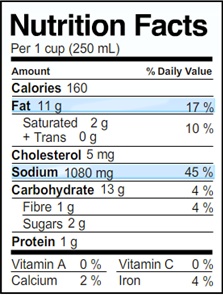
How many calories in 1 cup of soup? Remember to click the picture to enlarge it.
160
120
100
60

What is the name given to the organs that actually pass food through them?
Digestive tract
Digestive tube
Digestive tunnel
What is the main function of the EXCRETORY system?
Which organ of the excretory system stores urine until the body is ready to eliminate it?
(a)
In healthy people, which of the following substances is found mixed with water in urine?
Which excretory organ eliminates water, heat, and some chemical wastes in perspiration?
lungs
skin
liver
kidneys

Using the picture, what is the function (job) of structure A?

Use the diagram, what is structure B? If it helps, "B" is the black line / tube in the picture.
Which are the tubes that carry urine from the kidney to the bladder?
(a)
Kidneys create a liquid of Urea and water mixed together called:
(a)
Which of the following is not a way to get rid of wastes from the body?
Exhaling
Sweating
Urinating
All three help with removing wastes
Which of these organs is an excretory system organ?
bronchus.
diaphragm.
brain
liver.
What is the opening where urine is released from the body?
(a)
True or False: If your excretory system is not working right, wastes build up, and you get sick / die.
True
False
True or False: Minerals are created by living things.
True
False
True or False: You can eat whatever you want and still get all the vitamins and minerals you need.
True
False
True or False: A healthy, balanced diet should get you close to the nutrients you need each day.
True
False
A "deficiency" in vitamins or minerals means
You are not getting enough of a vitamin or mineral to keep yourself healthy.
You are getting exactly the right amount of a vitamin or mineral.
You are getting far too much of a vitamin or mineral.
In biology, "waste" means
Carbon dioxide (CO2)
Salts
Feces
Anything you do not need

What part of the digestive system is highlighted? It is NOT the green "sac", but the long organ right near it!
Pancreas
Gall Bladder
Stomach
Liver
Which of the following foods is NOT a protein source?
Orange
Steak
Eggs
Chicken
The role of fiber is to
Strengthen teeth and bones
Keep the digestive system healthy
Provides the body with energy
Repairs muscle and tissues
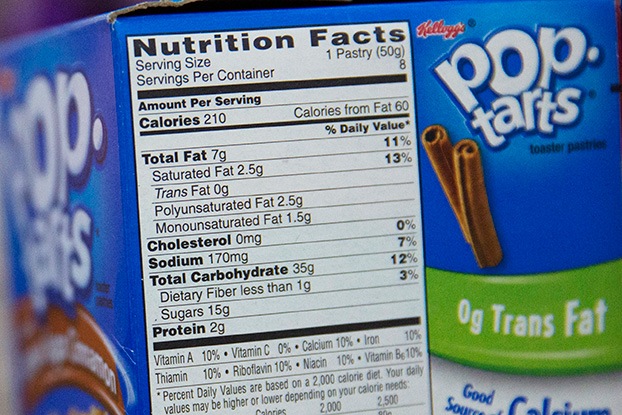
How many total servings are in this container of poptarts?
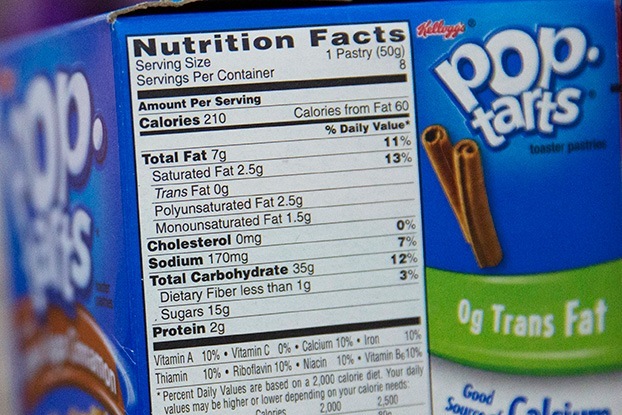
How many grams of sugar in 1 poptart?
170
34
15
less than 2%
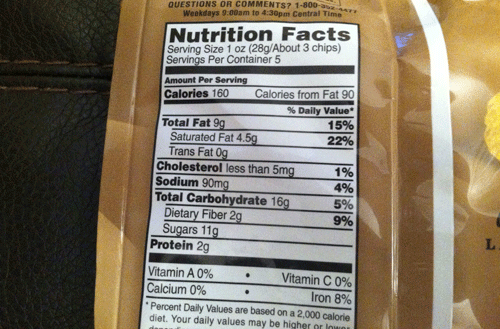
Based on the food label, if I eat 9 potato chips (3 servings), how many grams of protein would I be getting?
2g
4g
6g
8g
If you want to check vitamins and minerals in a food, where on the food label do you look?
Top
Middle
Bottom
The number of calories in a gram of fat.
1
4
7
9
The number of calories in a gram of protein or carbs.
1
4
7
9
Right at the top
On the bottom
In the middle
If a serving of cookies was 250 calories, and you ate all 10 servings in the container, how many calories did you eat?
500 calories
250 calories
2,500 calories
5,000 calories
Where are the energy sources found on a food label?
Right at the top
On the bottom
In the middle
Which organ contains the nephrons for filtering blood?
(a)
Which nutrient starts to be broken down by saliva?
Fat
Protein
Carbohydrates
In which organ do fats finally get broken down?
Mouth
Stomach
Intestines
Rectum

