wayground logo

Free Printable Worksheets

NEW

Font size

S
M
L
XL
Worksheets

Senior Physical Science Exam

Total questions: 59

Worksheet time: 58mins

Name
Class
Date
1.
What is used to measure the volume of liquids more precisely in milliliters?
a)
Beaker
b)
Flask
c)
Graduated Cylinder
d)
Test tubes
2.
True or False: Long hair MUST be tied back during a laboratory investigation.
a)
True
b)
False
3.
True or False: The wearing of flip flops and other open toed shoes are acceptable during a laboratory investigation during the hot summer months.
a)
True
b)
False
4.
The SI unit for time is the __?__.
a)
meter (m)
b)
liter (L)
c)
gram (g)
d)
second (s)
5.

What SI unit is used to measure length?

a)

meters

b)

liters

c)

kilograms

6.

Which is the SI unit of measurement for energy?

a)

Joules

b)

Watts

c)

Moles

d)

Amps

7.

Which is the SI unit of measurement for mass?

a)

Grams

b)

Liters

c)

Pounds

d)

Kilopounds

8.
Jack has a rock. The rock has a mass of 14g and a volume of 2cm3. What is the density of the rock?
a)
7 mL
b)
7 g/cm3
c)
28 g/cm3
d)
1/7 g/cm3
9.
What is the volume of 150 grams of lead if it has a density of 11.3 g/cm3?
a)
13.3 g
b)
13.3 cm3
c)
.075 g
d)
1695 cm3
10.
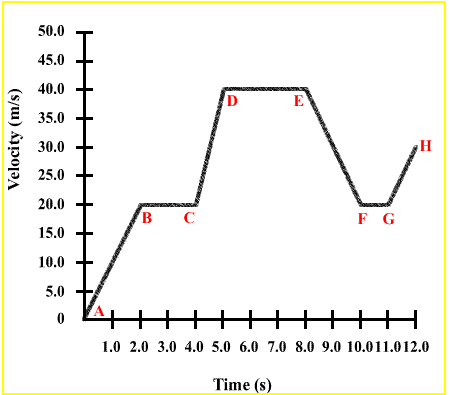
What kind of acceleration is shown here?
a)
positive
b)
negative
c)
none
d)
varies
11.
What kind of acceleration is shown here?
a)
positive
b)
negative
c)
none
d)
varies
12.
Is the speed constant or non-constant?
a)
constant
b)
non-constant
13.
Is the speed constant or non-constant?
a)
constant
b)
non-constant
14.
Which section of the graph shows decreasing velocity?
a)
CD
b)
DE
c)
EF
d)
GH
15.
Which section of the graph shows increasing velocity?
a)
AB
b)
BC
c)
DE
d)
EF
16.
Which section of the graph shows constant velocity?
a)
AB
b)
BC
c)
EF
d)
GH
17.
Acceleration of an object happens when things ________
a)
slow down
b)
go faster
c)
change direction (turn)
d)
All of the above
18.
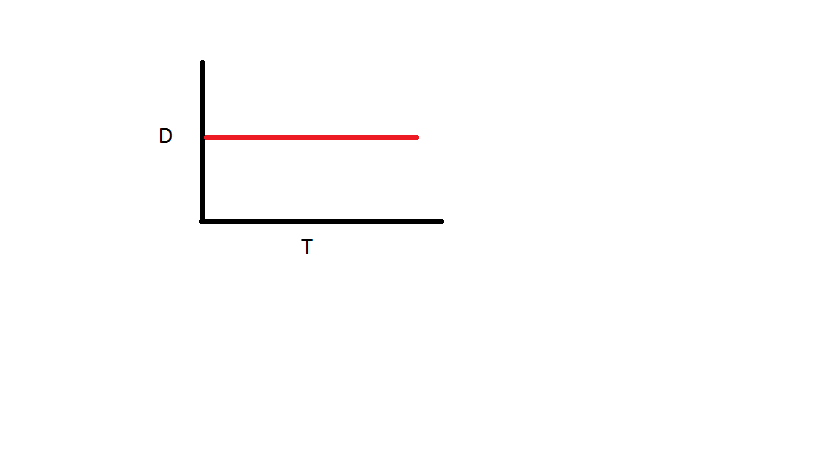
In the distance vs. time graph, what type of motion does the line represent?
a)
No motion
b)
Constant velocity
c)
Acceleration
d)
Deceleration
19.

Which of the following statements about speed and velocity is correct?

a)

Velocity only describes an object’s rate of motion.

b)

Speed describes how an object is changing its velocity.

c)

Only velocity includes the direction an object is traveling.
20.
Which is not a type of simple machine?
a)
spring
b)
screw
c)
pulley
d)
wedge
21.
work is...
a)
energy from the sun
b)
a type of machine
c)
a force that moves an object
d)
a force that pulls you toward the earh
22.
Which of these is an example of a wedge?
a)
skateboard
b)
broom
c)
stairs
d)
butter knife
23.
Which is a characteristic of a simple machine?
a)
They run on electricity.
b)
They take a long time to make.
c)
They have few or no moving parts.
d)
They are not very large.
24.
What type of simple machine is found on the cap of a pickle jar?
a)
lever
b)
inclined plane
c)
pulley
d)
screw
25.

The vertical (up and down) columns in the Periodic Table are called

a)

groups

b)

towers

c)

periods

d)

atomic numbers

26.
The Modern Periodic Table of Elements is arranged by
a)
atomic mass
b)
atomic number
c)
valence electrons
d)
number of isotopes
27.
The atomic number tells you what?  READ THE ANSWERS CAREFULLY
a)
only the number of electrons
b)
 only the number of protons
c)
only the number of neutrons
d)
the number of both electrons and protons in an atom.
28.

What are valence electrons?

a)

Any of an atom's electrons

b)

Electrons located on the first energy level

c)

Electrons not attached to any atom

d)

electrons located on the outer energy level
29.
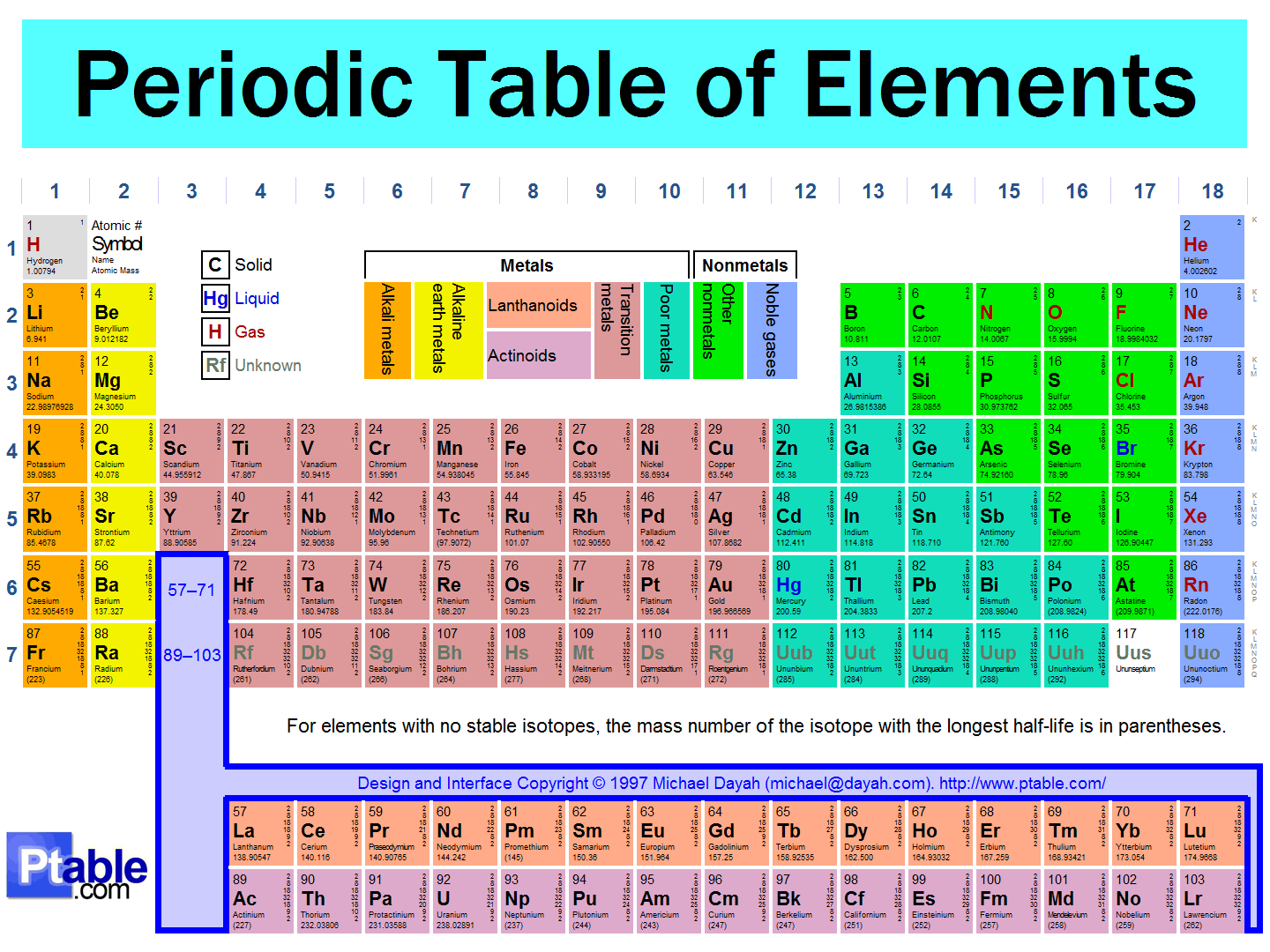
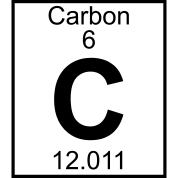
What does 12.011 represent?
a)
atomic mass
b)
atomic number
c)
element name
d)
chemical symbol 
30.

The horizontal (side to side) rows in the Periodic Table are called

a)

groups

b)

families

c)

periods

d)

atomic numbers

31.

Why are halogens so reactive?

a)

They want to get rid of their only valance electron

b)

They only need one more electron

c)

They are non reactive, they have a full shell

32.

How many valence electrons does a carbon atom have?

a)

8

b)

4

c)

2

d)

6

33.
What is the symbol for Potassium?
a)
P
b)
K
c)
Pb
d)
Pd
34.

Hydrogen appears to be on the "wrong" side of the periodic table. Why?

a)

Hydrogen is non-metal, but found on the left side

b)

Hydrogen is a non-metal, but is at the top

c)

Hydrogen is a metaloid, but with the metals

d)

Hydrogen is a metal, but on the right side

35.
all matter is made of what 
a)
energy 
b)
atoms 
c)
electrons 
d)
compounds 
36.
The positive particles of an atom are 
a)
electrons 
b)
positrons 
c)
neutrons 
d)
protons 
37.
the central region of an atom where its neutrons and protons are is its 
a)
nucleus 
b)
electron cloud
c)
core 
d)
center 
38.
Particles in an atom that are neutral and have no charge are 
a)
negatrons 
b)
electrons 
c)
neutrons 
d)
protons 
39.

What charge does an atom have when it GAINS electrons?

a)

Positive

b)

Negative

c)

Neutral

40.

When an atom loses an electron, it becomes a(n) _____________ ion.

a)

positive

b)

negative

c)

neutral

d)

polyatomic

41.
Two atoms of the same element but with different mass numbers are called________
a)
electrons
b)
isotopes
c)
variables
d)
electron cloud
42.
The subatomic particle with a negative charge is the
a)
electron
b)
proton
c)
neutron
d)
nucleus 
43.
Ions are: 
a)
atoms with a positive or negative charge
b)
atoms with no charge
c)
atoms with ONLY a positive charge
d)
atoms with ONLY a negative charge
44.

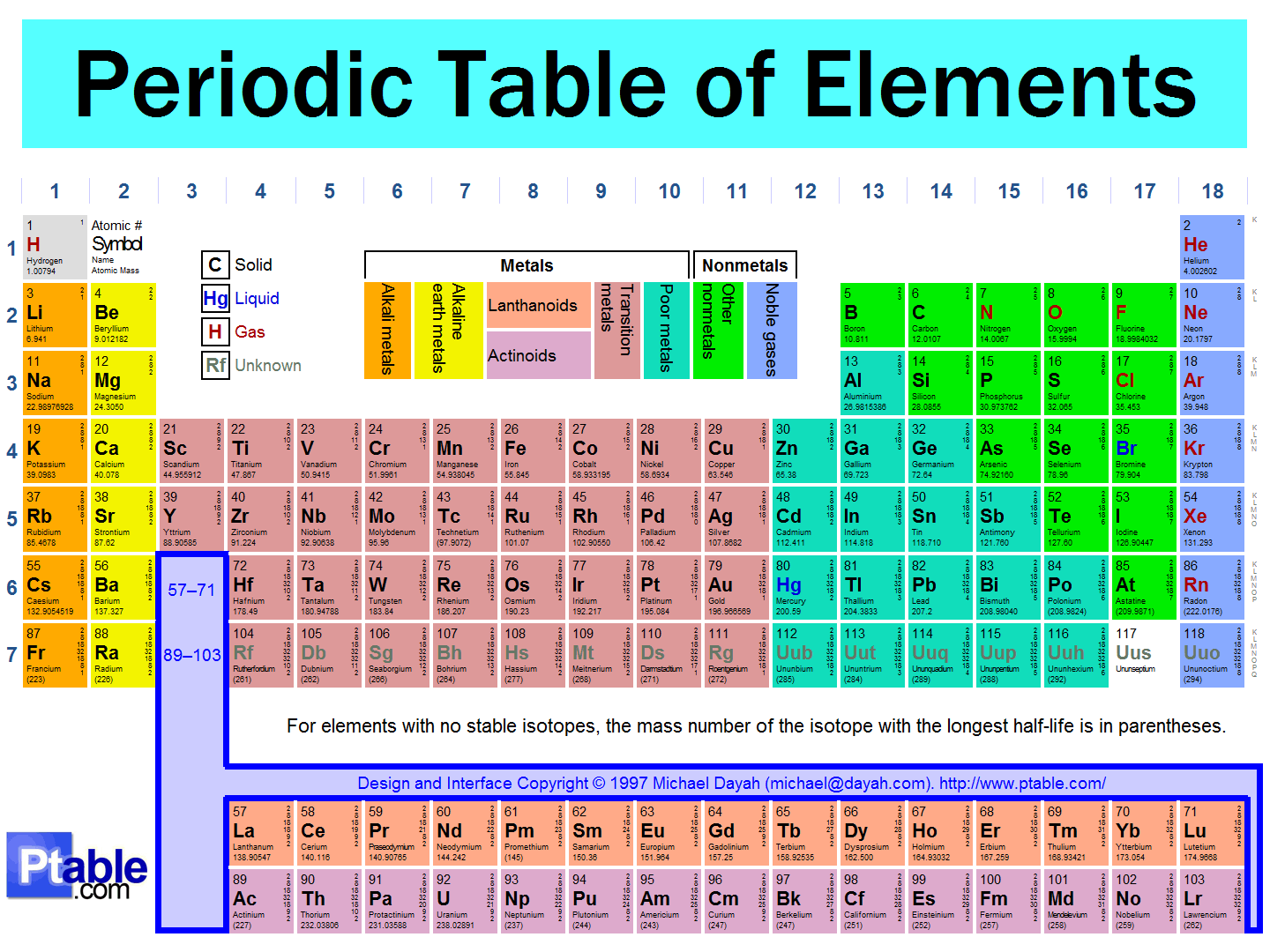
Which element is this?

a)

Nickel

b)

Neon

c)

Sodium

d)

Nitrogen

45.

How many valence electrons?

a)

2

b)

3

c)

4

d)

5

46.

A bond between a metal and a nonmetal is called a(n)

a)

covalent bond

b)

ionic bond

c)

metallic bond

d)

transfer bond

47.

A bond between a nonmetal and a nonmetal is called a(n)

a)

covalent bond

b)

ionic bond

c)

metallic bond

d)

transfer bond

48.

What type of bond involves the sharing of electrons between atoms?

a)

covalent bond

b)

ionic bond

c)

metallic bond

d)

transfer bond

49.

Identify the following compound as ionic or covalent: Na2SO4

a)

ionic

b)

covalent

50.

Identify the following compound as ionic or covalent: CF4

a)

ionic

b)

covalent

51.
Ba+2, Br-1
a)
BrBa
b)
Br2Ba2
c)
BaBr2
d)
Br2Ba
52.
What is the correct name for P₃Cl₆?
a)
Potassium chloride
b)
Phosphorous chloride
c)
Triphosphorous hexachloride
d)
Tetraphosphorous heptachloride
53.
What is the correct name for MgI₂?
a)
Manganese IV iodide
b)
Manganese diiodide
c)
Magnesium iodide
d)
Magnesium diiodide
54.
What is the correct formula for phosphorous trichloride?
a)
P₃Cl
b)
PCl₃
c)
KCl₃
d)
K₃Cl
55.
What is the right part of a chemical equation called...
2H2 + O2 --> 2H2O
a)
Reactants
b)
Products 
c)
Yields 
d)
Chemical Equation 
56.
What is the left part of a chemical equation called?
2H2 + O2 --> 2H2O
a)
Reactants
b)
Products 
c)
Yields 
d)
Chemical Equation 
57.
What is the number before a chemical formula called?
Ex: 2H2 + O2 --> 2H2O
a)
Coefficient
b)
Subscript
c)
Atom
d)
Equation
58.
Is the following equation balanced?
4Fe + 3O2 --> 2Fe2O3
a)
yes
b)
no
59.
4Si + S8 --> 2Si2S4
a)
Synthesis
b)
Decomposition
c)
Single displacement
d)
Double displacement