wayground logo

Free Printable Worksheets

NEW

Font size

S
M
L
XL
Worksheets

LS Vocab Blast #3 (FSA Review)

Total questions: 70

Worksheet time: 1hrs 5mins

Name
Class
Date
1.
An organism's ability to survive and reproduce
a)
niche
b)
habitat
c)
adaptation
d)
fitness
2.
Two closely related species of birds live in the same tree.  Species A feeds on ants and termites, while Species B feeds on caterpillars.  The two species coexist successfully because –
a)
each occupies a different niche
b)
they interbreed 
c)
they use different methods of reproduction
d)
birds compete for food
3.
What type of cell has a nucleus? 
a)
eukaryotic
b)
prokaryotic 
4.

Directs all cell activities through the DNA located there.

a)

Endomembrane System

b)

Nucleus

c)

Ribosomes

d)

Mitochondria

5.
 What do tissues form?
a)
Blood 
b)
Organ Systems
c)
Organs
d)
Nails
6.
 What might the immune system protect our body from?
a)
sugars, fats, and carbs.
b)
viruses, bacteria, fungi, other parasites
c)
viruses, bacteria, fungi, other parasites, carbs, sugars
d)
Cold & Flu
7.
Which gases are being exchanged through the respiratory system? 
a)
O2 & CO4
b)
HO2
c)
CO
d)
O2 & CO2
8.

What is a group of cells that are alike and work together?

a)

a cell team

b)

a tissue

c)

a cell family

9.

A group of tissues that work together is a(n) ______________________.

a)

cell

b)

organ

c)

organ system

10.

Organs that work together are part of a(n) ________________________.

a)

cells

b)

tissue

c)

organ system

11.

The dark structure in the middle of each cell is a

a)

nucleus

b)

lysosome

c)

mitochondria

12.

Muscle tissue is made of ...

a)

muscle cells

b)

skin tissue

c)

stem cells

13.

A specialized cell is a cell that has ...

a)

the ability to divide

b)

a specific role to do

c)

no specific function in the bod

14.

When similar cells group together it is called a tissue

a)

true

b)

false

15.

This muscle tissue is only found in the heart.

a)

Skeletal

b)

Smooth

c)

Cardiac

16.

These are the muscles attached to your bones.

a)

Skeletal

b)

Smooth

c)

Rough

17.

These are the muscles found in your organs (like your stomach).

a)

Skeletal

b)

Smooth

c)

Rough

18.

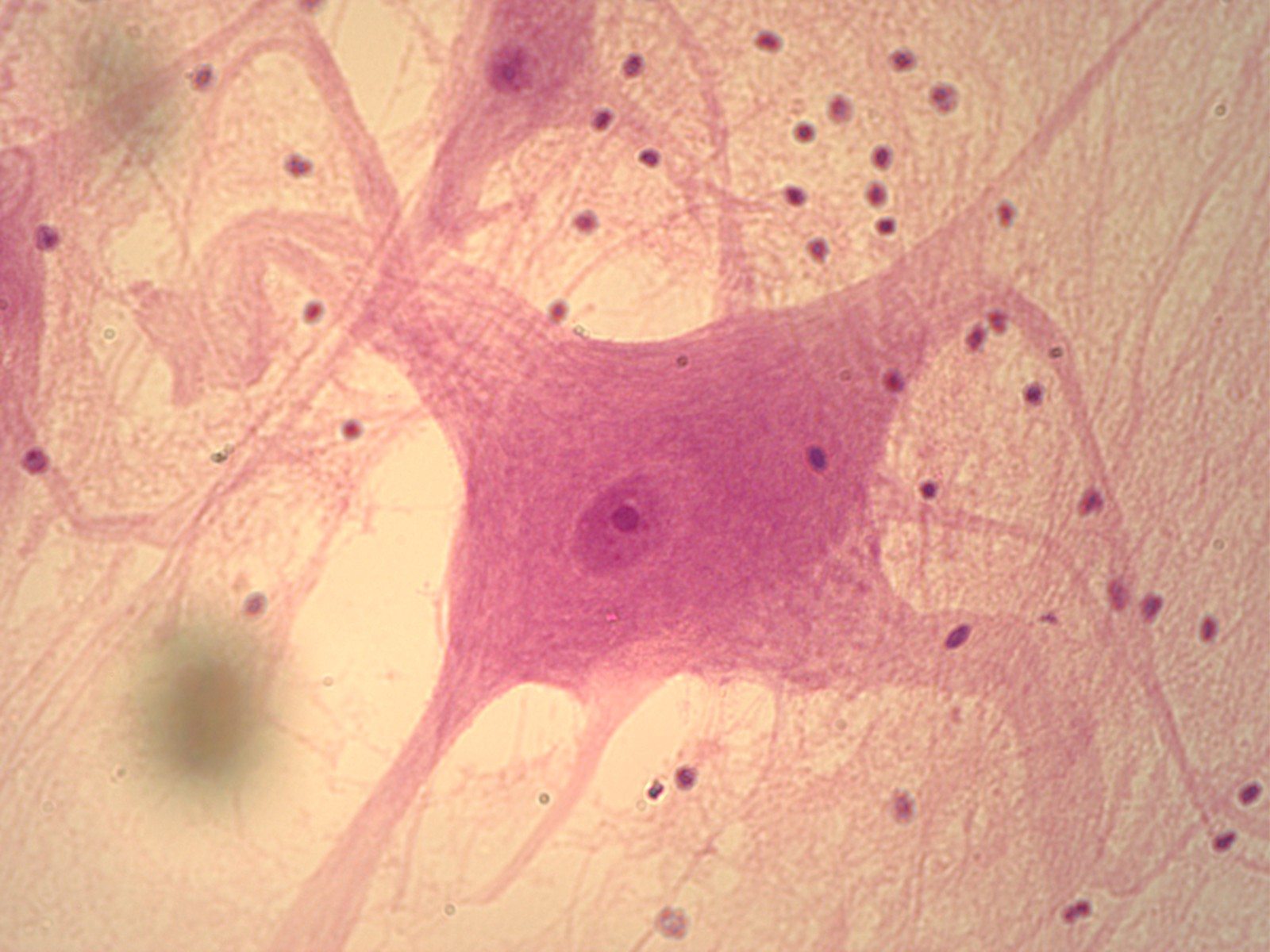
This type of tissue shown in the picture transmits information throughout the body to and from the brain.

a)

Nervous Tissue

b)

Connective Tissue

c)

Muscular Tissue

19.

Which of the following is not one of the four main types of tissues?

a)

Blood

b)

Connective

c)

Epithelial

d)

Nervous

20.

Blood is a type of .....

a)

Epithelial Tissue

b)

Connective Tissue

c)

Muscle Tissue

d)

Nervous Tissue

21.

organ systems make up.....

a)

Tissues

b)

Organs

c)

Organ systems

d)

organisms

22.

What is the correct order of organization?

a)

cells->tissue->organs->organ systems-> organism

b)

tissue->cells->organs->organ systems-> organism

c)

organs->organ systems-> organism->cells->tissue

23.
Each cell has a specific job. Whatever job a cell does is called its ______________.
a)
Structure
b)
Function
c)
Career
d)
Jobanelle
24.
What type of cells have a cell wall and chloroplasts?
a)
Plant cells
b)
Animal cells
c)
Plant and animal cells
d)
Neither plant NOR animal cells
25.

What are organelles?

a)

Parts that come together to make an organ system.

b)

A group of similar cells that perform similar functions.

c)

A group of organs that perform similar functions

d)

Tiny structures within a cell that allow the cell to live, grow, and reproduce.

26.
Any individual living thing.
a)
Decomposer
b)
Organism
c)
Producer
d)
Abiotic
27.
During osmosis
a)
water moves from high to low concentration
b)
large or oddly shaped molecules move across a cell membrane
c)
water moves when energy is used
d)
proteins are built
28.
A relationship between two species where one benefits while the other is harmed.
a)
Mutualism
b)
Commensalism
c)
Parasitism
d)
Naturalism
29.
A frog eats a fly. The frog and fly are demonstrating ________.
a)
mutualism
b)
competition
c)
predator/prey
d)
parasitism
30.
A relationship between two organisms in which one organism benefits and the other is unharmed
a)
Mutualism 
b)
Competition
c)
Parasitsm 
d)
Commensalism 
31.
A relationship between two organisms in which both organisms benefit. 
a)
Mutualism 
b)
Competition
c)
Parasitsm 
d)
Commensalism 
32.
How many generations are shown in this pedigree?
a)
1
b)
2
c)
3
d)
4
33.
How many females are in this pedigree?
a)
3
b)
4
c)
6
d)
7
34.
Which of the following is not a natural cause of water pollution?
a)
Volcanoes
b)
Algae Blooms
c)
Oil Spills
d)
Animal Waste
35.
What type of water pollution is produced from chemicals used to kill bugs and weeds?
a)
Sewage
b)
Animal Waste
c)
Pesticides and Herbicides
d)
Factories
36.
A population is...
a)
A group of one species in one area
b)
Multiple species that live in one area
c)
All of the living and nonliving things in an area
d)
None of these
37.
T - tall and t = short
In the punnett square below, what belongs in the missing square
a)
tt
b)
Tt
c)
Bb
d)
TT
38.
B = brown fur  b = white fur
In the punnett square, what is the probability for white fur? 
a)
0%
b)
25%
c)
50%
d)
75%
39.
What is the probability of heterozygous offspring?
a)
25%
b)
50%
c)
0%
d)
100%
40.
What allele combination should go in the missing box?
a)
AA
b)
Aa
c)
aa
d)
none of these
41.

What is the main function of Protein?

a)

For growth and repair of body cells

b)

Acts as an energy giving nutrient

c)

To keep the body warm

d)

Protect internal organs

42.
DNA holds the code for
a)
lipids
b)
carbohydrates
c)
protein
d)
sugar
43.

This picture is an example of:

a)

Plant-like protist named algae

b)

Plant-like protist names diatoms

c)

Plant-like protist named euglenoids

d)

Plant-like bacteria called algae

44.

What are the 4 nitrogen bases?

a)

adenine, thymine, cytoplasm, and guanine

b)

adenine, thymine, cytosine, and guanine

c)

adenine, thymine, cytosine, and gylcerol

d)

adenine, thymine, cytosine, and glucose

45.
DNA replication results in two DNA molecules,
a)
each one with two original strands
b)
each one with two new strands
c)
each one with one new strand and one original strand
d)
one with two new strands and the other with two original strands
46.

A Reptiles INTERNAL body TEMPERATURE depends on it's surroundings, because it is __________________.

a)

Cold-Blooded

b)

Warm-Blooded

47.

Which situation best describes the act of maintaining homeostasis?

a)

An organism sweating when their body temperature begins to rise

b)

A plant on a window sill growing towards sunlight

c)

A bear hibernating in the winter months

d)

All of the above

48.

Identify the stimulus..."A person shivers because it is cold outside"

a)

Cold temperature

b)

A person shivers

49.
What is the function of ribosomes? 
a)
to bond amino acids together to form proteins
b)
to break down biological polymers
c)
to modify lipids and proteins
d)
to contain 
DNA
50.
An endangered species is
a)
One whose numbers are so small that it is at risk of extinction
b)
One whose not been spotted after many years.
c)
One whose numbers are abundant.
51.
A species is defined as endangered when it
a)
suffers from damage to its habitat.
b)
suffers from disease or predation.
c)
when there are hazards to the continued life of the species.
d)
all of the above
52.
Who is the closest relative to the birds?
a)
crocodiles
b)
sharks
c)
fish
d)
amphibians
53.
Who is the closest relative to the sharks?
a)
crocodiles
b)
sharks
c)
ray-finned fish
d)
amphibians
54.

What is the mistaken idea that life can arise form nonliving material?

a)

biogenesis

b)

evolution

c)

spontaneous combustion

d)

spontaneous generation

55.
Barnacles create home sites by attaching themselves to whales. This relationship neither harms nor benefits the whales. 
a)
parasitism
b)
commensalism
c)
mutualism
56.
Yucca flowers are pollinated by yucca moths. The moths lay their eggs in the flowers where the larvae hatch and eat some of the developing seeds. Both species benefit. 
a)
parasitism
b)
commensalism
c)
mutualism
57.
Oxpeckers feed on the ticks found on a rhinoceros. The oxpeckers get a meal and the rhinoceros is helped by the removal of the ticks.
a)
parasitism
b)
commensalism
c)
mutualism
58.
Which characteristic would most likely be inherited by a baby?
a)
brown hair
b)
crying a lot
c)
ability to jump high
d)
his ability to talk
59.

A dog rolls over and receives a treat. The dog rolls over again. This is an example of...

a)

learned behavior

b)

adaptive behavior

c)

inherited behavior

d)

instinctive behavior

60.

Which trait does a puppy inherit from its parents?

a)

fur color and pattern

b)

obedience to commands

c)

food brand preference

d)

affection for a specific home

61.

Which best explains why a child may look like his father, but is not able to play basketball as well as him?

a)

Physical characteristics are inherited, but the ability to shoot a basketball is not.

b)

The ability to shoot a basketball is inherited, but physical characteristics are not.

c)

The child chooses to look like his father, but he does not choose to play basketball.

d)

He hates playing basketball so he doesn't care if his dad can play.

62.

When the RNA gets to the ribosomes, which molecule transfers to the mRNA to amino acids?

a)

DNA

b)

mRNA

c)

tRNA

d)

Replicated RNA

63.
What gas is TAKEN IN during photosynthesis?
a)
argon
b)
nitrogen
c)
oxygen
d)
carbon dioxide
64.
What gas is RELEASED during photosynthesis?
a)
carbon dioxide
b)
argon
c)
oxygen
d)
nitrogen
65.

What is transpiration?

a)

Excess water being released from the leave

b)

Excess sugar being released from the leave

c)

The way a plant makes its food

d)

When the plant uses sugar for energy

66.

Administered to influence the immune system to build immunity against pathogens

a)

Antigen

b)

Antibody

c)

Vaccine

d)

antibiotics

67.

What do viruses need to reproduce?

a)

they need genetic material

b)

They need a host cell

c)

They need bacteria

d)

They need insulin

68.
Reasons that viruses are considered to be nonliving is because
a)
They are not cellular
b)
They cannot reproduce on their own
c)
They cannot make proteins
d)
all of the above
69.

Viruses are...

a)

prokaryotic

b)

eukaryotic

c)

non-living

d)

endospores

70.

What is a way to become immune to a disease without first having the disease?

a)

antibiotics

b)

Anti-retroviral drugs

c)

Vaccinations

d)

Exposure Therapies