wayground logo

Free Printable Worksheets

NEW

Font size

S
M
L
XL
Worksheets

8TH GRADE SCIENCE STAAR REVIEW 2019

Total questions: 50

Worksheet time: 40mins

Name
Class
Date
1.
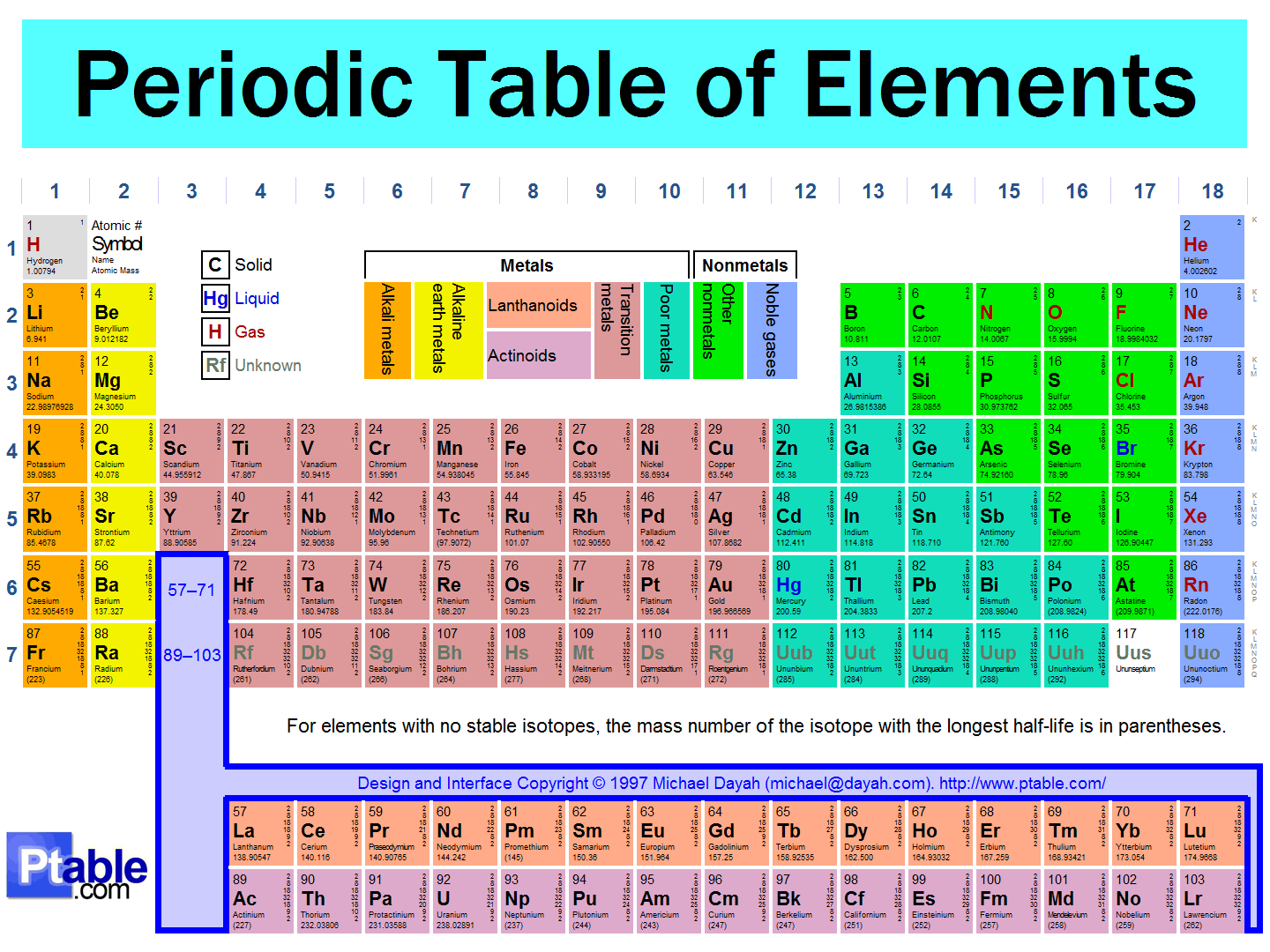
an atom with atomic number 6 would have how many protons 
a)
6
b)
12
c)
3
d)
cannot be determined 
2.
Particles in an atom that are neutral and have no charge are 
a)
negatrons 
b)
electrons 
c)
neutrons 
d)
protons 
3.
If an atom has 10 protons, 10 neutrons, and 10 electrons, what is the mass of the atom?
a)
10
b)
20
c)
30
4.

If the mass number of this chlorine atom is 36, how many neutrons does it have?

a)

17

b)

18

c)

19

d)

can't be determined

5.

What is the mass number of the atom shown in the Bohr model?

a)

11

b)

12

c)

23

d)

Can't be determined

6.

The vertical (up and down) columns in the Periodic Table are called

a)

groups

b)

towers

c)

periods

d)

atomic numbers

7.

The horizontal (side to side) rows in the Periodic Table are called

a)

groups

b)

families

c)

periods

d)

atomic numbers

8.

what group number are the noble gases

a)

17

b)

18

c)

14

d)

15

9.
The substances listed on the right side of a chemical equation are the
a)
Yields
b)
Reactants
c)
Products
d)
Precipitates
10.
How many Oxygen (O) atoms are in 2C2HO8Cl2
a)
2
b)
16
c)
8
d)
5
11.
How many molecules of Carbon are in the following formula? 3C2H6
a)
3
b)
6
c)
12
d)
18
12.
How many elements are in C6H12O6?
a)
1
b)
2
c)
3
d)
4
13.
What is the net force?
a)
5000 N right
b)
4000 N right
c)
40 N left
d)
4000 N left
14.
What law is best described by inertia?
a)
1st
b)
2nd
c)
3rd
d)
law of conservation of mass
15.
What is Newton's Third Law?
a)
Object in motion stays in motion and an object at rest stays at rest unless acted on by a outside force
b)
Force = mass x acceleration
c)
For every action there is an equal and opposite reaction
16.
When something has speed in a certain direction it is called ___________.
a)
motion
b)
position
c)
velocity
d)
speed
17.
Acceleration of an object happens when things ________
a)
slow down
b)
go faster
c)
change direction (turn)
d)
All of the above
18.
A 20 kg bike accelerates at 10 m/s2.  what was the force?
a)
25 Newtons
b)
20 Newtons
c)
200 Newtons
d)
10 Newtons
19.
At position A, which hemisphere would have summer?
a)
Northern hemisphere
b)
Southern hemisphere
c)
Neither hemisphere
20.
What does the tilt of the earth cause?
a)
heating
b)
Seasons
c)
Atmosphere
d)
Years
21.
What type of moon is this?
a)
Waning gibbous
b)
Waxing gibbous
c)
Waxing crescent
d)
Waning crescent
22.
Earth's ________ on its axis causes day and night.
a)
rotation
b)
revolution
c)
phase
d)
comet
23.
What kind of galaxy is this?
a)
Ring
b)
Irregular
c)
Spiral
d)
Elliptical 
24.
Which category is our Sun located in?
a)
White Dwarfs
b)
Supergiants
c)
Main Sequence
d)
Giants
25.
In the diagram given, what happens as we move to the left?
a)
Stars Get Larger
b)
Stars get Colder
c)
Stars get hotter
26.
Blue stars are the _____________.
a)
hottest
b)
coolest
c)
smallest
27.
A rift valley occurs at a ____________ boundary.
a)
divergent
b)
convergent
c)
transform
d)
horizontal
28.
What type of boundary occurs when two plates slide past each other?
a)
divergent
b)
transform
c)
lateral
d)
convergent
29.
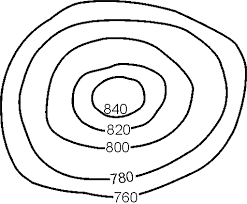
What is the elevation of point B?
a)
800 ft
b)
850 ft
c)
900 ft
d)
1000 ft
30.
Determine the contour interval:
a)
5 m
b)
10 m
c)
15 m
d)
20 m
31.
What do contour lines that are farther apart represent?
a)
waterfall
b)
steep area
c)
gentle slope
d)
river
32.

An organism that can make its own food

a)

decomposer

b)

producer

c)

consumer

33.

Small consumers that are hunted and eaten by larger consumers

a)

producer

b)

prey

c)

predator

34.

NON-living things found in an ecosystem

a)

biotic

b)

abiotc

c)

habitat

35.

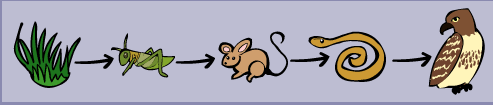
Explain the flow of energy in this food chain (who passes energy to who).

a)

The hawk gives energy to the snake. The snake gives energy to the mouse. The mouse gives energy to the grasshopper who gives energy to the grass.

b)

The mouse gives energy to the hawk. The snake gives energy to the grasshopper. The grass gives energy to the snake.

c)

The grass gives energy to the grasshopper. The grasshopper gives energy to the mouse. The mouse gives energy to the snake who gives energy to the hawk.

36.
Is the following equation balanced?...
Al + O2 --> 2Al2O3
a)
Yes!
b)
No!
37.
Element or compound?
H2O
a)
Element
b)
Compound
38.
How many aluminum atoms are in Al2(SO4)3?
a)
1
b)
2
c)
3
d)
4
39.
How many atoms are in the neurotransmitter serotonin? The formula for serotonin is C10H12N2O
a)
10
b)
20
c)
25
d)
23
40.
Is the following equation balanced?
2C2H2 + 5O2 --> 4CO2 + 2H2O
a)
yes
b)
no
41.
What type of air pressure is present?
a)
High 
b)
Low
42.
What type of air pressure is present?
a)
High 
b)
Low
43.

Red half circles

a)

Warm

b)

Cold

c)

Stationary

d)

Occluded

44.

Blue triangles

a)

Warm

b)

Cold

c)

Occluded

d)

Stationary

45.
a)

cold

b)

stationary

c)

warm

d)

occluded

46.
a)

cold

b)

stationary

c)

occluded

d)

warm

47.
What are the final two stages of a medium mass star?
a)
white dwarf - black dwarf
b)
neutron star - black hole
c)
supernova - neutron star
d)
pulsar - neutron star
48.
Our sun is currently in what star stage?
a)
Protostar
b)
Nebula
c)
Main Sequence
d)
Red Giant
49.
Most stars are made of which elements?
a)
Hydrogen only
b)
Hydrogen and Lithium
c)
Hydrogen and Sodium
d)
Hydrogen and Helium
50.
Which of the following list the correct order of the life cycle of massive stars?
a)
Nebula --> protostar --> main sequence --> red supergiant --> supernova --> blackhole
b)
Nebula --> protostar --> main sequence --> red giant --> planetary nebula --> white dwarf --> black dwarf
c)
Nebula --> protostar --> main sequence --> supernova --> red giant --> blackhole
d)
Nebula --> protostar --> blackhole --> red supergiant --> supernova --> main sequence