
 Worksheets
Year 7 Term 4 week 2
Total questions: 53
Worksheet time: 40mins
What is the smallest planet?
Venus
Pluto
Jupiter
Mercury
What is the hottest planet?
Venus
Mercury
Earth
Jupiter
Pluto is a..?
Tiny planet
Dwarf planet
A planet
Moon
Which planet tilts 90 degrees on its axis(which planet is upside down) ?
Jupiter
Earth
Saturn
Uranus
Which of the gas giants has the largest rings?
Jupiter
Saturn
Mercury
Neptune
What are the Inner Planets?
Mercury, Mars, Earth, and Venus
Earth, the Moon, Mars
Neptune, Pluto, Earth
Jupiter, Saturn, Uranus, Neptune
Mercury,Saturn
Jupiter, Uranus, Neptune
Jupiter, Neptune,
Mercury,Saturn,
Uranus
Mars,Jupiter,
Saturn,Uranus
Neptune
What is at the middle of a Heliocentric system?
Mars
Moon
Sun
Earth
What is at the middle of a Geocentric system?
Sun
Neptune
Earth
The Universe
What does the Geocentric system look like?
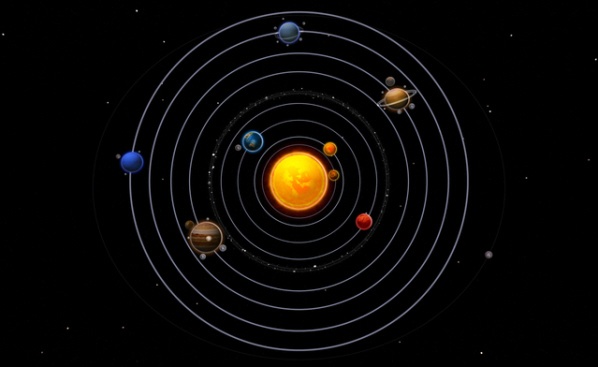
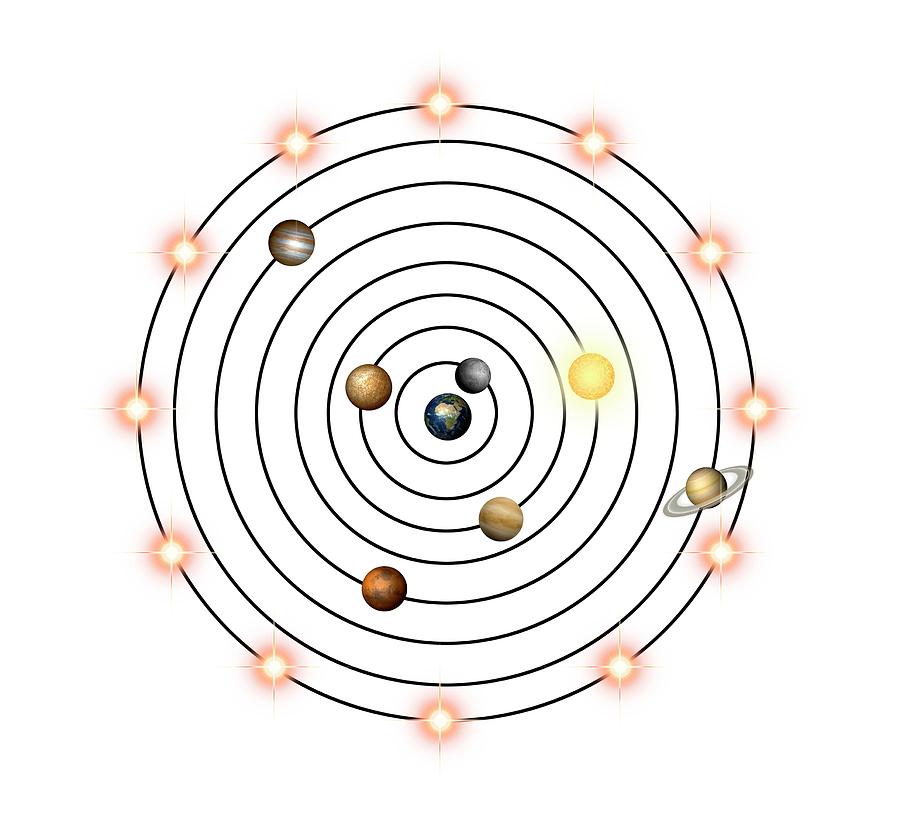
What does the Heliocentric system look like?


What is the biggest difference between the Geocentric Model and the Heliocentric Model?
the shape of the planets' orbits
the movement of the moon
the center of the solar system


Which phenomenon does the Moon affect on Earth?
The seasons
Tree growth
Mountain erosion
The tides
What causes the moon to shine?
The sun
Its red-hot surface
Pixie dust
Electricity

What term do we use for spin of an astronomical body on its axis?
Orbit
Rotate/Rotation
Revolve/Revolution

How long does it take for the Earth to spin on its axis one time?
1 Day
1 Month
1 Year
1 Hour

What time is it at point A?
Noon
6PM
Midnight
6AM
What time is it at point B?
Noon
6PM
Midnight
6AM
What time is it at point C?
Noon
6PM
Midnight
6AM
A revolution takes one _____.
Year
Month
Day
A rotation takes one _____.
Year
Month
Day
What is the line that runs from North to South through the middle of the Earth called?
Tilt line
Equator
Axis
Equinox

When the Earth faces away from Sun, it is _____.
Daytime
Nighttime
When the Earth faces towards the Sun, it is _____.
Daytime
Nighttime
What causes the seasons?
The earths moon
The earths tilt
The ocean
The star
What does revolution mean?
Revolution means an object moving around something
The shadows get longer as seasons go on
The earth is moving around the sun
The sun is moving horizontally
Why are the seasons in the Northern hemisphere different from the ones in the Southern hemisphere?
The sun blows up into pieces
During summer or winter one part of the planet is exposed to summer while the other is exposed to winter
The sun is moving around the Earth so one half the Earth is fried and the other half is frozen
The sun is freezing
What does rotation mean?
An object spinning on it's axis
People pollute the earth
The sun is heating up the earth while it spins
The Earth is moving around the sun
The spinning of Earth on its axis in a day is called
perihelion
aphelion
rotation
revolution

What is the name of the imaginary line running through the North Pole to the South Pole?
orbit
equator
axis
latitude
The Earth is rotating on its axis, creating _____
day and night
a year
the seasons
a month

When the part of the world that you're living in is leaning away from the Sun, its _____
winter
spring
summer
autumn

When the part of the world that you're living in is leaning towards the Sun, its _____
winter
spring
summer
fall
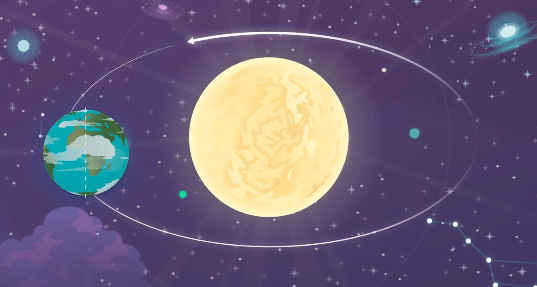
How long does it take for the Earth to make one full orbit around the Sun?
one day
one week
one month
one year
The earth rotates every _____________.
24 hours
15 hours
365 days
hour

What does the tilt of the earth cause?
heating
seasons
years
atmosphere
A revolution takes one _____.
Year
Month
Day
A rotation takes one _____.
Year
Month
Day

