wayground logo

Free Printable Worksheets

NEW

Font size

S
M
L
XL
Worksheets

Year 3 Science Revision

Total questions: 51

Worksheet time: 46mins

Name
Class
Date
1.

A magnet will pick up an object that is made of...

a)

plastic

b)

iron or steel

c)

glass

d)

copper

2.

The strongest parts of the magnet are ...

a)

fronts

b)

backs

c)

poles

d)

middle

3.

Like magnetic poles push each other away

a)

true

b)

false

4.

Which of the following is a rock that will pick up iron?

a)

pumice

b)

granite

c)

magnetite

d)

limestone

5.

What would happen if you touched a south pole end of a magnet to a north pole end of another magnet?

a)

they would be attracted to each other

b)

they would be repelled from each other

6.

What is the purpose of a compass?

a)

to tell you directions

b)

to tell how far you have walked

c)

to tell what time you left

d)

to tell where the sun is

7.

The earth has one magnetic pole.

a)

true

b)

false

8.

What would happen is a north pole of a magnet came close to a north pole of another magnet?

a)

they would be attracted to each other

b)

they would be repelled from each other

9.

Which direction does a compass always point?

a)

north

b)

south

c)

east

d)

west

10.

The middle of the magnet is the ________________ point.

a)

hottest

b)

coldest

c)

weakest

d)

strongest

11.

The area around a magnet is called the .....

a)

attraction zone

b)

work area

c)

magnetic field

d)

hot zone

12.
The bouncing of light off an object is ....
a)
a mirror
b)
absorption
c)
reflection
d)
refraction
13.
Light is a kind of.....
a)
reflection
b)
energy
c)
heat
d)
matter
14.
What happens to light after it hits a mirror?
a)
It goes through the mirror and bend.
b)
It goes straight through the mirror.
c)
It goes around the mirror.
d)
It bounces off the mirror.
15.
Which of these describes how light travels through an empty space?
a)
It travels straight but may change direction to avoid objects.
b)
It changes direction often even if there are no objects. 
c)
It comes to a stop after it travels a certain distance. 
d)
It travels in a straight line without stopping. 
16.
What surface best reflects light?
a)
dull
b)
shiny
c)
clear
d)
black
17.

When the sun gets higher in the sky, shadows get ______.

a)

longer

b)

gone

c)

shorter

d)

darker

18.

When the sun gets lower in the sky, shadows get______.

a)

longer

b)

gone

c)

shorter

d)

darker

19.

Shadows are longest during _______.

a)

morning and evening

b)

noon

c)

night

20.

Shadows are shortest around______.

a)

morning and evening

b)

noon

c)

night

21.

The sun appears to __________.

a)

rise in the east, set in the west

b)

rise in the west, set in the east

22.
Where does the sun rise? 
a)
North
b)
South
c)
East
d)
West
23.
Where does the sun set? 
a)
North 
b)
South
c)
East
d)
West
24.
Which light source causes shadows in the outdoor environment? 
a)
The Sun
b)
The Lightbulb
c)
The House
d)
The School
25.

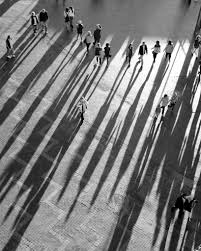
When was this picture most likely taken?

(Hint: think about the shadow's length)

a)

morning or evening

b)

night

c)

noon

d)

afternoon

26.

What do shadows on Earth help show?

a)

Earth's rotation

b)

Earth's revolution

c)

Earth's equator

d)

Earth's axis

27.
Which type of rock results from melting and cooling of magma?
a)
Igneous
b)
Metamorphic
c)
Sedimentary
d)
Extrusive
28.
Which type of rock forms from extreme heat and pressure?
a)
Igneous
b)
Sedimentary
c)
Organic
d)
Metamorphic
29.
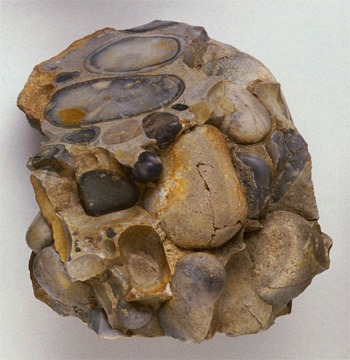
This rock was formed by smaller pieces of rock that settled at the bottom of a lake millions of years ago. What type of rock is this?
a)
Sedimentary
b)
Igneous
c)
Metamorphic
30.
What are the 3 major types of rocks?
a)
Igneous, Metamorphic, Sedimentary
b)
Metamorphic, Igneous, Cementation
c)
Brown, Red, Gray
d)
Streak, Hardness, Breakage
31.
Each rock type can follow only one pathway of the rock cycle.
a)
True
b)
False
32.
A mineral's resistance to being scratched is called?
a)
streak
b)
luster
c)
hardness
d)
heft
33.
In what kind of rock can fossils be found?
a)
Sedimentary Rocks
b)
Igneous Rocks
c)
Metamorphic Rocks
d)
Granite
34.
Which layer formed first?
a)
Rock Layer W
b)
Rock Layer X
c)
Rock Layer Y
d)
Rock Layer Z
35.
What bone is at question "E" ?
a)
Knee Cap 
b)
Leg Bone
c)
Skull
d)
Ribs
36.
What is the role of the bone at "A" ?
a)
To protect the heart
b)
To protect the brain
c)
To protect the lungs
d)
To protect the heart and lungs
37.
What is the letter "B" pointing to?
a)
The ribs
b)
The skull
c)
The legs
d)
The heart
38.
What is "C" pointing to and what does it protect?
a)
The Skull and it protects the brain
b)
The Spine and it protects the heart
c)
The Spine and it protects the spinal column.
d)
The lungs and it protects the ribs
39.
What is the letter "E" pointing to?
a)
A fin
b)
A leg
c)
A spine
d)
A rib
40.
What do you think the dotted line at letter "D" represents?
a)
The skin
b)
The fishing line left in the fish
c)
A mistake
d)
A fin bone
41.
What kind of joint is "F"?
a)
A linear joint
b)
A rotary joint
42.
A shoulder girdle is made up of two arms.
a)
True
b)
False
43.
Two hip bones makes up a pelvic girdle.
a)
True
b)
False
44.
An elbow is an example of a rotary joint.
a)
False
b)
True
45.
An example of a rotary joint is:
a)
A shoulder
b)
An elbow
c)
A knee
d)
A knuckle
46.
A place where 2 bones meet is called a __________
a)
joint
b)
muscle
c)
bone
d)
banana
47.
Walking and running adaptions only apply to __________________________________
a)
Land mammals
b)
Sea  creatures
c)
Snakes
d)
Webbed footed animals
48.
How are the bones of a bird adapted to flying?
a)
They are hollow
b)
They have jet packs
c)
They are small
d)
The muscles are well developed
49.
Muscles can only pull on bones.
a)
True
b)
False
50.
Muscles work in pairs
a)
True
b)
False
51.
Relaxed means to get small and tight.
a)
True 
b)
False