

Wayground logo

Free Printable Worksheets

Font size

S
M
L
XL
Worksheets

STAAR Review

Total questions: 36

Worksheet time: 35mins

Name
Class
Date
1.

Which statement correctly describes the location and charge of electrons in an atom?

a)

the electrons are inside the nucleus and have no charge

b)

the electrons are inside the nucleus and have a negative charge

c)

the electrons are outside the nucleus and have no charge

d)

the electrons are outside the nucleus and have a negative charge

2.

Based on the image, which atom is LEAST reactive?

a)

1

b)

2

c)

3

d)

4

3.

What is true about this element based on the model?

a)

It is neon, has two energy levels, and is nonreactive

b)

It is neon, has 10 valence electrons, and is nonreactive

c)

It is neon, has two energy levels, and is highly reactive

d)

It is neon, has two valence electrons, and is highly reactive

4.

Based on the diagram, which elements are in the same period on the Periodic Table?

a)

Neon and Chlorine

b)

Gallium and Tin

c)

Chlorine and Gallium

d)

None of the above

5.

Which of the following IDENTIFIES THE ELEMENT?

a)

protons

b)

neutrons

c)

electrons

6.

True or false: Lithium is highly reactive

a)

true

b)

false

7.

Reactivity is determined by the number of:

a)

electrons

b)

protons

c)

valence electrons

d)

energy levels

8.

Similar chemical properties are in the same:

a)

group

b)

period

9.

Group 18 is considered (select all that are true):

a)

nonreactive

b)

highly reactive

c)

noble gases

d)

stable

10.
a)

1

b)

2

c)

4

d)

8

11.

Which of the following have the same number of CARBON atoms?

a)

1 and 2

b)

2, 3, 4

c)

2 and 3 only

d)

1 and 3

12.

What is the best evidence that a chemical reaction has occurred?

a)

A new substance is produced

b)

Melting

c)

Boiling

d)

Changing shape

13.

Which part of digestion is a PHYSICAL change?

a)

teeth tearing food into smaller pieces

b)

stomach acid breaking food down

14.

What is the best equation to solve this problem?

a)

F = m x a

b)

a = F/m

c)

m = F/a

d)

F = m/a

15.

Are the forces acting on the leaf balanced or unbalanced?

a)

balanced

b)

unbalanced

16.

Is the object in the graph traveling at a constant speed or changing speed?

a)

constant

b)

changing

17.

What is this speed graph demonstrating about the motion of the object?

a)

the object is speeding up

b)

the object is slowing down

c)

the object is stopped

18.

In which position is it winter in North America?

a)

1

b)

2

c)

3

d)

4

19.

Which answer correctly states the order of moon phases after a new moon?

a)

waxing crescent, first quarter, waxing gibbous

b)

waning crescent, third quarter, waning gibbous

c)

waxing crescent, first quarter, waning gibbous

d)

waning gibbous, third quarter, waxing crescent

20.

Which area represents the main sequence stars?

a)

M

b)

Z

c)

P

d)

X

21.

A full moon occurred on the night of the 10th of July. What moon would you expect to see on the night of the 13th?

a)

waning gibbous

b)

new moon

c)

waxing crescent

d)

waxing gibbous

22.
<--------8N  4N-------->
a)
2N
b)
12N
c)
4N
d)
32N
23.
Which of Newton's laws is illustrated when a magician pulls a tablecloth out from under the dishes without disturbing them?
a)
first
b)
second
c)
third 
d)
fourth
24.
What is Newton's First Law
a)
F=ma
b)
Every action has an equal and opposite reaction
c)
An object at rest stays at rest, an object in motion stays in motion. 
d)
Friction 
25.
What kind of energy is in a moving skateboard?
a)
Potential
b)
Kinetic
26.
What is happening at A?
a)
Stationary
b)
Accelerating
c)
Slower steady speed; moving away from the starting position
d)
Steady speed; returning to start position
27.
What types of particles are found in the cloud surrounding the atom's nucleus?
a)
Positively charged particles and negatively charged particles.
b)
Negatively charged particles only
c)
Neutral particles and positively charged particles
d)
Positively charged particles only
28.
The image shows a plate boundary.  Arrows have been added to indicate the movement of the plates.
What plate boundary feature is shown?
a)
A ridge formed by an inactive convergent boundary
b)
A valley forming at an active divergent boundary.
c)
A fault forming at an active transform boundary
d)
A volcano formed by an active transform boundary
29.
Coal contains carbon and other elements.  Carbon dioxide forms when coal burns in the presence of oxygen.  Which of these is the best evidence that a chemical reaction occurs when coal burns?
a)
The shape of the coal changes.
b)
Oxygen is present.
c)
A new substance is produced.
d)
Coal is made up of more than one element.
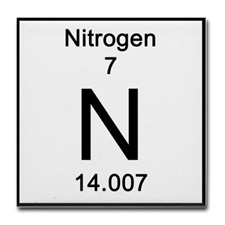
30.
What is the number of protons that the element in this image contain?
a)
14
b)
7
c)
15
d)
18
31.
The positive particles of an atom are called:
a)
electrons 
b)
positrons 
c)
neutrons 
d)
protons 
32.
Which is an electron?
a)
A
b)
B
c)
C
33.
What is the atomic number?
a)
The number of protons in an element
b)
The number of neutrons in an element
c)
The number of protons and neutrons.
d)
The number of protons and electrons.
34.
What is found in the nucleus of atoms?
a)
Protons and electrons.
b)
Protons, neutrons, and electrons.
c)
Protons and neutrons.
d)
Neutrons and electrons.
35.
Each row in the periodic table is called a 
a)
group
b)
period
c)
cluster
d)
unit
36.
Each column in the periodic table is called a 
a)
period
b)
group
c)
cluster
d)
unit
