wayground logo

Free Printable Worksheets

Font size

S
M
L
XL
Worksheets

Environmental Science Final Exam Practice

Total questions: 81

Worksheet time: 56mins

Name
Class
Date
1.
Examples of a producer
a)
frog
b)
algae
c)
worm
d)
mouse
2.
What is a producer?
a)
an organism that gets energy from eating other organisms
b)
an organisms that uses sunlight to make its own food
c)
an organism that gets energy from eating dead organisms, non-living material or waste
d)
an organism that uses chemical energy to make its own food
3.
What is a herbivore?
a)
an animal that gets energy from eating other animals
b)
an organism that gets energy from eating only plants
c)
an animal that gets energy by eating both plants and other animals
d)
an animal that eats only herbs
4.
What is a carnivore?
a)
an animal that gets energy by eating other animals
b)
An animal that gets energy by eating only plants
c)
an animal that gets energy by eating both plants and animals
d)
an animal that makes its own energy through photosynthesis
5.
An animal that gets energy from eating both plants and animals is a 
a)
herbivore
b)
carnivore
c)
omnivore
d)
autotroph
6.
The shrew provides energy for the _______?
a)
cricket
b)
grasshopper
c)
frog
d)
snake
7.
Where do all life forms get their energy?
a)
Earth's Core
b)
Water
c)
Plants
d)
The Sun
8.
What is this called?
a)
Food Web
b)
Food Chain
c)
Abiotic Factors
9.
What is this called?
a)
Food Web
b)
Food Chain
c)
Abiotic Factors
10.
All food chains begin with a ____________.
a)
primary consumer
b)
secondary consumer
c)
producers
d)
scavengers
11.
A mite lives in the base of the eyelashes of people who use mascara. It feeds on the mascara; it does not seem to harm people. What type of symbiotic relationship is this?
a)
mutualism
b)
commensalism
c)
parasitism
d)
predation
12.
A coyote captures, kills, and eats a rabbit. What type of symbiotic relationship is this?
a)
mutualism
b)
commensalism
c)
parasitism
d)
predation
13.
A tapeworm lives in the intestines of a dog. It absorbs food the dog has eaten and grows larger in the process. The dog becomes weaker from malnutrition. What type of symbiotic relationship is this?
a)
mutualism
b)
commensalism
c)
parasitism
d)
predation
14.
The flower of the yucca plant provides the only location where the yucca moth can lay her eggs. In the process, the moth pollinates the yucca flower. What type of symbiotic relationship is this?
a)
mutualism
b)
commensalism
c)
parasitism
d)
predation
15.
Cleaner shrimp living in the ocean eat ectoparasites (parasites on the outer surface of the animal) off of fish. What type of symbiotic relationship is this?
a)
mutualism
b)
commensalism
c)
parasitism
d)
predation
16.
Bacteria that live on the surface of our teeth require sugar from our food to survive. A by-product of their metabolism (body processes) decays the enamel of teeth. What type of symbiotic relationship is this?
a)
mutualism
b)
commensalism
c)
parasitism
d)
predation
17.
A 3-point buck is killed by a hunter. What type of symbiotic relationship is this?
a)
mutualism
b)
commensalism
c)
parasitism
d)
predation
18.
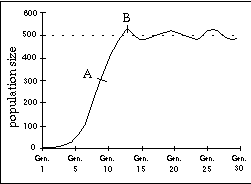
What is the carrying capacity of the graph?
a)
around 500
b)
more than 500
c)
less than 500
d)
around 600
19.
The total number of individuals a habitat can survive with the resources it has available.
a)
Carrying capacity
b)
Limiting factors
c)
Resources
d)
Population
20.
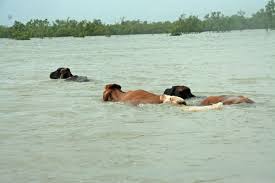
Excessive amounts of rain caused a flood in the southwest United States that resulted in substantial amounts of deaths in the rabbit population? This situation is an example of a density _____________ limiting factor.
a)
density-independent
b)
density-dependent
c)
density- too high
d)
density- too low
21.

Natural disasters can be considered limiting factors.

a)

true: density independent limiting factors

b)

false; natural disasters are not limiting factors

c)

true: density dependent limiting factors

d)

false: because Mrs. Schaffer said

22.
An environmental factor such as storms and extreme heat or cold that decrease a population are considered to be. 
a)
density- dependent factor
b)
population density
c)
dispersion
d)
density- independent factor
23.

A lion and a cheetah attempt to occupy the same niche. The more aggressive lion survives; the cheetah does not.

a)

Density-Dependent: Competition

b)

Density-Independent: Competition

c)

Density-Dependent: Predator-Prey

d)

Density-Independent: Predator-Prey

24.
An organism that is killed and eaten by another organism
a)
Predator
b)
Prey
c)
Competition
d)
Adaptation
25.
Barn owls hunt shrews. In this example what is a barn owl?
a)
Herbivore/Predator
b)
Carnivore/Prey
c)
Carnivore/Predator
26.
Camouflage is an example of an ______________________ that a prey might have to survive.
a)
Niche
b)
Prey
c)
Competition
d)
Adaptation
27.
What role does the mouse play?
a)
Predator
b)
Prey
28.
How many carnivores are shown in this food web?
a)
6
b)
4
c)
5
d)
3
29.
A frog eats a fly. The frog and fly are demonstrating ________.
a)
mutualism
b)
competition
c)
predator/prey
d)
parasitism
30.
Members of a species in a defined area
a)
Ecosystem
b)
community
c)
biodiversity
d)
population
31.
All the organisms in a particular location, including their nonliving environment
a)
ecosystem
b)
carnivore
c)
niche
d)
population
32.
In a parasitic relationship, one organism is ___________ and one organism is benefiting. 
a)
helped
b)
harmed
c)
not effected
d)
happy
33.
In a mutual relationship, both organisms are ________________. 
a)
hurt
b)
not effected
c)
harmed
d)
benefiting 
34.
Commensalism is where one organism is benefiting and the other organism is _____________________. 
a)
not effected
b)
helped
c)
harmed
d)
hurt
35.
1.  A bee and a flower work together to benefit each other. This is an example of _________________. The bee helps the flower by pollinating it and the flower helps the bee by providing it with nectar. 
a)
commensal relationship 
b)
parasitic relationship 
c)
mutual relationship 
36.
When a dog and a tick are in a relationship. The dog is being harmed and the tick is benefiting. The tick is using the dog as it's ____________. 
a)
harmer
b)
host
c)
parasite
37.
Which human activity would preserve nonrenewable resources?
a)
deforestation
b)
removing carnivores from a forest 
c)
recycling
d)
heating homes with fossil fuels  
38.
Increased industrialization will most likely
a)
decrease available habitats 
b)
increase environmental carrying capacity 
c)
increase the stability of ecosystems 
d)
decrease global warming
39.
Which human activity is correctly paired with its likely future consequence?
a)
overfishing in the Atlantic — increase in supply of flounder and salmon as food for people 
b)
development of electric cars or hybrid vehicles — increased rate of global warming 
c)
use of fossil fuels — depletion of underground coal, oil, and natural gas supplies 
d)
genetically engineering animals — less food available to feed the world’s population
40.
Which human activity would most likely deplete nonrenewable resources?
a)
use of natural enemies to eliminate insect pests
b)
development of wildlife refuges 
c)
governmental restriction of industrial pollution 
d)
increased use of fossil fuels
41.
Approximately 75 percent of the Earth's surface is covered in water. So why is water considered such a precious resource?
a)
The greenhouse effect is causing most of the world's freshwater to be trapped in the atmosphere
b)
Only a small fraction of the Earth's water is freshwater available for drinking and irrigation
c)
Each year, more freshwater is being trapped in icecaps located at the North and South Poles
d)
Global warming caused by greenhouse gas emissions will likely cause Earth's oceans to evaporate
42.
Albert wants to practice conservation. He has decided to examine his lifestyle in order to identify areas in which he can reduce the resources he consumes, reuse resources he already has, and recycle resources that he cannot reuse. In which of the following ways can Albert best reduce the resources he currently consumes?
a)
Use paper grocery bags as gift wrap
b)
Ride a bike to work instead of taking his car
c)
Subscribe to a daily rather than a weekly newspaper
d)
Use an organic rather than synthetic fertilizer in his garden
43.
Many common products, such as wooden furniture, paper, and books, are made from trees. Which of the following is a likely consequence of humans cutting down a forest in order to make use of the natural resources there? 
a)
the decrease of chemical runoff into the oceans
b)
increased acid rain
c)
the increase of light pollution in cities
d)
the destruction of habitats
44.
Which of the following historical events most likely triggered the largest increase in the human population? 
a)
the Black Death plague, which occurred in the mid-1300s
b)
the domestication of wheat crops, which began around 8000 B.C
c)
the fall of the Roman Empire, which occurred around A.D. 800
d)
the Industrial Revolution, which began in the late 1700s
45.
What causes smog?
a)
The burning of particulates
b)
The formation of ozone
c)
Acid Rain
d)
the interaction of sunlight with pollutants produced by fossil fuels
46.
Global warming has been linked to a decrease in 
a)
the size of the polar ice caps 
b)
the temperature of Earth 
c)
the rate of species extinction 
d)
the rate of carbon dioxide production
47.
Continued depletion of the ozone layer will most likely result in
a)
an increase in skin cancer among humans 
b)
a decrease in atmospheric pollutants 
c)
an increase in marine ecosystem stability 
d)
a decrease in climatic changes
48.

Which of the following is an indicator of economic development?

a)

High illiteracy

b)

Unskilled labor force

c)

Gross domestic product per capita

d)

Under developed tertiary sectors

49.

The greater the country’s level of economic development, the —

a)

higher the quality of life

b)

higher the agricultural labor force

c)

lower the cost of living

d)

lower the urban population

50.
Which natural disaster is a violent rotating column of air extending from a thunderstorm to the ground?
a)
Drought
b)
Tornado
c)
Earthquake
d)
Hurricane
51.
Which natural disaster is a prolonged period of abnormally low rainfall; a shortage of water resulting from this?
a)
Flood
b)
Blizzards
c)
Drought
d)
Hurricane
52.
Which natural disaster is the sliding down of a mass of earth or rock from a mountain or cliff?
a)
Landslide
b)
Tsunami 
c)
Thunderstorm
d)
Tornado 
53.
Which natural disaster is a long high sea wave caused by an earthquake, submarine landslide, or other disturbance?
a)
Hurricane
b)
Flood
c)
Wildfire 
d)
Tsunami 
54.
Which natural disaster is a mass of snow, ice, and rocks falling rapidly down a mountainside?
a)
Volcano Eruption
b)
Sinkhole
c)
Avalanche 
d)
Flooding
55.
Which natural disaster is a storm with a violent wind, in particular a tropical cyclone in the Caribbean?
a)
Tornado
b)
Hurricane
c)
Blizzards
d)
Landslide
56.
Which natural disaster is an overflowing of a large amount of water beyond its normal confines, especially over what is normally dry land?
a)
Tsunami 
b)
Drought
c)
Tornado
d)
Flooding
57.

Resources that are not able to be reproduced as quickly as they are used are called _____.

a)

renewable resources

b)

replaceable resources

c)

non renewable resources

d)

non replaceable resources

58.

Renewable resources ...

a)

are not replaceable

b)

are used more frequently than non renewables

c)

are never going to run out

d)

going to run out

59.

Air Pollution:

a)

Smoke and harmful gases

b)

Littering and dumping illegally on the ground

c)

Water, soil, minerals, wildlife, forests, etc.

d)

Where something exists or lives

60.

Water Pollution:

a)

Chemicals being released into oceans, lakes, rivers, etc.

b)

Protecting things in nature

c)

Sprays that kill bugs

d)

Prevent leakage in landfills

61.

Land pollution:

a)

Littering and dumping illegally on the ground

b)

Making something new out of something old

c)

Protecting things in nature

d)

Where something exists or lives

62.

Resources:

a)

Water, soil, minerals, wildlife, forests

b)

Prevent leakage in landfills

c)

Chemicals being released into oceans, lakes, rivers, etc.

d)

Smoke and harmful gases

63.
Which is a biotic factor?
a)
Fox
b)
Mountain
c)
Air
d)
Sunlight
64.
The place where an organism lives is its _________.
a)
habitat
b)
abiotic
c)
ecosystem
d)
community
65.
All of the nonliving parts of an ecosystem are _______.
a)
biography
b)
biotic
c)
abiotic
d)
biology
66.
A group of organisms of the same species living in the same area are called a/an ________.
a)
community
b)
habitat
c)
population
d)
ecosystem
67.
Energy flow for an ecosystem starts with...
a)
Sun
b)
Moon
c)
Neither
68.
When should you tie back long hair or baggy clothing?
a)
When working with chemicals
b)
When working with a Bunsen burner
c)
When doing dissections.
d)
Any time you are working in the lab.
69.
Part of lab safety includes reading the lab procedure...
a)
before doing the lab
b)
while doing the lab
c)
after doing the lab
d)
only if you think you really need it
70.
The relationship between a zebra and a tick
a)
Mutualism
b)
Parasitism
c)
Commensalism
71.
What is mean by homeostasis?
a)
Controls and coordinates body activities through chemical 
b)
controls and coordinates body activities through electrical impulses
c)
For maintenance of a steady state in the internal environment
d)
remove metabolic waste products from the cel
72.

How are viruses different than bacteria, fungi, and parasites?

a)

Viruses are not living

b)

Viruses reproduce quickly

c)

Viruses can infect the cells of a variety of organisms

73.

Antibiotics only cure ______________.

a)

viruses

b)

fungi

c)

parasites

d)

bacteria

74.

____________________ helps warm the human body when we are cold.

a)

sweating

b)

shivering

c)

inhaling oxygen

d)

exhaling carbon dioxide

75.
Air pollution is _________________________
a)
the addition of any substance that has harmful or toxic effects to air
b)
the addition of any good substance that benefits air
c)
a chemical reaction
76.
The Clean Air Act is federal law that regulates levels of air pollution produced from
a)
Transportation and factories
b)
Private homes only
c)
Power plants only
d)
Transportation, factories, power plants, and private homes
77.
A common air pollutant that is very dangerous because you cannot see it or smell it
a)
Sulfur Monoxide
b)
Carbon Monoxide
c)
Carbon Dioxide
d)
Nitrogen Oxide
78.
Who was the naturalist that traveled the world to study plants and animals?
a)
Albert Einstein
b)
Charles Darwin
c)
Charles Barkley
d)
Isaac Newton
79.
The gradual change in species over time is...
a)
Evolution
b)
Nucleotide 
c)
Adaptation
d)
Natural Selection
80.
To adjust to a changing environment
a)
Mutation
b)
Adapt
81.
Which term refers to the process by which individuals that are better suited to the environment survive and reproduce therefore passing down their genes to their offspring? 
a)
Evolution 
b)
Variation 
c)
Adaptation
d)
Natural Selection