
 Worksheets
Astronomy B Final
Total questions: 85
Worksheet time: 7hrs 5mins
An astronomical unit is...
The average distance between the Earth and the Sun
The average distance between the Sun and Neptune
The diameter of the sun
The time it takes light to travel across our solar system
The distance that light can travel in a year is called....
A light second
A light minute
A light month
A light year
A light year is approximately.....
59,987,812 kilometers
8,522,846,507 kilometers
9,460,730,472,581 kilometres
377,160,825,209,412,592 kilometers
This geometrically derived unit equals about 3.26 light years
Astronomical Unit
Light year
Parsec
Light second
When the North Pole is tilted toward the Sun, it is —
Winter in both hemispheres
Summer in the Northern Hemisphere and winter in the Southern Hemisphere
Winter in the Northern Hemisphere and summer in the Southern Hemisphere
Fall in both hemisphers

People in the Northern Hemisphere see the same constellations as the people in the Southern Hemisphere.
True
False

What is the celestial equivalent of "latitude?"
Inclination
Left Ascension
Right Ascension
Declination
What is the celestial equivalent of "longitude?"
Inclination
Left Ascension
Right Ascension
Declination
What units are used to measure declination?
Hours
Minutes
Degrees
Meters

Which sun's path best represents the summer solstice?
A
B
C
Giving specific directions where does the sun rise and set on the equinoxes
Rise in NE and sets in NW
Rise in SE and sets in SW
Rise in E and sets in W

What latitude is this location?
Tropic of Cancer
Equator
North Pole
Tropic of Capricorn
How long does it take the sun to move through all of the constellations of the zodiac?
one day
one month
one week
one year
The path the sun appears to follow through the constellations of the zodiac actually represents the Earth's orbit around the sun. It is called the:
celestial equator
meridian
parallel
ecliptic
When does the sun cross the celestial equator?
on the solstices
on the equinoxes
never

Ancient Astronomers used the stars to...
Tell Time
To determine directions
to know when to plant and harvest
All of the above
None of the above
How did astronomical observations benefit ancient societies? Select all that apply.
Kept track of time
Helped people who relied on agriculture for survival
Kept track of seasons
Prevented diseases
Ancient civilizations achieved all of the following in astronomy EXCEPT...
Keeping track of the time of day
Keeping track of the time of year
Tracked stages of the star cycle
Tracked cycles of the Moon
What is the geocentric model?
Sun-centered solar system
Earth-centered solar system
Pluto-centered solar system
What is the heliocentric view?
A sun-centered solar system
A Earth-centered solar system
A Pluto-centered solar system

Why did the Ancient Greeks consider the stars to be "fixed" and non-moving?
stars did not change positions over time like planets
the stars were represented by the gods
stars were considered to be so old they couldn't move
they knew that the stars were always there

Why were planetary motions unpredictable?
because they were representative of the Greek gods
planets "wandered" or moved in backward loops unexpectedly
ancient peoples had very little insight into the heavens
they did not represent the stars so they were unpredictable

List the following astronomers from the earliest years of contribution to the latest.
Newton-Aristotle-Copernicus-Einstein
Aristotle-Copernicus-Newton-Einstein
Einstein-Newton-Aristotle-Copernicus
Newton-Einstein-Aristotle-Copernicus
His model of the Earth-centered universe was the cornerstone of astronomy for 1,500 years
Claudius Ptolemy
Nicolaus Copernicus
Isaac Newton
Galileo Galilei




There are two twins on Earth. One flies off on a spacecraft traveling 90% of 'c' while the other twin stays on Earth. Which of the following is TRUE?
The twin on the spacecraft will age more slowly than the Earth-bound sibling
Time in each frame of reference proceeds differently at different speeds
This is an example of the 'Twin Paradox'
All answers are true

The speed of light (c) =
186,282 miles per hour
299,792 kilometers per second
3.0 x 10⁵ km/min (kilometers per minute)
All answers are correct and equal to one another

General Relativity is a theory of...
Quantum mechanics
Orbital motion
Light
Gravity

General Relativity combines
Matter and Energy
Space and Time
Particles and forces
Particles and waves
Name the point directly above an observers head
North Celestial Pole
Nadir
Zenith
Polaris
What is the Sun's path through the celestial sphere called?
meridian
declination
ecliptic
right ascension
Philadelphia, PA, has a latitude of 40 degrees N. What is the altitude of Polaris in this city?
90 degrees
73.5 degrees
40 degrees
50 degrees
What is the maximum value for any declination?
24 hrs
90 degrees
180 degrees
0 degrees
Which diagram best represents the apparent path of the Sun on June 21st?


Albert Einstein said that you cannot tell where you are in the Universe without including time. He called this an EVENT.
Where are you located in the Universe? 10pts
What happens to objects that are traveling near the Speed of Light? 4pts
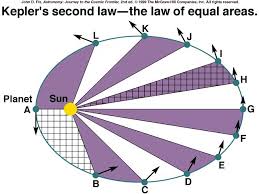
Explain how Johannes Kepler destroyed the Pythagorean Paradigm. 4pts

