
 Worksheets
Introduction to Anatomy & Physiology
Total questions: 81
Worksheet time: 1hrs 14mins
An anatomical section that separates the body into right and left portions is a __________ section.
frontal
transverse
coronal
sagittal
Maintaining a stable internal environment typically requires
positive feedback mechanisms
an unstable outside environment
decreased atmospheric pressure
negative feedback mechanisms
In negative feedback mechanisms, changes away from the normal state
stimulate changes in the same direction
inhibit all body reactions
stimulate changes in the opposite direction
stimulate a reduction in all requirements of the body
The study of the form or structure of body parts
(a)
The study of the function of body parts
(a)
Of the following, which is the most complex
tissue
organ system
organ
cell
Maintaining a constant internal environment is called (a) .
Which type of feedback tries to cancel out the stimulus?
(a)
Which type of feedback accentuates the stimulus to move the body further away from homeostasis?
(a)
Give an example of positive feedback.
Give an example of negative feedback.


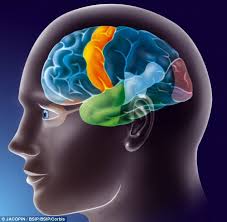
[The eyes are _______ to the brain].
Your feet are ________ to your knees.
caudal
cephalic
inferior
superior
The head is _____ to the shoulders.
proximal
caudal
superior
inferior

This plane divides the body into superior and inferior parts.
coronal plane
frontal plane
transverse plane
sagittal plane
_______ means towards the side of the body.
distal
proximal
medial
lateral
The eyes are _________ to the ears
medial
lateral
anterior
posterior
The heart is ____________ to the hips
posterior
anterior
superior
inferior
The nose is on the _________side of the body
superior
anterior (ventral)
posterior (dorsal)
proximal
The study of the structures of the body
biology
physiology
anatomy
geology
The study of the functions of the body
physiology
psychology
physics
anatomy

Cranial Cavity
Pleural Cavity
Pericardial Cavity
Vertebral Canal

The cavity surrounded by a box is?
Abdominal Cavity
Pelvic Cavity
Pleural Cavity
Cranial Cavity

The cavity surrounded by a box is?
Cranial Cavity
Abdominal Cavity
Pelvic Cavity
Abdominopelvic Cavity

The cavity surrounded by a box is?
Abdominal Cavity
Pelvic Cavity
Thoracic Cavity
Pericardial Cavity

The cavity surrounded by a box is?
Pericardial Cavity
Pleural Cavity
Abdominal Cavity
Pelvic Cavity

The cavity surrounded by a box is?
Thoracic Cavity
Abdominal Cavity
Pelvic Cavity
Vertebral Canal
Anatomy is
the study of the functions of the structures of the body
imaginary vertical and horizontal lines
the study of the structures of the body
Physiology is
the study of the structures of the body
holding arms at sides with hands turned so that palms face front
the study of the functions of the structures of the body
The backside of the body is also referred to as what?
Posterior
Anterior
Dorsal
Both Posterior and Dorsal
Both Anterior and Posterior
The Pelvic Cavity is _____ to the Abdominal Cavity.
Superior
Proximal
Inferior
Lateral
The sternum (chest bone) is __________ to the shoulder.
Distal
Lateral
Medial
Superior
Study of anatomy on a microscopic level
Anatomy
Physiology
Regional Anatomy
Microscopic Anatomy
The study of tissues
Cytology
Physiology
Histology
Pathology
The study of cells
Pathology
Cytology
Pathology
Systemic Anatomy
The study of anatomy on a large scale
Anatomy
Regional Anatomy
Gross Anatomy
Systemic Anatomy
The study of anatomy by regions of the body
Regional Anatomy
Systemic Anatomy
Gross Anatomy
Microscopic Anatomy
The study of anatomy by systems
Microscopic Anatomy
Regional Anatomy
Gross Anatomy
Systemic Anatomy

Which is NOT a term that describes point A?
Rostral
Superior
Distal
Cranial

Complete the statement:
A is _________ to B.
Medial
Distal
Proximal
Lateral
The sagittal plane
is a horizontal plane that divides the body into superior (upper) and inferior (lower) portions
is a vertical plane that divides the body
is a vertical plane that divides the body into unequal left and right portions
The midsagittal plane is
a horizontal plane that divides the body into superior (upper) and inferior (lower) portions
also known as the "midline" and it divides the body into equal left and right halves
referring to the front of the body
The ________ plane divides the body into anterior (front) and posterior (back), also known as the coronal plane
superior
proximal
frontal
the transverse plane
is a horizontal plane that divides the body into superior (upper) and inferior (lower) portions
refers to the back of the organ or body
means toward the lower part of the body

What abdominal region is #1?
Right Hypochondriac Region
Left Hypochondriac Region
Right Lumbar Region
Right Lumbar Region

What abdominal region is #6?
Hypogastric
Right Inguinal
Left Lumbar
Umbilical

What is b?
Right Upper Quadrant
Left Upper Quadrant
Right Lower Quadrant
Left Lower Quadrant
Select the 3 major planes of the human body.
Frontal (Coronal)
Superficial (Surface)
Sagittal (median)
Transverse (horizontal)
Parasagittal (Semi-median)

3 is referring to...
Orbital
Oral
Nasal
Mental
4 is referring to...
Orbital
Oral
Nasal
Mental

1 is referring to ....
Digital
Brachial
antecubital
carpel
5 is referring to ....
Digital
Brachial
antecubital
carpel
4 is referring to ....
Digital
Brachial
antecubital
carpel
2 is referring to ....
Digital
Brachial
antecubital
carpel

3 is referring to...
gluteal
vertebral
flank
cubital
6 is referring to...
gluteal
vertebral
flank
cubital
8 is referring to...
acromial
popliteal
Plantar
lumbar
Which of the following is the correct match between a cell, tissue, and organ?
skin cell, skin tissue, heart
muscle cell, muscle tissue, bicep (arm muscle)
fat cell, fat tissue, liver
nerve cell, skin cell, brain

Which is the correct structural order?
chemical-tissue-cells-organ-organ system
cells-tissue-chemical-organ system-organ
tissue-cells-organ system-chemical-organs
chemical-cells-tissue-organ-organ system
Check off ALL of the survival needs of living things from the list below:
normal body temperature
oxygen
appropriate atmospheric pressure
nutrients
water
The ability to sense changes in the environment and then react to them is known as
responsiveness
excretion
metabolism
maintaining boundaries
A broad term that refers to all the chemical reactions that occur within the body and all of its cells is:
responsiveness
metabolism
digestion
irritability

